Miasma: The Old Belief That Bad Air Carried Disease
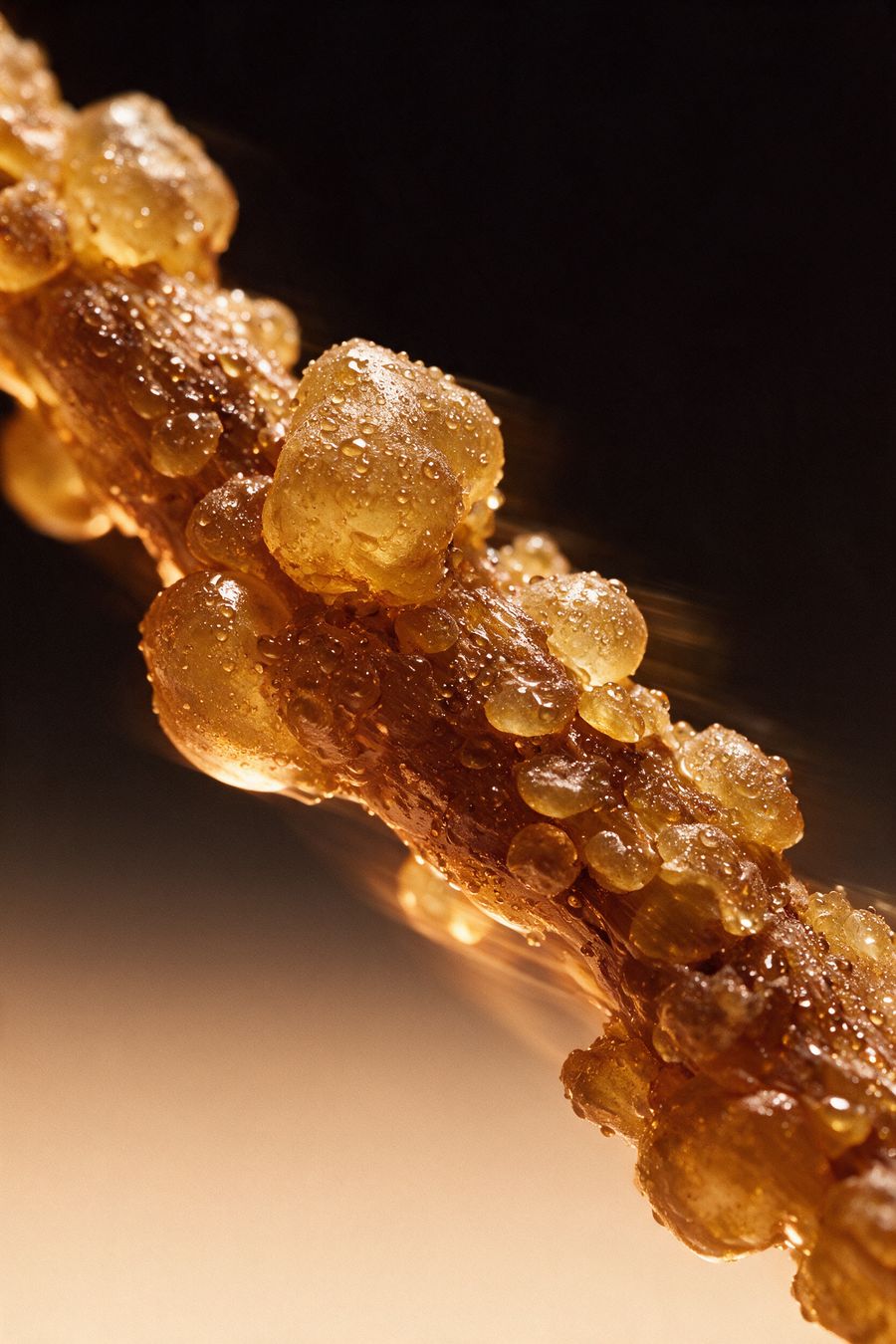
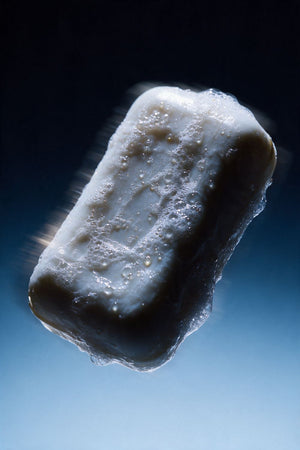
Miasma is a Greek word for stain or defilement. In medicine it became the belief that foul air from rot, marshes and sewage carried disease. Paris doctors blamed corrupt air in 1348, London blamed the smell in 1858, and John Snow argued in 1855 that cholera travelled by water. Koch found the cholera vibrio in 1883.
What is miasma?
Miasma is the old name for "bad air": foul vapour from rot, marsh and sewage that doctors once believed carried disease. The word is Greek and first meant a stain or a defilement. It is also the name of a medical theory, held in different forms for centuries and replaced in the 1880s by the germ. Every date below comes from a text read for this article.
The famous scene is Broad Street, London, in 1854. The pump handle is taken off, and the cholera ends. John Snow's own account is less tidy. By his count there were 143 fresh attacks on the first of the month and 12 on the eighth, the day the handle came off. The epidemic was already falling, and Snow said so himself. The smell theory fared the same way: it had a long career, a mixed record, and an end that came from the laboratory rather than the nose.
Miasma meaning: a stain, not a vapour
The Perseus Greek word study glosses μίασμα as "stain, defilement." The Liddell and Scott lexicon adds the sense that matters in Greek religion: a defilement "esp. by murder or other crime", a taint of guilt, and then a pollution that spreads to a country or a household. Tragedy uses it that way, and so do the orators and Plato in his Laws.
The same lexicon records a looser use in prose, and it points at the Hippocratic treatise On Breaths: air, or breath, fouled by diseased pollutions. That is the bridge from guilt to illness. A stain on a city and a stain in the air were the same kind of thing: an uncleanness that could be passed on. A scholarly study of 1983 treats the religious side under the title Miasma: Pollution and Purification in Early Greek Religion. Only its catalogue entry was read for this article, so nothing more is claimed about it here.
Miasma theory: what doctors believed
Miasma theory is the belief that disease arises from "bad air" given off by decaying matter, marshes, graves, sewers and crowded rooms. It was never one text with one author. It was a family of beliefs, and the sources show how loose the family was.
The Hippocratic treatise Airs, Waters, Places tells the physician to study seasons, winds and a town's water supply, so that "he cannot miss knowing, when he comes into a strange city, either the diseases peculiar to the place." Its marsh dwellers of the river Phasis are sickly, and the treatise gives the reason: "They drink the hot and stagnant waters, both when rendered putrid by the sun." The cause named is the water, not the breath. Place causes disease is the old idea. The word miasma is not in the English passages read.
By 1802 the plural miasmata was an English medical term, and it was still disputed. In that year an English translator of a French treatise on purifying air wrote in his preface that sufficient evidence had not yet been found to conclude that contagious effluvia were "essentially the same" as the miasmata exhaling from putrid substances. Doctors argued over what the thing was while agreeing that foul air mattered.
Paris, 1348: the plague and the planets
The best-documented medieval statement is the report of the Paris medical faculty on the Black Death, dated October 1348 in Rosemary Horrox's collection of sources. It blames the sky first. "In 1345, at one hour after noon on 20 March, there was a major conjunction of three planets in Aquarius." That conjunction acted "by causing a deadly corruption of the air around us."
The report then explains how. "Mars was also retrograde and therefore attracted many vapours from the earth and the sea which, when mixed with the air, corrupted its substances." And Mars, in a hostile aspect to Jupiter, "caused an evil disposition or quality in the air, harmful and hateful to our nature." So the corrupt air of 1348 is a cosmic event, vapours lifted by a planet, not a smell from a ditch. The extract uses no word for scent, and it does not use the word miasma.
Did perfume keep bad air away?
If air could be corrupt, it could in theory be corrected. Two records are firm. A pomander "against the plague" is among the prescriptions made for Edward IV, a king of England of the fifteenth century, in a biography of 1910 that cites a manuscript. The book does not say what the pomander held.
The second record is a failure told by the man who tried it. In the hard winter of 1773 the vaults of the principal church of Dijon were full of dead bodies and the stench was unbearable. Louis-Bernard Guyton de Morveau, in a treatise translated into English in 1802, lists what had been tried first: fumigations of vinegar, and the burning of a variety of perfumes and odoriferous herbs, storax, benzoin and the rest. His verdict is flat. The odour of the putrid effluvia "was merely masked for a moment by these operations." Then he turned to a chemical, the fumes of muriatic acid, which he thought would seize the ammonia he took to be the vehicle of the "fetid miasmata".
So the belief produced two answers, scent and chemistry, and one of its own champions said the first only covered the smell. Benzoin, one of the resins he names, is recorded in our glossary as sweet, vanilla, balsamic, woody and powdery. It stayed in perfumery. It left the sickroom.
The Great Stink of 1858
London in summer 1858 gave the theory its most famous test. The London Museum records that the population was over 2.5 million, that temperatures "hit 30 degrees and stayed high for weeks," and that the river sank and left sewage on its banks. People blamed the smell itself, which they called "miasma", and curtains and blinds were soaked in chloride of lime. The museum adds that "At the time, people didn't think diseases were spread by water. Londoners still used the dirty Thames for drinking and washing."
Parliament sat beside the river. A bill proposed by Benjamin Disraeli to fund a new sewer became law in 18 days. Joseph Bazalgette's network, with pumping stations at Deptford and Abbey Mills, was completed in 1875.
Florence Nightingale and the air test
Nightingale is the clearest voice of the air-first view. Her Notes on Nursing, read here in a 1908 printing, opens with a rule: "To keep THE AIR HE BREATHES AS PURE AS THE EXTERNAL AIR, without chilling him." She names where bad indoor air comes from, among them an underground kitchen, a sink, a water-closet, "or even, as I myself have had sorrowful experience, from open sewers." And she looked forward to the day when "Scarlet fever would be no more ascribed to contagion, but to its right cause" and for her the right cause was the air. Snow argued the opposite case about cholera.
John Snow and Broad Street
Snow's book On the Mode of Communication of Cholera, in its second edition of 1855, takes the smell theory apart without ever naming it. "It used to be generally assumed, that if cholera were a catching or communicable disease, it must spread by effluvia given off from the patient into the surrounding air, and inhaled by others into the lungs." Then comes his answer: we have no right to limit how a disease spreads, because the itch, syphilis and intestinal worms each travel in a different way.
On Broad Street he counted, and the figures are his.
| Date, 1854 | Fresh attacks of cholera, by Snow's count |
|---|---|
| 1 September | 143, the greatest number in a day |
| 2 September | 116 |
| 3 September | 54 |
| 8 September, the pump handle removed | 12 |
| 9 September | 11 |
| 10 September | 5 |
| 12 September | 1 |
Within 250 yards of the corner of Cambridge Street and Broad Street, he wrote, "there were upwards of five hundred fatal attacks of cholera in ten days." He also found "no particular outbreak or increase of cholera, in this part of London, except among the persons who were in the habit of drinking the water of the above-mentioned pump-well."
Did removing the pump handle stop the cholera?
Snow saw the guardians of St James's parish on the evening of Thursday 7 September. "In consequence of what I said, the handle of the pump was removed on the following day." He is candid about what followed. The population had fled, and "the attacks had so far diminished before the use of the water was stopped" that, he says, he cannot decide whether the well still held the poison or had cleared of it. The handle did not end the outbreak by itself, and the man who ordered it removed said as much in print. His case rested on the map of the deaths and on the households he questioned, not on the pump alone.
What Snow said about smell itself
Snow gave evidence in 1855 before a select committee on the Public Health and Nuisances Removal Bill, and afterwards wrote to Sir Benjamin Hall. Benjamin Ward Richardson's memoir of Snow, printed in the 1936 reprint of the book, gives the point in Richardson's words, not Snow's: "a bad smell cannot, simply because it is a bad smell, give rise to specific disease." Snow was no defender of nuisances. An offensive trade in the wrong place should be dealt with as a nuisance under ordinary law. Richardson also gives his view an image: smallpox might appear over a cesspool "as an oak may spring up through a manure heap," but never without its own specific poison.
That is the sharp edge of the dispute. Smell was a real nuisance and a fair reason to clean a street. It was not, by Snow's argument, a cause.
Who disproved the miasma theory?
No single person did. Snow's work of 1854 and 1855 pointed to water. Robert Koch's laboratory work supplied the germ. The Nobel Prize biography records that Koch grew anthrax bacilli in pure culture on the aqueous humour of an ox's eye and showed that bacilli which "had had no contact with any kind of animal" could still cause the disease. The Nobel facts page says he "discovered and described the TB bacterium in 1882." In 1883 he went to Egypt as leader of the German Cholera Commission and discovered the vibrio that causes cholera.
| Year | Step from "bad air" to germs | Source read |
|---|---|---|
| 1345 (20 March) | Planet conjunction named as the distant cause of corrupt air | Paris faculty report, in Horrox |
| 1348 | The Paris faculty report, dated October | Horrox |
| 1773 | Dijon vaults: perfumes and herbs "merely masked" the smell | Guyton de Morveau, translated 1802 |
| 1802 | A translator doubts that contagion and miasmata are the same thing | Same treatise, preface |
| 1854 (8 September) | Broad Street pump handle removed | Snow, 1855 |
| 1855 | Snow's second edition and his evidence on smell | Snow and Richardson's memoir |
| 1858 | The Great Stink and the 18-day sewer bill | London Museum |
| 1875 | Bazalgette's sewers completed | London Museum |
| 1882 | Koch describes the tuberculosis bacterium | Nobel Prize Outreach |
| 1883 | Koch finds the cholera vibrio | Nobel Prize Outreach |
Today's agencies describe cholera in germ terms. The World Health Organization calls it "an acute diarrhoeal infection caused by consuming food or water contaminated with the bacterium" Vibrio cholerae. The US Centers for Disease Control says it is "a bacterial disease spread through contaminated water and food" and that it is not likely to spread from casual contact. With Koch's own Nobel biography, that makes three sources that agree on the cause. Nothing here is advice. It is what the sources say.
Did the smell theory build the sewers?
The common line is that miasma theory was wrong but led to good sanitation. One historian disagrees. William Tullett, in The Historical Journal in 2019, argues that nineteenth-century "sanitary practices of circulation, ventilation, and disinfection proceeded despite, not because of, medical attitudes to smell." Surgeons and physicians, he writes, argued that odours were no indicator of disease causing matter. Odour kept its force as a rhetorical weapon: it made sanitary reports vivid and frightening. This is one study, and only its abstract was read, so it is given here as an argument, not a verdict. It does fit the museum's own account of 1858, where the stench moved Parliament in 18 days.
What is a synonym for miasma, and where does the word still live?
The nearest words in the sources are "effluvia" and "exhalations": the 1802 translator sets effluvia and miasmata side by side as things given off by putrid matter, and treats them as possibly different. Outside medicine the Greek sense survives in the study of religion, where miasma means pollution that needs purifying.
Perfumery borrows the idea in reverse. Our glossary files mountain air with the aquatic, oceanic and ozonic family, which "has a clean smell reminiscent of the ocean", and an airy note is built on molecules such as hedione and helional. Where the old physician feared the air, a perfumer now makes air as a note. The clean notes entry follows the same line, and so does the story of how soap became the dominant smell of the West.
For the court that lived by these beliefs, read Versailles smelled of death: hygiene and perfume in the Grand Siècle. For the first book written about smell, see Theophrastus and Concerning Odors.
Frequently Asked Questions
What does miasma mean?
The Greek noun means stain or defilement. In religion it is a pollution from guilt that has to be cleansed. In English medicine it became the plural miasmata, harmful exhalations from rotting matter. Both senses are about an uncleanness that can spread, which is why the word moved from the temple to the sickroom.
What is miasma in real life?
It was a theory, not a substance. People believed foul air from rot, marshes or sewage caused disease. In London in 1858, the London Museum records, they blamed the smell itself, called it miasma, and soaked curtains in chloride of lime. The WHO and the CDC describe cholera as a water and food infection.
What is miasma in Greek mythology?
The Greek lexicon defines it as a defilement, especially by murder or other crime, and as the pollution that follows, which can fall on a person, a house or a country. It is found in the tragic poets. A 1983 study treats the subject at length, but only its title was read for this article.
Who disproved miasma theory?
Not one person. John Snow argued in 1854 and 1855 that cholera spread by water, and said smell alone could not start a specific disease. Robert Koch's bacteriology followed: the tuberculosis bacterium in 1882 and the cholera vibrio in 1883, by his Nobel Prize biography.
Did removing the Broad Street pump handle stop the cholera?
Snow had the handle removed on 8 September 1854. His own count shows 143 attacks on 1 September and 12 on the day of removal, so the outbreak was already falling. He wrote that he could not decide whether the well still held the poison. The handle was a sound precaution, not a clean experiment.
What was the Great Stink?
The summer of 1858, when heat and a low Thames left sewage on London's riverbanks. Contemporaries blamed disease on the smell. A sewer bill proposed by Disraeli became law in 18 days, and Bazalgette's sewers were completed in 1875, by the London Museum's account.
Did people use perfume against bad air?
Yes. A pomander against the plague was prescribed for Edward IV. In Dijon in 1773 Guyton de Morveau reports that burning perfumes and odoriferous herbs only masked the smell of the dead for a moment, and he turned to acid fumes instead. That is a chemist's report of one failure, not a test of perfume.
What did Hippocrates say about bad air?
The Hippocratic treatise Airs, Waters, Places ties disease to seasons, winds and water, and blames stagnant water gone putrid in the sun for the sickly marsh dwellers of the Phasis. A lexicon cites On Breaths for breath fouled by diseased pollutions. The word miasma is not in the English passages of the first.
Sources
- Liddell, Scott and Jones, A Greek-English Lexicon, entry miasma, and the Perseus Greek Word Study. Read at Perseus, 19 November 2026.
- R. Horrox (ed.), The Black Death, Manchester University Press, 1994, extract of the Paris medical faculty report, October 1348. Read in the Stanford course copy.
- L. B. Guyton de Morveau, A Treatise on the Means of Purifying Infected Air, translated by R. Hall, London, 1802. Read in full text at the Internet Archive.
- Hippocrates, On Airs, Waters, and Places, English translation by Francis Adams, 1881 edition. Read in full text at the Internet Archive.
- London Museum, The Great Stink of 1858. Read online, 19 November 2026.
- Florence Nightingale, Notes on Nursing, 1908 printing, chapter I. Read in full text at the Internet Archive.
- John Snow, On the Mode of Communication of Cholera, 2nd edition, 1855, with the memoir by B. W. Richardson, in Snow on Cholera, 1936 reprint. Read in full text at the Internet Archive.
- Nobel Prize Outreach, Robert Koch, facts and biography. WHO, Cholera fact sheet. CDC, Cholera, About. Read online, 19 November 2026.
- W. Tullett, "Re-odorization, disease, and emotion in mid-nineteenth-century England", The Historical Journal 62(3), 2019. DOI 10.1017/S0018246X18000286. Abstract read through Crossref.
- L. Stratford, Edward the Fourth, London, 1910. PREMIEREPEAU glossary, entries benzoin, mountain air, airy note, clean notes.

Simili Mirage
Extrait de parfum at 20%. 8 notes, including olibanum, thyme and white thyme.
Read also
3
Versailles Smelled of Death: Hygiene and Perfume in the Grand Siècle
The palace of Versailles, completed in its most extravagant form by the late seventeenth century, was the largest and most expensive residential building in Europe. It housed, at peak occupancy, roughly 10,000 people:...

Ring Around the Rosie Meaning: The Plague Story Against the Printed Record
The plague story says the ring is a rash and the ashes are the dead. The printed versions of 1855 to 1898 tell of posies, sneezes and curtsies, and the plague link comes in 1951.
Theophrastus and Concerning Odors: The World's First Book About Smell
Around 300 BCE, a man in Athens sat down and wrote the first systematic treatise on the nature of smell. His name was Theophrastus.
Next
Perfumery Journal
Versailles Smelled of Death: Hygiene and Perfume in the Grand Siècle
05.02.26