Smelling Salts: Ammonia, a Reflex, and the Perfumers Who Sold It
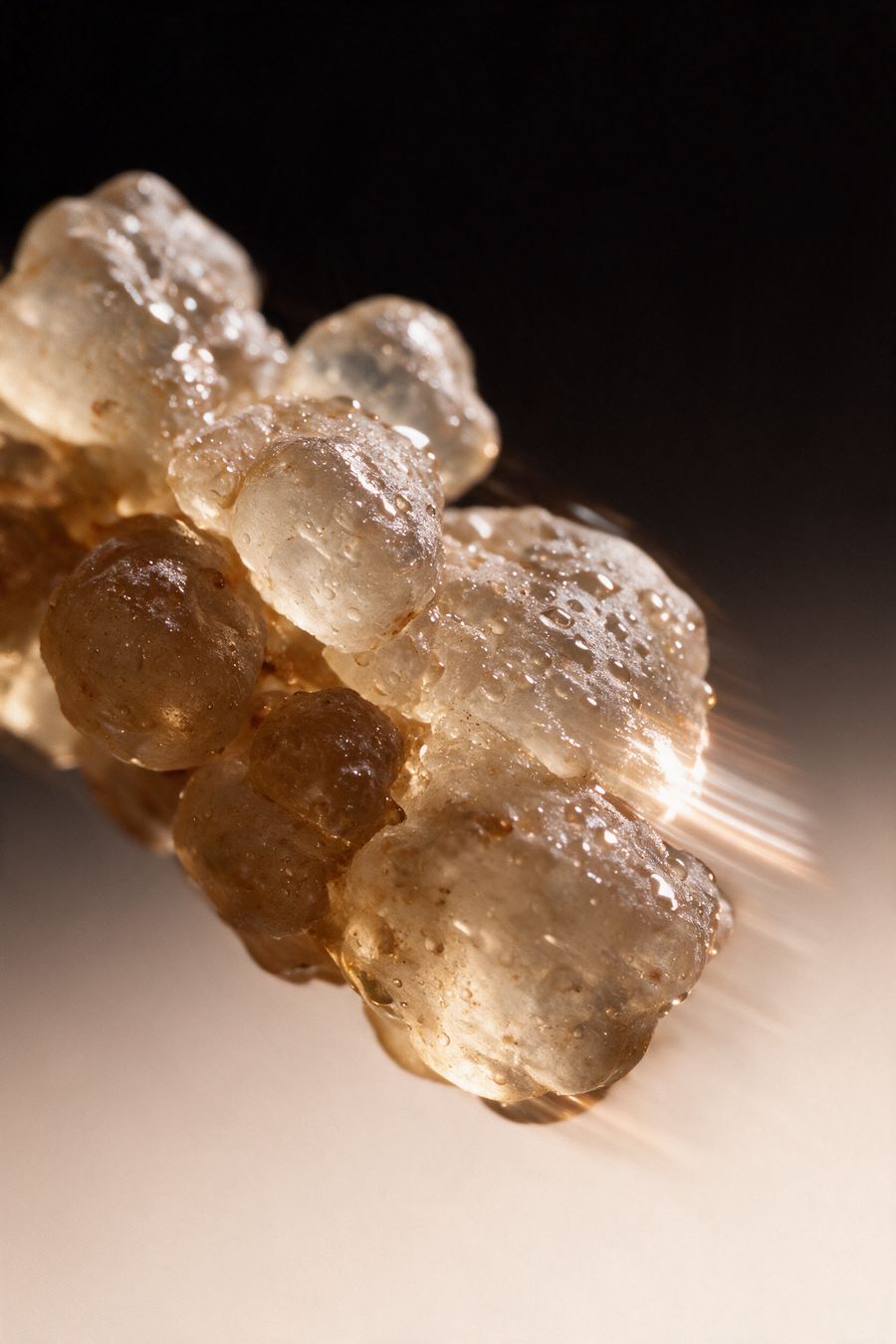
Smelling salts are ammonia inhalants. The old kind was ammonium carbonate in a stoppered bottle, scented by perfumers with lavender, bergamot and cloves. Most of today's are ammonia in water and alcohol. The gas irritates the nose and lungs and forces a sharp breath.
What are smelling salts?
Smelling salts are ammonia inhalants. The classic form is ammonium carbonate, a white solid that gives off ammonia gas, scented with oils such as lavender. Most products sold today are ammonia in water and alcohol. The gas irritates the lining of the nose and lungs and triggers a sharp, involuntary breath, which is why they were held under the nose of people who had fainted.
Most smelling salts are no longer salts. The capsules sold to athletes hold ammonia dissolved in water and alcohol, and the editorial that the British Journal of Sports Medicine devoted to them in 2006 says their proper name is "aromatic spirits of ammonia." The salt was the older form: lumps of ammonium carbonate in a stoppered bottle. The people who filled that bottle were perfumers.
"The perfumer uses liq. amm. fortis, that is, strong liquid ammonia, and the sesqui-carbonate of ammonia, for preparing the various 'salts' that he sells," wrote G. W. Septimus Piesse in The Art of Perfumery, in the Philadelphia printing of 1856. He gives three recipes, and he does not believe the name of the first.
What do smelling salts do, and how do they work?
They make you breathe in, hard, without deciding to. Ammonia gas, in the words of the 2006 editorial, "irritates the membranes of the nose and lungs, and thereby triggers an inhalation reflex." The head pulls back and the breath comes fast. A 2024 review in Sports Health reports what follows: the vessels of the brain widen and the heart rate rises, with no change in blood pressure. It also names the jerk of the head, "the involuntary withdrawal reflex associated with ammonia inhalation."
That reflex is the whole mechanism. It is why a bottle was held under the nose of someone who had fainted, and it is all a lifter gets before a heavy bar. Any gain in alertness, the editorial adds, "remains to be proven scientifically."
What do smelling salts smell like?
Of ammonia, which the United States institute for occupational safety describes as a "colorless gas with a pungent, suffocating odor." The chemical database PubChem collects other attempts: "sharp, cloying, repellent," "sharp, intensely irritating," and, for those who want an image, "characteristic of drying urine." A consumer health site compares it to household cleaning products.
That is the modern capsule. The old bottle carried a second smell on top. Piesse's perfumers added the ottos of rosemary, English lavender, bergamot and cloves, and of the white crystal kind he notes that any perfuming otto will do, "lavender otto giving, as a general rule, the most satisfaction." The smelling bottle of 1856 was lavender laid over ammonia.
When smelling salts were perfume
Piesse lists the names under which the trade sold ammonia "mixed with other odoriferous bodies": "Smelling Salts," "Preston Salts," "Inexhaustible Salts," "Eau de Luce," "Sal Volatile." It had been, he writes, "very extensively consumed as material for gratifying the olfactory nerve."
| Name and source | Base | Scent |
|---|---|---|
| Inexhaustible Salts. Piesse, 1856, pages 124 to 125 | 1 pint of liquid ammonia, soaked into sponge or poured over crystals in the bottle | Rosemary, English lavender, bergamot, cloves |
| White Smelling Salt. Piesse, 1856, page 126 | Sesqui-carbonate of ammonia in powder | Any otto, lavender preferred |
| Preston Salts. Piesse, 1856, page 126 | Ammonium chloride or carbonate with fresh slaked lime. The cheapest kind | A drop of French lavender or bergamot |
| Lavender smelling salts. Lake, 1911, page 188. Barroll, 1913, page 332 | 8 ounces of carbonate of ammonia in a smelling bottle | Oils of cloves, lavender, bergamot and cassia |
The first recipe is shaken "in a very strong and well-stoppered bottle." The inexhaustible kind, Piesse admits, does not keep its promise "more than two or three months," because "the warm hand soon dissipates the ammonia under any circumstances, and they require to be refilled." He adds a warning from the shop counter: spilt on certain coloured fabrics, the ammonia "causes a stain."
By 1911 the perfumer's article had become a kitchen recipe. Two American household cookbooks, printed two years apart, give the same "lavender smelling salts": eight ounces of carbonate of ammonia in a smelling bottle, covered with a mix of the oils of cloves, lavender, bergamot and cassia.
The same manual describes the object that carried the scent. Concentrated perfumed vinegars were poured "upon sponge into little silver boxes, called vinaigrettes, from their French origin," or into an ornamental smelling bottle. They were carried, Piesse says, "in the presumption of keeping those who carried them from the effects of infectious disease." The journal has the longer story of the perfume bottle.
Hartshorn, sal volatile, sal ammoniac: the names of smelling salts
Ammonium carbonate still carries its old name in the chemical registers. PubChem lists "Hartshorn" among its synonyms: the horn of the hart. The 2006 editorial says the product was called "salt (or spirit) of hartshorn" in the seventeenth century and became smelling salts once it was mixed with perfume. Sal volatile, the volatile salt, was also swallowed. A poisoning handbook of 1884 prescribes "Stimulants freely, brandy, spirits of chloroform, or sal volatile."
The Roman ancestry usually claimed for them is thinner. The editorial traces smelling salts to Pliny the Elder. What Pliny describes, in book 31 of the Natural History, is "hammoniacum, a salt so called from the fact of its being found beneath the sands" of Cyrenaica, "highly useful in medicine." He says nothing of sniffing it, and his translators of 1855 note that its identity is disputed.
Do smelling salts work?
Athletes use them, the 2006 editorial says, "as a pre-game stimulant or as a 'pick me up' when performance is flagging." The evidence that this does anything measurable is slight. The 2024 review found a benefit only in repeated bouts of high-intensity exercise and none in a single maximal effort. A 2026 meta-analysis pooled 10 studies, 163 participants and 47 effect sizes: "Ammonia inhalation did not significantly improve overall physical performance in the primary analysis." What rose clearly was how aroused people said they felt, and only two studies asked. Its authors call ammonia "a brief arousal stimulus rather than a consistent ergogenic aid."
Why do hockey players use smelling salts?
For that jolt, before or during play. The habit is established enough that one product named in a 2024 warning letter of the US Food and Drug Administration is called "Hockey Smelling Salt." The reviews apply on the ice as in the gym: a felt boost, no consistent gain.
Are smelling salts bad for you?
The sources agree on the limits and differ in tone. A consumer health site, Medical News Today, updated in November 2025: "For people without underlying health issues, there is no evidence to indicate that using smelling salts as directed is dangerous." It adds that asthma or other breathing problems change the picture, and that "prolonged inhalation may result in permanent lung damage or death."
The regulator is cooler. In May 2023 the US Food and Drug Administration warned consumers "to not purchase or use" two ammonia inhalants sold for alertness and energy, products that "have not been demonstrated to be safe or effective for their intended uses." It had received reports of shortness of breath, seizures, migraines, vomiting, diarrhoea and fainting. A year later it wrote to another maker that its inhalants were "unapproved new drugs." According to WebMD, the agency's approval covers fainting only.
The sports physicians worry about the head. An athlete brought round with ammonia after a blow may be an athlete with a concussion who goes back on. The 2024 review is categorical: inhalants "have no role in medical management of head injuries, as they have the potential to exacerbate an underlying brain injury due to the involuntary withdrawal reflex." The 2006 editorial found "no reports of adverse health problems related to the use of smelling salts in sport" and still concluded that they "should not be recommended."
| Who | When | What it says |
|---|---|---|
| US Food and Drug Administration | 1 May 2023 | Consumers warned "to not purchase or use" two ammonia inhalants sold for alertness |
| US Food and Drug Administration | 30 April 2024 | One maker's inhalants are "unapproved new drugs" |
| National Football League | August 2025 | Teams may not distribute them. Players may use their own |
| US institute for occupational safety (NIOSH) | Current | Limits for ammonia gas in workplace air: 25 ppm recommended, 50 ppm permitted, 300 ppm immediately dangerous |
| British Journal of Sports Medicine | 2006 | "Should not be recommended" |
| Sports Health | 2024 | "No role in medical management of head injuries" |
| Brain Sciences | 2026 | No significant gain in performance across 10 studies and 163 participants |
Did the NFL ban smelling salts?
No. The headline ran in August 2025, and the rule is narrower. As the magazine of the American Chemical Society reported that month, "the NFL put in new regulations: players can use smelling salts during games, but teams cannot distribute them." A club may not hand them out. A player may bring his own.
Frequently Asked Questions
What are smelling salts made of?
Classic smelling salts are ammonium carbonate, a solid that releases ammonia gas, scented with essential oils. Piesse's perfumers of 1856 used strong liquid ammonia or the sesqui-carbonate with lavender, bergamot, rosemary and cloves. Most products sold today are ammonia in water and alcohol, and two named in a 2024 FDA letter list sodium carbonate and ammonium chloride.
Are smelling salts bad for you?
A consumer health site finds no evidence that use as directed is dangerous for people without underlying health issues, and names asthma as a risk. The US Food and Drug Administration has warned against ammonia inhalants sold for alertness and calls them unapproved drugs. Sports physicians warn that they can hide a concussion.
What do smelling salts smell like?
Of ammonia: pungent and suffocating in the words of the US institute for occupational safety, sharp and intensely irritating in the chemical databases, close to household cleaning products. The scented salts of the nineteenth century added lavender, bergamot, rosemary and cloves on top, so the old bottle smelled of lavender over ammonia.
Why do hockey players use smelling salts?
As a stimulant before or during play. A 2006 editorial describes athletes using them as a pre-game stimulant or a pick-me-up, and a 2024 FDA letter names a product called Hockey Smelling Salt. A 2026 meta-analysis found a rise in felt arousal and no significant gain in overall physical performance.
Why did the NFL ban smelling salts?
It did not ban them outright. In August 2025 the league barred its teams from distributing ammonia inhalants, and players may still use their own. Reports of the decision cite the FDA warning and the risk that the salts hide the signs of a concussion.
How long does the effect of smelling salts last?
No study read for this article gives a figure in minutes. The 2026 meta-analysis describes ammonia as a brief arousal stimulus, and the reviews describe a reflex: one sharp breath and a faster heart rate. Piesse's complaint in 1856 was about the bottle, which went flat in two or three months.
Is sal volatile the same as smelling salts?
In the perfumery trade of 1856, yes. Piesse lists Sal Volatile with Smelling Salts, Preston Salts and Eau de Luce as names for ammonia mixed with scent. The term also covered a preparation taken by mouth as a stimulant: a poisoning handbook of 1884 prescribes it beside brandy.
What were smelling salts used for in the past?
To bring round someone who had fainted, and as a scented pick-me-up carried in a smelling bottle. Perfumers sold them ready-scented in the 1850s under names such as Preston Salts and Inexhaustible Salts, and American cookbooks of 1911 and 1913 give a home recipe with eight ounces of carbonate of ammonia and four oils.
Sources
- G. W. Septimus Piesse, The Art of Perfumery, Philadelphia, Lindsay and Blakiston, 1856, pages 124 to 128. Read in full text at the Internet Archive.
- P. McCrory, "Smelling salts", British Journal of Sports Medicine 40(8), 659 to 660, 2006. DOI 10.1136/bjsm.2006.029710.
- J. M. Bender and C. A. Popkin, "Ammonia Inhalants: Use, Misuse, and Role in Sports Performance", Sports Health, 2024. DOI 10.1177/19417381231217341.
- S. Liu and others, "Smelling Salts or Smoke and Mirrors?", Brain Sciences 16(8), 849, 2026. DOI 10.3390/brainsci16080849.
- US Food and Drug Administration, consumer alert on Nose Slap and Soul Slap products, 1 May 2023, and warning letter 672166 to Ward Smelling Salts, 30 April 2024.
- US National Institute for Occupational Safety and Health, Pocket Guide to Chemical Hazards, Ammonia.
- PubChem, records for ammonium carbonate (CID 517111) and ammonia (CID 222).
- Pliny the Elder, Natural History, book 31, chapter 39, translated by John Bostock and H. T. Riley, London, 1855 to 1857.
- Carlotta Lake, The Progress Meatless Cook Book, 1911, page 188. Mary Barroll, Around-the-World Cook Book, 1913, page 332.
- William Murrell, What to Do in Cases of Poisoning, 1884, page 229.
- Medical News Today, "Smelling salts: Uses, safety, and side effects", updated 3 November 2025. WebMD, "Smelling Salts: Benefits, Risks and Side Effects", reviewed 22 October 2025.
- Chemical and Engineering News, American Chemical Society, 22 August 2025, on the National Football League's rule.

Albâtre Sépia
Extrait de parfum at 20%. 8 notes, including incense, white truffle and black pepper.
Read also
3
The Perfume Bottle: From Roman Amphora to the Spray
You can perform a test in any department store on earth, and the results will be the same every time.
Snuff: The Scented Tobacco of the Snuffbox
Before it was a health warning, snuff was a scent. The old books give the recipes, the named blends, the box and the word.
The Tear Bottle That Was Never a Tear Bottle
In museum collections around the world, in glass cases and on labeled shelves, sit thousands of small, elongated vessels made of blown glass, molded ceramic, or carved stone. They are typically between five and fiftee...
Next
Perfumery Journal
The Perfume Bottle: From Roman Amphora to the Spray
08.02.26