Patchouli gets judged by people who have smelled a joss stick and never the oil. The oil is distilled from the dried leaves of Pogostemon cablin, a low shrub of the mint family with soft, toothed leaves. It smells of earth and it is sweet, as expected. It is also dry and camphoraceous, and a good lot has a mineral side, like wet clay left out in the sun.
3 min
Where patchouli comes from
The plant grows wild in the shade of wet forests in Indonesia, the Philippines and Malaysia. Indonesia produces most of the world's oil, and buyers still measure other origins against Sulawesi. A fresh leaf gives almost no oil. Growers dry the cut leaves in the shade for several days and turn the heaps so that they ferment a little without rotting.
Drying breaks the cell walls and frees the oil. Most of its character comes from patchoulol, a sesquiterpene alcohol. Young oil has a camphor bite. Kept for a few years, it loses the bite and turns rounder and woodier, with some cocoa in it, which is why the best lots are sold aged.
The cashmere shawl trick
In the nineteenth century, Indian merchants shipped cashmere shawls to Europe with dried patchouli leaves laid between the folds to keep the moths out. European buyers learned to check a shawl with the nose. The copies woven in Paisley and Lyon had no smell and were easy to catch, until the weavers there bought patchouli and scented their own. In about one generation a moth repellent had become the smell of an expensive shawl.
Counterculture and after
A century later the beatniks, then the hippies, wore it. The oil was cheap, any health food shop sold it, and it covered other smells. It also smelled of somewhere else, the opposite of the soapy aldehydic florals then sold in department stores.
By the mid-1970s patchouli meant one thing, and for close to twenty years fine fragrance kept away from it. It came back in the 1990s, cleaned up. Perfumers paired it with clean musks, iris and transparent woods, and used it as a base that few wearers would name.
What it smells like
Dip a paper strip in the undiluted oil. For the first seconds it is green and harsh, like snapped stems. Within a minute the earth takes over, thick and a little sticky, with an edge of burnt sugar. After twenty minutes on skin the green has gone, and what is left is dry and woody, nearer to pencil shavings than to dirt. So one material does three jobs in a perfume: earth at the start, sweetness in the middle, dry wood at the end.
Patchouli in fine fragrance
A chypre stands on patchouli. It gives the dark, mossy base that oakmoss, now restricted by IFRA, can no longer give alone. In an amber perfume it thickens the base and gives the vanilla a wood to lean on. In a clean, musky perfume a trace of it puts some soil back.
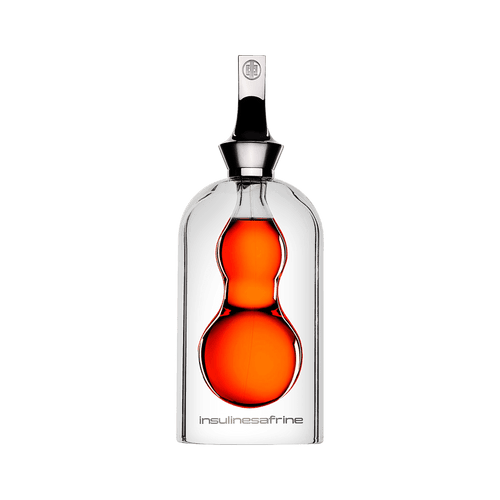
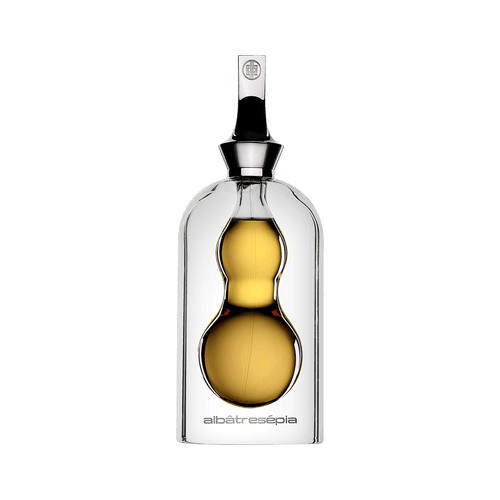
At PREMIEREPEAU, Albâtre Sépia has Indonesian patchouli essence in its base, under the white truffle and the ink accord. It keeps the vanilla from turning to pastry.
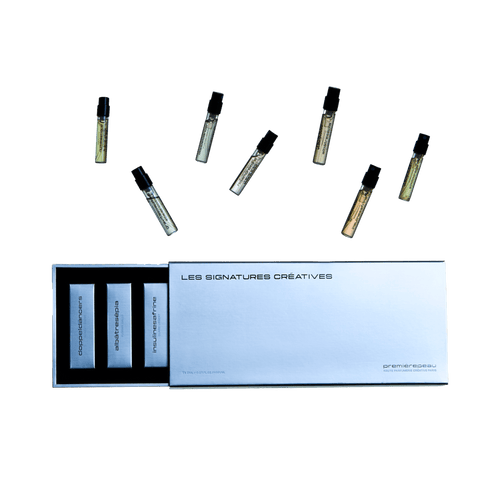
This material at PREMIEREPEAU: Albâtre Sépia. Seven extraits at 20%, one collection. The Discovery Set carries all seven in 2 ml.
Explore the full Perfumery Journal