


Papaja
PrirodnaVOĆE, POVRĆE I ORAŠASTI PLODOVIvoćni · tropski · mošusni
Srednje notePiramida
—Jačina
—Trajnost
5Poreklo
Uzorak
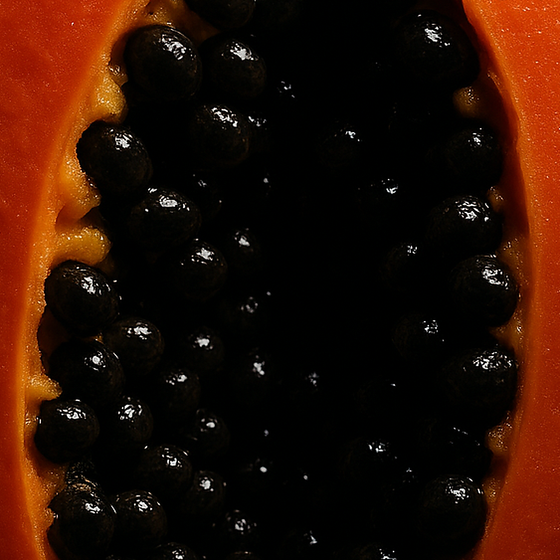
Carica papaya
Definicija
Papaya is the plant species Carica papaya, of the family Caricaceae, first domesticated in Mesoamerica. Among the odour-active compounds of its fruit, benzyl isothiocyanate is described as smelling of papaya.
SLADAK MOŠUSNI VOĆNI TOPAO SVEŽ TROPSKI
pawpaw, papaw
- Type
- Sirovina
- Olfactive family
- Voćni
- Source
- fruit
Instrumenti
Piramida
GGornje note
SSrednje note
BBazne note
Zemlje proizvođači
Indija Dominikanska Republika Indonezija Brazil Meksiko
Miris
U parfemima kuće PREMIEREPEAU
Detaljno
Dobijanje i hemija
Način dobijanja
Volatiles of papaya fruit can be extracted from the headspace by solid-phase microextraction.
- Botanički naziv
- Carica papaya
- Sinonimi
- pawpaw, papaw
Status prema standardima IFRA
Pogledajte napomenuNo IFRA Standard for the material itself (51st Amendment)
U parfemima
Methyl butanoate, a fruity ester among the odour-active compounds of papaya, is manufactured on a small scale for use in perfumes and as a food flavouring.
Uloga u formuli
01modifikator
02okosnica
03nota potpisa
04sredstvo za podizanje
05sirovina za stapanje
06naturalizator
Oblici na tržištu
fruit headspace extract
Pogledajte i
7 nota