Anointing Oil: Myrrh, Cinnamon, Calamus and Cassia, the Recipe No One May Copy
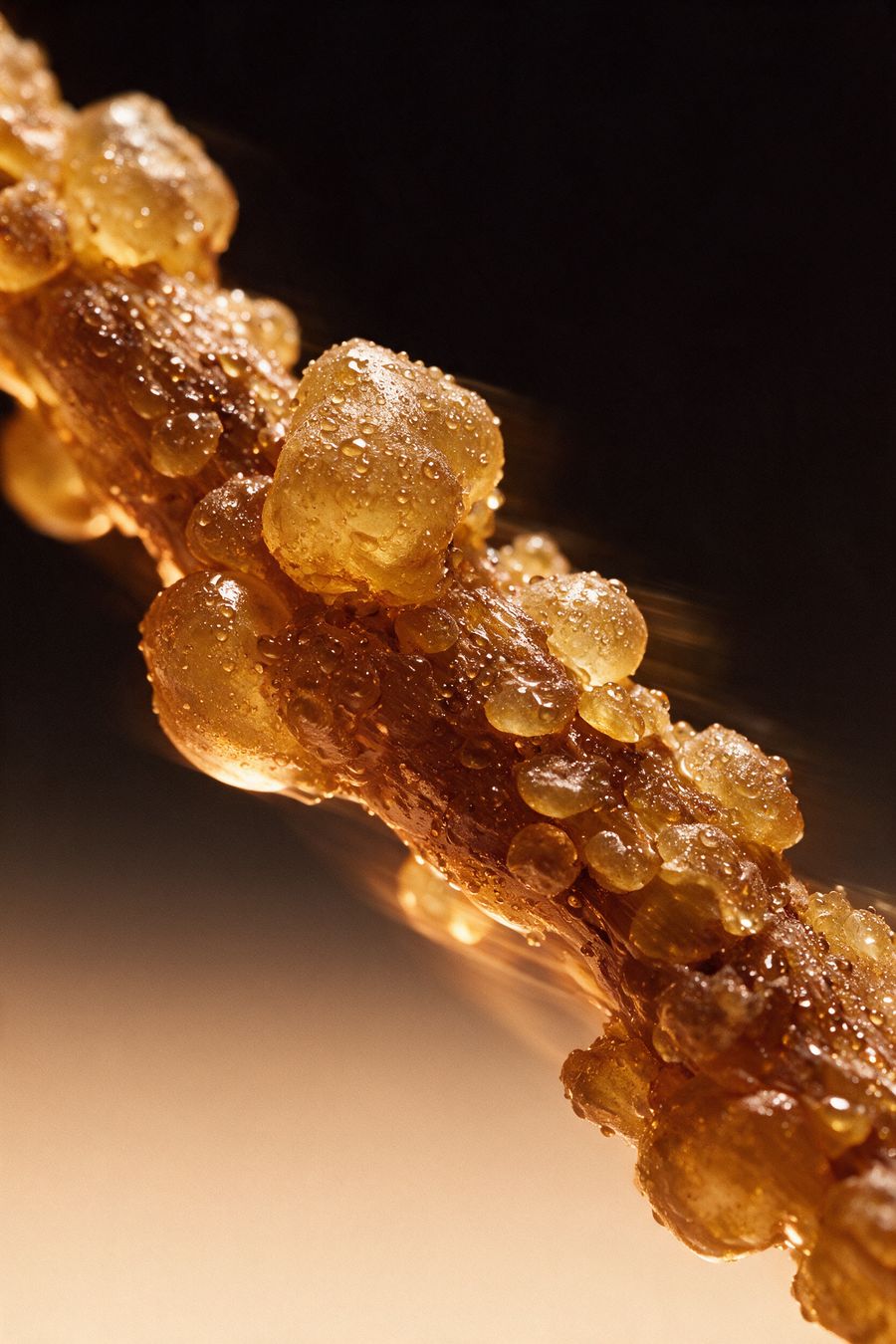
Anointing oil is a perfumed oil that sets people and things apart in religious rites. Exodus 30 gives its recipe, 500 shekels each of myrrh and cassia and 250 each of cinnamon and calamus in a hin of olive oil, and forbids copying it. Churches consecrate chrism and myron today, and a perfumed olive oil anointed King Charles III.
What is anointing oil?
Anointing oil is a perfumed oil used to set people and things apart in religious rites, and its first recipe is written in the Book of Exodus. Exodus 30 names pure myrrh, sweet cinnamon, sweet calamus and cassia in olive oil, and forbids anyone to copy it. Churches still consecrate perfumed oils, called chrism or myron, and a perfumed olive oil anointed King Charles III in 2023.
On Google's first page for "anointing oil", one vial after another in the shopping row names frankincense, myrrh or both. The recipe they invoke has myrrh but not frankincense. "Take thou also unto thee principal spices, of pure myrrh five hundred shekels, and of sweet cinnamon half so much, even two hundred and fifty shekels, and of sweet calamus two hundred and fifty shekels, And of cassia five hundred shekels, after the shekel of the sanctuary, and of oil olive an hin."
Frankincense is four verses further on, in another recipe, for another purpose. And the text that gives the formula forbids anyone to make it.
Anointing oil in the Bible: the recipe of Exodus 30
The oil was for the sanctuary and its priests. "And thou shalt anoint the tabernacle of the congregation therewith, and the ark of the testimony," Exodus continues, and the table, the candlestick, the altars, the laver. "And thou shalt anoint Aaron and his sons, and consecrate them, that they may minister unto me in the priest's office." Leviticus shows it done: "And he poured of the anointing oil upon Aaron's head, and anointed him, to sanctify him." Kings came later. In the First Book of Samuel, "Samuel took a vial of oil, and poured it upon his head" over Saul.
Exodus gives the weights. The Jewish Encyclopedia of 1906 makes them measurable: "The Biblical shekel weighed 11.95 grams, and the addition of one-fifth (2.39 grams) gives 14.34 grams as the weight of the later coin." A modern translator of Maimonides gives a third value, "16 grams of pure silver." The hin of oil is "6.074 lit." in the same encyclopedia; by two Jewish measures quoted by the translator, it is between about 4.1 and 7.2 litres.
| Ingredient, KJV | Shekels | At 11.95 g | At 14.34 g | At 16 g |
|---|---|---|---|---|
| Pure myrrh | 500 | 5.98 kg | 7.17 kg | 8.0 kg |
| Sweet cinnamon | 250 | 2.99 kg | 3.59 kg | 4.0 kg |
| Sweet calamus | 250 | 2.99 kg | 3.59 kg | 4.0 kg |
| Cassia | 500 | 5.98 kg | 7.17 kg | 8.0 kg |
| All four spices | 1,500 | 17.9 kg | 21.5 kg | 24.0 kg |
| Olive oil | One hin | About 6.07 litres, or 4.1 to 7.2 by other measures | ||
The conversions are ours, from the encyclopedia's and the translator's figures. Whichever is chosen, the spices outweigh the oil about three to one. Myrrh and cassia make up two thirds of them.
Where frankincense belongs
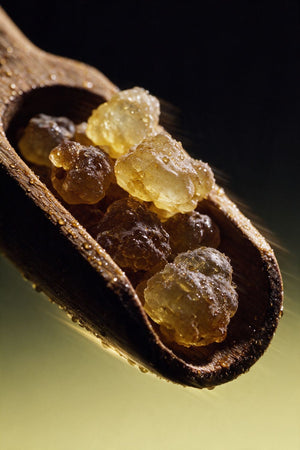
In the incense. Exodus 30:34 gives a separate formula: "Take unto thee sweet spices, stacte, and onycha, and galbanum; these sweet spices with pure frankincense: of each shall there be a like weight: And thou shalt make it a perfume, a confection after the art of the apothecary, tempered together, pure and holy." The oil and the incense are two recipes, and they share one phrase, "after the art of the apothecary." The resins themselves are told in frankincense and myrrh.
The recipe no one may copy
Exodus closes the formula with a ban. "Upon man's flesh shall it not be poured, neither shall ye make any other like it, after the composition of it: it is holy, and it shall be holy unto you. Whosoever compoundeth any like it, or whosoever putteth any of it upon a stranger, shall even be cut off from his people."
Jewish law read it as a single batch. In the words of the translator of Maimonides' code, "after the oil was made at Moses' command, no other such oil was ever made and the mitzvah was merely 'to have it.'" By the text's own rule, a vial on sale cannot be the oil of Exodus.
How the oil was made
The Bible does not say. Maimonides, in the twelfth century, described the method his tradition held. Each spice "should be ground separately, mixed together and then soaked in pure, sweet water until all of its power was extracted into the water." Then "A hin" of oil "was placed above the water. The entire mixture was then cooked over fire until the water boiled off and only the oil remained." The water takes the power of the spices, and the fire leaves only the oil.
Myrrh or musk, calamus or cannabis
The tradition itself disagrees on two ingredients. Maimonides reads the first one as musk: the spices are "musk, cinnamon, and costus and the equivalent of 250 shekel of fragrant cane." A commentator objected, his translator notes: the Ra'avad held that the blood of a beast, let alone of an unclean one, could not be used in the Sanctuary, and read the word as myrrh. The costus of Maimonides replaces the cassia of the King James Bible.
The cane is the larger quarrel. A chapter of the volume Cannabis and Culture, published in 1975, argues that "we find kaneh bosm variously and erroneously translated as 'calamus'", and reads the cane as cannabis; a book of 1995 repeats the sentence word for word. The tradition reads it otherwise. Maimonides describes canes "like red straw that come from the Indian islands and have a pleasant fragrance." His modern translator records two readings: "Rav Kapach identifies this as the acorus calamus plant. In his Living Torah, Rav Aryeh Kaplan identifies this as the cymbopogon martini or palmarosa plant." A review of the medicinal plants of the Bible, published in 2019, lists the Hebrew "Kneh Bosem" as Acorus calamus, sweet flag. It names cannabis only among plants known from ancient Egypt for which no sufficient data exist to count them as plants of the Bible. None of the rabbinic or botanical sources read for this article identifies the cane as cannabis.
| Source | First ingredient | The cane |
|---|---|---|
| King James Bible | Pure myrrh | Sweet calamus |
| Maimonides, 12th century | Musk | Fragrant cane from the Indian islands |
| The Ra'avad, his critic | Myrrh, the herb, not a beast's blood | |
| Rav Kapach | Acorus calamus | |
| Rav Aryeh Kaplan | Cymbopogon martini, palmarosa | |
| Dafni and Böck, 2019 | Acorus calamus |
Calamus and the rules
Sweet flag carries a molecule the law watches, beta-asarone. The European regulation on flavourings lists it among "Substances which shall not be added as such to food," caps it at 1.0 mg per kilogram in alcoholic drinks, and names the "Tetraploid form of Acorus calamus L." among "Source materials which shall not be used for the production of flavourings." Our glossary entry for calamus records the perfumers' rule: under the IFRA standard on asarone, the level in a finished product must not exceed "100 ppm (0.01%)." It gives calamus oil a smell that is "warm, bitter, woody, spicy, camphory and aromatic."
Holy oil today: chrism and myron
The churches kept the gesture and changed the formula. The Catechism of the Catholic Church records that "Very early, the better to signify the gift of the Holy Spirit, an anointing with perfumed oil (chrism) was added to the laying on of hands," and that the Eastern Churches call it chrismation, "or myron which means 'chrism.'" In the Catholic Church, "It is the bishop who, in the course of the Chrism Mass of Holy Thursday, consecrates the sacred chrism for his whole diocese."
The Orthodox myron is a perfumery. The Ecumenical Patriarchate prepares it "roughly once each decade": in April 2022, for the first time since 2012, from "57 precious and rare aromatic materials." The list "is found in the official Patriarchal Catalog compiled in 1890, which is still in use today," and the formula is "patterned after the anointing oil described in Exodus." It holds virgin olive oil, dry red wine and Bulgarian rose oil, "the main aromatic ingredient," and calls for two animal materials, ambergris and musk. In 2022 the musk could not be procured. A dealer was found selling it at "$250 a gram," the recipe "calls for 50 grams," and "A plant substitute was used instead." The essential oils are added only once the cauldrons have cooled to 25 to 30 degrees, "because if heated, they evaporate."
The oil of a coronation
The oil that anointed King Charles III on 6 May 2023 was made from "olives harvested from two groves on the Mount of Olives," pressed "just outside Bethlehem" and consecrated at the Church of the Holy Sepulchre. The Royal Household listed its perfume: sesame, rose, jasmine, cinnamon, neroli, benzoin and amber, "as well as orange blossom." Of the four spices of Exodus, cinnamon is the one that remains. The formula, the Household adds, "is based on the oil used at the Coronation of Queen Elizabeth II, the formula of which has been used for hundreds of years."
Like Aaron, the sovereign receives the oil on the head. "During the Coronation, the Sovereign is anointed on their head, hands and heart," the Church of England explains, behind a screen, "not seen by TV audiences or the congregation in the Abbey." The same page gives the root of the word: "The title 'Christ' comes from the Greek 'chrīstós', meaning 'anointed one'."
Frequently Asked Questions
What are the 5 ingredients of anointing oil?
Exodus 30:23 to 24 names five: pure myrrh, 500 shekels; sweet cinnamon, 250; sweet calamus, 250; cassia, 500; and a hin of olive oil. Frankincense is not among them; it belongs to the incense of Exodus 30:34. Maimonides reads the first ingredient as musk, so the tradition itself disagrees on one of the five.
What is holy oil?
Holy oil is oil set apart by a rite. In the Bible it is the compound of Exodus 30, made for the tabernacle and the priests. In the Catholic Church the bishop consecrates the chrism on Holy Thursday, and the Orthodox myron, prepared by the Ecumenical Patriarchate, holds 57 aromatic materials, rose oil chief among them.
Can I make anointing oil myself?
Exodus 30:32 to 33 forbids making any oil like the one it describes, on pain of being cut off from the people, and Jewish law read the oil as a single batch made at Moses' command. That is the text's own rule for that oil. The sources read do not address blessing ordinary oil at home.
Was the anointing oil cannabis?
A chapter of 1975 in the volume Cannabis and Culture says so, holding that kaneh bosm was erroneously translated as calamus. The rabbinic and botanical sources read for this article do not: Maimonides describes fragrant canes from the Indian islands, his translators record Acorus calamus and palmarosa, and a 2019 review of Bible plants lists kneh bosem as Acorus calamus.
What is chrism?
Chrism is perfumed oil consecrated for anointing. The Catechism of the Catholic Church records that an anointing with perfumed oil was added very early to the laying on of hands, that the bishop consecrates the chrism on Holy Thursday, and that the Eastern Churches call it myron. The word Christ means anointed one.
What oil was used to anoint King Charles III?
Olive oil from two groves on the Mount of Olives, pressed just outside Bethlehem and consecrated at the Church of the Holy Sepulchre, perfumed with sesame, rose, jasmine, cinnamon, neroli, benzoin and amber, as well as orange blossom. The Royal Household says it follows the formula of the oil of Elizabeth II.
How was the anointing oil of Exodus made?
The Bible does not say. Maimonides, in the twelfth century, wrote that each spice was ground, mixed and soaked in sweet water until its power passed into the water, that a hin of oil was set above, and that all was cooked until the water boiled off and only the oil remained.
How much did the anointing oil of Exodus weigh?
With the Jewish Encyclopedia's shekel of 11.95 grams, the spices come to about 17.9 kilograms, among them about 6 of myrrh and 6 of cassia, in a hin of about 6 litres of oil. With a shekel of 14.34 grams they come to 21.5 kilograms. The conversions are ours.
Sources
- The Bible, King James Version: Exodus 30:22 to 35, Leviticus 8:10 to 12, 1 Samuel 10:1. Read through bible-api.com.
- The Jewish Encyclopedia, "Weights and Measures", New York, 1906.
- Maimonides, Mishneh Torah, Laws of the Vessels of the Sanctuary 1:1 to 3, translated by Eliyahu Touger, with his notes. Read at Sefaria.
- A. Dafni and B. Böck, "Medicinal plants of the Bible: revisited", Journal of Ethnobiology and Ethnomedicine, 2019, table of identifications. DOI 10.1186/s13002-019-0338-8.
- Cannabis and Culture, edited by V. Rubin, The Hague, 1975, and C. Bennett, Green Gold the Tree of Life, 1995, passages on kaneh bosm. Read through the search inside the scans of the Internet Archive.
- Regulation (EC) No 1334/2008 on flavourings, annexes III and IV. Read at the Publications Office of the European Union.
- Catechism of the Catholic Church, nos. 1289 and 1297. Read on the website of the Holy See.
- Greek Orthodox Archdiocese of America, "Ecumenical Patriarch Begins Rare Rite of Holy Myrrh at Phanar", 19 April 2022.
- The Royal Household, "The consecration of the Coronation Oil", 20 March 2023. Church of England, "Why are British monarchs anointed?", 30 April 2023.
- PREMIEREPEAU glossary, entry calamus. Google's first page for the words "anointing oil" in the United States, read on 19 November 2026.

Simili Mirage
Extrait de parfum at 20%. 8 notes, including olibanum, thyme and white thyme.
Read also
3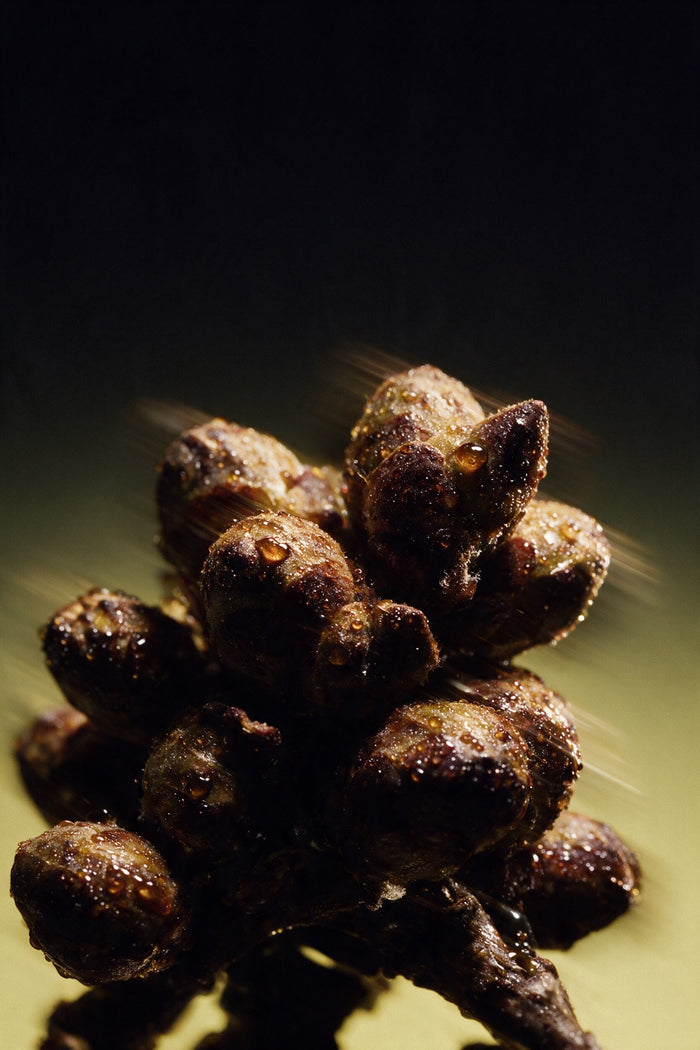
Balm Balm of Gilead: The Bible's Resin and the Poplar Buds Sold in Its Name
The Bible's balm was a resin tapped from a low shrub, and its plant is still argued. The buds sold today under the name come from a poplar of North America.
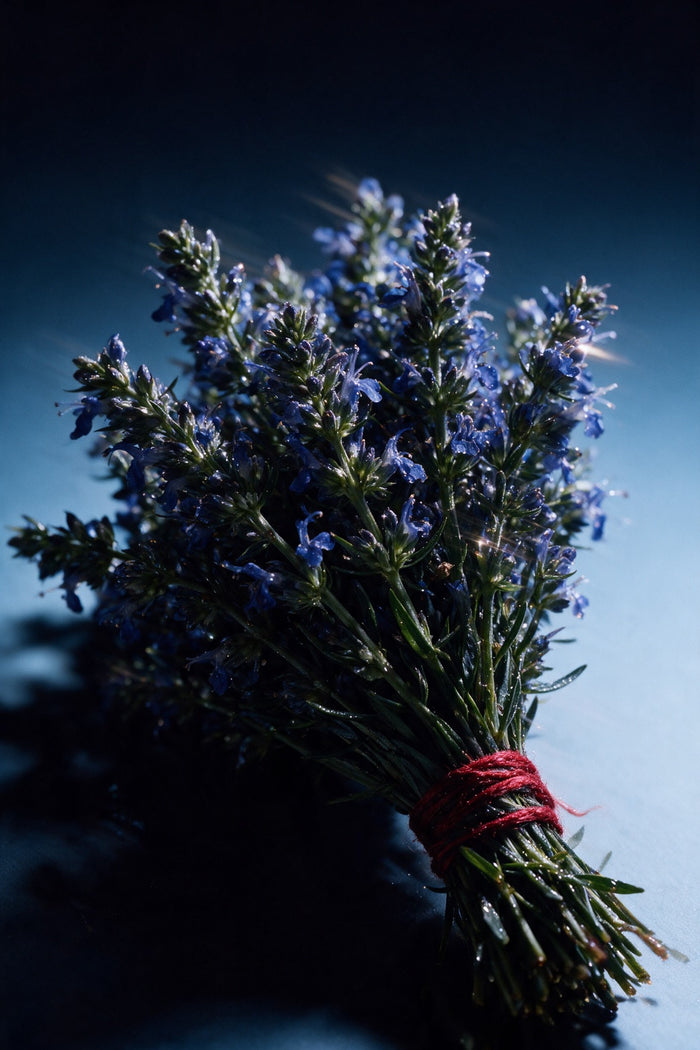
Herb Hyssop: The Herb of the Psalms, and Why the Garden Plant Is Another
"Purge me with hyssop, and I shall be clean." The Psalm made the plant a word for cleansing, and the garden herb took the credit. There are two hyssops: the one in the verses, and the one in the seed catalogue.
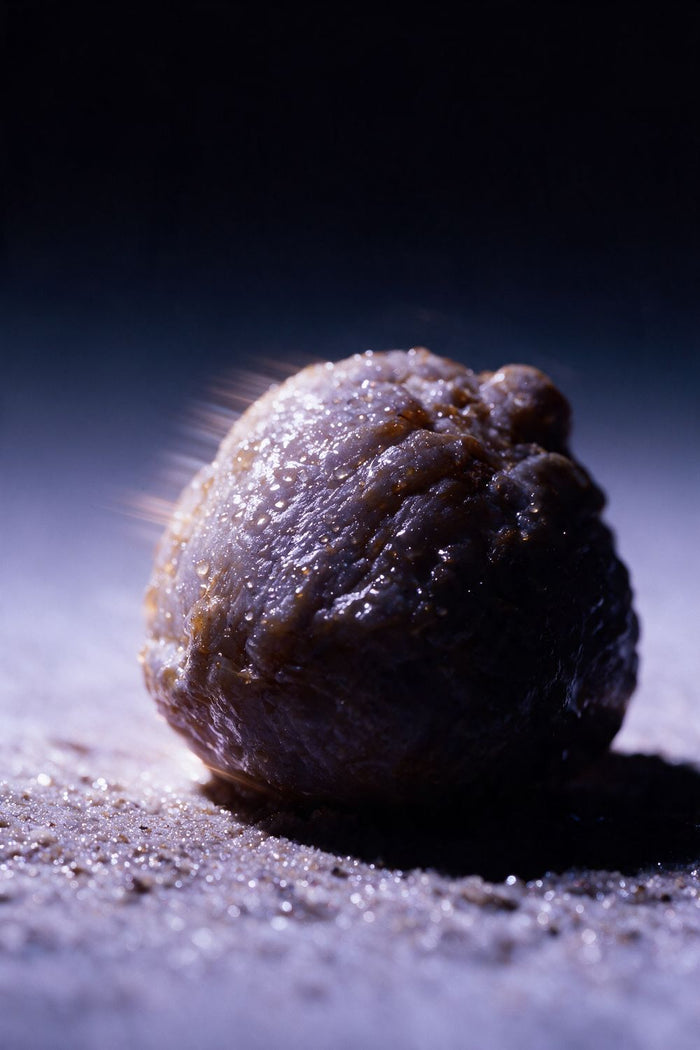
Amber Ambergris: Anatomy of a 4,000-Year Obsession
Ambergris is a waxy lump that forms in the rectum of about one sperm whale in a hundred, around the indigestible beaks of the squid it eats. It leaves the whale with its faeces or at its death, floats, and slowly chan...
Next
Perfumery Journal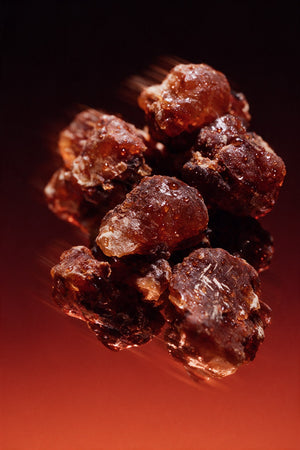
Myrrh Myrrh: The Bitter Resin of the Pharaohs, and What It Smells Like
20.11.25