The Word on the Box That No Law Defines, and What the Label Still Names
Clean perfume has no legal definition in Europe or the United States. The word stands for a list of ingredients a brand or a retailer leaves out, and the lists differ: one large retailer's seal prohibits a musk that European law allows with its name on the label. Natural oils such as jasmine and bergamot are among the allergens every European label must name.
What is clean perfume?
Clean perfume is perfume sold as made without a list of ingredients that its seller chooses, and no law defines the word. One large retailer's seal, for example, rules out phthalates, parabens and four synthetic musks. European law, for its part, makes every perfume name its allergens on the label, and several of them are natural oils.
"Best case scenario is 100% botanically derived, natural ingredients," writes one guide to clean and non-toxic perfume. Another holds that "all-natural or organic perfume brands are free from synthetics, petrochemicals, dyes, parabens." The first guide also says, a few lines further on: "Terms like clean, safe, and non-toxic aren't regulated, so anyone can use them without any real validity behind them."
That last sentence is the one the law bears out. The rest, that clean means natural and natural means safe, is a belief the rule books do not share. They define no clean, they list natural oils among the allergens, and the one thing clean reliably names is a smell: the smell the trade calls clean notes, built on synthetic musks.
Is clean a legal word?
No text defines it. The European regulation on cosmetic claims, adopted on 10 July 2013, covers every claim "in the form of texts, names, trademarks, pictures and figurative or other signs." It sets six common criteria for them, and it says in its recitals that "the common criteria should not aim at defining and specifying the wording that can be used for cosmetic product claims." The word clean does not appear in it.
The criteria still bind whoever uses the word. A claim must be "supported by adequate and verifiable evidence." Claims "shall not denigrate the competitors, nor shall they denigrate ingredients legally used." A product may not sell as a benefit what the law requires of everyone: "Claims which convey the idea that a product has a specific benefit when this benefit is mere compliance with minimum legal requirements shall not be allowed." And a claim may not give one product, as its own, characteristics that "similar products possess." Plain exaggeration is spared: "Statements of clear exaggeration which are not to be taken literally by the average end user (hyperbole)" need no proof. Whether clean is an ingredient claim or a hyperbole, the regulation does not say.
The United States says less. The Food and Drug Administration "does not have a list of approved or accepted claims for cosmetics," and labelling, "including claims, must be truthful and not misleading." The nearest the agency has come to a vague cosmetic word concerns another one. Of hypoallergenic it writes: "There are no Federal standards or definitions that govern the use of the term 'hypoallergenic.' The term means whatever a particular company wants it to mean." A rule of 1975 had tried to define it, until a federal appeals court struck it down. The FDA's magazine drew the lesson in April 1978: "there is no such thing as a 'nonallergenic' cosmetic."
The Federal Trade Commission, which oversees advertising, has a guide for a neighbouring word. "A non-toxic claim likely conveys that a product, package, or service is non-toxic both for humans and for the environment generally," and those who make it "should have competent and reliable scientific evidence" for both.
| Who | What it says about the word |
|---|---|
| European Union, claims regulation of 2013 | Six criteria for every claim; it does not aim at "defining and specifying the wording" |
| US Food and Drug Administration | No list of approved claims; labelling must be truthful and not misleading |
| The same agency, on "hypoallergenic" | No federal definition; the term "means whatever a particular company wants it to mean" |
| US Federal Trade Commission | "Non-toxic" means for humans and for the environment, and needs evidence for both |
| One large retailer | A list of ingredients its "clean" products are formulated without, with no guarantee of total absence |
| A second retailer | Fragrances must be sorted into categories; full disclosure of their ingredients is "encouraged" |
What a clean seal is: a list
Where the law is silent, retailers write their own. One of the largest says that its seal means a product "is formulated without specific ingredients such as sulfates, parabens, phthalates, and more," and adds at once that "The 'formulated without' does not guarantee '100% free-from' since trace contaminants are possible." It does not require brands to test for them.
Its list, in the version dated 31 March 2022, is long and precise. Parabens: "Prohibited." Phthalates: "Prohibited." Phenoxyethanol: "Must be 1% or less of total formula." Synthetic fragrance is allowed at under 1% "in skincare, bodycare, makeup, and hair products," a cap the list does not set for perfume itself. And: "All fragrance allergens are required to be listed according to EU regulation."
Under the heading "Nitromusks and Polycyclic Musks," the list prohibits four molecules: musk ketone, hexamethylindanopyran, acetyl hexamethyl tetralin and acetyl hexamethyl indan.
A second retailer works differently. Its standard requires brands to "Categorize fragrances for consumers" and only encourages them to "Fully disclose fragrance ingredients." It states the reason on its fragrance page: "US law does not require fragrance transparency." Two sellers, two definitions of the same word, and neither is the law's.
Where the seal and the law part: the musks
Hexamethylindanopyran is the name on the ingredient list. The trade knows it as Galaxolide. The retailer's seal prohibits it. European law does not: the allergen regulation of 26 July 2023 enters it as number 336 and requires only that "The presence of the substance shall be indicated in the list of ingredients" above 0.001% of a perfume.
It is also the molecule that the word clean describes. Our glossary records that "The odor of galaxolide is described as a clean, sweet, floral, woody musk," and gives it a tenacity of 400 hours, undiluted. A seal named clean rules out the material whose smell is called clean.
| Musk | CAS number | Odour words in the trade's records | EU allergen list | One retailer's seal |
|---|---|---|---|---|
| Galaxolide (hexamethylindanopyran) | 1222-05-5 | Sweet, floral, musk | Entry 336, named on the label | Prohibited |
| Ethylene brassylate | 105-95-3 | Sweet, floral, ambrette, powdery, woody, musk | Not on the list read | Not named |
| Helvetolide | 141773-73-1 | Floral, fruity, ambrette, pear, woody, musk | Not on the list read | Not named |
| Muscone | 10403-00-6 | Powdery, animal, musk | Not on the list read | Not named |
"Not named" means only that: the list read says nothing of ethylene brassylate, Helvetolide or muscone, which is not a verdict on them.
Natural is not a safety line
The belief behind most guides is that natural is the safe side. The European allergen list does not draw that line. Next to single molecules such as citral, entry 70, and limonene, entry 88, the regulation of 2023 lists the oils of ylang ylang (347), bergamot (352), lemon (353), jasmine (357), lavender (360), peppermint (361), damask rose (366) and sandalwood (367). Each must be named on a perfume's label above 0.001%. The European Commission estimates that 1 to 9% of the Union's population is allergic to fragrance allergens.
The United States agrees in its own words: "The law treats Ingredients from plants the same as those from any other source." The fragrance industry's association makes no claim for one side either. About three quarters of fragrance material "now comes from modern synthesis plants around the world, while the remaining share is sourced from natural ingredients," it writes, and "Whether engineered or harvested, every litre of material passes through refining, quality control and safety assessment." What the safety rules test, material by material, is told in is perfume bad for you.
What does clean perfume smell like?
Of laundry, mostly, and the smell has an address in chemistry. The trade's databases do not use the word: they record Galaxolide as "sweet, floral, musk" and ethylene brassylate as sweet, floral, ambrette, powdery, woody and musk. The fresh edge that often comes with them belongs to citrus molecules on the same allergen list: citral is recorded as lemon, citrus, sweet and sharp, limonene as citrus, herbal and terpenic.
Our glossary follows the clean accord over time. Immediately, "Clean and sweet." After a few hours, "Floral and musky." After a few days, "Woody musk." It gives the accord a tenacity of 24 hours, and records that "Synthetic musks are used as flavorings and fixatives in cosmetics, detergents, perfumes and foods." The journal tells how soap made that smell the smell of the West in clean, and where the musks came from in what is musk.
How to read a perfume label
A seal tells you what one seller left out. The ingredient list tells you what is in the bottle, and in Europe it follows a rule. Ingredients are listed "in descending order of weight," and those under 1% "may be listed in any order" after the rest. The fragrance appears as one word, "parfum." After it come the allergens of the list, each by its own name, as soon as it passes 0.001% of the product: Limonene, Citral, Hexamethylindanopyran, or one of the oils by its Latin name.
In the United States the label may stop at "Fragrance," and the FDA's own page on fragrance says that the agency "does not have the same legal authority to require allergen labeling for cosmetics as for food." The 1978 article drew the practical conclusion that still holds for the European list: "FDA regulations now require the ingredients used in cosmetics to be listed on the product label, so consumers can avoid substances that have caused them problems."
Frequently Asked Questions
What does clean perfume mean?
No law defines it. The European claims regulation of 2013 says it does not aim at defining the wording of claims, and the FDA keeps no list of approved cosmetic claims. A retailer defines clean for its own seal, as a list of ingredients its products are formulated without, so the word means what its seller says.
Is clean perfume regulated?
The word is not, but the claim is. In Europe a claim must rest on adequate and verifiable evidence, must not denigrate ingredients legally used, and must not present mere legal compliance as a benefit. In the United States labelling must be truthful and not misleading, and the trade commission asks for evidence behind a non-toxic claim.
What is the cleanest perfume brand?
No law and no independent test ranks perfumes by cleanness. Each retailer's seal applies its own list, and the lists differ. One large retailer prohibits the musk Galaxolide for its seal, while European law allows it in perfume with its name on the ingredient list. A ranking depends on whose list is used.
Are there perfumes that are not toxic?
The US trade commission says that a non-toxic claim conveys safety for humans and for the environment, and that whoever makes it needs competent and reliable scientific evidence for both. No source certifies a perfume as non-toxic. European law works by banning, capping and naming substances, not by certifying products.
Are there any 100% natural perfumes?
Some makers sell perfumes composed only of natural materials, and guides to clean perfume recommend them. No law defines natural for perfume, and the FDA notes that there is no regulatory definition of essential oils. By the industry's own count, about three quarters of fragrance material is now made by synthesis.
Is natural perfume safer than synthetic?
The rules draw no such line. The European allergen list of 2023 names the oils of jasmine, rose, bergamot, lemon, lavender, ylang ylang, peppermint and sandalwood beside synthetic molecules, and the FDA writes that the law treats ingredients from plants the same as those from any other source. No source ranks natural above synthetic.
Is clean perfume free of allergens?
Not by one large retailer's seal. That retailer's list requires all fragrance allergens to be listed according to European rules, which means they may be present and are named. In Europe every perfume must name each listed allergen above 0.001% of the product, whatever seal is on the box.
Are synthetic musks banned?
Not by the European texts: Galaxolide, sold under the ingredient name hexamethylindanopyran, is entry 336 of the allergen labelling list, named on the label above 0.001%. One large retailer's clean seal prohibits it, with musk ketone and two other musks, for the products that carry its seal.
Sources
- Commission Regulation (EU) No 655/2013 of 10 July 2013 laying down common criteria for the justification of claims used in relation to cosmetic products: article 1, recital 7 and the annex. Read in full at the Publications Office of the European Union.
- Commission Regulation (EU) 2023/1545 of 26 July 2023, annex, entries 70, 88, 336 and 346 to 367; recital 2. Regulation (EC) No 1223/2009, article 19(1)(g), in the text retained in United Kingdom law at legislation.gov.uk.
- US Food and Drug Administration: "Cosmetics Labeling Claims" (content current as of 21 November 2022), "'Hypoallergenic' Cosmetics" with Margaret Morrison's article of FDA Consumer, April 1978 (content current as of 25 February 2022), and "Fragrances in Cosmetics" (28 February 2022). Read on 19 November 2026.
- Code of Federal Regulations, title 16, sections 260.4 and 260.10, the Federal Trade Commission's Guides for the Use of Environmental Marketing Claims. Read at the Legal Information Institute of Cornell Law School.
- Sephora, help centre: "What are 'Clean at Sephora' standards?" (updated 17 July 2024) and "What ingredients are Clean at Sephora products formulated without?". Credo Beauty, "The Credo Standard". Read on 19 November 2026.
- IFRA, the International Fragrance Association, "Where is fragrance sourced?". Read on 19 November 2026.
- Odour descriptors of the Good Scents Company, through the Pyrfume data, and PubChem records for CAS 1222-05-5, 105-95-3, 141773-73-1, 10403-00-6, 5392-40-5 and 138-86-3.
- PREMIEREPEAU glossary, entries clean notes and Galaxolide.
- The guides quoted: Organically Becca, on non-toxic perfume, and Organic Beauty Lover, on the best clean perfumes. Read on 19 November 2026.

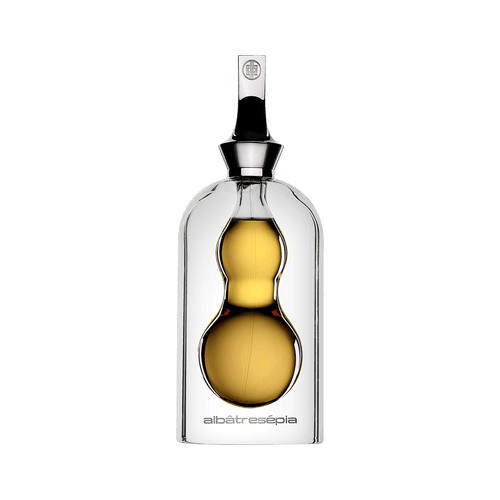
Albâtre Sépia
Extrait de parfum at 20%. 8 notes, including incense and white truffle.
Read also
3
Clean: How Soap Became the Dominant Smell of the West
A smell that most Westerners cannot identify as a smell at all. It is the smell of clean.

What Is Musk? 3,000 Years of Obsession
Musk is the most misunderstood word in perfumery. Ask ten people what it smells like and you will get ten answers: clean laundry, bare skin, something vaguely animal, nothing at all. The confusion is earned. The...
IFRA, or How Bureaucracy Erased a Century of Perfumery
In 1917, Francois Coty composed a fragrance that would define an entire family for the next century.
Next
Perfumery Journal
Clean: How Soap Became the Dominant Smell of the West
13.02.26