Eau de Toilette: The Perfume Named After a Cloth
Eau de toilette is perfume diluted in alcohol at 5 to 15% fragrance by the industry's own table, lighter than eau de parfum. The name means toilet water: the toilette was first a cloth on a dressing table, then the table, then the act of getting ready.
What is eau de toilette?
Eau de toilette is a perfume diluted in alcohol, lighter than eau de parfum. The fragrance industry's own association gives it 5 to 15% fragrance, typically around 10%. The name is French for toilet water. The toilette in question is the dressing table and the act of getting ready, a word that began as the name of a small cloth.
In 1694 a toilette was a cloth. The first dictionary of the Académie française defines it as "Toile qu'on estend sur une table pour y mettre le des-habillé, & les hardes de nuit, comme le peignoir, les peignes, le bonnet": a cloth spread on a table to hold the undress and the night things, the dressing gown, the combs, the cap. The water came later, and the strength later still.
The word on the bottle has had three lives. It was a piece of linen, then everything that stood on it, then a figure between 5 and 15 that no law has ever written down.
Eau de toilette meaning: from the cloth to the table to the act
Toilette is the diminutive of toile, cloth. Littré, in 1873, still gives the first sense as "Petite toile," said of the finest linens. The dictionaries of the Académie follow the word as it climbs from the fabric to the furniture to the person.
| Year | Dictionary | What toilette means |
|---|---|---|
| 1694 | Académie, 1st edition | A cloth spread on a table for the night things: dressing gown, combs, cap |
| 1762 | Académie, 4th edition | "Les flambeaux, les boîtes, les flacons": the candlesticks, boxes and flasks of a woman's dressing table |
| 1798 | Académie, 5th edition | The act: "Faire sa toilette. Être long-temps à sa toilette" |
| 1835 | Académie, 6th edition | The piece of furniture itself, and "cabinet de toilette," the room |
| 1873 | Littré | "Petite toile," the first sense kept on record |
| 1932 | Académie, 8th edition | Furniture fitted "pour se laver, se coiffer, se parer," and the action of doing so |
The flasks appear in 1762, on the table. The 1835 edition adds a character who has since left the language, the pilier de toilette: "homme qui assiste assidûment à la toilette d'une ou de plusieurs femmes," a man who diligently attends the dressing of one or several women.
That is why the French call it eau de toilette. It is the water of the dressing table, used in the act the table is named for. A search of the same collection of old dictionaries for the two words together returns nothing: the phrase belonged to the perfumers before it belonged to the Académie.
Toilet water: what the words named in the nineteenth century
A class of product, and a weak one. A Paris manual of 1856 speaks of "pommades et eaux de toilette" as one class and gives away the trade: examine their ingredients, writes its author, and "c'est toujours la même composition; les différences n'existent que dans les doses et la substitution d'un parfum à un autre." Always the same composition. Only the doses change, and one scent is swapped for another.
The doses can be read in the recipes. They are far below the strength the name carries today.
| Recipe | Book | Spirit | Scent | Share of oils, our arithmetic |
|---|---|---|---|---|
| Riche eau de toilette | Pradal and Malepeyre, Paris, 1863 | 28 litres of Montpellier alcohol at 85 degrees, 2 litres of rose water | Bergamot 400 g, citron 300 g, lavender 30 g, rose 20 g | About 2.5% |
| Lavender water | Piesse, London, 1857 | 3 quarts of spirit, 1 pint of rose water | 4 ounces of English oil of lavender | About 3% |
| Eau de Cologne, first quality | Piesse, 1867 and 1879 | 6 gallons of grape spirit | 18 ounces of neroli, bigarade, rosemary, orange, citron and bergamot | About 1.9% |
The English words are missing where one would look for them. The full texts of Piesse's Art of Perfumery in 1857, 1867 and 1879, and of Rimmel's Book of Perfumes in 1865 and 1867, were searched for "toilet water" and for "eau de toilette." Five books, no result. The two great English manuals of the century say waters, extracts and essences. The only toilette in Piesse's text of 1857 is "the toilette of fashion." He sells toilet vinegars, and no toilet water.
One place still says toilet water without irony. The American regulation on denatured alcohol authorises its perfumery formula for "Toilet waters and colognes." The eau de Cologne has its own article.
How strong is an eau de toilette today?
Between 5 and 15% fragrance, typically around 10%, by the table of IFRA, the association of the fragrance industry. The same page says that such terms "are not strictly defined by international standards" and that its ranges rest "on common industry practices rather than strict regulatory definitions."
| Name on the bottle | Fragrance concentration, IFRA | Typically around |
|---|---|---|
| Splash and aftershave | 1 to 3% | |
| Eau de Cologne | 3 to 8% | 5% |
| Eau de toilette | 5 to 15% | 10% |
| Eau de parfum, parfum de toilette | 10 to 20% | 15% |
| Perfume extract, extrait | 15 to 40% | 20% |
The laboratory uses the same figure. A 2025 study of how fragrance evaporates from skin built its test liquid "to reflect an 'eau de toilette'": fragrance ingredients at 10% in a solution of 96% ethanol. Set beside the recipes of the 1860s, today's eau de toilette is three to five times stronger than the waters that gave it its name.
Does the law define eau de toilette?
The law uses the words and never says what they are. In the European regulation on cosmetics, eau de toilette appears three times, each time in the annex of restricted substances. Musk xylene is allowed at "1,0 % in fine fragrance" and "0,4 % in eau de toilette." Musk ketone at 1.4% and 0.56%. Methyl eugenol at 0.01% and 0.004%. A product's legal ceiling therefore depends on a name that the same text leaves undefined. Its list of cosmetic products says only "perfumes, toilet waters and eau de Cologne."
American law defines a cosmetic by its use, as an article applied to the body "for cleansing, beautifying, promoting attractiveness, or altering the appearance," and names no strength in the passage read for this article.
How long does eau de toilette last?
No test was found that answers for the name. One brand page says two to three hours. A 2021 review of perfume engineering gives the life on skin of the layers instead: 15 to 30 minutes for top notes, 3 to 4 hours for middle notes, more than 4 hours for base notes. An eau de toilette built on base notes outlasts a stronger perfume built on citrus, which is the case made in the concentration lie.
Eau de toilette vs eau de parfum
On the ladder of names, eau de toilette stands one rung below. In IFRA's table the two overlap: from 10 to 15% a perfume may carry either name. The eau de parfum is also the younger word by far, in print as a strength in 1941, while the toilette has been in the dictionary since 1694. All the rungs are set side by side in perfume concentration levels explained.
Frequently Asked Questions
What does eau de toilette mean?
Water for the toilette, that is, for washing, dressing and getting ready. In French the word toilette first meant a small cloth, then the cloth spread over a dressing table, then the flasks and boxes on it, then the act itself. A scented water kept on that table was an eau de toilette.
Is toilet water water from the toilet?
No. The 1694 dictionary of the Académie française defines toilette as a cloth spread on a table for combs, cap and dressing gown, and by 1762 the word covers the flasks of a woman's dressing table. Toilet water is the English rendering of eau de toilette, a scented water for grooming.
Why do the French call it eau de toilette?
Because faire sa toilette is to wash, do one's hair and dress, a sense the Académie records in 1798. The scented waters stood among the flasks of the dressing table, itself called a toilette since the eighteenth century. The dictionaries record the table and the act, never the phrase: that came from the perfumers.
What percentage is eau de toilette?
By the table of the fragrance industry's association, 5 to 15% fragrance in alcohol, typically around 10%. A 2025 laboratory study built its eau de toilette at exactly 10% in 96% ethanol. The toilet waters of the 1850s and 1860s were far weaker: about 2 to 3% by the recipes of the manuals.
How long does eau de toilette last?
No test found answers for the name itself. One brand page says two to three hours. A 2021 review gives 15 to 30 minutes for top notes, 3 to 4 hours for middle notes and more than 4 hours for base notes, so an eau de toilette lasts as long as its materials do.
What is the difference between eau de toilette and eau de parfum?
The share of fragrance, on paper. The industry's table gives eau de toilette 5 to 15% and eau de parfum 10 to 20%, so between 10 and 15% a perfume may carry either name. Neither word is defined by law. Houses sometimes change the formula between the two as well as the dilution.
What was a toilet water in the 1800s?
A light scented spirit for the dressing table. A Paris manual of 1863 makes its Riche eau de toilette from 28 litres of alcohol and 750 grams of bergamot, citron, lavender and rose. Piesse's lavender water of 1857 takes 4 ounces of oil for 3 quarts of spirit and a pint of rose water.
Does any law define eau de toilette?
None read for this article. The European regulation on cosmetics uses the words three times, to set lower limits for two musks in eau de toilette than in fine fragrance, and never defines them. American law defines a cosmetic by its use. The strength behind the name is trade custom.
Sources
- Dictionnaire de l'Académie française, editions of 1694, 1762, 1798, 1835 and 1932, entry Toilette. Émile Littré, Dictionnaire de la langue française, 1873, entry Toilette. Read in the ARTFL collection of old dictionaries, University of Chicago, which was also searched for the phrase.
- A. Debay, Nouveau manuel du parfumeur-chimiste, Paris, 1856. Read in full text at the Internet Archive.
- P. Pradal and F. Malepeyre, Nouveau manuel complet du parfumeur, Paris, Roret, 1863, chapter "Eaux diverses", page 229 and following.
- G. W. Septimus Piesse, The Art of Perfumery, London, 1857, and the editions of 1867 and 1879. Eugene Rimmel, The Book of Perfumes, 1865 and 1867. Full texts searched at the Internet Archive.
- IFRA, the International Fragrance Association, "About the IFRA Transparency List", question on the terms EDT, perfume, eau de parfum and eau de cologne. Read on 19 November 2026.
- Regulation (EC) No 1223/2009 on cosmetic products, annex III, entries 96 and 97, and the list of product categories. Read in the text retained in United Kingdom law at legislation.gov.uk.
- United States Code, title 21, section 321(i). Code of Federal Regulations, title 27, section 21.71.
- Hadjiefstathiou and others, "Exploring the impact of fragrance molecular and skin properties on the evaporation profile of fragrances", International Journal of Cosmetic Science, 2025. DOI 10.1111/ics.13085.
- A. E. Rodrigues and others, "Perfume and Flavor Engineering: A Chemical Engineering Perspective", Molecules 26(11), 3095, 2021. DOI 10.3390/molecules26113095.

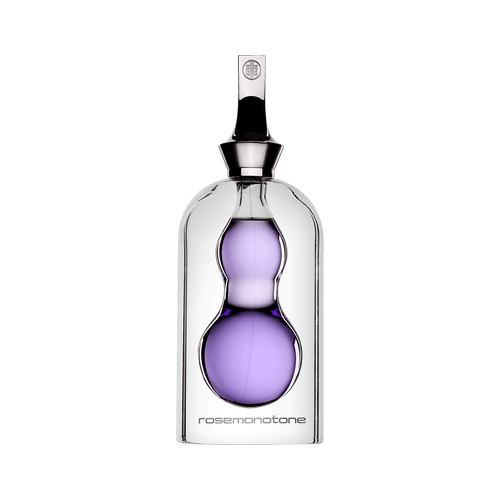
Rose Monotone
Extrait de parfum at 20%. 8 notes, including crystalline rose, pink pepper and cellophane.
Read also
3
The Eau de Cologne: How an Italian Merchant Invented Modern Luxury
The date of 1709 belongs to a firm, not to a water. Who made the first eau de Cologne, what the old books say it held, and the Cologne firms that fought over one family name.

Florida Water: The Cologne, the 1808 Claim and the Ritual
Florida water is a cologne-type toilet water that a New York firm advertised in 1858. Its Fountain of Youth story and its 1808 date rest on no early document read, and the ritual use rests on modern pages.

The Concentration Lie: Why an Eau de Toilette Can Outperform an Extrait
A lie repeated so often in perfumery that it has calcified into received wisdom. It goes like this: Eau de Toilette is weaker than Eau de Parfum, which is weaker than Extrait de Parfum, which sits at the apex of quali...
Next
Perfumery Journal
The Eau de Cologne: How an Italian Merchant Invented Modern Luxury
06.02.26