Indole: The Jasmine Molecule That Came From Indigo
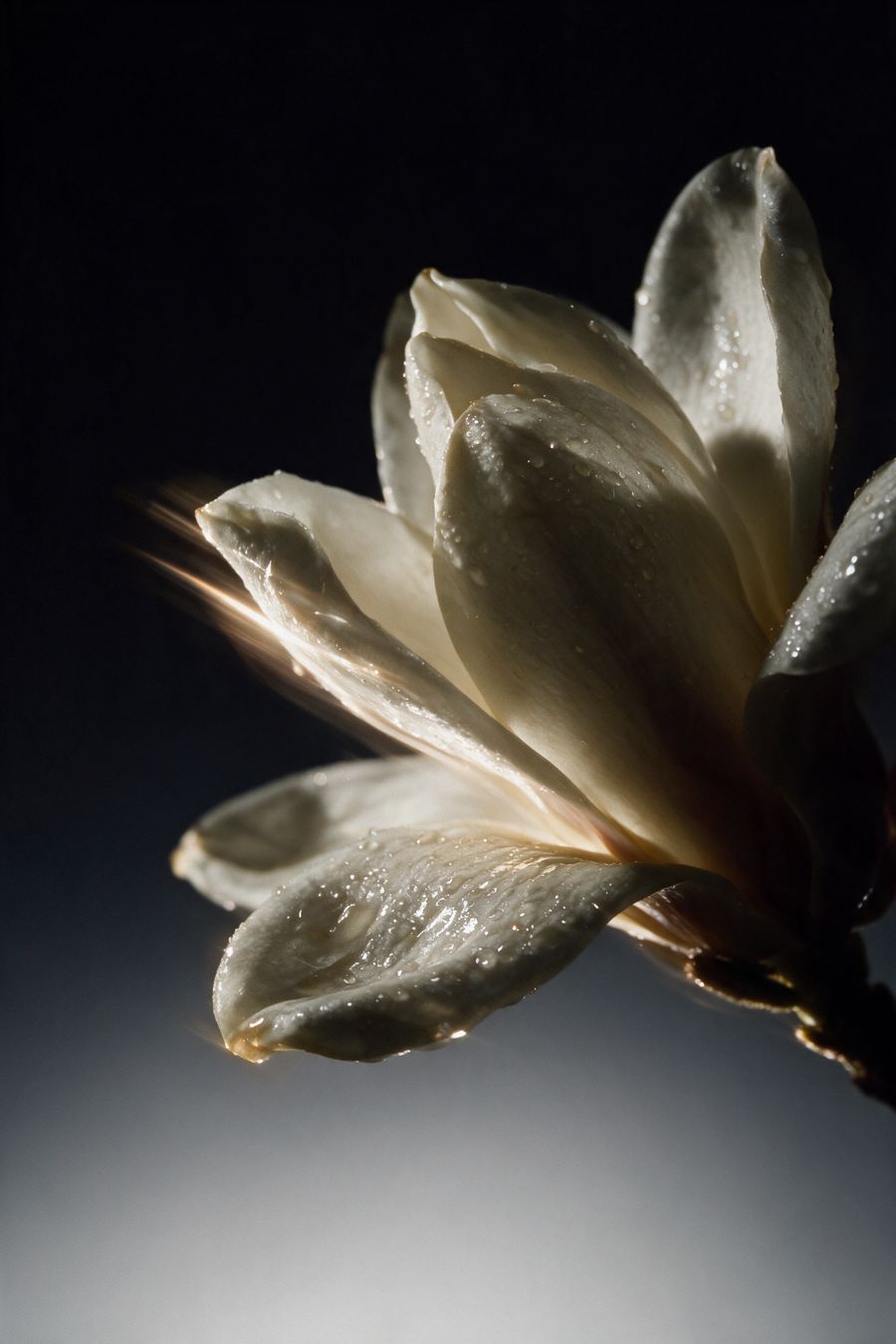
Indole is a small aromatic molecule, C8H7N. Strong, it smells faecal and of mothballs. Below 0.1% it smells floral, like jasmine. It occurs in jasmine and tuberose, gut bacteria make it from tryptophan, and chemists first obtained it from the dye indigo.
What is indole?
Indole is a small aromatic molecule, C8H7N, that smells faecal and of mothballs when strong, and floral, like jasmine, when very dilute. It occurs in jasmine and tuberose, is made in the human gut by bacteria from the amino acid tryptophan, and is used in perfumery at trace levels.
Indole was found in a dye before it was found in a flower. Chemists first obtained it by reducing indigo blue, and a textbook of dyestuffs printed in 1892 describes the result: "colourless leaflets" that melt at 52 degrees and "have a peculiar, unpleasant smell." The same page notes that the substance is also produced in "the pancreatic digestion of albuminoids."
So by 1892 the two reputations of the molecule were already in print, the laboratory and the gut. The third came from the perfumers. Dilute those leaflets a thousand times and they smell of jasmine.
What does indole smell like?
It depends on how much of it there is, and the handbooks have said so for fifty years. Fenaroli's handbook of flavour ingredients, in 1975: "almost floral odor when highly purified, otherwise exhibits characteristic odor of feces." Hawley's chemical dictionary: "Unpleasant odor in high concentration but pleasant in dilute solution." Ullmann's encyclopedia of industrial chemistry says only "Light jasmine odor."
Our glossary puts figures on the turn.
| Strength | What the glossary records |
|---|---|
| Concentrated | "Extremely diffusive and powerful, almost tarry-repulsive and choking" |
| At 1% | "Pungent and floral, slightly naphtha- and mothball-like, with a fecal and animalic musty character" |
| Below 0.1% | "Powerful floral notes and pleasant radiation" |
| On a strip, at once | Pungent, mothball-like |
| After a few hours | Floral, narcotic, jasmine-like |
| After a few days | Animalic and musty, with a fecal and slightly musk character |
The trade's own word lists hold the contradiction in one line: musty, naphthyl, animal, floral, fecal, pungent. That is what a perfumer means by indolic: a white flower with a trace of the body in it. The glossary gives the material a strength of 4 on a scale of 5, a tenacity of 400 hours, and a detection threshold of 300 parts per trillion in air. Very little of it is needed to be noticed, and very little is used.
Indole in jasmine: how much, and in which jasmine
Less than the legend says, and not in every jasmine. A study of four species grown in Egypt, published in 2026, measured the scent given off by the living flowers. In Jasminum grandiflorum, the jasmine of Grasse, indole made up 0.82% in July and 0.98% in August. In Jasminum sambac it was 0.03%. Another study of the same year, on sambac cultivars, detected indole in only one of them.
| Material | Share of indole | What was measured |
|---|---|---|
| Jasminum sambac flowers, Egypt, August | 0.03% | Scent of the living flower |
| Jasminum grandiflorum flowers, Egypt, July | 0.82% | Scent of the living flower |
| Jasminum grandiflorum flowers, Egypt, August | 0.98% | Scent of the living flower |
| Fresh Jasminum sambac flowers, another study | 1.83% | Volatile compounds |
| Tuberose absolute, four Indian varieties | 0.36 to 2.15% | The absolute |
| Natural jasmine oil, in our glossary | About 2.5% | The oil |
| Orange blossom oil, in our glossary | 0.1% | The oil |
The figures do not agree with each other, and they are not meant to: a flower in August is not an absolute, and one cultivar is not the next. What they agree on is the order of size. The molecule that carries the reputation of the white flowers is one or two parts in a hundred of their scent, and often far less. The journal follows it into jasmine absolute and tuberose.
What does indole do in the body?
It is made there, by tenants. A review in Nature Communications in 2018 describes how gut bacteria produce indole from tryptophan with one enzyme, tryptophanase, "expressed in many Gram-negative, as well as Gram-positive bacterial species including Escherichia coli, Clostridium spp. and Bacteroides spp." Its authors conclude that "in adults, indole is the most abundant microbial tryptophan catabolite."
For the bacteria it is a message. The same review calls indole "an intercellular signal molecule" that affects "spore formation, plasmid stability, drug resistance, biofilm formation, and virulence." What the body does with it afterwards was already in the dye textbook of 1892: "Indol is converted into indoxyl-sulphuric acid in the animal organism."
What foods contain indole?
More than the reputation of the molecule would suggest. Our glossary lists indole as the main volatile compound of stinky tofu, which surprises nobody, and as a component of Swiss cheese, Camembert, wine, cocoa, black and green tea, rum, roasted hazelnut and raw shrimp. It is also in the cup of jasmine tea. The 2026 study of Egyptian jasmines cites the seven main volatile components of Chinese jasmine tea: "methyl anthranilate, indole, α-farnesene, benzyl alcohol, linalool, benzyl acetate, and (Z)-3-hexenyl benzoate."
Where indole comes from: indigo, coal tar, synthesis
From indigo first. The 1892 textbook is flat about it: "Indol was first obtained by reduction of indigo blue." Our glossary gives the dates of what followed.
| Year | What happened |
|---|---|
| 1866 | Adolf von Baeyer reduces oxindole to indole with zinc dust |
| 1869 | Baeyer and Emmerling make it from ortho-nitrocinnamic acid |
| 1883 | Emil Fischer finds the synthesis that still carries his name |
| 1892 | An English textbook records indol in indigo chemistry and in digestion |
| 1910 | Weissgerber isolates it from coal tar |
| 1912 | Madelung reports another synthesis |
The substance on the perfumer's shelf is a solid. By the glossary it melts at 52 to 54 degrees and boils at 253 to 254, dissolves in alcohol and oils and hardly in water, and does not like light: it "turns red." It comes from neither a flower nor a dye vat. The glossary names two sources: coal tar, which holds about 0.2% of it, and synthesis from aniline and ethylene glycol in the vapour phase, between 200 and 500 degrees.
Indole and skatole
Skatole is indole with one more carbon: 3-methylindole. It is the heavier and louder of the two.
| Indole | Skatole | |
|---|---|---|
| Formula | C8H7N | C9H9N |
| Molecular weight | 117.15 | 131.17 |
| CAS number | 120-72-9 | 83-34-1 |
| Strength in our glossary, of 5 | 4 | 5 |
| Trade odour words | Musty, naphthyl, animal, floral, fecal, pungent | Naphthyl, animal, fecal, civet |
The glossary's line on skatole could be written of either: "fecal at high levels" and "pleasant, sweet and warm at very low levels." The last word of its trade list, civet, points to the other animal notes of perfumery, which have their own article.
Is indole allowed in perfume?
Yes. The European list of cosmetic ingredients registers indole as an active ingredient with one function, perfuming. The European chemicals agency lists it as registered. It is one of the 3,691 materials on the Transparency List of IFRA, the association of the fragrance industry, which is an inventory of what perfumers use. Our glossary records no IFRA Standard restricting the material itself.
Frequently Asked Questions
What does indole do in the body?
Gut bacteria make it from the amino acid tryptophan with the enzyme tryptophanase, and a 2018 review calls it the most abundant microbial tryptophan product in adults. It serves bacteria as a signal that affects biofilm formation, drug resistance and virulence. The body converts it to indoxyl sulphate.
What is indole used for?
In perfumery it is used in traces to give white-flower accords, jasmine and tuberose above all, their warm and bodily depth. The European list of cosmetic ingredients gives it one function, perfuming. Our glossary also records its long use as a fixative, and it carries a flavour number, FEMA 2593.
What foods contain indole?
Our glossary lists it as the main volatile compound of stinky tofu, and as present in Swiss cheese, Camembert, wine, cocoa, black and green tea, rum and raw shrimp. A study cited in a 2026 paper also counts indole among the seven main volatile components of Chinese jasmine tea.
What is another name for indole?
The chemical registers list 1H-indole, 2,3-benzopyrrole, benzopyrrole, 1-benzazole, 1-azaindene and ketole, with the CAS number 120-72-9. Nineteenth-century chemists wrote indol, without the final letter. Its relative with one more carbon, 3-methylindole, is called skatole.
Does indole smell like poo?
When strong, yes. A flavour handbook of 1975 gives it the characteristic odour of faeces unless highly purified, and our glossary describes it at 1% as pungent, mothball-like and faecal. Below 0.1% the same molecule shows powerful floral notes, which is how it is used in perfume.
Is indole in jasmine?
Yes, in small and uneven amounts. A 2026 study of flowers grown in Egypt measured 0.82 to 0.98% indole in the scent of Jasminum grandiflorum and 0.03% in Jasminum sambac. Another study found it in only one sambac cultivar. Tuberose absolute holds 0.36 to 2.15%.
What is the difference between indole and skatole?
One carbon. Skatole is 3-methylindole, C9H9N, against C8H7N for indole. Both smell faecal at high levels and pleasant at very low ones. Our glossary rates skatole stronger, 5 on a scale of 5 against 4, and the trade adds the word civet to its description.
Who discovered indole?
It came out of the chemistry of indigo. A textbook of 1892 states that indol was first obtained by reduction of indigo blue, and our glossary dates the work to Adolf von Baeyer, who reduced oxindole to indole with zinc dust in 1866. Emil Fischer added his synthesis in 1883.
Sources
- R. Nietzki, Chemistry of the Organic Dyestuffs, translated by A. Collin and W. Richardson, London, 1892, pages 219 to 220. Read in full text at the Internet Archive.
- A. Baeyer, "Ueber die Reduction aromatischer Verbindungen mittelst Zinkstaub", Justus Liebigs Annalen der Chemie 140, 295 to 296, 1866. Record checked at Crossref.
- PubChem, record of indole (CID 798) and of skatole (CID 6736), with the odour lines it quotes from Fenaroli's Handbook of Flavor Ingredients (1975), Hawley's Condensed Chemical Dictionary (1993) and Ullmann's Encyclopedia of Industrial Chemistry.
- "Comparative analysis of flower volatiles from four Jasminum species growing in Egypt using multivariate analysis", Scientific Reports, 2026. DOI 10.1038/s41598-026-39688-w.
- "From monthly volatile dynamics to cultivar differences in the aroma of jasmine (Jasminum sambac)", Food Chemistry: X, 2026. DOI 10.1016/j.fochx.2026.104219.
- M. V. Chandravadana and others, "Indole in tuberose (Polianthes tuberosa) varieties", Journal of Essential Oil Research 6, 1994. DOI 10.1080/10412905.1994.9699364.
- H. M. Roager and T. R. Licht, "Microbial tryptophan catabolites in health and disease", Nature Communications 9, 3294, 2018. DOI 10.1038/s41467-018-05470-4.
- European Commission, CosIng database, Indole. European Chemicals Agency, substance record of indole. IFRA Transparency List. Read on 19 November 2026.
- PREMIEREPEAU glossary, entries indole and skatole, for the smell by strength and over time, the dates of the syntheses, the sources of today's material and the foods.
- Odour words: The Good Scents Company and Leffingwell.
Nuit Élastique
Extrait de parfum at 20%. 8 notes, including magnolia, black olive and green olive.
Read also
3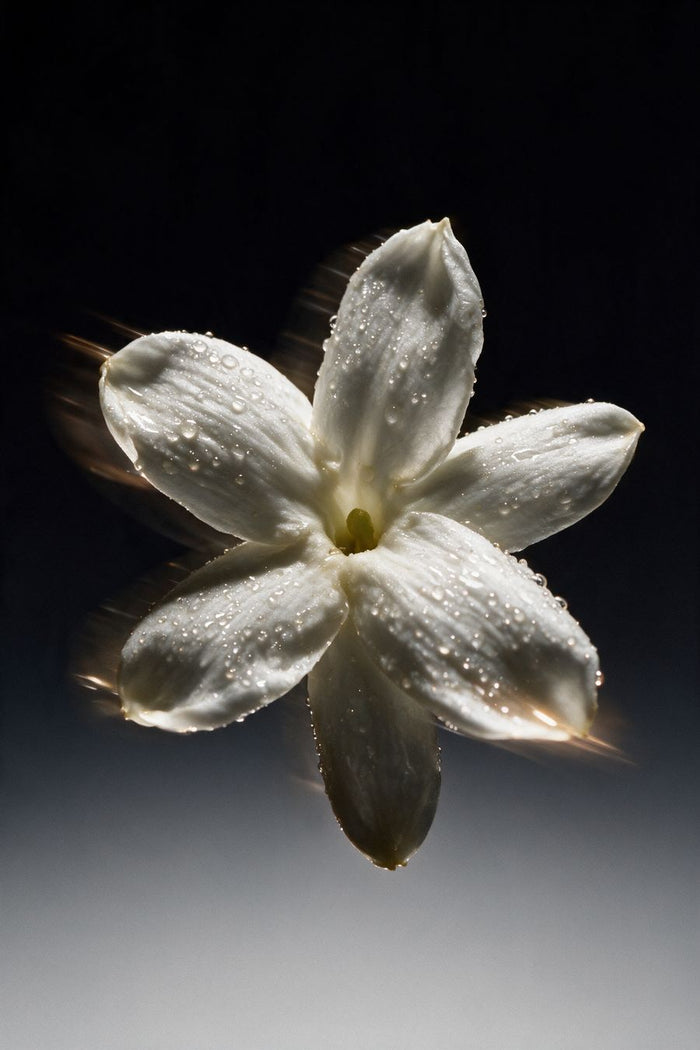
Jasmine Flower: 8,000 Blossoms Per Gram of Absolute
Jasmine is a central flower in perfumery, and one that is often misunderstood. It appears in an estimated 80% of women's fragrances and a third of men's. The name evokes white petals and wedding garlands. But the flow...

Tuberose: The Night-Blooming Flower That Divides
Tuberose is not a rose. It is not a tuber. The name misleads twice, and the flower itself misleads a third time, by smelling so intensely of sex, cream, and funeral parlour that half the people who encounter it fall i...

Jasmine in Perfumery: Why It Smells of Skin, Not Soap
What jasmine really smells like (heady, indolic, animal), the difference between sambac and grandiflorum, and how to wear it, with Nuit Élastique as the worked example.
Next
Perfumery Journal
Jasmine Flower: 8,000 Blossoms Per Gram of Absolute
15.11.25