Is Incense Bad for You? The Smoke Measured, From the Stick to the Cohort
Incense smoke carries fine particles, formaldehyde and other pollutants, more of them in a closed room. In the Singapore Chinese Health Study, where most users had burned incense daily for twenty years or more, current users had a 12% higher risk of cardiovascular death. France's tests found moderate use, about twice a month with airing, to be of no concern.
Is incense bad for you?
Incense smoke carries fine particles, formaldehyde and other pollutants, and the long studies of heavy users found higher risks of some diseases. In Singapore, where most users had burned incense daily for twenty years or more, current users had a 12% higher risk of dying of cardiovascular disease. In France, tests of 20 products found moderate use, about twice a month with the room aired, to be of no concern.
Two health charities answer the question on the first page of results, in opposite tones. Cancer Council Australia: "Burning incense is safe in normal amounts." The American Lung Association: "No indoor burning is completely safe as it adds pollution to the air and increases health risks."
The Australian page gives the key to both: "The mere presence of PAHs is not a risk, it comes down to the amount." What follows is the amount, as the studies measured it: in the smoke, in the room, and in people followed for decades.
What is in incense smoke?
Fine particles first. In 1996 researchers burned three stick incenses in a clean room of 4 cubic metres and found "an average of greater than 45 mg/g burned" of particles, against "about 10 mg/g burned for the cigarettes" tested beside them. A chamber study of 23 kinds of incense, published in 2002, measured a spread of more than tenfold between products: fine particles "ranged from 7 to 202 mg/h," or "from 5 to 56 mg/g of incense burned." By mass, they measured "approximately 0.06 to 2.5 microm in aerodynamic diameter, with peak values between 0.26 and 0.65 microm."
Then gases. A review of 2021 lists "carbon dioxide, carbon monoxide, sulfur dioxide, formaldehyde, nitrogen dioxide, polycyclic aromatic compounds, volatile organic compounds" in the smoke. Health Canada notes that "Burning incense also increases the acrolein concentration in indoor air." In a Hong Kong temple and home, formaldehyde was the largest of the compounds of its family, "approximately 55% of the total carbonyl mixing ratios."
| Study | Setting | What was measured | Figure |
|---|---|---|---|
| Mannix and others, 1996 | Room of 4 m3, three stick incenses | Particles per gram burned | Over 45 mg/g; cigarettes about 10 mg/g |
| Jetter and others, 2002 | Chamber, 23 incense types | Fine particles (PM2.5) | 7 to 202 mg an hour; 5 to 56 mg/g |
| Ji and others, 2010 | Test house, one stick for 15 minutes | Indoor fine particles | 197 µg/m3; 25,500 particles per cm3 near the stick |
| Ho and Yu, 2002 | Hong Kong temple and home | Formaldehyde | 108 to 346 ppbv in the temple; 103 ppbv on average in the home |
| Lung and others, 2003 | Household altar, room closed or aired | Coarser particles (PM10) near the altar | 723 µg/m3 closed; 178 µg/m3 aired |
The formaldehyde figures, the Hong Kong authors note, "exceed the World Health Organization (WHO) air quality guideline of 100 microg m(-3) (88 ppbv)."
Is incense worse than cigarettes?
Per gram burned, by one measure. The American Lung Association writes that "burning just one gram of incense can create about 45 milligrams of particulate matter, which is four times more than a cigarette produces." The figure is the 1996 study's, and it is a figure per gram, not per stick or per cigarette smoked. The same study found the reverse for gases: "In relation to the quantity of particulate generated, cigarette smoke was found to produce proportionally larger quantities of carbon monoxide and nitrogen oxides than did incense."
The 2021 review cites an earlier experiment that found "a twice the emission rate of particulate matter as compared to cigarettes" per gram. The health publisher Healthline sums up the official standing: "Incense isn't officially deemed a major public health risk comparable to smoking tobacco."
What one stick does to a room
In an experimental house, a single stick burned for 15 minutes raised indoor fine particles to 197 micrograms per cubic metre, and the particles were found to "disperse throughout the house, even in rooms with closed doors and in rooms as far away as the next floor."
Another study measured the air near a household altar. During burning, coarser particles reached 723 micrograms per cubic metre with the room closed and 178 with it aired, "more than nine and 1.6 times background levels." Airing lowered them by about 371 micrograms on average. Closed, the room stayed polluted: "Concentrations were elevated for at least 6 h under closed conditions." The review of 2021 draws the lesson in one line: "the emission and health risk may differ among housing conditions, particularly ventilation." How to burn incense with the window in mind is told in how to burn incense.
What the long studies found
The largest evidence comes from one cohort, the Singapore Chinese Health Study. Between 1993 and 1998 it enrolled 63,257 Singapore Chinese aged 45 to 74 and followed them through the national registries. Incense there is a daily practice: "76.9% were current incense users, and most of the current users (89.9%) had burned incense daily for ≥ 20 years."
| Outcome | Group compared | Risk, with 95% confidence interval |
|---|---|---|
| Cardiovascular death | Current users against others | 1.12 (1.04 to 1.20) |
| Death from stroke | Current users | 1.19 (1.03 to 1.37) |
| Death from coronary heart disease | Current users | 1.10 (1.00 to 1.21) |
| Cardiovascular death | Users with no heart disease at the start | 1.16 (1.07 to 1.26) |
| Cardiovascular death | Users who already had heart disease | 1.00 (0.86 to 1.17) |
| Cardiovascular death | Current smokers who used incense | 1.05 (0.91 to 1.22) |
| Chronic limb-threatening ischaemia | Current users | 1.22 (1.04 to 1.43) |
| Chronic limb-threatening ischaemia | Daily use for more than 40 years | 1.25 (1.06 to 1.46) |
| Squamous cell carcinoma of the respiratory tract | Long-term users | 1.8 (1.2 to 2.6) |
The cancer paper of 2008, on 61,320 members of the cohort followed through 2005, found incense use "associated with a significantly increased risk of UPT carcinomas other than nasopharyngeal," cancers of the upper respiratory tract, "whereas no overall effect was observed on lung cancer." The paper of 2025 on the arteries of the legs counted 1,097 cases over a mean follow-up of 18.8 years.
These are associations, measured by interview and followed by registry. Healthline makes the point plainly: the population studies "only note an association," and they do not show that incense caused the diseases. On lung cancer the review of 2021 is blunt: "So far, the association between incense burning and lung cancer remains a contentious issue."
Incense and the lungs
Smaller studies point the same way and say less. In Taiwan, temple workers and volunteers exposed to incense for years were compared with outpatients: "FEV1 was significantly more diminished in the exposed group than in the control group during the cold season." Among 431 Chinese adults with diabetes, those exposed to indoor incense had "130% higher odds of impaired lung function," an odds ratio of 2.3 whose confidence interval, 0.97 to 5.16, includes no effect at all. The link was clear only in men.
The American Lung Association quotes a physician on children: "In one study from Taiwan, daily exposure of children to burning incense resulted in reduced lung function as measured by pulmonary function testing." France's institute for industrial environments and risks names children and people with asthma among the sensitive.
Is incense bad for cats?
One study looked. At the veterinary hospital of National Taiwan University, researchers compared dogs and cats with respiratory disease against healthy animals, asked their owners about smoke, cooking and incense, and estimated the fine particles in their homes. For dogs, "Dogs with respiratory disease were more commonly exposed to incense burning than control dogs (30 versus 13%, P = .045)," but once age, weight and body condition were taken into account, those factors, not the air, were the ones linked to the disease.
For cats the result ran the other way. Incense burning was more common in the homes of sick cats, 22% against 6%, but the difference was not significant. What mattered was the air itself: "household PM2.5 level was significantly higher in cats with respiratory disease than in control cats," and cats in homes above 35 micrograms per cubic metre had about four times the odds of respiratory disease. For scale, one stick in the experimental house of 2010 raised a room to 197. The American Lung Association adds that poor ventilation "could mean exposing family members and pets to secondhand smoke."
How often is it safe to burn incense?
France is the one country whose agency tested the question. INERIS, the national institute for industrial environments and risks, selected 20 incenses representative of the French market, sticks and cones, and burned them in a room of an experimental house. Its conclusion, in its note of 8 March 2016: moderate use, typically twice a month, followed by airing the rooms after each use, "ne représente aucun caractère préoccupant": it raises no concern. In some situations and for some products, however, the average inhaled benzene and formaldehyde exceeded the usual reference values.
The institute's recommendations are three: do not breathe the smoke directly, air the home after each use, and keep use moderate, especially around children and people with asthma. It tested no resin in pieces: "Aucun encens sous forme de 'morceaux' n'a été testé." Its survey found a gap between belief and measurement. More than 58% of users said incense improves the air or has no effect on it, and 27% said they burn it to clean the air.
Is natural incense safer?
Two pages that rank for the question say so. A school of aromatic medicine: "There's a world of difference between synthetic smoke and aromatic plant smoke." A shop: "While all smoke contains pollutants, ensuring that your incense is made with all natural ingredients and safe essential oils may reduce your risk." No study read for this article compares natural with synthetic incense. What the 23-product chamber study shows is a tenfold spread between incenses, without a line between natural and synthetic.
Resin or wood warmed on charcoal, such as frankincense or bakhoor, was measured by none of the studies read here, and the French institute tested no incense in pieces. The history of the resin itself is told in frankincense and myrrh.
Frequently Asked Questions
Are incense sticks bad for you?
Their smoke carries fine particles, formaldehyde and other pollutants, between 5 and 56 mg of fine particles per gram burned across 23 products in one study. Long studies of daily users in Singapore found higher risks of cardiovascular death and of some respiratory cancers. France's tests found moderate use, about twice a month with airing, of no concern.
Is it harmful to breathe in incense?
The smoke is mostly fine particles, with gases such as formaldehyde and carbon monoxide. Taiwanese temple workers exposed for years had lower lung function in the cold season than outpatients compared with them. France's institute for industrial environments and risks advises against breathing the smoke directly and asks for airing after each use.
Is burning incense in your room bad for you?
A closed room keeps the smoke. Near a household altar, coarse particles reached 723 micrograms per cubic metre with the room closed and 178 with it aired, and stayed raised for at least six hours when closed. In an experimental house, one stick's particles reached rooms with closed doors and the next floor.
Is incense as bad as cigarettes?
Per gram burned, a 1996 test found over 45 mg of particles from incense against about 10 mg from cigarettes. The same test found that cigarette smoke made proportionally more carbon monoxide and nitrogen oxides. A gram of incense is not a cigarette smoked, and no health body read here ranks incense with tobacco.
Does incense cause cancer?
Studies report an association, not a proven cause. In 61,320 Singapore Chinese followed through 2005, long-term users had a relative risk of 1.8 for squamous cell carcinoma of the respiratory tract, with no overall effect on lung cancer. A 2021 review calls the link with lung cancer a contentious issue.
Is incense bad for cats?
One veterinary study in Taiwan found incense burning in 22% of homes of cats with respiratory disease against 6% of healthy cats, a difference that was not significant. What was significant was household fine particles: cats in homes above 35 micrograms per cubic metre had about four times the odds of respiratory disease.
How often is it safe to burn incense?
No source gives a safe frequency for every case. France's institute tested 20 sticks and cones and found moderate use, typically twice a month followed by airing, raised no concern; some products in some situations exceeded reference values for benzene and formaldehyde. The Singapore studies concerned daily use over twenty years and more.
Is natural incense safer?
Some sellers say so, but no study read for this article compares natural with synthetic incense. A chamber study of 23 products found a tenfold spread in fine particles between them, without a line between natural and synthetic. Resin burned on charcoal was not tested by the studies read here.
Sources
- R. C. Mannix and others, "Physical characterization of incense aerosols", Science of the Total Environment 193(2), 149 to 158, 1996. DOI 10.1016/s0048-9697(96)05343-0.
- J. J. Jetter and others, "Characterization of emissions from burning incense", Science of the Total Environment 295, 51 to 67, 2002. S. S. H. Ho and J. Z. Yu, "Concentrations of formaldehyde and other carbonyls in environments affected by incense burning", Journal of Environmental Monitoring 4(5), 728 to 733, 2002.
- X. Ji and others, "Characterization of particles emitted by incense burning in an experimental house", Indoor Air 20(2), 147 to 158, 2010. S. C. Lung and others, "Contribution of incense burning to indoor PM10 and particle-bound polycyclic aromatic hydrocarbons under two ventilation conditions", Indoor Air 13(2), 194 to 199, 2003.
- J. T. Friborg and others, "Incense use and respiratory tract carcinomas: a prospective cohort study", Cancer 113(7), 1676 to 1684, 2008. DOI 10.1002/cncr.23788.
- A. Pan and others, "Incense use and cardiovascular mortality among Chinese in Singapore: the Singapore Chinese Health Study", Environmental Health Perspectives 122(12), 1279 to 1284, 2014. A. F. Ying and others, "Incense Use and the Risk of Chronic Limb-Threatening Ischemia Among Middle-Aged and Older Adults in the Singapore Chinese Health Study", Environmental Health Perspectives 133(1), 17009, 2025.
- "The Adverse Impact of Incense Smoke on Human Health: From Mechanisms to Implications", Journal of Inflammation Research, 2021. Read in full text at Europe PMC.
- S. E. Guo and others, "Exposure to incense burning, biomarkers, and the physical health of temple workers in Taiwan", Environmental Science and Pollution Research 30, 2023. Y. Meng and others, "Indoor incense burning and impaired lung function in patients with diabetes", Scientific Reports 15, 840, 2025.
- C. H. Lin and others, "Association between indoor air pollution and respiratory disease in companion dogs and cats", Journal of Veterinary Internal Medicine 32(3), 1259 to 1267, 2018. DOI 10.1111/jvim.15143.
- INERIS, Note relative au rapport "Utilisation d'encens et qualité de l'air intérieur: enjeux sanitaires, substances d'intérêt, bonnes pratiques", 8 March 2016. Health Canada, "Residential indoor air quality guidelines: Acrolein".
- The pages quoted: Cancer Council Australia, "Burning incense is safe in normal amounts"; American Lung Association, "The Hidden Health Dangers of Burning Incense", 5 June 2026; Healthline, "Is Burning Incense Bad for Your Health?", updated 19 September 2024; Northwest School of Aromatic Medicine, "5 Common Myths About Incense"; Sea Witch Botanicals, "Is Incense Bad For You?". Read on 19 November 2026.
Gravitas Capitale
Extrait de parfum at 20%. 8 notes, including primofiore lemon, pimento and buddha's hand.
Read also
3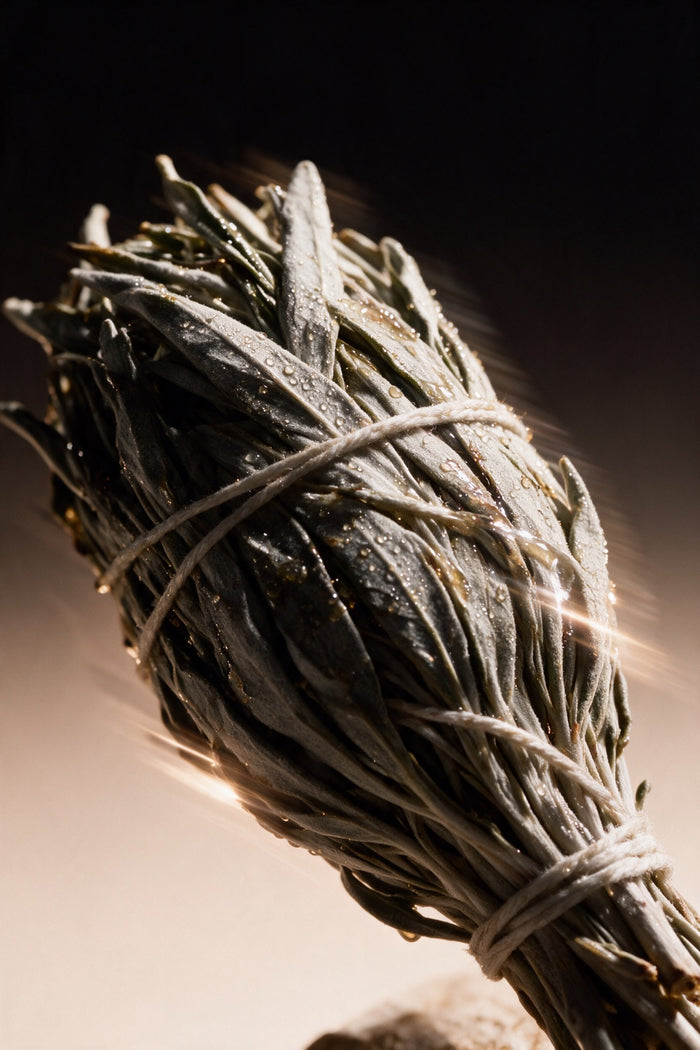
White Sage: The Smudging Plant of California, Its Smell and Its Poachers
In June 2021 park rangers handed 300 pounds of confiscated white sage to a Tongva ethnobotanist. That is the plant behind the smudge stick: a small native range, a sacred use, and a trade that has outgrown both.
The Incense Road: The Silk Road Nobody Knows
A road older than silk, older than spice, older than any commodity route that textbooks care to remember.
Benzoin: The Incense of Churches That Became a Base Note
In the highland forests of Laos, along the slopes of mountains that receive enough rainfall to sustain dense tropical canopy but enough altitude to cool the air to near-temperate mildness, there grows a tree that has ...
Next
Perfumery Journal
Frankincense: 5,000 Years of Sacred Commerce
22.01.26