Palo Santo: The Holy Wood That Is Two Different Trees
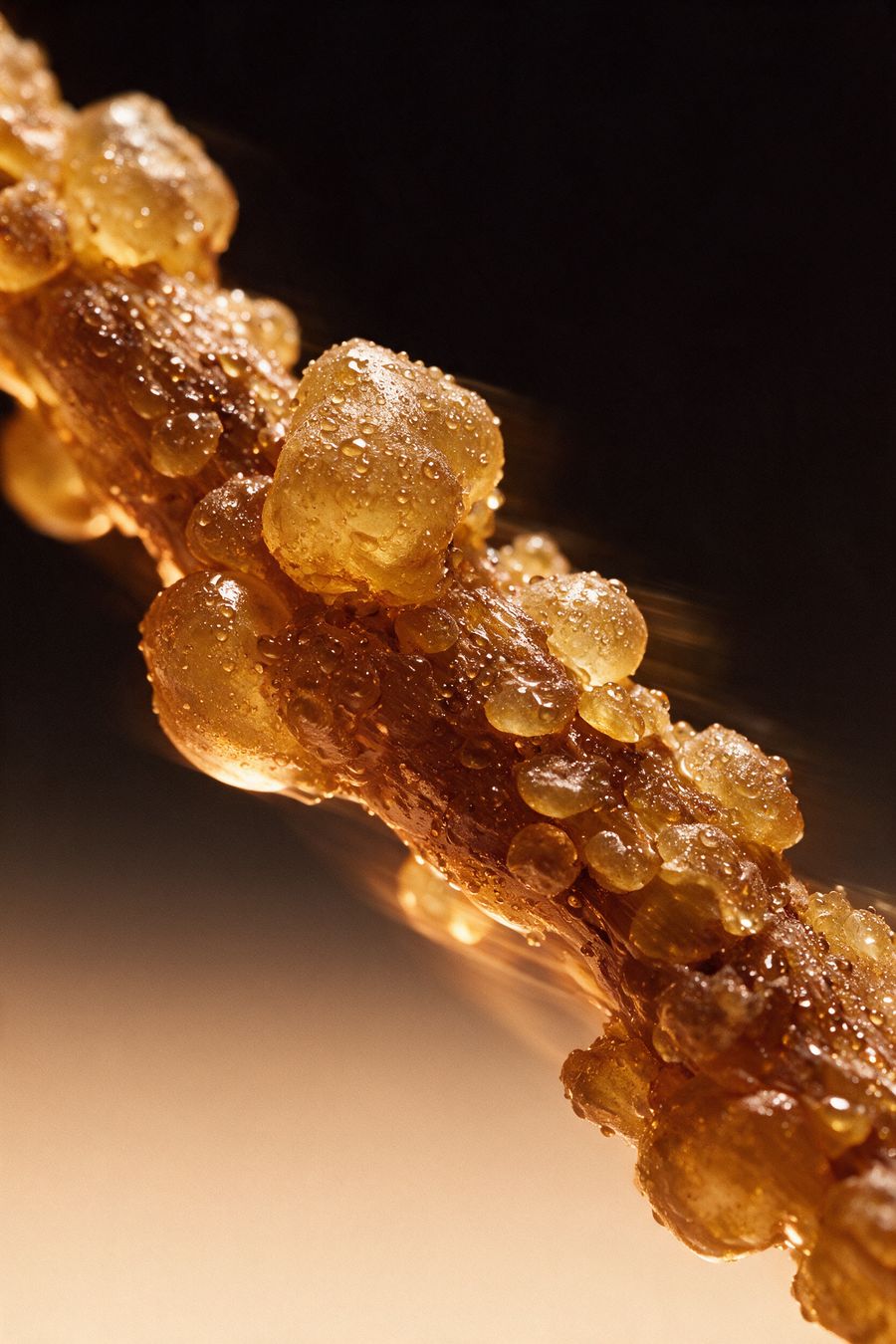
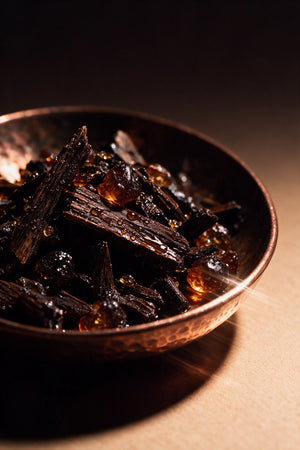
Palo santo means holy wood. The sticks sold for burning come from Bursera graveolens, a tree of the frankincense family that grows from Mexico to Peru. Its oil is mostly limonene. An unrelated tree, Bulnesia sarmientoi, carries the same name: that one is rated Endangered.
What is palo santo?
Palo santo, Spanish for holy wood, is the fragrant wood of Bursera graveolens, a tree of the family of frankincense and myrrh that grows from Mexico to Peru. It is burned in sticks as incense and distilled into an oil rich in limonene. The same name is also given to an unrelated South American tree, Bulnesia sarmientoi.
Two trees are called palo santo, and they are not related. One is Bursera graveolens, a cousin of frankincense, cut into the sticks that are sold for burning. The other is Bulnesia sarmientoi, a hardwood of another botanical family, the tree perfumers know for guaiac wood. The first is rated Least Concern on the Red List. The second is rated Endangered, and its trade is regulated by treaty.
So the question asked of every bundle of sticks, whether palo santo is endangered, has two answers. Which one applies depends on a Latin name that the label rarely prints.
Palo santo meaning: holy wood, and whose
Palo santo is Spanish for holy wood, and Spanish speakers have been generous with it. In 1921 the American wood scientist Samuel Record gave the reason for the name, and he was writing about the other tree. The wood of Bulnesia, he noted, holds an essential oil "which is fragrantly scented, somewhat suggesting sandalwood. This odor is quite pronounced upon heating and the wood is in local demand for incense in churches; hence the name 'palo santo' (holy wood)."
The same book finds the name on other trees still. In Cuba, Guaiacum officinale is "guayacan negro, guayacan prieto, palo santo." In Chile the Spaniards gave it to a shrub they credited with the virtues of guaiac. "In Patagonia the name 'palo santo' is given to Flotowia diacanthoides." Bursera does not appear in the book at all.
The tree of the sticks received its present name in 1872, from Triana and Planchon, in the Annales des Sciences Naturelles. Graveolens means strong-smelling.
| Bursera graveolens | Bulnesia sarmientoi | |
|---|---|---|
| Family | Burseraceae, with frankincense and myrrh | Zygophyllaceae, with lignum vitae |
| Named | 1872, Triana and Planchon | Renamed Gonopterodendron sarmientoi in 2018. The trade keeps Bulnesia |
| Where | Mexico, Central America, Colombia, Venezuela, Ecuador, the Galápagos, Peru | The palo santo of Argentina, in Record's book of 1921 |
| What is sold | Sticks for burning. An oil rich in limonene | Timber. An oil the trade has called "palo balsamo" since 1892 |
| Oil in the wood | 1.26% in one Ecuadorian study. About 14 millilitres a kilogram in a Peruvian one | 5 or 6% of the heartwood |
| Red List | Least Concern | Endangered |
| Trade convention (CITES) | Not listed | Appendix II |
Is palo santo endangered?
The tree of the sticks is not, by the Red List of the International Union for Conservation of Nature, which rates Bursera graveolens Least Concern. The other palo santo is. Bulnesia sarmientoi is rated Endangered and is listed in Appendix II of the convention on trade in endangered species, in the list valid from 7 February 2025.
The listing has a clause written for perfumers. It covers "Logs, sawn wood, veneer sheets, plywood, powder and extracts," and then steps aside: "Finished products containing such extracts as ingredients, including fragrances, are not considered to be covered by this annotation."
Least Concern does not mean that every stick is clean. The magazine Discover reported in 2024 that "authorities in Peru detained nearly 12,000 kilos of palo santo wood that was cut down illegally; by law it must only come from trees that have died naturally." Sellers add that the fallen wood must lie for years before it is fragrant. No study read for this article measures that.
What does palo santo smell like?
Our glossary gives the oil a "woody, fruity/balsamic, sweet, terpenic aroma" with "citrus, mint and soft spice nuances," and finds it "somewhat reminiscent of frankincense." The family resemblance is real: both trees are Burseraceae.
The chemistry explains the citrus. Every analysis read for this article finds the same leading molecule, limonene, the molecule of orange peel, and no two agree on how much.
| Sample | Limonene | Next in line |
|---|---|---|
| Study of 2012 | 26.5% | Not given in the summary |
| Colombia, Bolívar, 2019 | 42.2% | Pulegone 20.9%, carvone 7.5%, caryophyllene 4.1% |
| Ecuador, Manabí, wood chips, 2022 | 68.52% | Mentofuran 20.37% |
The mint comes from the second rank. The trade describes carvone as "minty, licorice," and pulegone and mentofuran are molecules of the mints. What a burning stick smells of is another matter: the odour databases describe oils and molecules, and none describes the smoke.
What is palo santo used for?
For burning, first. The sticks are lit like incense and carried around a room. For perfume, second: the European list of cosmetic ingredients registers the wood oil of Bursera graveolens with the functions fragrance, perfuming and flavouring, and also lists an oil of the fruit and a water of the wood.
The medicinal claims are the weakest part of the story, by the admission of the pages that carry them. The health site Healthline, after listing the traditional uses: "There isn't a lot of scientific proof behind these benefits." Discover: the evidence "remains somewhat limited."
How to burn palo santo
The instructions are short, and Healthline gives them in four sentences: "Hold the stick downward at a 45-degree angle. Let the stick burn for 30 seconds. Blow out the flame. Place the stick in a heatproof dish to let it burn." The wood does not stay alight like a stick of incense. It smoulders, goes out, and is lit again.
Discover adds what the sellers leave out: the room should be ventilated, and smoke of any kind can worsen asthma and irritate cats. The neighbouring rituals have their own articles, from bakhoor to frankincense and myrrh.
How palo santo oil is made
By steam, from dry wood, and the finer the wood the more it gives. A Peruvian study of 2022 distilled wood at 13.89% moisture in three forms. Shavings gave 13.76 millilitres of oil a kilogram and sawdust 14.53, because more surface is exposed to the steam. An Ecuadorian study of the same year measured an average yield of 1.26% from wood chips and identified 36 components, which made up 98.54% of the oil.
The other palo santo is richer. Record's Bulnesia heartwood "yields 5 or 6 per cent" of its oil by distillation, four times as much.
Frequently Asked Questions
What is palo santo good for?
It is burned as incense and its oil is used in perfumery: the European list of cosmetic ingredients registers the wood oil as a fragrance material. The traditional claims for pain and stress are less solid. The health site Healthline writes that there is not a lot of scientific proof behind those benefits.
Why should we stop using palo santo?
The worry is over-harvesting, and it mixes two trees. Bursera graveolens, the tree of the sticks, is rated Least Concern on the Red List. Bulnesia sarmientoi, an unrelated tree with the same common name, is rated Endangered and listed in Appendix II of the trade convention. Illegally cut Bursera wood has also been seized in Peru.
What does palo santo smell like?
Woody, sweet and balsamic, with citrus and mint edges, and close to frankincense, its botanical relative. The oil is led by limonene, the molecule of orange peel, at 26.5 to 68.5% depending on the sample, with minty molecules such as carvone, pulegone or mentofuran behind it.
Is palo santo the same as guaiac wood?
No, though one name covers both. Guaiac wood comes from Bulnesia sarmientoi, a hardwood of the family Zygophyllaceae that was already called palo santo in Argentina in a book of 1921. The sticks sold for burning come from Bursera graveolens, of the family Burseraceae. The two trees are not related.
Is palo santo related to frankincense?
Yes. Bursera graveolens belongs to the Burseraceae, the family of Boswellia, which gives frankincense, and of Commiphora, which gives myrrh. Our glossary describes the oil of palo santo as somewhat reminiscent of frankincense. The name graveolens means strong-smelling.
How do you burn palo santo?
Healthline's instructions: hold the stick downward at a 45-degree angle, let it burn for 30 seconds, blow out the flame, and place the stick in a heatproof dish. The wood smoulders and goes out by itself. The magazine Discover adds that the room should be ventilated.
What does palo santo mean?
Holy wood, in Spanish. A wood scientist explained the name in 1921: the scented wood was in local demand for incense in churches. He was writing about Bulnesia, the palo santo of Argentina, and his book finds the same name on other trees in Cuba, Chile and Patagonia.
Is palo santo banned?
Bursera graveolens does not appear in the appendices of the convention on trade in endangered species valid from 7 February 2025. Bulnesia sarmientoi does, in Appendix II, for logs, sawn wood, veneer, plywood, powder and extracts. The listing says that finished products containing such extracts, including fragrances, are not covered.
Sources
- International Plant Names Index and World Checklist of Vascular Plants, Royal Botanic Gardens, Kew: Bursera graveolens (Kunth) Triana & Planch., Annales des Sciences Naturelles, Botanique, series 5, 14: 303, 1872, and its range. GBIF for Gonopterodendron sarmientoi, 2018.
- Samuel J. Record, Lignum-vitae: a study of the woods of the Zygophyllaceae, 1921. Read in full text at the Internet Archive.
- IUCN Red List categories as carried by GBIF: Bursera graveolens, Least Concern. Bulnesia sarmientoi, Endangered. Read on 19 November 2026.
- Convention on International Trade in Endangered Species (CITES), Appendices I, II and III valid from 7 February 2025, Zygophyllaceae and annotation 11.
- L. Monzote and others, Natural Product Communications 7(11), 2012. DOI 10.1177/1934578x1200701130.
- B. Jaramillo-Colorado and others, Acta Scientiarum. Biological Sciences 41, 2019. DOI 10.4025/actascibiolsci.v41i1.46822.
- Eduarte Saltos and others, Boletín Latinoamericano y del Caribe de Plantas Medicinales y Aromáticas 21(4), 2022. DOI 10.37360/blacpma.22.21.4.28.
- Puescas and others, "Yield of essential oil from Bursera graveolens wood", Manglar 19, 2022. DOI 10.17268/manglar.2022.016.
- European Commission, CosIng database: Bursera graveolens wood oil, fruit oil and wood water. Odour words of carvone and limonene: The Good Scents Company and Leffingwell.
- Healthline, "What Is Palo Santo, and How Is It Used Medicinally?", 11 August 2020. Discover Magazine, S. Mowbray, 11 October 2024.
- PREMIEREPEAU glossary, entry palo santo, for the smell of the oil.

Simili Mirage
Extrait de parfum at 20%. 8 notes, including olibanum, thyme and white thyme.
Read also
3
Incense Frankincense: 5,000 Years of Sacred Commerce
Before silk, before spices, before tea, before opium, there was resin.
Bakhoor Bakhoor: The Ancient Scenting Ritual The West Forgot
The sources call it smouldering, and the oldest English eyewitness saw its smoke wafted to the face and beard. What bakhoor is made of, how it was used in Cairo and in Qatar, what the studies of its smoke report, and ...
Sweetgrass Sweetgrass: Two Plants Share the Name, Burned and Woven
Sweetgrass is a northern grass that is braided and burned, and the word also names the basket grass of South Carolina. They are two plants, and only one has the coumarin scent.
Next
Perfumery Journal
Incense Frankincense: 5,000 Years of Sacred Commerce
22.01.26