Sweetgrass: Two Plants Share the Name, Burned and Woven
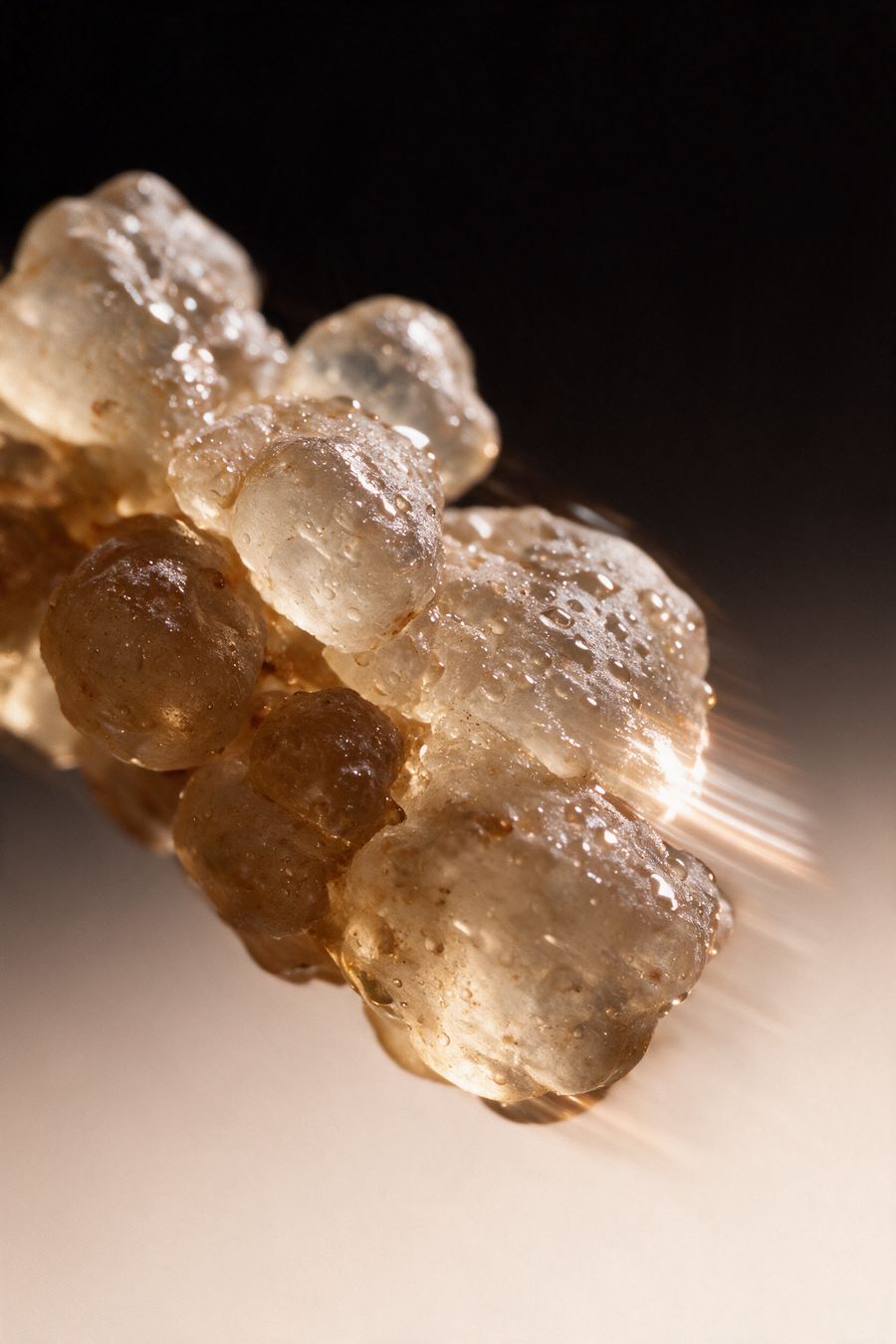
Sweetgrass is a fragrant perennial grass of the cool northern world, accepted by Kew as Anthoxanthum nitens and often still called Hierochloe odorata. It is braided, dried and burned in ceremony by many Indigenous peoples, and its sweet vanilla scent comes from coumarin. In the American South the word also names a different grass, woven into Gullah baskets.
What is sweetgrass?
Sweetgrass is a fragrant perennial grass of the cool northern world, braided, dried and burned in ceremony by many Indigenous peoples. Kew's accepted name is Anthoxanthum nitens, and many pages still use the older Hierochloe odorata. In the American South the same word names a different grass, woven into baskets.
The pages that rank for sweetgrass in the United States agree on three things. It is braided and burned. Its Latin name is Hierochloe odorata. And it contains coumarin, which two of them call an anticoagulant. South Dakota State University Extension writes: "Coumarin is also an anti-coagulant and is the natural derivative of modern blood thinner medication." A homesteading blog writes: "Sweetgrass contains coumarin, an anticoagulant". Neither names a study. The first holds. The second is the older name, which Kew now files under another genus. The third rests on a story that began in a different plant, a spoiled clover. One lab paper on sweetgrass tested mosquitoes, not blood.
Two plants called sweetgrass
The word names two grasses that are not the same plant. One is the northern grass that is burned. The other is the grass of the Gullah baskets of South Carolina. The US Department of Agriculture's conservation service gives the second as "gulfhairawn muhly, Muhlenbergia filipes", native to the southern Atlantic and Gulf coasts. Kew treats Muhlenbergia filipes as a synonym of Muhlenbergia sericea. Both grasses belong to the grass family, Poaceae, and to different genera.
| The braided, burned grass | The Lowcountry basket grass | |
|---|---|---|
| Kew's accepted name | Anthoxanthum nitens | Muhlenbergia sericea, with M. filipes as a synonym |
| Older or common names | Hierochloe odorata, holy grass, vanilla grass, bison grass | Gulfhairawn muhly |
| Range | Subarctic and temperate Northern Hemisphere | Southern Atlantic and Gulf coasts |
| Scent, as the source says it | Sweet, with a vanilla note, credited to coumarin | A fresh corn silk fragrance |
| Use | Braiding, burning, perfume, keeping clothes | Coiled baskets |
Kew's native list for the burned grass names no southern coastal state. South Carolina, Georgia and Florida are not on it. The two plants do not meet on the map the sources give.
Hierochloe odorata or Anthoxanthum nitens?
Both names are in use for the northern grass. Kew's Plants of the World Online accepts Anthoxanthum nitens, first published in 1985, and lists 54 synonyms for it. Hierochloe odorata, published in 1812, is one of them. Kew's page also records an alternative taxonomy, followed by a Kew grass database and by the USDA plant database, that cites the plant as Hierochloe odorata. So a nursery that writes the old name is using a name that a major American database still uses.
| Year | Name in Kew's list | Where published |
|---|---|---|
| 1753 | Holcus odoratus L. | Species Plantarum, page 1048 |
| 1787 | Poa nitens Weber, the base of the accepted name | Supplementum Florae Holsaticae, page 6 |
| 1789 | Savastana hirta Schrank | Baierische Flora, volume 1 |
| 1812 | Hierochloe odorata (L.) P.Beauv. | Essai d'une nouvelle agrostographie |
| 1915 | Torresia odorata (L.) Hitchc. | American Journal of Botany 2 |
| 1985 | Anthoxanthum nitens (Weber) Y.Schouten & Veldkamp | Blumea 30 |
The oldest name in the list is the one Linnaeus printed in 1753. The (L.) after Hierochloe odorata credits him, which is an inference from the author citation. NativeTech adds that in the Great Lakes region the grass was historically called Torresia odorata, the name Frances Densmore used.
GBIF lists holy grass, bison grass, manna grass, vanilla grass and Seneca grass among its English names.
Where does sweetgrass grow in the US?
Kew puts it across the cool north of the world: "The native range of this species is Subarctic & Temp. Northern Hemisphere." In North America its native list runs from Alaska, Alberta and Labrador through the Great Plains and the Rockies to New England, and down to Arizona, New Mexico and New Jersey. It also names Great Britain, Ireland, France, Germany, Norway, Finland, Iceland, Mongolia, Korea and Nepal. NativeTech calls it "a circumboreal plant which is common above 40 degrees north latitude in Asia, Europe, and North America".
South Dakota State University Extension places it on the plains: "It grows across the Northern Great Plains in wetlands and by rivers and streams."
What does sweetgrass smell like?
Sweet and vanilla-like, and the sources put it down to coumarin. South Dakota State University Extension calls the smell "akin to vanilla" and names coumarin as the key to its "characteristic fragrance". The Good Scents Company, a perfumery database, records the odour of pure coumarin as sweet, hay, new mown hay and tonka. That list is for the molecule, not for the grass.
The scent changes with the state of the leaf. ICT Inc, in a post of 2012 by Bob Joseph, says the scent "is intensified when it rains or when burned". A homesteading blog says: "When moistened or burned, the intriguing perfume of the plant returns with full intensity." NativeTech notes that grass harvested after exposure to frost has little scent. Neither source gives the chemistry of the change.
Coumarin is C9H6O2, CAS 91-64-5, in the PubChem record. A 2015 paper on scented grasses in Norway states the general rule: "Some grass species are richer in coumarin and thus more sweetly scented than others." The basket grass of South Carolina is named for a "fresh, corn silk fragrance", says the USDA. The same molecule gives hay its smell.
What did Native Americans use sweetgrass for?
Many things, and the sources agree only on the broad lines. Uses differ from nation to nation, and the institutions below speak for themselves, not for every people. The University of Manitoba's teaching page, credited to Leah Fontaine in 2022, says: "There are diverse teachings about sweetgrass". It places the plant among four sacred medicines, with tobacco, sage and cedar.
NativeTech, a research site on Native American technology and art, sums up: "It is usually braided, dried, and burned." It adds: "Sweetgrass braids smolder and doesn't produce an open flame when burned." It also reports that sweetgrass is often burned at the beginning of a prayer or ceremony. Quoting Frances Densmore on the Chippewa, it records that "young people, chiefly young men, carried a braid of sweet grass and cut off 2 or 3 inches of it and burned it for perfume." This is Densmore's text as NativeTech prints it.
A 2016 paper in the Journal of Agricultural and Food Chemistry records, as the authors' summary of documented use, that "Both the Flatheads of Montana and Blackfoot of Alberta" used "braided plant material in a sachet in clothing or burn them from one end as incense". NativeTech also reports Chippewa coiled basketry and braided sweetgrass woven into the ash baskets of the Waban-aki. South Dakota State University Extension says it is "dried and burned as incense" for ceremonies.
What does it mean when someone gives you sweetgrass?
There is no single meaning, and the sources say so. They disagree on what the three strands stand for, each as a teaching of a particular people or school, none as a rule for all.
| Source | What the three parts of the braid stand for |
|---|---|
| University of Manitoba, teaching bundle credited to Leah Fontaine, 2022 | Three postures: gentleness, love and kindness |
| The same page | Leaves arranged in three groups of seven, honouring the seven grandparents: love, respect, truth, wisdom, honesty, courage and humility |
| ICT Inc, Anishinaabek teaching | Mind, body and soul |
| ICT Inc, some First Nations | Love, kindness and honesty |
ICT Inc adds that to the Anishinaabek the grass "is believed to be the sacred hair of O'gushnan, Mother Earth". The University of Manitoba page says: "Braiding is a social act and signifies a cultural connection". A gift of sweetgrass therefore carries the teaching of the people who give it, not one fixed meaning.
How is sweetgrass harvested, braided and burned?
The sources agree on manners before method. ICT Inc says the best time to harvest is late June to early July and that one should "never pick by pulling the stems as this will damage the root system". It adds that the Anishinaabek explain to the spirit why the grass is picked, often with an offering of tobacco. NativeTech gives the same season.
The University of Rhode Island's Youngken medicinal garden gives the reason for the braid in practical terms: "The plant is harvested and stored braided to hold the grass together and retain its scent." Its audio guide adds that a dark, dry place keeps the scent longer than light does. The braid, dried, "can then be burned as a smudging stick to draw good energy".
A braid smolders instead of flaming, and the 2016 paper describes it burned from one end. It has a second use. A homesteading blog and South Dakota State University Extension both say dried braids hang in closets or drawers to keep clothes fresh, and the extension adds "ward off moths". No test of that claim was found. For other smoke materials, see smoke and tobacco.
Scented grass in Norway, a Sámi tradition
The braided grass grows in Europe too, and so does the custom. In 2015 T. Alm published "Scented grasses in Norway, identity and uses" in the Journal of Ethnobiology and Ethnomedicine. He finds that the main species behind the Norwegian scented grass tradition is sweetgrass: "By far the most important grass species hiding behind the 'scented grass' tradition in Norway is Hierochloë odorata."
The local names mean "scent grass" in three languages: luktegress in Norwegian, háissasuoidni in North Sámi and hajuheinä in Finnish. The grass was collected and "used as perfume, for storing with clothes". Alm writes: "Only the foliage of Hierochloë provides suitable material for making traditional braids." Because the tradition is concentrated in the far north, he suggests "it has originally mainly been a Sámi tradition, adopted by their neighbours."
Does sweetgrass repel mosquitoes?
In a laboratory test on extracts, yes. In 2016 Charles Cantrell and colleagues tested sweetgrass extracts in an in vitro feeding test on the mosquito Aedes aegypti. They report that "the hydrodistillate had the highest level of mosquito biting deterrence". The active fractions held phytol, coumarin and 2-methoxy-4-vinylphenol, and "Phytol and coumarin were both determined to be responsible for the Ae. aegypti biting deterrency." They conclude that their result "validates its traditional use as a biting-insect deterrent."
The test used extracts and mosquitoes, not people and not a burning braid. South Dakota State University Extension calls sweetgrass a strong natural mosquito repellant for a yard. That page cites no test of burning it.
Is sweetgrass a blood thinner?
This is the claim at the top of this article, and the record is narrower than the pages that repeat it. This chapter reports what the sources say. It gives no advice.
The two pages quoted above state that coumarin is an anticoagulant. The anticoagulant story starts elsewhere. The Journal of Biological Chemistry printed the work of Karl Paul Link's group in 1941 under the title "Studies on the hemorrhagic sweet clover disease". The title speaks of sweet clover, a different plant from sweetgrass.
The only laboratory paper on sweetgrass is the mosquito test of 2016, and it reports no blood or clotting finding. No study of sweetgrass on blood in people is cited here.
Is coumarin banned?
As a molecule, coumarin has listings and one food rule. These show no ban on coumarin in perfume, and they state no limits. A listing is not a safety verdict.
| Body | What the record says |
|---|---|
| European Commission, CosIng | COUMARIN, CAS 91-64-5, function perfuming, a restriction under Annex III, reference III/77, status active |
| IFRA Transparency List | Listed, one entry among 3,691 rows in the list, which records materials used in fragrance |
| ECHA | Coumarin, EC number 202-086-7, REACH registered |
| US eCFR, Title 21, section 189.130 | Food with added coumarin or tonka beans is deemed adulterated, on an order of 5 March 1954 |
The American rule is written for food. Its text reads: "Food containing any added coumarin as such or as a constituent of tonka beans or tonka extract is deemed to be adulterated under the act". It is about added coumarin, not about sweetgrass and not about perfume. For the history of the molecule and its limits in perfumery, see coumarin, and for the bean, tonka bean.
The sweetgrass baskets of South Carolina
The grass of the Gullah baskets has a different history. The USDA's conservation service says the Gullah community, descendants of enslaved Africans in the coastal area of South Carolina, use its leaves as the base of coiled basketry, and that the craft "came from the slave's African homelands". The page lists the other materials: longleaf pine needles, black rush stems and strips of saw palmetto.
The page is plain about the purpose. "The original purpose of these baskets was entirely functional, mainly to carry out rice production activities." Today the baskets are an art form, and their sale is "a major source of income for the Gullah basketmakers". The same page says the plant's South Carolina stands have been "seriously impacted by urbanization" and that those left are hard to reach. The US Army Corps of Engineers, Charleston District, plants seed collected in the 1990s so that basketmakers can harvest it.
For other materials burned for their smell, see frankincense, bakhoor and dukhan.
Frequently Asked Questions
What did Native Americans use sweetgrass for?
Sources describe braiding, burning in prayer, smudging and ceremony, and weaving into baskets. A 2016 paper records the Flatheads of Montana and the Blackfoot of Alberta carrying braids in clothing or burning them as incense. Customs differ by nation, so one answer for all peoples would be wrong.
Where does sweetgrass grow in the US?
Kew lists the burned grass, Anthoxanthum nitens, as native from Alaska and the northern states through the Great Plains and the Rockies to New England, and down to Arizona, New Mexico and New Jersey. It is also native across Europe and Asia. The basket grass of South Carolina is a different plant of the southern coasts.
What does it mean when someone gives you sweetgrass?
Teachings differ. The University of Manitoba's teaching page says the braid stands for three postures: gentleness, love and kindness. ICT Inc reports mind, body and soul for the Anishinaabek, and love, kindness and honesty for some First Nations. These are teachings of particular peoples, not one rule for every gift of sweetgrass.
Does sweetgrass smell like vanilla?
Sources say so. South Dakota State University Extension calls the smell akin to vanilla, and names coumarin as the key to its characteristic fragrance. The Good Scents Company lists pure coumarin as sweet, hay, new mown hay and tonka. ICT Inc says the scent grows stronger in rain or when the grass is burned.
Is sweetgrass the same as the grass in Charleston baskets?
No. The USDA names the grass of the Gullah baskets as Muhlenbergia filipes, native to the southern Atlantic and Gulf coasts, with a corn silk fragrance. Kew's burned grass is Anthoxanthum nitens, and its native list names no southern coastal state. In American usage the word sweetgrass covers both.
Does sweetgrass repel mosquitoes?
A 2016 laboratory paper tested sweetgrass extracts in a mosquito feeding test and found the hydrodistillate gave the most biting deterrence. It named phytol and coumarin as responsible. The test used extracts on Aedes aegypti, not people or a burning braid, and the abstract gives no percentages.
Is sweetgrass a blood thinner?
Two ranking pages say coumarin is an anticoagulant. The anticoagulant story belongs to dicoumarol, found in spoiled sweet clover and studied by Link's group in 1941. The one laboratory paper on sweetgrass tested mosquitoes. No study of sweetgrass on blood in people is cited.
Is coumarin banned?
The records show listings and one food rule, not a perfume ban. CosIng lists coumarin as a perfuming ingredient with an Annex III restriction, the IFRA list includes it, and it is REACH registered. US food rules treat added coumarin or tonka beans as adulterating.
Sources
- Kew, Plants of the World Online, Anthoxanthum nitens (Weber) Y.Schouten & Veldkamp, accepted name, native range and 54 synonyms. Read at powo.science.kew.org on 19 November 2026. GBIF species 2703346, common names. Kew WCVP record for Muhlenbergia filipes, through IPNI.
- USDA Natural Resources Conservation Service, "Sweetgrass - a historically important native grass for coastal conservation", 24 August 2022.
- C. L. Cantrell, A. M. Jones and A. Ali, "Isolation and Identification of Mosquito (Aedes aegypti) Biting-Deterrent Compounds from the Native American Ethnobotanical Remedy Plant Hierochloë odorata (Sweetgrass)", Journal of Agricultural and Food Chemistry, 2016. DOI 10.1021/acs.jafc.6b01668. Abstract read at Europe PMC.
- T. Alm, "Scented grasses in Norway--identity and uses", Journal of Ethnobiology and Ethnomedicine, 2015. DOI 10.1186/s13002-015-0070-y. Abstract read at Europe PMC.
- University of Manitoba, Centre for the Advancement of Teaching and Learning, "Sweetgrass Teaching Bundle", credited to Leah Fontaine, 2022. ICT Inc, "Indigenous Sacred Plants: Sweetgrass", Bob Joseph, 5 June 2012. NativeTech, "Native American Uses for Sweetgrass", citing F. Densmore (1974). University of Rhode Island, Youngken Garden, sweetgrass page.
- South Dakota State University Extension, "Sweetgrass and White Sagebrush: Native Plants with Medicinal Uses". Insteading, "The Many Uses of Sweetgrass".
- PubChem record for coumarin (CID 323) and the Good Scents Company descriptors through the Pyrfume data. European Commission CosIng, ingredient 33057. IFRA Transparency List. ECHA substance record 100.001.897. US eCFR, Title 21, section 189.130.
- C. F. Huebner and K. P. Link, "Studies on the hemorrhagic sweet clover disease", Journal of Biological Chemistry 138: 529-534, 1941, Crossref record. Google's first page for "sweetgrass" in the United States, read on 19 November 2026.

Albâtre Sépia
Extrait de parfum at 20%. 8 notes, including incense and white truffle.
Read also
3
Coumarin: The Banned Molecule That Invented Modern Perfumery
Coumarin is a fragrant plant molecule, C9H6O2, that smells of hay. It was first isolated from the tonka seed in the 1820s, and William Henry Perkin made the same molecule in a laboratory in 1868. Perfume rules restric...
Bakhoor: The Ancient Scenting Ritual The West Forgot
The sources call it smouldering, and the oldest English eyewitness saw its smoke wafted to the face and beard. What bakhoor is made of, how it was used in Cairo and in Qatar, what the studies of its smoke report, and ...
White Sage: The Smudging Plant of California, Its Smell and Its Poachers
In June 2021 park rangers handed 300 pounds of confiscated white sage to a Tongva ethnobotanist. That is the plant behind the smudge stick: a small native range, a sacred use, and a trade that has outgrown both.
Next
Perfumery Journal
Coumarin: The Banned Molecule That Invented Modern Perfumery
31.12.25