Spikenard: The Nard of the Gospels, Its Alabaster Box and Its Price
Spikenard is the oil or ointment of the root of Nardostachys jatamansi, a Himalayan plant rated Critically Endangered. In Mark and John a woman pours it on Jesus at Bethany, from an alabaster box, and those present value it at three hundred pence, about three hundred days of a labourer's pay. Pliny priced the spike at 100 denarii a pound.
What is spikenard?
Spikenard is the oil, or the ointment, made from the root of Nardostachys jatamansi, a Himalayan plant of the honeysuckle family. It is the "ointment of spikenard very precious" of the Gospels, poured on Jesus at Bethany from an alabaster box. The plant is rated Critically Endangered today, and its trade is controlled under CITES.
The scene is in Mark. "And being in Bethany in the house of Simon the leper, as he sat at meat, there came a woman having an alabaster box of ointment of spikenard very precious; and she brake the box, and poured it on his head." Some of those present did the sum at once. "Why was this waste of the ointment made? For it might have been sold for more than three hundred pence, and have been given to the poor."
John tells it again, with a name and a different gesture. "Then took Mary a pound of ointment of spikenard, very costly, and anointed the feet of Jesus, and wiped his feet with her hair: and the house was filled with the odour of the ointment." Mark gives the woman no name and pours the oil on the head; John names Mary and anoints the feet. Both keep the price, and the smell is in John alone.
The price of the nard: three hundred pence
The pence of the King James Bible are denarii. Easton's Bible Dictionary of 1897 defines the penny as the Greek denarion and adds: "It was the daily pay of a Roman soldier in the time of Christ." Matthew gives the same wage to a field hand, in the parable of the vineyard: "And when he had agreed with the labourers for a penny a day, he sent them into his vineyard." At that wage, the ointment of Bethany was worth three hundred days of work, more by Mark's count. The reckoning is ours, from the verses.
Pliny the Elder, in his Natural History, gives the trade price. Nard "holds the principal place among our unguents," and "the price of spikenard is one hundred denarii per pound." John's pound of ointment was valued at three times that, and Pliny lists cheaper nards beside it.
| Nard, by Pliny, Natural History 12.26 | Price per pound |
|---|---|
| Spikenard, the Indian nard | 100 denarii |
| Leaf nard, the smallest leaves (microsphaerum) | 75 denarii |
| Leaf nard, middle leaves (mesosphaerum) | 60 denarii |
| Leaf nard, the larger leaves (hadrosphaerum) | 40 denarii |
| Gallic nard | 3 denarii |
| The ointment of Bethany, one pound (John 12) | 300 pence, that is denarii |
Twelve kinds of nard, and the fakes
Pliny's chapter on nard counts twelve varieties and trusts few of them. "All these kinds of nard, however, are to be reckoned as herbs, with the exception of Indian nard." He ranks the Syrian next after the Indian, then the Gallic, then the Cretan. The Gallic, at three denarii a pound, "is not very different from the Indian nard."
Pliny also describes the fraud. "Nard is adulterated with a sort of plant called pseudo-nard." It is also "mixed with the root of the genuine nard, which adds very considerably to its weight." His test uses the nose and the tongue: "Its genuineness is tested by its lightness, the redness of its colour, its sweet smell, and the taste more particularly, which parches the mouth, and leaves a pleasant flavour behind it." The Greek of the Gospels calls the ointment nardos pistike, and Easton gives what he calls the most probable reading: the word "designates the nard as genuine or faithfully prepared."
Alabaster box or alabaster jar: the flask she broke
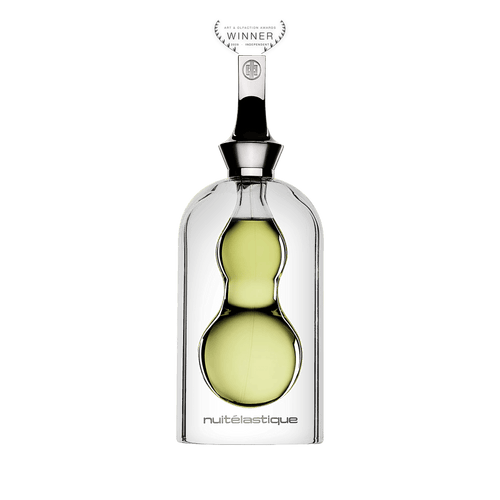
The King James Bible says box. The World English Bible, a modern translation, says jar: "a woman came having an alabaster jar of ointment of pure nard, very costly. She broke the jar, and poured it over his head." Both render the Greek alabastron, a flask for ointment with a long narrow neck. Pliny gives the reason it was the right vessel: "Unguents keep best in boxes of alabaster."
Easton explains the word by a town. The boxes "were made from a stone found near Alabastron in Egypt," the name then passed to the stone, "and finally to all perfume vessels, of whatever material they were formed." He also explains what the woman broke: "she broke off, as was usually done, the long and narrow neck so as to reach the contents." Both explanations are Easton's, in 1897. The museums show the shape in every material.
| Alabastron in the Metropolitan Museum of Art | Date | Material | Height |
|---|---|---|---|
| Egyptian, Third Intermediate Period or later | About 1080 to 664 BCE | Faience | 17.5 cm |
| Greek, Attic | Early 4th century BCE | Terracotta | 10.3 cm |
| Place not given | About the middle of the 1st millennium BCE | Glass | 13.6 cm |
| Parthian | About the 2nd century BCE to the 3rd century CE | Alabaster | 39.4 cm |
The rest of the vessel's story, from flask to spray, is told in the perfume bottle, from Roman amphora to the spray.
What spikenard smells like
Pliny describes the raw root without flattery: "it has a musty smell, too, very much like that of the cyperus, with a sharp, acrid taste." The trade describes the oil today. Our glossary entry for spikenard oil gives its odour as "sweet, woody, spicy and animal, with valerian, ginger and cardamom," and its course over time in three steps.
| Spikenard oil, scent over time | What the glossary records |
|---|---|
| Immediately | Spicy, with ginger and cardamom |
| After a few hours | Sweet and woody |
| After a few days | Animal and valerian |
Another trade source, Scento, describes an "earthy, woody and slightly animalic root note, damp and dark, with a hint of valerian and moss." The chemistry is on record too. A study of rhizomes from three districts of Nepal, published in 2026, found valeranone at 37.42 percent and patchouli alcohol at 6.09 percent in the oil of Taplejung. Patchouli alcohol is described in the Good Scents records as "camphoreous, powdery, patchouli, woody, earthy."
The same study shows that one place does not speak for all. The oils of Taplejung and Gorkha were alike; the oil of Jumla was another oil, led by dihydrotagetone, valencene and beta-pinene.
| Main compounds of the oil, Shahi and others, 2026 | Taplejung | Gorkha | Jumla |
|---|---|---|---|
| Valeranone | 37.42% | 40.24% | |
| Cadin-4-en-10-ol | 28.07% | 29.99% | |
| Patchouli alcohol | 6.09% | 6.71% | |
| Dihydrotagetone | 21.30% | ||
| Valencene | 16.58% | ||
| Beta-pinene | 12.56% | ||
| Guaia-6,9-diene | 10.93% | ||
| Compounds identified | 35 | 28 | 28 |
Spikenard in the Song of Songs
The Gospels did not introduce the nard to the Bible. "While the king sitteth at his table, my spikenard sendeth forth the smell thereof," says the Song of Solomon. In chapter 4 the beloved's plants are "an orchard of pomegranates, with pleasant fruits; camphire, with spikenard, Spikenard and saffron; calamus and cinnamon, with all trees of frankincense; myrrh and aloes, with all the chief spices." The King James text prints the word twice in the one verse. Three of them, calamus, cinnamon and myrrh, are also in the holy oil of Exodus, told in anointing oil.
The plant: Nardostachys jatamansi
Botanists accept the name Nardostachys jatamansi, published by de Candolle in 1830 in the fourth volume of his Prodromus, and place the plant in the Caprifoliaceae. The CITES lists use a synonym, Nardostachys grandiflora. Kew's checklist gives its range as West and East Himalaya, Nepal, Tibet, Qinghai, North-Central and South-Central China, Assam, Bangladesh and Myanmar. Our glossary places it at 3,000 to 5,000 metres.
The perfume is in the root. Easton describes it in 1897: "It is distinguished by its having many hairy spikes shooting out from one root. It is called by the Arabs sunbul Hindi, 'the Indian spike.'" The names recorded by GBIF still carry the spike and the musk: Indian spikenard, Indian nard, nardus root, muskroot.
Spikenard and American spikenard
On Google's first page for the word, nurseries and herb shops sell another plant under the same name. Aralia racemosa, sold as American spikenard, belongs to another family, the Araliaceae. The nard of the Gospels and of Pliny is the Himalayan root, Nardostachys jatamansi.
Is spikenard endangered?
The plant is rated Critically Endangered on the IUCN Red List. The CITES appendices list "Himalayan spikenard" in Appendix II, with annotation 2: "All parts and derivatives except: a) seeds and pollen; and b) finished products packaged and ready for retail trade." In international trade the root and the oil need CITES papers; a finished product packed for retail does not. The European Commission's cosmetic ingredient database lists the root oil, CAS 90064-28-1, with the functions fragrance and skin conditioning.
Frequently Asked Questions
What did spikenard smell like?
Pliny found the raw root musty, close to cyperus, with a sharp and acrid taste. Our glossary describes the oil as sweet, woody, spicy and animal, with valerian, ginger and cardamom: spicy at first, sweet and woody after a few hours, animal after a few days. Scento calls it an earthy, woody, slightly animalic root note.
What is spikenard called today?
Botanists call the plant Nardostachys jatamansi, in the Caprifoliaceae, and CITES lists it as Nardostachys grandiflora. GBIF records the common names Indian spikenard, Indian nard, nardus root, muskroot and jatamanchi, and Easton's Bible Dictionary gives the Arabic name sunbul Hindi, the Indian spike.
What was spikenard used for in the Bible?
It was a costly ointment. In Mark 14 a woman pours it from an alabaster box on the head of Jesus at Bethany; in John 12 Mary anoints his feet with a pound of it and wipes them with her hair. The Song of Solomon names spikenard among the scents of the beloved.
Why was spikenard so expensive?
Pliny priced the Indian spikenard at 100 denarii a pound, against 3 for the Gallic nard, and describes how it was adulterated. In the Gospels a pound of the ointment is valued at three hundred pence, and a penny is a day's pay in Matthew's parable of the labourers.
What is an alabaster box?
The alabaster box of the King James Bible is the Greek alabastron, a flask for ointment with a long narrow neck, which the World English Bible calls a jar. Pliny wrote that unguents keep best in alabaster, and the Metropolitan Museum holds alabastra in alabaster, terracotta, glass and faience.
Is spikenard the same as American spikenard?
No. American spikenard is Aralia racemosa, of the family Araliaceae, sold by nurseries and herb shops. The spikenard of the Bible and of Pliny is Nardostachys jatamansi, a Himalayan plant of the Caprifoliaceae whose root gives the oil.
Is spikenard endangered?
The IUCN Red List rates Nardostachys jatamansi Critically Endangered, and CITES lists it in Appendix II under the name Nardostachys grandiflora. Its parts and derivatives need CITES papers in international trade, except seeds, pollen and finished products packed for retail.
Did Mary anoint the head or the feet of Jesus?
The two Gospels differ. In Mark 14 an unnamed woman breaks the box and pours the ointment on his head. In John 12 Mary anoints the feet of Jesus and wipes them with her hair, and the house is filled with the odour of the ointment.
Sources
- The Bible, King James Version: Mark 14:3 to 5, John 12:3 to 5, Matthew 20:2, Song of Solomon 1:12 and 4:13 to 14; World English Bible, Mark 14:3 and John 12:3. Read through bible-api.com.
- Pliny the Elder, Natural History, 12.26 and 13.3, translated by J. Bostock and H. T. Riley, London, 1855. Read at the Perseus Digital Library.
- M. G. Easton, Illustrated Bible Dictionary, 1897, entries penny, spikenard and alabaster.
- The Metropolitan Museum of Art, alabastra 17.194.2268, 06.1021.89, 17.194.586 and 86.16.6. Records read through the museum's open data service.
- J. Shahi and others, "GC-MS profiling, antibacterial and antioxidant activities of Nardostachys jatamansi rhizomes collected from Taplejung, Gorkha and Jumla districts of Nepal", Journal of Institute of Science and Technology 31(1), 2026. DOI 10.3126/jist.v31i1.87558.
- GBIF, Nardostachys jatamansi and Aralia racemosa, with the IUCN Red List category; IPNI; Kew, World Checklist of Vascular Plants. CITES, Appendices I, II and III valid from 21 May 2023. European Commission, CosIng.
- PREMIEREPEAU glossary, entry spikenard oil. Scento, note spikenard. Good Scents records for patchouli alcohol, through the Pyrfume data. Google's first page for the word "spikenard" in the United States, read on 19 November 2026.

Albâtre Sépia
Extrait de parfum at 20%. 8 notes, including incense, white truffle and black pepper.
Read also
3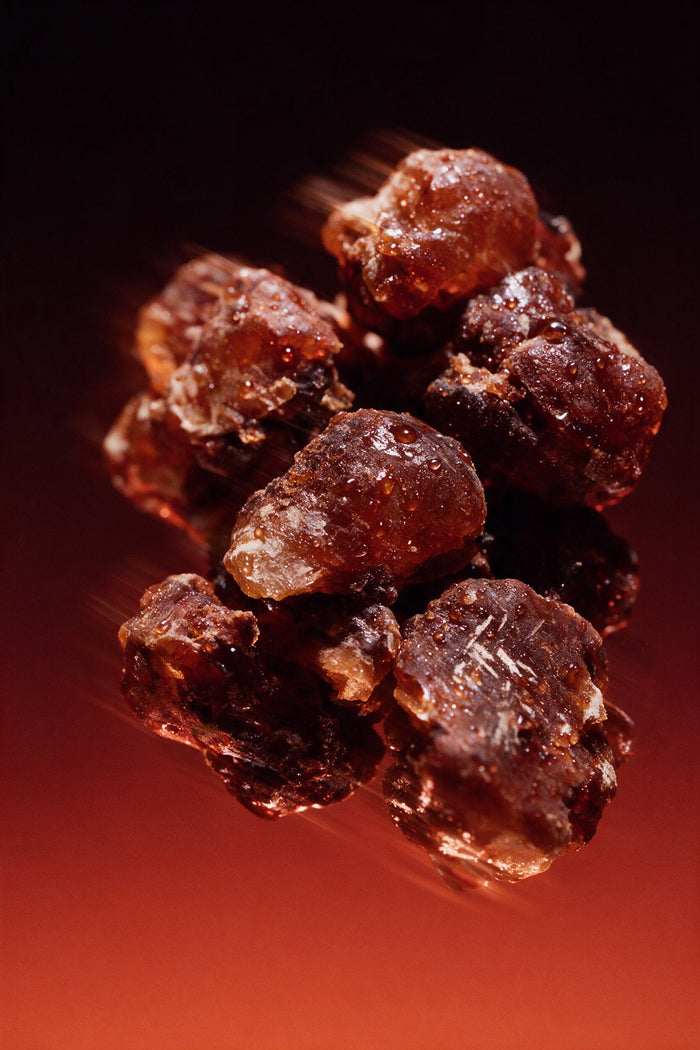
Myrrh Myrrh: The Bitter Resin of the Pharaohs, and What It Smells Like
Myrrh is named for what it tastes like. The word comes from the Semitic root m-r-r, meaning bitter. Arabic murr, Hebrew mor, Akkadian murru. It entered English through the Greek myrrha, which borrowed it from the same...
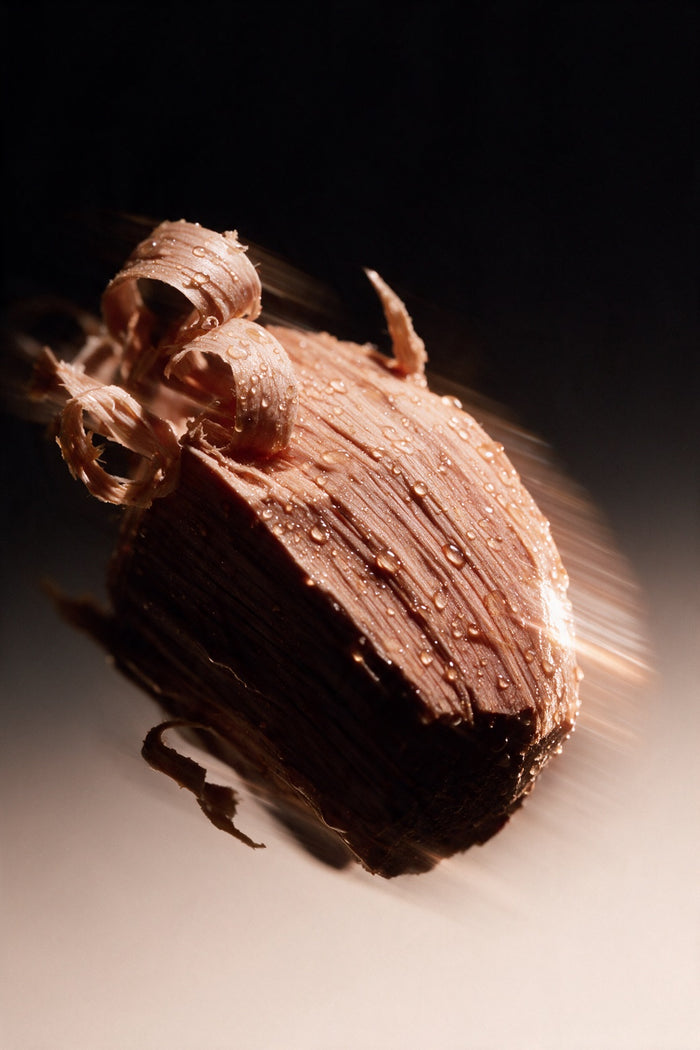
Hinoki Hinoki: The Japanese Cypress Behind the Temple Wood Smell
Hinoki is the cypress of Japanese temples and baths, famous for a lemony, green wood smell. Its name is often read as fire tree, a reading a garden source calls probably incorrect.
Hippie Patchouli: From Hippie Cliché to Perfumery Icon
Patchouli is the ingredient people think they hate. Say the word at a dinner party and watch faces contract, a reflex memory of head shops, dorm-room incense, patchouli oil dabbed on wrists that hadn't seen soap since...
Next
Perfumery Journal
Myrrh Myrrh: The Bitter Resin of the Pharaohs, and What It Smells Like
20.11.25