Wormwood: The Herb of Absinthe, Its Thujone and Its Cousins
Wormwood is the bitter herb Artemisia absinthium, which flavours absinthe and, in our glossary's account, vermouth. It belongs to the genus Artemisia, which also holds the plant behind artemisinin, the Nobel-winning malaria drug. Its thujone varies from plant to plant, and the EU and the US each limit thujone in drinks by their own written rules.
What is wormwood?
Wormwood is a bitter, silvery herb, Artemisia absinthium, and the name is also given to other plants of its genus. Its leaves and flowering tops flavour absinthe. Our glossary records its oil as the flavouring principle of vermouth, and as a green, herbal heart note in perfumery.
The United States regulator's own circular of 2007 says that absinthe "was often portrayed as an addictive and psychotropic beverage due to the presence of the substance thujone." In 2008 a laboratory opened thirteen bottles of absinthe made before 1915 and measured them. They held between 0.5 and 48.3 mg of thujone a litre, and the authors wrote that the amount had been "generally overestimated in the past."
Where the name wormwood comes from
Our glossary records that "The word wormwood itself is an alteration of Old English wermod, which is of obscure origin." It adds that the German cousin Wermut gave French and English the word vermouth. The botanical name has two roots in the same entry: "The wormwood genus bears the name of the Greek goddess of childbirth, Artemis," and "The specific name derives from apsínthion, the Greek term for the plant."
GBIF, the biodiversity database, lists the French names armoise absinthe and armoise amère, and one entry that runs "Armoise absinthe, Absinthe, Herbe aux vers", the herb of the worms. For English it lists common wormwood, absinthe wormwood and absinthium.
What is Artemisia?
Artemisia is a genus of the daisy family, Asteraceae. IPNI, the plant-name index kept at Kew, files Artemisia absinthium in that family. Our glossary describes the genus as "hardy herbaceous plants and shrubs with powerful chemical constituents in their essential oils," growing in dry or semiarid places in both hemispheres, and notes that the National Collection of Artemisia in Sidmouth, Devon holds about 400 taxa.
| Species | Name in our glossary | What the record says |
|---|---|---|
| Artemisia absinthium | Wormwood | Named by Linnaeus in 1753. The herb of absinthe |
| Artemisia annua | Sagewort | The plant of the malaria drug that won a Nobel Prize in 2015 |
| Artemisia vulgaris | Mugwort | Oil "herbaceous, camphorous and sage-like" |
| Artemisia dracunculus | Tarragon | Scent "leafy and aniseed-fennel" |
| Artemisia tridentata | Big sagebrush | Listed among the notable species of the genus |
| Artemisia herba-alba | Armoise | "Morocco supplies about 90% of global armoise oil production, estimated at 50 metric tons a year" |
The genus entry is Artemisia in our glossary.
Which Artemisia won the Nobel Prize?
Not absinthe's. On 5 October 2015 the Nobel Assembly at Karolinska Institutet gave half of that year's Prize in Physiology or Medicine to Tu Youyou "for her discoveries concerning a novel therapy against Malaria." Her plant was Artemisia annua. The press release tells the road: "an extract from the plant Artemisia annua emerged as an interesting candidate. However, the results were inconsistent, so Tu revisited the ancient literature and discovered clues that guided her in her quest to successfully extract the active component from Artemisia annua."
The component was artemisinin. "When used in combination therapy, it is estimated to reduce mortality from Malaria by more than 20% overall and by more than 30% in children," the Assembly wrote, and "more than 100 000 lives are saved each year" in Africa alone. That is a 2015 estimate for the drug of Artemisia annua. The Assembly makes no such claim for Artemisia absinthium.
Artemisia absinthium: the plant
Linnaeus published the name on 1 May 1753 in volume 2, page 848, of Species Plantarum, as IPNI records it. GBIF treats it as the accepted name and lists 19 synonyms, among them Absinthium vulgare and Absinthium officinale.
The Washington State Noxious Weed Control Board describes "an herbaceous perennial with a strong sage odor" that commonly grows to 3 feet tall, with fine silky hairs and a gray-green look, and yellow flower heads. It lists the plant as native to Eurasia, as weed class C, listed in 1988. The Catalogue of Life gives Europe, North Africa and temperate Asia as the native range and marks the United States, Canada, Australia and New Zealand as introduced.
What does wormwood smell like, and is it used in perfumery?
Our glossary describes wormwood oil from America, Italy and Poland as "sweet, herbal and green, with notes of coffee, davana, horehound and candy," and oil from Cuba as balsamic. On a strip it opens "Green and herbal," turns to "Sweet, with coffee and horehound notes" after a few hours, and after a few days gives "Candy and balsamic notes." The glossary rates its tenacity at "212 hours at 100.00%" and places it as a heart note. Davana is named in that line.
The oil, in the glossary's words, "is distilled from the dried leaves and flowering tops of the herb," harvested in full bloom, usually in July in the northern hemisphere, and wilted for 24 hours. Direct steam gives a better oil than water distillation. How steam does that work is told in steam distillation and the other extraction methods.
The European Commission's CosIng database lists the plant's ingredients under one CAS number, 84929-19-1, all with the status Active. A listing records a name and a function and is not a safety verdict.
| CosIng name | Function listed |
|---|---|
| Artemisia absinthium oil | Antimicrobial |
| Artemisia absinthium herb extract | Perfuming |
| Artemisia absinthium herb oil | Perfuming |
| Artemisia absinthium extract | Skin conditioning |
The IFRA Transparency List also holds an entry for alpha-thujone, CAS 546-80-5. Presence on that list is a listing as well.
Does wormwood contain thujone?
It can, and how much depends on the plant. Alpha-thujone is C10H16O, molar mass 152.23, and the Good Scents records give its odour as "cedar" and "thujonic". Thujone occurs in nature, the European Medicines Agency writes, "as a variable mixture of α-thujone (CAS Number: 546-80-5) and β-thujone (CAS Number: 471-15-8)."
A Polish team grew eleven wild Central European populations of wormwood side by side and distilled each. The oil made 0.75 to 1.69 g per 100 g of dry herb, and 41 compounds were identified. The oils split into types: "a pure sabinyl acetate chemotype," mixed types, and "a thujone chemotype." Thujone led in a single population.
| Measure, eleven Polish populations | Lowest | Highest |
|---|---|---|
| Essential oil, g per 100 g dry herb | 0.75 | 1.69 |
| Alpha-thujone, percent of the oil | not detected | 19.31 |
| Beta-thujone, percent of the oil | 0.06 | 19.26 |
| Sabinyl acetate, percent of the oil | not detected | 76.02 |
The authors write that the two thujones "were present in remarkable amounts only in population 9." In the ten others alpha-thujone stayed at 1.01% or below and beta-thujone at 1.13% or below. These are shares of the oil, not of the herb, and they describe eleven populations in one study. A wild plant of this species can carry almost no thujone.
Did old absinthe contain more thujone?
One analysis says no. Lachenmeier and colleagues measured thirteen authentic absinthes from before 1915 and published the result in the Journal of Agricultural and Food Chemistry in 2008.
| Total thujone, 13 absinthes before 1915 | mg per litre |
|---|---|
| Lowest | 0.5 |
| Highest | 48.3 |
| Mean | 25.4 +/- 20.3 |
| Median | 33.3 |
The same team analysed absinthes made from 1915 to 1988 and sold from 2003 to 2006, and found that "the encompassed thujone ranges of all absinthes are quite similar, disproving the supposition that a fundamental difference exists between preban and modern absinthes manufactured according to historical recipes." Their last line is plain: "nothing besides ethanol was found in the absinthes that was able to explain the syndrome 'absinthism'." That is a finding about thirteen old bottles, not about every absinthe ever made.
Our glossary records that absinthe "was thought to contain up to 260-350 mg/L thujone" in the past. The European Medicines Agency adds, in a public statement of 2012, that "it is not possible to infer any useful conclusions for thujone toxicity from the phenomenon of absinthism."
Is wormwood banned? What the EU and US texts say
In Europe the text is Regulation (EC) No 1334/2008 on flavourings, Annex III. Part A is headed "Substances which shall not be added as such to food," and thujone (alpha and beta) closes its list. Part B sets maximum levels for substances that are naturally present in flavourings and in food ingredients with flavouring properties, and it gives thujone its own rows. The text is hosted by legislation.gov.uk, and amendments after 2008 are not covered here.
| Thujone (alpha and beta), Annex III part B | Maximum, mg per kg |
|---|---|
| Alcoholic beverages, except those produced from Artemisia species | 10 |
| Alcoholic beverages produced from Artemisia species | 35 |
| Non-alcoholic beverages produced from Artemisia species | 0.5 |
A note to the table adds that the maximum levels "shall not apply where a compound food contains no added flavourings and the only food ingredients with flavouring properties which have been added are fresh, dried or frozen herbs and spices." Bitter-tasting spirit drinks appear in the same annex under a different substance, Teucrin A, at 5 mg per kg. That is not thujone.
In the United States the text is 21 CFR 172.510, the Food and Drug Administration's list of natural flavouring substances. It names "Artemisia (wormwood)" with the limitation "Finished food thujone free." The Alcohol and Tobacco Tax and Trade Bureau applies it to labels in its Industry Circular 2007-5. "TTB considers a product to be 'thujone-free' if it contains less than 10 parts per million of thujone," the circular says, and it approves the word absinthe on a label only for such a product. The word may not be a brand name and "may not stand alone on the label," and the artwork "may not project images of hallucinogenic, psychotropic, or mind-altering effects."
As for the bans of history, our glossary records that absinthe "was banned in the Republic of Congo in 1898, Belgium in 1905, Switzerland in 1910, the Netherlands in 1910, the USA in 1912, France in 1914/1915 and Italy in 1932," and that "The French Senate voted to repeal the prohibition in mid-April 2011." Other plants have been caught by other rules, a story told for oakmoss and for the tonka bean.
What the European Medicines Agency wrote about thujone
The agency's herbal committee published a public statement on thujone in 2012, after it assessed wormwood and sage. It opens: "Thujone has been regarded as a severe neurotoxicant, although recently differing views have been expressed." For Absinthii herba, the committee set a daily limit of 3 mg of thujone per person, for at most two weeks.
The statement reports that "The most prominent symptoms associated with acute intoxication are epileptiform convulsions," seen in animal studies. In a drinking trial of 25 volunteers, a high thujone dose (about 15 mg) had a negative effect on attention at the first test, 30 minutes in, and alcohol alone or with a low dose did not. In a pilot with two subjects who drank absinthe holding 3.85 mg of thujone, "hallucinogenic effects were not described." Its conclusion: "Few available studies suggest that low doses (of the order of 1.5 to 3.85 mg) have no effects attributable to thujone." The statement also says that no studies permit a reliable assessment for pregnant women or children. This article gives no dose and no advice. It reports what the texts say.
What people believed about wormwood
The 1814 edition of Nicholas Culpeper's Complete Herbal treats three wormwoods. Of the plain one he says only: "Common Wormwood I shall not describe, for every body that can eat an egg knows it." What he believed it did follows. "Wormwood is an herb of Mars," he writes. "The sun never shone upon a better herb for the yellow jaundice than this," he says, and "it causes appetite to meat, because Mars rules the attractive faculty in man." Of the sea wormwood he says "The seed of this Wormwood is that which usually women give their children for the worms." His own recipe: take the flowers of wormwood, rosemary and blackthorn with saffron, boil them in Rhenish wine, and "This is the way to keep a man’s body in health." These are the beliefs of an old book, not medicine. The herb also gave its name to a star.
In the King James Bible, Revelation 8:11 reads: "And the name of the star is called Wormwood: and the third part of the waters became wormwood; and many men died of the waters, because they were made bitter." The verse names a star and a bitter water. The verse names no plant.
Two plants of other families flavour absinthe beside wormwood, in our glossary's account: anise and fennel. The rules that shaped such plants are told in how bureaucracy erased a century of perfumery.
Frequently Asked Questions
What is Artemisia?
Artemisia is a genus of the daisy family, Asteraceae. It holds common wormwood, Artemisia absinthium, named by Linnaeus in 1753, and Artemisia annua, the plant of the malaria drug artemisinin that won Tu Youyou a Nobel Prize in 2015. Our glossary also files mugwort, tarragon and big sagebrush under the genus.
Which Artemisia gave the Nobel malaria drug?
Artemisia annua. The Nobel Assembly writes that an extract of it emerged from a screen of herbal remedies, gave inconsistent results, and that Tu Youyou then reread the ancient literature for clues to extract the active component, artemisinin. It is a different species from the wormwood of absinthe.
Does wormwood contain thujone?
It can. In a study of eleven wild Polish populations, alpha-thujone in the oil ran from not detected to 19.31%, and beta-thujone from 0.06% to 19.26%, with thujone high in one population only. The plants split into chemotypes, some led by sabinyl acetate. These are shares of the oil, not of the herb.
What is the EU limit of thujone in alcoholic drinks?
Annex III part B of Regulation (EC) No 1334/2008 gives 10 mg per kg for alcoholic beverages, 35 mg per kg for alcoholic beverages produced from Artemisia species, and 0.5 mg per kg for non-alcoholic beverages produced from Artemisia species. Bitter spirit drinks appear there under another substance, Teucrin A.
Is absinthe legal in the US?
With conditions. 21 CFR 172.510 lists Artemisia (wormwood) with the limit "Finished food thujone free." The Alcohol and Tobacco Tax and Trade Bureau treats under 10 parts per million as thujone-free and approves the word absinthe on a label only for such a product, never as a stand-alone name.
Did old absinthe contain more thujone?
Not by much, in one analysis. Lachenmeier and colleagues measured thirteen absinthes made before 1915 in 2008 and found 0.5 to 48.3 mg per litre of thujone, a median of 33.3. They concluded earlier estimates were too high, and found post-ban and modern absinthes in a similar range.
What does wormwood smell like?
Our glossary describes the oil as sweet, herbal and green, with notes of coffee, davana, horehound and candy, and a balsamic oil from Cuba. On a strip it opens green and herbal, turns sweet with coffee and horehound notes after hours, and ends in candy and balsamic notes. The glossary places it in the heart.
What exactly is wormwood in the Bible?
In Revelation 8:11 of the King James Bible, a great star falls from heaven and "the name of the star is called Wormwood," and the third part of the waters became wormwood and bitter. The verse names the star and the waters. The verse itself names no plant.
Sources
- IPNI, Artemisia absinthium L., Species Plantarum 2: 848, 1753. GBIF, Artemisia absinthium (accepted name, synonyms, common names) and the Catalogue of Life distribution., 19 November 2026.
- Washington State Noxious Weed Control Board, Absinth Wormwood. nwcb.wa.gov.
- Nobel Assembly at Karolinska Institutet, press release for the 2015 Nobel Prize in Physiology or Medicine, 5 October 2015. nobelprize.org.
- O. Kosakowska and others, "Intraspecific Variability of Wormwood (Artemisia absinthium L.) Occurring in Poland in Respect of Developmental and Chemical Traits", Molecules 30(14), 2915, 2025. DOI 10.3390/molecules30142915. Read in full text at Europe PMC.
- D. W. Lachenmeier and others, "Chemical composition of vintage preban absinthe with special reference to thujone, fenchone, pinocamphone, methanol, copper, and antimony concentrations", Journal of Agricultural and Food Chemistry 56(9), 3073-3081, 2008. DOI 10.1021/jf703568f. Abstract read at Europe PMC.
- Regulation (EC) No 1334/2008, Annex III, as hosted by legislation.gov.uk. 21 CFR 172.510, eCFR. Alcohol and Tobacco Tax and Trade Bureau, Industry Circular 2007-5, 16 October 2007.
- European Medicines Agency, Committee on Herbal Medicinal Products, Public statement on the use of herbal medicinal products containing thujone, EMA/HMPC/732886/2010 Rev. 1, 22 May 2012.
- European Commission, CosIng database, records for Artemisia absinthium oil, extract, herb extract and herb oil. IFRA Transparency List and PubChem for alpha-thujone, with the Good Scents odour words.
- Nicholas Culpeper, Culpeper's Complete Herbal, edition of 1814, entry Wormwood. Read in full text at the Internet Archive. The King James Bible, Revelation 8:10-11, read at bible-api.com.
- PREMIEREPEAU glossary, entries wormwood, absinthe, artemisia, mugwort and tarragon, read on 19 November 2026.

Simili Mirage
Extrait de parfum at 20%. 8 notes, including olibanum, thyme and white thyme.
Read also
3
Oakmoss Oakmoss & IFRA: The Regulation That Killed Chypre
Oakmoss is not a moss. It is a lichen, Evernia prunastri, a symbiotic organism half fungus, half alga, spreading in slow grey-green crusts along the bark of oaks across southern Europe. For most of the twentieth centu...
Tonka Tonka Bean: Banned But Beloved
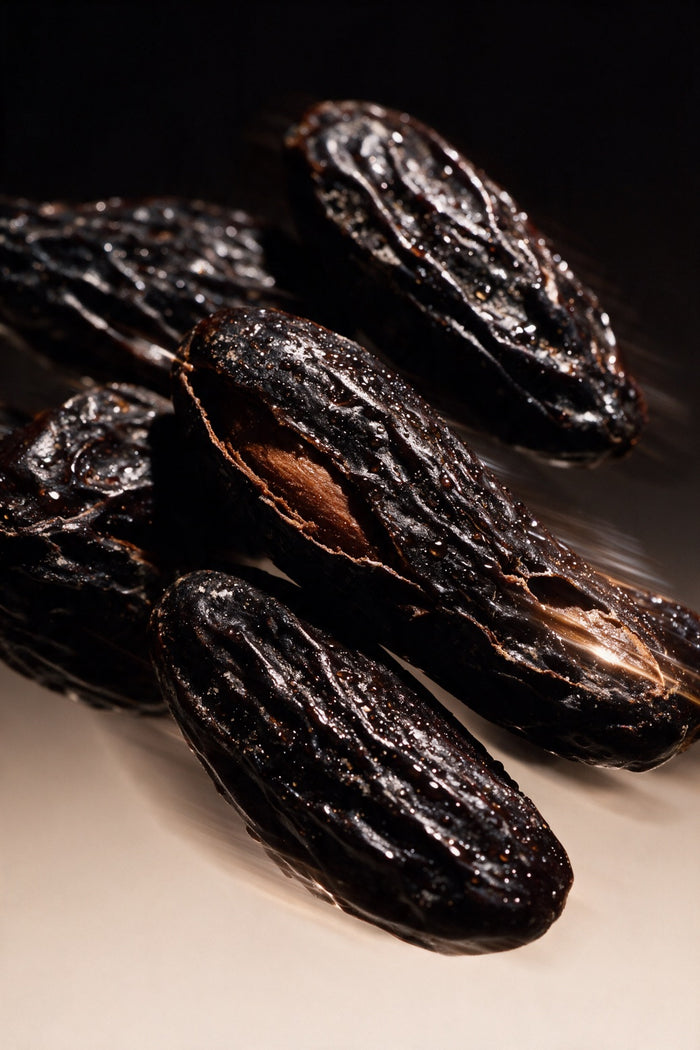
The US rule says food with added coumarin, as such or as tonka beans, is adulterated, and it is silent on perfume. What the bean smells like, the European food limits, the safety numbers and how a bean is cured.
Helichrysum Helichrysum: The Mediterranean Shrub Behind the Word Immortelle
Helichrysum names a whole genus, but the perfumer means one Mediterranean shrub, Helichrysum italicum, called immortelle. Its oil costs a great deal and its scar claims rest on little.
Next
Perfumery Journal
Coumarin Coumarin: The Banned Molecule That Invented Modern Perfumery
31.12.25