


Araucaria
Keywords: woody · green · fresh
Araucaria is a genus of evergreen coniferous trees in the family Araucariaceae, largely confined to the Southern Hemisphere. As a fragrance note it is described as woody and resinous.

- Olfactive family
- Woods · 363 entries of the glossary in this family Subfamily: Classic woods · 130 entries in this subfamily Cluster: Earthy woods · 236 entries in this cluster
- Material
- Natural Oleogum resin
- Pyramid
- Heart · Volatility: Heart Note
- Strength
- Medium Step 3 of 5 · shared by 1,462 of 2,149 graded entries Graded entries at each step, from 1 to 5: 4, 118, 1,462, 501, 40. 24 more sit between two steps.
- Also called
- Monkey Puzzle, Norfolk Island Pine
Araucaria · Facets
Entries of the glossary that carry each facet, of 3,979:
- citrus 488
- green 1,442
- sweet 1,987
- warm 1,109
- fresh 1,390
- resinous 199
Araucaria · Scent
The araucaria note has a woody and resinous profile, a clean, slightly medicinal piney character with a faint camphor edge and an underlying earthiness. The wild-harvested oil sold as araucaria has a creamy tea-rose aroma. The oil is placed in the light floral scent family and is said to carry whispers of delicate rose.
Evolution over time
Araucaria: scent over time.
- Immediately
Clean, slightly medicinal and piney, with a faint camphor edge
- After a few days
An underlying earthiness
- Tenacity
- > 200 hours
Araucaria · In Perfumery
The oil sold as araucaria is a middle note that can extend a heart chord, softening sharper notes. It is a good blender with florals without adding another strong aromatic personality. As a fragrance note, araucaria pairs well with resins, earthy notes and cool woods.
Pyramid
Araucaria: Heart. Entries of the glossary stored at each place of the pyramid, of 4,000 (35 store no place):
- Top 718
- Top · Heart 496
- Heart 1,644
- Heart · Base 513
- Base 594
Role in the formula
Araucaria: roles in the formula. Entries of the glossary that share each role, of 4,000:
- Modifier 1,168
- Signature note 898
- Lifting agent 568
- Blender 1,041
- Volume builder 780
- Freshness 720
Araucaria · Terroir & Origins
- Producing countries
- New Caledonia
- Other countries of origin
- Brazil, Australia
No origin card: New Caledonia.
Brazilian Araucaria
Southern Brazil — Brazil
Facet scores, out of 100
- Woody 97
- Green 72 (also a facet of the entry)
- Earthy 64
- Sweet 53 (also a facet of the entry)
- Smoky 48
- Resinous 40 (also a facet of the entry)
The species is critically endangered. It has lost an estimated 97% of its habitat to logging, agriculture and silviculture.
Its Brazilian range is divided into two populations, one in Serra da Mantiqueira and one on the southern plateau.
- Species
- Araucaria angustifolia (Paraná pine)
- Harvest
- Seeds (pinhão) harvested extensively
- Climate
- Subtropical/temperate with abundant rainfall
- Soil
- Well drained, slightly acidic
Australian Araucaria
New South Wales & Queensland — Australia
Facet scores, out of 100
- Woody 100
- Earthy 72
- Green 67 (also a facet of the entry)
- Smoky 47
- Sweet 40 (also a facet of the entry)
- Resinous 32 (also a facet of the entry)
The species is now mainly found on timber plantations.
Plantations in Queensland have been damaged by a native rat, Rattus tunneyi, which digs to the roots of semi-mature trees and kills them.
- Species
- Araucaria cunninghamii (hoop pine)
Facet scores, origin against origin
Widest gap: Sweet · 13 points of 100. Highest: Brazilian Araucaria: 53. Lowest: Australian Araucaria: 40.
Araucaria · Extraction & Chemistry
The essential oil sold as araucaria is wild-harvested in New Caledonia from Neocallitropsis pancheri. An essential oil has also been obtained from the oleogum resin of Araucaria heterophylla.
Available as
Araucaria: available as.
- essential oil
- absolute
- Appearance
- Viscous essential oil
Araucaria · Did You Know?
The name monkey puzzle arose in Britain around 1850, when the lawyer Charles Austin remarked of a young specimen that it would puzzle a monkey to climb it.
Araucaria · In Depth
Araucaria is a genus of evergreen coniferous trees in the family Araucariaceae. Today they are largely confined to the Southern Hemisphere. The genus includes the monkey-puzzle tree (Araucaria araucana) and the Norfolk Island pine (Araucaria heterophylla). Many species are called pine, although they are only distantly related to true pines, in the genus Pinus.
Distribution and Habitat
Members of the genus are found in forest and maquis shrubland, with an affinity for exposed sites. By far the greatest diversity exists in New Caledonia. Many New Caledonian species have been severely affected by nickel mining and are now considered threatened or endangered. The Norfolk Island pine is endemic to Norfolk Island and is not a true pine.
Wood and Uses
The wood of the monkey-puzzle tree was once valued for its long, straight trunk, but it is now rarely used. Its durability and resistance to decay made it excellent for wood products such as veneers and plywood. The timber of the Norfolk Island pine is good for woodturning. Together with the similar Cook pine, it is extensively used by Hawaiian artisans. The edible large seeds of A. araucana, A. angustifolia and A. bidwillii are eaten as food, particularly among the Mapuche people of Chile and southwest Argentina.
Oils and Chemistry
The oil sold as araucaria comes from Neocallitropsis pancheri of New Caledonia. That tree is now called Callitris pancheri and belongs to the cypress family, Cupressaceae. Its foliage is superficially similar to some species of Araucaria, though they are only very distantly related.
The essential oil of the oleogum resin of Araucaria heterophylla was analysed, and 24 major components were identified, representing 99.89% of the total oil. The major ones were caryophyllene oxide (14.8%), (+)-sabinene (12.07%), D-limonene (11.22%) and caryophyllene (10.36%). Monoterpene hydrocarbons were the most abundant non-oxygenated components, at 32.93%. Previously reported literature on the oil gave a different picture, with α-pinene (44.88%) the most abundant component, followed by germacrene-D (10.25%).
Conservation
The monkey-puzzle tree is endangered, and logging, long a major threat, was finally banned in 1990. The IUCN classifies the Norfolk Island pine as vulnerable.
Explore all seven extraits in the Discovery Set.
Araucaria · Technical Sheet
Identity
- Botanical
- Araucaria
- Botanical records
- Araucaria: POWO, Araucaria · IPNI, Araucaria · GBIF, Araucaria · Wikidata, Araucaria · Wikipedia, Araucaria
- IPNI
- Araucaria Juss., Gen. Pl. 413 (1789). — Antoine Laurent de Jussieu (1748–1836)
- Type
- Ingredient
- Category
- Woods and mosses
- Note
- N/A – no standard perfumery extract
Classification
- Chemical class
- Essential oil
Chemical data
- Formula
- Complex natural mixture (key constituents: caryophyllene oxide; (+)-sabinene C₁₀H₁₆; D-limonene C₁₀H₁₆; caryophyllene; β-pinene C₁₀H₁₆)
- Structure
- Caryophyllene oxide, Limonene, Beta-Caryophyllene:
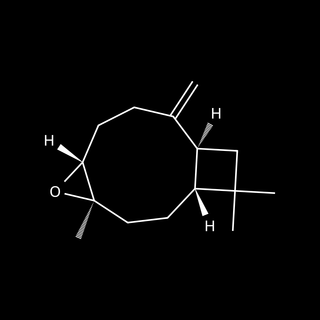
Caryophyllene oxide
PubChem, Caryophyllene oxide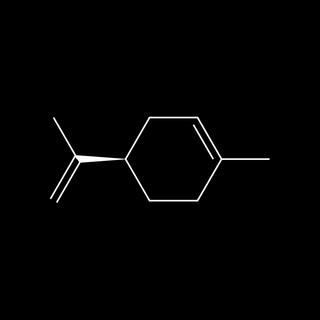
Limonene
PubChem, Limonene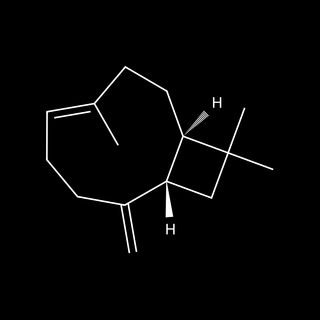
Beta-Caryophyllene
PubChem, Beta-Caryophyllene - CAS
- 8015-68-7
Performance and rules
- IFRA status
- No IFRA Standard for the material itself (51st Amendment)
Araucaria · See Also
Entries related to Araucaria, by their place in the pyramid. “shared” marks a scent word Araucaria has too.
Top notes

Cypress Oil
woody (shared) · coniferous · green (shared) Woods / Same cluster / Natural
Cyclopidene
fresh (shared) · aromatic · floral Florals / Top · Heart / Synthetic


Heart notes


Base notes

Hinoki Oil
woody (shared) · warm (shared) · spicy Woods / Same cluster / Natural
Oud
woody (shared) · animalic · smoky Woods / Natural
Sandalwood
woody (shared) · floral Woods / Natural
Patchouli
Woods / Natural
Javanol
woody (shared) · creamy · clean Woods / Synthetic
Cedarwood
woody (shared) · dry · clean Woods / Natural


Araucaria · Sources
- Scientific reports (2023) Araucaria heterophylla oleogum resin essential oil is a novel aldose reductase and butyryl choline esterase enzymes inhibitor: in vitro and in silico evidence
- IFRA Standards, 51st Amendment
- Wikipedia Araucaria
- Wikipedia Araucaria heterophylla
- Wikipedia Araucaria araucana
- Wikipedia Neocallitropsis
Cite as PREMIEREPEAU Glossary, “Araucaria”, https://premierepeau.com/
