


Castoreum Absolute
Keywords: animalic · leathery · warm
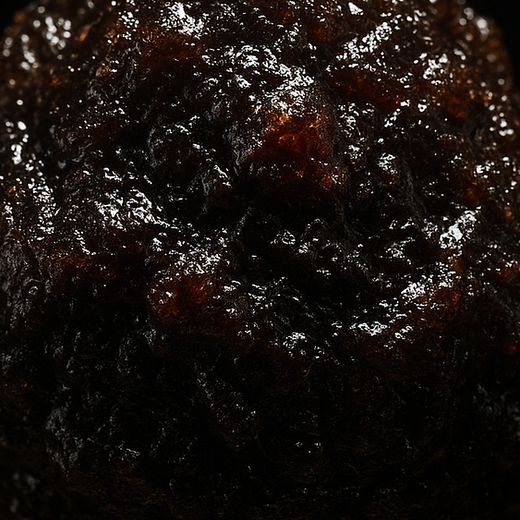
Castoreum Absolute: Castoreum is a yellowish exudate from the castor sacs of mature beavers. Its odour is leathery, animalic and smoky.
- Olfactive family
- Animalic · 28 entries of the glossary in this family Subfamily: Animalic notes · 26 entries in this subfamily
- Material
- Natural Animal-derived
- Pyramid
- Base · Volatility: Base Note
- Also called
- Castoreum extract, castoreum resinoid, castoreum tincture
Family, subfamily and cluster: PREMIEREPEAU house classification, version 2026‑11.
Castoreum Absolute · Facets
Entries of the glossary that carry each facet, of 3,979:
- leather 78
- animalic 84
- warm 1,108
- sweet 1,988
- balsamic 343
Castoreum Absolute · Scent
Castoreum has a warm, animal-sweet odour, becoming more pleasant on dilution. Dilute castoreum, for example as a tincture in ethanol, smells pleasantly of birch tar and musk and is slightly fruity. It evokes notes of fur, ink, plum, black olives and dried fruits. Its odour is also described as animal, ink, leathery and phenolic.
Evolution over time
Castoreum Absolute: scent over time.
- After a few hours
Warm, animal-sweet, with leathery and ink notes.
Scent words: sweet · warm · leather · animalic - After a few days
Birch, tar-like and musky, phenolic and resinous.
Scent words: resinous · musky
Castoreum Absolute · In Perfumery
In perfumery, the term castoreum refers to the resinoid extract made from the dried beaver castor tinctured with alcohol. Castoreum is largely used for its note suggesting leather, typically compounded with other ingredients covering top, middle and base notes. It was used mainly in fine fragrances for its characteristic, long-lasting odour, particularly for delicate leather nuances. It is used as a tincture in some perfumes. Historically, compounds isolated from castoreum were used in strawberry and raspberry flavourings and vanilla substitutes. At present, however, the annual industry consumption is very low, around 100 kilograms. Castoreum was also considered as an ingredient for the flavour and odour of cigarettes.
Pyramid
Castoreum Absolute: Base. Entries of the glossary stored at each place of the pyramid, of 4,006 (42 store no place):
- Top 718
- Top · Heart 497
- Heart 1,641
- Heart · Base 514
- Base 594
Role in the formula
Castoreum Absolute: roles in the formula. Entries of the glossary that share each role, of 4,006:
- Modifier 1,167
- Signature note 897
- Fixative 340
- Warmth 53
Castoreum Absolute · Terroir & Origins
- Producing countries
- Canada, United States (Alaska), Russia (Siberia)
No origin card: United States.
Canadian Castoreum Absolute
Quebec and Ontario — Canada
Facet scores, out of 100
- Animalic 93 (also a facet of the entry)
- Leathery 87
- Smoky 76
- Resinous 62
Beavers from Quebec and Ontario produce castoreum with pine resin and galbanum-like nuances.
Canada was the leading exporter in the 19th and early 20th centuries, but current volumes are negligible.
- Species
- Castor canadensis
Siberian Castoreum Absolute
Volga and Siberian regions — Russia
Facet scores, out of 100
- Animalic 93 (also a facet of the entry)
- Leathery 87
- Smoky 76
- Resinous 62
Beavers from the Volga and Siberian regions yield castoreum with a tarry, birch bark-like odor.
Russian castoreum was historically the most sought after, but production is now minimal due to wildlife protection.
- Species
- Castor fiber
Facet scores, origin against origin
Widest gap: Animalic · 0 points of 100. Highest: Canadian Castoreum Absolute: 93. Lowest: Canadian Castoreum Absolute: 93.
Castoreum Absolute · Extraction & Chemistry
Castoreum is removed from the animal during the skinning period and is dried in the sun or sometimes over burning wood. It is extracted with alcohol from the dried and crushed castor sacs. The dried beaver castor sacs are generally aged for two or more years to mellow. Hot alcohol extraction gives a yield of about 75 to 80%. This extract is not a true absolute and it is not clearly soluble in cold alcohol. Resinoids are prepared by extracting dried, comminuted pouches with suitable solvents. A commercial castoreum absolute is made by extraction using volatile solvents followed by a purification in alcohol. Today, there are special beaver farms where the beavers rub their secretions off onto special collection containers.
Available as
Castoreum Absolute: available as.
- absolute
- synthetic
- Appearance
- Dark-brown, soft, unctuous mass
Castoreum Absolute · Did You Know?
The intense, leathery odour of castoreum from Siberian beavers is caused largely by phenolic compounds, which the beavers take in with their food and excrete into their abdominal pouches. In Sweden, castoreum has traditionally flavoured a kind of snaps called Bäverhojt.
Castoreum Absolute · In Depth
Beavers use castoreum in combination with urine to scent mark their territory. Both beaver sexes have a pair of castor sacs and a pair of anal glands, located in two cavities under the skin between the pelvis and the base of the tail. Beavers deposit castoreum on piles of debris and mud called scent mounds.
Source animals
The two living beaver species are the North American beaver (Castor canadensis) and the Eurasian beaver (Castor fiber). The North American beaver is native to North America. The Eurasian beaver is widespread across Eurasia.
Composition
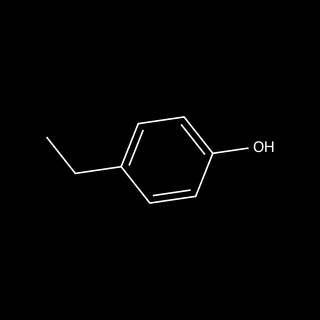
At least 24 compounds are known constituents of beaver castoreum. Several of these have pheromonal activity; the strongest are the phenols 4-ethylphenol and catechol and the ketones acetophenone and 3-hydroxyacetophenone. Castoreum also contains nupharamine alkaloids, castoramine and cis-cyclohexane-1,2-diol. It contains castorin (0.33 to 2.5%) and volatile oil (1 to 2%), together with benzoic acid, salicylic acid, cinnamic acid and phenols. A minor component, 5-(3′-furyl)-8-methylindolizidine, makes up less than 0.0002% of castoreum.
The pouches
Canadian pouches are wrinkled, pear-shaped, almost flat, from 6 to 15 cm long and 4 to 8 cm wide. Siberian pouches are ovoid and smooth, slightly larger in size, but valued less commercially. Castoreum is a by-product of the fur industry. The fresh pouch contains a yellowish, butter-like mass. When the pouches are dried in the air or over a wood fire, the contents turn dark brown and become resinous.
Food use
In the United States, the Food and Drug Administration classes castoreum extract as a generally recognized as safe food additive.
Explore all seven extraits in the Discovery Set.
Related: Ambrein · Animal Notes · Horse skin · Civet Absolute
Castoreum Absolute · History
Medical uses of castoreum
Although it is unclear at what point people started using castoreum for any purpose, its history can be traced back to ancient Greece and Rome. In those times it was used as a remedy for various medical conditions such as heart palpitation, vertigo, tremor and coma. It was best known as an emmenagogue in gynecology, promoting placental expulsion and menstruation. In antiquity it was also used to treat epilepsy. Medieval beekeepers used castoreum to increase honey production.
Hunting of beavers
The North American beaver was trapped out and almost extirpated because its fur and castoreum were highly sought after. The Eurasian beaver was hunted to near-extinction for both its fur and castoreum, with only about 1,200 beavers in eight relict populations from France to Mongolia in the early 20th century.
Castoreum Absolute · Technical Sheet
Identity
- Botanical
- Castor canadensis / Castor fiber
- Taxonomy
- Rodentia order › Castoridae family › Castor genus · GBIF
- Botanical records
- Castor canadensis: GBIF, Castor canadensis · Wikidata, Castor canadensis · Wikipedia, Castor canadensis · IUCN Least concern (LC), Castor canadensis
- Type
- Ingredient
- Category
- Musk, amber, animalic smells
In Nature
In Print
- In English books
- most mentioned in the 1980s · Google Books Ngram
Classification
- Cluster
- Animalic notes · 52 entries in this cluster
- Chemical class
- Complex natural mixture
Chemical data
- Formula
- Complex natural mixture (key constituents: castoramine; 4-ethylphenol; catechol; acetophenone)
- Structure
- 4-Ethylphenol, Acetophenone:
4-Ethylphenol
PubChem, 4-Ethylphenol
Acetophenone
PubChem, Acetophenone - CAS
- 8023-83-4
- EC
- 232-427-5

Physical properties
- Flash point
- > 100 °C
- Appearance
- Brown to dark brown semi-solid to solid (est)
Performance and rules
- Strength
- High,recommend smelling in a 10.00 % solution or less
- Tenacity
- 400 hour(s) at 10.00 % in dipropylene glycol
- IFRA status
- No IFRA Standard for the material itself (51st Amendment)
Castoreum Absolute · See Also
Entries related to Castoreum Absolute, by their place in the pyramid. “shared” marks a scent word Castoreum Absolute has too.
Base notes

Phenyl Acetic Acid
animalic (shared) · honeyed · sweet (shared) Amber & musk / Same cluster / Synthetic-
Tobacco Absolute
smoky · warm (shared) · honeyed Amber & musk / Same cluster / Natural 
Ambrein
amber · warm (shared) · rich Amber & musk / Same cluster / Natural
Hyraceum
animalic (shared) · smoky · dark Amber & musk / Same cluster / Natural
Muskrat
musky · rich · warm (shared) Amber & musk / Same cluster / Natural
Skatole
floral · animalic (shared) Amber & musk / Same cluster / Natural & Synthetic
Tonka Bean
Gourmand / Natural
Cashmeran
musky · woody · spicy Amber & musk / Synthetic
Leather
animalic (shared) · smoky · dry Amber & musk / Fantasy/Concept
Ambergris
animalic (shared) · marine · amber Amber & musk / Natural & Synthetic
Musk
animalic (shared) · clean · skin Amber & musk / Natural & Synthetic


Castoreum Absolute · Sources
- European Journal of Organic Chemistry (2014) Enantiospecific Synthesis and Biological Investigations of a Nuphar Alkaloid: Proposed Structure of a Castoreum Component
- Helvetica Chimica Acta (1976) Zur Kenntnis der stickstoffhaltigen Inhaltsstoffe von Castoreum
- IFRA Standards, 51st Amendment
- Wikipedia Castoreum
- Wikipedia North American beaver
- Wikipedia Eurasian beaver
Cite as PREMIEREPEAU Glossary, “Castoreum Absolute”, https://premierepeau.com/
