


Kuromoji
Keywords: woody · soft · sweet
Kuromoji is a shrub of the Lauraceae family, Lindera umbellata, whose leaves and branches are steam-distilled into an essential oil. The scent of the oil is gentle and soft.
- Olfactive family
- Woods · 363 entries of the glossary in this family Subfamily: Classic woods · 130 entries in this subfamily Cluster: Creamy woods · 30 entries in this cluster
- Material
- Natural Leaf and branch (twig) of Lindera umbellata
- Pyramid
- Heart
- Also called
- Lindera umbellata leaf/twig oil
Kuromoji · Facets
Entries of the glossary that carry each facet, of 3,979:
- woody 790
- sweet 1,987
- soft 17
- fragrant 8
- aromatic 103
Kuromoji · Scent
The fragrance carries a woody undertone with subtle sweetness, creating a gentle and soft impression. The aroma family is Woody.
Evolution over time
Kuromoji: scent over time.
- Immediately
A gentle, soft impression.
- After a few hours
Subtle sweetness.
- After a few days
A woody undertone.
Scent words: woody
The scent is neutral.
Kuromoji · In Perfumery
The oil is used as a fragrance ingredient in perfumes and soaps. It is classed as a middle note. It blends well with a wide range of essential oils, especially those with deep sweetness, citrus, and spice. It combines well with black pepper, lemon, and rose. Its neutral scent facilitates easy balancing when used in blends.
Pyramid
Kuromoji: Heart. Entries of the glossary stored at each place of the pyramid, of 4,000 (35 store no place):
- Top 718
- Top · Heart 496
- Heart 1,644
- Heart · Base 513
- Base 594
Role in the formula
Kuromoji: roles in the formula. Entries of the glossary that share each role, of 4,000:
- Fragrance ingredient 51
- Heart note fewer than 40 entries
- Blender 1,041
- Perfuming agent 43
Kuromoji · Extraction & Chemistry
The essential oil is obtained by steam distillation of the branches and leaves, with an extraction rate of 0.35% to 0.4%. Branches and leaves are collected from August to October for distillation.
- Appearance
- Yellowish
Kuromoji · Did You Know?
The name “kuromoji” comes from the black spots on the green branches, which resemble letters. Kuromoji essential oil has drawn attention in recent years for its similarity to rosewood essential oil, which is derived from an endangered species.
Kuromoji · In Depth
The plant
Kuromoji can grow up to 6 meters. It has green leaves and small, yellow-green flowers that typically bloom in the early spring. It grows throughout Japan. Kuromoji goes by different names according to its habitat, but these variations can be hard to tell apart. The wood has been used in various aspects of Japanese culture, such as in teas and as a hedge in tea rooms.
The essential oil
The primary components of the oil include linalool, along with 1,8-cineole, geranyl acetate and limonene. In one analysis, the essential oil contained 20 chemical compounds. Linalool was the most common, at 42.8% of the oil, followed by 1,8-cineole at 13.7%. β-Myrcene and D-limonene made up 7.68% and 7.42% of the oil. Another batch contained 35.6% linalool and 9.2% 1,8-cineole. Differences in composition between studies may be due to variations in the production area and harvest season.
The hydrosol, a by-product of the essential oil process, contains a higher proportion of linalool (57.5%) than the oil (42.8%). In a deodorizing test, the oil eliminated 50% of the ammonia and more than 97.6% of the isovaleric acid, but it did not eliminate hydrogen sulfide or methyl mercaptan.
Cosmetic functions
In cosmetic products, the oil serves as an antimicrobial, a fragrance and a skin conditioning ingredient.
Kuromoji · History
In Japan, Kuromoji toothpicks gained popularity during the Edo period (1603–1867) and were featured in Ukiyoe woodblock prints. The oil was once exported to Europe as a Japanese specialty fragrance, and the Izu Peninsula was the main producing area. By the 1970s the oil was hardly extracted any more. In the 21st century, regional promotion based on kuromoji has grown, and tea, essential oil, cosmetics and aroma oils are on the market in large numbers.
Kuromoji · Technical Sheet
Identity
- Botanical
- Lindera umbellata
- Botanical records
- Lindera umbellata: POWO, Lindera umbellata · IPNI, Lindera umbellata · GBIF, Lindera umbellata · Wikidata, Lindera umbellata
- IPNI
- Lindera umbellata Thunb., Fl. Jap. (Lipsiae) 145, t. 21 (1784) — Carl Peter Thunberg (1743–1828)
- Type
- Ingredient
- Category
- Woods and mosses
In Nature
In Print
- Timeline
- first described 1784 · earliest aroma paper in Europe PMC, 1966
- In English books
- most mentioned in the 1970s · Google Books Ngram
Classification
- Chemical class
- Essential oil containing many terpenoids
Chemical data
- Formula
- Complex natural mixture (key constituents: linalool C₁₀H₁₈O; 1,8-cineole; limonene C₁₀H₁₆)
- Structure
- Linalool, Eucalyptol (1,8-Cineole), Limonene:
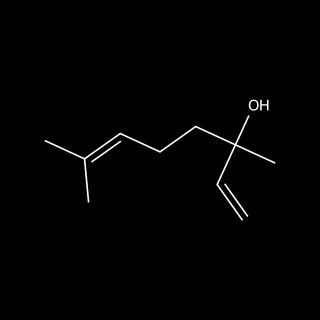
Linalool
PubChem, Linalool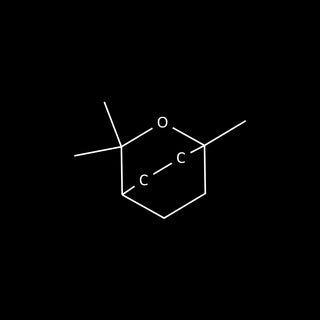
Eucalyptol (1,8-Cineole)
PubChem, Eucalyptol (1,8-Cineole)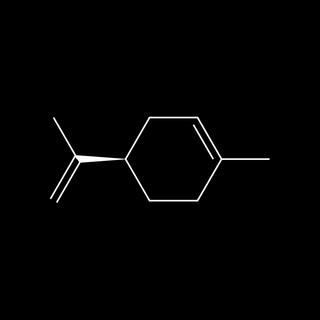
Limonene
PubChem, Limonene
Labelling
- EU allergens reported
- Linalool · Geranyl Acetate · Carvone
Performance and rules
- Available as
- essential oil
- IFRA status
- No IFRA Standard for the material itself (51st Amendment)
Kuromoji · See Also
Entries related to Kuromoji, by their place in the pyramid. “shared” marks a scent word Kuromoji has too.
Top notes

Litsea Cubeba
fresh · citrus · spicy Citrus / Natural-
Bay Essence
fresh · herbal · camphoraceous Aromatic / Top · Heart / Natural


Kuromoji · Sources
- GBIF Lindera umbellata (GBIF species record)
- Molecules (Basel, Switzerland) Comparison of Chemical Composition between Kuromoji (Lindera umbellata) Essential Oil and Hydrosol and Determination of the Deodorizing Effect
- IFRA Standards, 51st Amendment
- COSMILE Europe Lindera umbellata leaf twig oil
- Wikipedia (ja) クロモジ
- PubChem Linalool
- PubChem Limonene
Cite as PREMIEREPEAU Glossary, “Kuromoji”, https://premierepeau.com/
