


Mediterranean Immortelle
Keywords: warm · sweet · hay
Mediterranean Immortelle is a perfumery material from Helichrysum stoechas (Asteraceae), used as an essential oil and as a floral absolute. Its scent is warm and sweet, with hay, fruit, honey, tobacco and tonka facets.
- Olfactive family
- Aromatic · 509 entries of the glossary in this family Subfamily: Herbal aromatics · 228 entries in this subfamily
- Material
- Natural
- Pyramid
- Base · Volatility: Base Note
- Also called
- Mediterranean strawflower, curry plant, common shrubby everlasting, everlasting flower, eternal flower
Mediterranean Immortelle · Facets
Entries of the glossary that carry each facet, of 3,979:
- warm 1,108
- sweet 1,988
- hay 38
- fruity 1,301
- honey 97
- tobacco 67
Mediterranean Immortelle · Scent
It has a warm, sweet, caramellic hay, fruity, honey, tobacco, tonka organoleptic profile. The leaves and flowers have an intense fragrance.
Evolution over time
Mediterranean Immortelle: scent over time.
- Immediately
Fruity and sweet.
Scent words: fruity · sweet - After a few hours
Honey and warm hay.
Scent words: honeyed · warm - After a few days
Tobacco, tonka and caramellic notes.
Mediterranean Immortelle · In Perfumery
Helichrysum stoechas is used in perfumery and aromatherapy as a fixative in both its essential oil and floral absolute form.
Pyramid
Mediterranean Immortelle: Base. Entries of the glossary stored at each place of the pyramid, of 4,000 (36 store no place):
- Top 718
- Top · Heart 497
- Heart 1,641
- Heart · Base 514
- Base 594
Role in the formula
Mediterranean Immortelle: roles in the formula. Entries of the glossary that share each role, of 4,000:
- Fixative 340
- Warmth 53
- Heart note fewer than 40 entries
Mediterranean Immortelle · Terroir & Origins
- Producing countries
- Egypt (floral absolute)
Mediterranean Immortelle · Extraction & Chemistry
Helichrysum stoechas is obtained in two forms, an essential oil and a floral absolute.
Available as
Mediterranean Immortelle: available as.
- essential oil
- absolute
Mediterranean Immortelle · Did You Know?
The name Helichrysum is derived from the Ancient Greek words for sun and gold.
Mediterranean Immortelle · In Depth
The plant
Helichrysum stoechas is a species of the Asteraceae family. It is an annual or perennial shrub, depending on locale, that prefers dry, rocky and sandy areas. It can grow up to 120 centimeters (47 inches) in height. Its leaves are grayish green, and it produces small globular yellow flowers that are pollinated by insects.
Composition
Other flavonoids, sesquiterpenes and hydrocarbons are present too.
Traditional uses
Extracts of Helichrysum stoechas have been used in traditional medicine to treat colds, as a nerve tonic, to reduce inflammation, and facilitate the healing of bruises. Studies of the constituents of its flowers, stems and foliage have confirmed an inhibitory effect on some bacteria and viruses.
The genus
The genus Helichrysum consists of an estimated 600 species of flowering plants in the sunflower family (Asteraceae). Its species often go by the names everlasting, immortelle, and strawflower. The genus occurs in Africa (with 244 species in South Africa), Madagascar, Australasia and Eurasia.
Mediterranean Immortelle · Technical Sheet
Identity
- Botanical
- Helichrysum stoechas
- Taxonomy
- Asterales order › Asteraceae family › Helichrysum genus · GBIF
- Botanical records
- Helichrysum stoechas: POWO, Helichrysum stoechas · IPNI, Helichrysum stoechas · GBIF, Helichrysum stoechas · Wikidata, Helichrysum stoechas · Wikipedia, Helichrysum stoechas
- IPNI
- Helichrysum stoechas (L.) DC., Fl. Franç. [de Candolle & Lamarck], éd. 3. 4: 132 (1805) — Augustin Pyramus de Candolle (1778–1841)
- Type
- Ingredient
- Category
- Flowers
In Nature
- Flowering
- peak in May–June · north of the equator · iNaturalist
- Recorded altitude
- 0–750 m · median 250 m · 17,134 records with an altitude · GBIF
- Wild or cultivated
- 10,152 native · 3 introduced · 28 cultivated among 88,087 records (the rest carry no such mark) · GBIF
- Recorded in
- 15 of 512 squares of the world grid; a brighter dot holds more records · GBIF
- Also from this genus
- Helichrysum: Immortelle
In Print
- Timeline
- first described 1805 · earliest aroma paper in Europe PMC, 1998
- In English books
- most mentioned in the 1990s · Google Books Ngram
Classification
- Cluster
- Herbal aromatics · 76 entries in this cluster
Chemical data
- Formula
- Complex natural mixture (key constituents: nerol acetate; pinene; limonene; linalool; geraniol)
- Most reported compounds
- Astragalin (2 papers; one: J Pharm Biomed Anal 2001) · Chlorogenic Acid (2 papers; one: J Pharm Biomed Anal 2001) · Helipyrone (2 papers; one: J Ethnopharmacol 1991) · Linalool (1 paper; one: Planta Med 1997) · LOTUS
- Structure
- Neryl acetate, Limonene, Linalool:
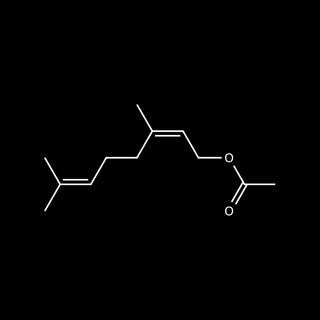
Neryl acetate
PubChem, Neryl acetate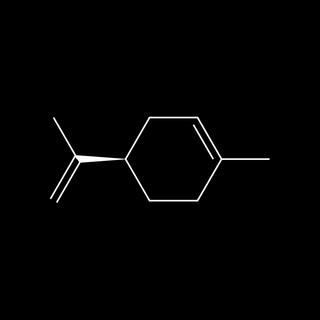
Limonene
PubChem, Limonene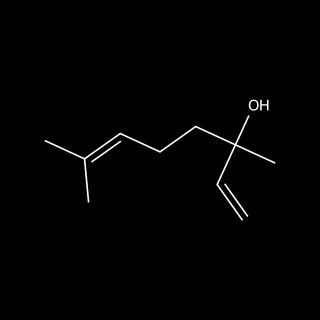
Linalool
PubChem, Linalool - CAS
- 91845-22-6
- EC
- 295-193-3
Labelling
- EU allergens reported
- Linalool · Benzyl Benzoate · Pinene · Beta-Caryophyllene
Performance and rules
- IFRA status
- No IFRA Standard for the material itself (51st Amendment)
Mediterranean Immortelle · See Also
Entries related to Mediterranean Immortelle, by their place in the pyramid. “shared” marks a scent word Mediterranean Immortelle has too.
Top notes


Heart notes

Immortelle
aromatic · honey (shared) · herbal Aromatic / Same cluster / Natural
African Marigold
herbal · fruity (shared) · warm (shared) Aromatic / Same cluster / Natural
Artichoke
green · earthy · fresh Green / Natural


Mediterranean Immortelle · Sources
- GBIF Helichrysum stoechas
- IFRA Standards, 51st Amendment
- Wikipedia Helichrysum stoechas
- Wikipedia Helichrysum
Cite as PREMIEREPEAU Glossary, “Mediterranean Immortelle”, https://premierepeau.com/
