


Muña
Keywords: herbal · minty · green
Muña is the common name of Minthostachys mollis, a medicinal plant of the Andes in the family Lamiaceae.
- Olfactive family
- Aromatic · 495 entries of the glossary in this family Subfamily: Herbal aromatics · 225 entries in this subfamily Cluster: Minty aromatics · 76 entries in this cluster
- Material
- Natural Leaves
- Pyramid
- Top-Heart Note
- Also called
- tipo, tipollo, poleo
Muña · Facets
Entries of the glossary that carry each facet, of 3,979:
- herbal 755
- minty 107
- green 1,444
- aromatic 103
- fresh 1,392
Muña · In Perfumery
Pyramid
Muña: Top · Heart. Entries of the glossary stored at each place of the pyramid, of 4,000 (35 store no place):
- Top 718
- Top · Heart 501
- Heart 1,646
- Heart · Base 512
- Base 588
Role in the formula
Muña: roles in the formula. Entries of the glossary that share each role, of 4,000:
- Freshness 720
- Top note fewer than 40 entries
- Green note fewer than 40 entries
- Modifier 1,168
PREMIEREPEAU collection: Extrait de parfum
Muña · Extraction & Chemistry
The essential oil is obtained by steam distillation of fresh leaves in a Clevenger type apparatus. Steam distillation of leaves from Ecuador was optimal at a plant material to water ratio of 1:5 and an extraction time of 150 minutes, giving a yield of 0.67%.
Muña · Did You Know?
The common name muña comes from Quechua. Minthostachys mollis is the most variable and widely distributed species of its genus.
Muña · In Depth
What it is
Minthostachys mollis belongs to the family Lamiaceae. The genus Minthostachys has 17 species of aromatic shrubs distributed in the Andes of South America. Minthostachys mollis is restricted to the Andes of Venezuela, Colombia, Ecuador, Peru and Bolivia. Other local names include tipo, tipollo and poleo.
Chemistry of the oil
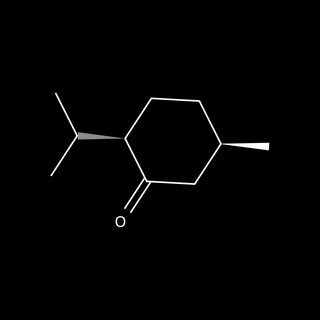
The principal components of the essential oil include pulegone, menthone, menthol, limonene, isomenthone, eucalyptol and carvone. In a GC-MS analysis of the oil, the main components were pulegone (33.48%) and menthone (26.68%). In the flowering tops, 19 compounds were identified in the essential oil, predominantly 29% neomenthol, 24% menthone, 20% menthol and 8% piperitone.
The composition of the oil varies among wild populations in Argentina. In that country, samples from Córdoba and San Luis belonged to the typical menthone-pulegone chemotype. Samples from Tucumán, Salta and Catamarca showed different compositions. Five groups were retained: dihydrocarvone-carvone, pulegone with absence of menthone, carvacryl acetate-carvacrol, limonene and linalool. In the leaf oil of plants grown in Ecuador, the main compounds were carvacryl acetate (44.01%), carvacrol (16.51%) and menthone (8.20%).
Traditional use
In the indigenous medicine traditions of the Andes, the plant is made into tea and used medicinally as a carminative and aphrodisiac.
Safety
In rats, the essential oil showed moderate acute oral toxicity, with an LD50 cut-off value of 500 mg/kg of body weight. With repeated doses for 28 days there was evidence of toxicity, in a dose-dependent manner, mainly at the liver level. This liver toxicity would be related to pulegone and menthone, the most abundant components of the oil.
Muña · Technical Sheet
Identity
- Botanical
- Minthostachys mollis
- IPNI
- Minthostachys mollis (Kunth) Griseb., Abh. Königl. Ges. Wiss. Göttingen 19: 235 (1874) — August Heinrich Rudolf Grisebach (1814-1879)
- Type
- Ingredient
- Category
- Greens, herbs and fougeres
In Nature
In Print
- Timeline
- first described 1874 · earliest aroma paper in Europe PMC, 1995
- In English books
- most mentioned in the 1990s · Google Books Ngram
Chemical data
- Formula
- Complex natural mixture (key constituents: pulegone C₁₀H₁₆O; menthone C₁₀H₁₈O)
Labelling
- EU allergens reported
- Limonene · Linalool · Pinene · Terpineol · Terpinolene · Beta-Caryophyllene
Performance and rules
- Available as
- essential oil
- IFRA status
- No IFRA Standard for the material itself (51st Amendment)
Muña · See Also


Muña · Sources
- GBIF Minthostachys mollis
- Journal of toxicology Potential Toxicity of the Essential Oil from Minthostachys mollis: A Medicinal Plant Commonly Used in the Traditional Andean Medicine in Peru
- Boletin Latinoamericano y del Caribe de Plantas Medicinales y Aromaticas Essential oil of Minthostachys mollis[HBK] Griseb. leaves from Ecuador: Extraction, chemical composition, antioxidant capacity and antimicrobial activity
- Edgar Heim Flora of Arequipa, Peru (2014)
- FAO AGRIS 65df74044c5aef494fe2b615
- PubChem pulegone
- IFRA Standards, 51st Amendment
- Wikipedia Minthostachys mollis
- Wikipedia Menthone
- PubChem pulegone
- PubChem menthone
Cite as PREMIEREPEAU Glossary, “Muña”, https://premierepeau.com/pages/glossary-terms/muna Updated 2026-11-19
