


Purslane
Keywords: earthy · fresh · green
Purslane is Portulaca oleracea, a succulent plant of the family Portulacaceae, eaten as a salad green and potherb. Its taste is slightly sour and salty.

- Olfactive family
- Aromatic · 510 entries of the glossary in this family Subfamily: Green notes · 93 entries in this subfamily Cluster: Green leafy notes · 420 entries in this cluster
- Material
- Natural Leaves
- Pyramid
- N/A — no standard perfumery material
- Strength
- N/A — no standard perfumery material Not on the graded scale
- Producing countries
- Asia, Mediterranean
- Also called
- Common purslane, little hogweed, pursley, verdolaga
Family, subfamily and cluster: PREMIEREPEAU house classification, version 2026‑11.
Purslane · Facets
Entries of the glossary that carry each facet, of 3,979:
- floral 1,546
- citrus 487
- green 1,442
- earthy 660
- fresh 1,387
Purslane · Scent
Evolution over time
Purslane: scent over time.
- Immediately
N/A — no documented evolution: no standard perfumery material
- After a few hours
N/A
- After a few days
N/A
Purslane · In Perfumery
In flavour, the stems, leaves and flower buds taste slightly tart or sour and salty, and the intensity of the flavour depends on the physiology of the plant. Leaves picked early in the day, when malic acid concentrations are highest, have the tartest flavour. In cosmetics the extract serves as an antioxidant and skin conditioning ingredient.
Pyramid
Entries of the glossary stored at each place of the pyramid, of 4,006 (42 store no place):
- Top 718
- Top · Heart 497
- Heart 1,641
- Heart · Base 514
- Base 594
Role in the formula
Purslane: roles in the formula. Entries of the glossary that share each role, of 4,006:
- N/A — no documented formula role 361
Purslane · Extraction & Chemistry
Purslane water is the steam distillate obtained from the whole plant.
- Appearance
- Annual plant with a fleshy stem, succulent leaves, small yellow or white flowers and small black seeds
Purslane · Did You Know?
Although often considered a nuisance in North America, common purslane has been used as food and medicine for more than 4,000 years. A single plant produces up to 240,000 seeds that can remain viable in the soil for more than 40 years.
Purslane · In Depth
What purslane is
Purslane (Portulaca oleracea) is a succulent plant in the family Portulacaceae. It is a widespread edible weed. All parts of the plant are edible raw or cooked. Its distribution extends from North Africa and Southern Europe through the Middle East and the Indian subcontinent to Malesia and Australasia. The plant may reach 40 centimetres (16 inches) in height. It contains 94 percent water.
Volatiles
The sourness of the plant is due to oxalic and malic acid. Sixteen volatile compounds have been identified in the leaves, of which 32.74% were pyrazines and 32.24% monoterpenoids. The two largest individual compounds are 2-sec-butyl-3-methoxypyrazine (25.07%) and linalool (20.18%). 2-Isopropyl-3-methoxypyrazine (2.07%) was found only in purslane among the seven species compared. Linalool is characteristic of basil, coriander and thyme, and its aroma is described as flowery and rose.
Composition
Purslane is a source of alpha-linolenic acid, an essential omega-3 fatty acid. Its leaves contain nearly 300–400 mg of alpha-linolenic acid per 100 g of fresh weight. The leaves are very high in oxalates.
Uses
Purslane may be used fresh as a salad, stir-fried, or cooked as spinach is. Because of its mucilaginous quality it is also suitable for soups and stews. Aboriginal Australians use the seeds to make seedcakes. The leaves and seeds can be taken orally or applied to the skin to ease skin allergy.
Explore all seven extraits in the Discovery Set.
Purslane · History
Purslane has been used in various parts of the world as folk medicine and traditional food since ancient times. Its use for various ailments is mentioned in ancient texts such as Materia Medica by Dioscorides, Canon of Medicine by Avicenna and Charaka Samhita. Carl Linnaeus recorded the species in 1753 in Species Plantarum. Evidence from Crawford Lake deposits in Ontario dated 1350–1539 suggests that the plant reached North America in the pre-Columbian era.
Purslane · Technical Sheet
Identity
- Botanical
- Portulaca oleracea
- Taxonomy
- Caryophyllales order › Portulacaceae family › Portulaca genus · GBIF
- Botanical records
- Portulaca oleracea: POWO, Portulaca oleracea · IPNI, Portulaca oleracea · GBIF, Portulaca oleracea · Wikidata, Portulaca oleracea · Wikipedia, Portulaca oleracea · IUCN Least concern (LC), Portulaca oleracea
- IPNI
- Portulaca oleracea L., Sp. Pl. 1: 445 (1753) — Carl Linnaeus (1707–1778)
- Type
- Ingredient
- Category
- Greens, herbs and fougeres
- Note
- Purslane is primarily used as a fresh green olfactory note. No standard essential oil commercially distilled for perfumery.
In Nature
- Native range
- Middle Europe · Southwestern Europe · Southeastern Europe · Eastern Europe · Northern Africa · Macaronesia · West Tropical Africa · West-Central Tropical Africa · 9 more regions · POWO
- Introduced to
- 228 regions · Northern America 65 · Southern America 46 · Temperate Asia 28 · Tropical Asia 28 · Pacific 26 · Africa 16 · Europe 10 · Australasia 9
- Flowering
- peak in June–September · north of the equator · iNaturalist
- Recorded altitude
- 0–750 m · median 200 m · 38,863 records with an altitude · GBIF
- Wild or cultivated
- 9,486 native · 1,310 introduced · 72 cultivated among 203,138 records (the rest carry no such mark) · GBIF
- Recorded in
- 203 of 512 squares of the world grid; a brighter dot holds more records · GBIF
- Also from this genus
- Portulaca: Portulaca or Pigweed
In Print
- Timeline
- first described 1753 · earliest aroma paper in Europe PMC, 2015
- In English books
- most mentioned in the 1970s · Google Books Ngram
Classification
- Chemical class
- Fantasy note
Chemical data
- Formula
- Complex natural mixture (key constituents: alpha-linolenic acid; linalool; 2-sec-butyl-3-methoxypyrazine)
- Most reported compounds
- Oleic Acid (3 papers; one: J Pharm Pharmacol 2015, Oleic Acid) · Linoleic Acid (3 papers; one: J Pharm Pharmacol 2015, Linoleic Acid) · Lauric Acid (2 papers; one: Fette, Seifen, Anstrichm 1986, Lauric Acid) · Beta-Carotene (2 papers; one: J Chromatogr A 2000, Beta-Carotene) · Myristic Acid (2 papers; one: Fette, Seifen, Anstrichm 1986, Myristic Acid) · LOTUS
- Structure
- Linolenic Acid, Linalool, 2-sec-Butyl-3-methoxypyrazine:
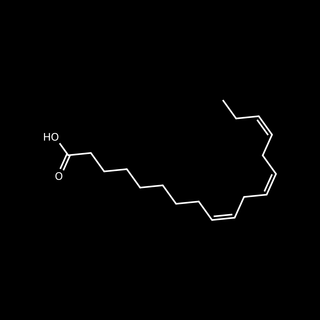
Linolenic Acid
PubChem, Linolenic Acid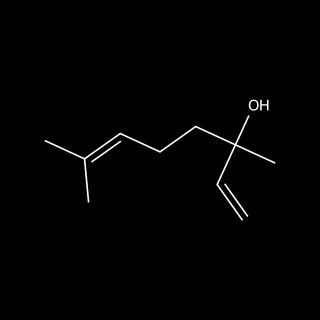
Linalool
PubChem, Linalool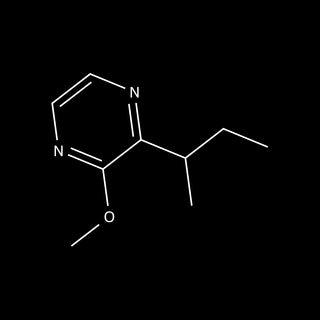
2-sec-Butyl-3-methoxypyrazine
PubChem, 2-sec-Butyl-3-methoxypyrazine - CAS
- 90083-07-1
- EC
- 290-201-1
- INCI names (CosIng)
- PORTULACA OLERACEA EXTRACT (SKIN CONDITIONING)PORTULACA OLERACEA FLOWER/LEAF/STEM EXTRACT (ANTIOXIDANT, SKIN CONDITIONING)PORTULACA OLERACEA SPROUT EXTRACT (SKIN CONDITIONING – EMOLLIENT, SKIN CONDITIONING – HUMECTANT)PORTULACA OLERACEA WATER (SKIN CONDITIONING)PORTULACA OLERACEA JUICE (SKIN CONDITIONING)PORTULACA OLERACEA LEAF VESICLES (HAIR CONDITIONING, SKIN PROTECTING, SKIN CONDITIONING – MISCELLANEOUS)
- Compound classes reported
- Monoterpenoids 4 % · Sesquiterpenoids 2 % · Fatty acids and conjugates 18 % · of 92 compounds reported, 8 % of them esters · LOTUS
Performance and rules
- Available as
- fantasy note
- IFRA status
- No IFRA Standard for the material itself (51st Amendment)
Purslane · See Also
Entries related to Purslane, by their place in the pyramid. “shared” marks a scent word Purslane has too.
Top notes

Basil
aromatic · green (shared) · herbal Aromatic / Top · Heart / Same subfamily / Natural
Thyme
aromatic · fresh (shared) · green (shared) Aromatic / Top · Heart / Same subfamily / Natural
Black Pepper
spicy · warm · aromatic Aromatic / Natural
Rosemary
aromatic · herbal · camphorous Aromatic / Top · Heart / Natural


Heart notes

Portulaca or Pigweed
green (shared) · earthy (shared) · fresh (shared) Aromatic / Same cluster / Natural
Immortelle
aromatic · honey · herbal Aromatic / Natural
Duck Poo Oolong
floral (shared) · creamy · tea Florals / Natural


Base notes

Asparagus
agrestic · hay · tobacco Aromatic / Natural

Purslane · Sources
- International Plant Names Index (IPNI) Portulaca oleracea L.
- Journal of Pharmacopuncture (2019) A Pharmacological Review on Portulaca oleracea L.: Focusing on Anti-Inflammatory, Anti- Oxidant, Immuno-Modulatory and Antitumor Activities
- Heliyon (2022) A review on bioactive phytochemicals and ethnopharmacological potential of purslane (Portulaca oleracea L.)
- Plants (2022) Nutritional Composition, Bioactive Compounds, and Volatiles Profile Characterization of Two Edible Undervalued Plants: Portulaca oleracea L. and Porophyllum ruderale (Jacq.) Cass
- Frontiers Assessment of the Volatile Profiles and Identification of Differentiating Aromas of Wild Undervalued Plants
- Mississippi State University Extension Forgotten Foods: Common Purslane
- University of Wisconsin–Madison Extension Common Purslane, Portulaca oleracea
- IFRA Standards, 51st Amendment
- Wikipedia Portulaca oleracea
Cite as PREMIEREPEAU Glossary, “Purslane”, https://premierepeau.com/
