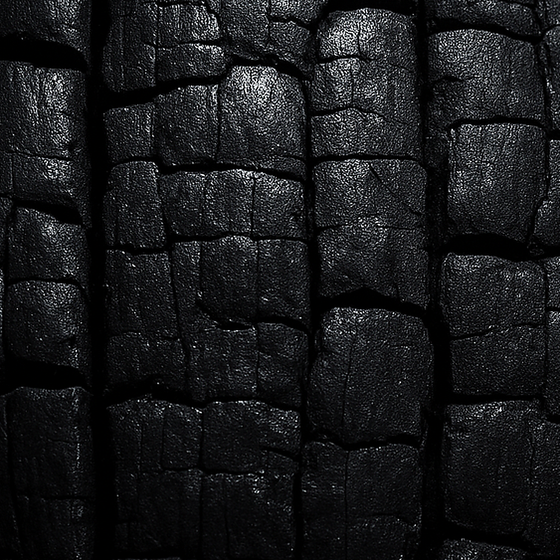
Nagorelo drvo

AkordDRVA I MAHOVINEdrvenast · bogat · dimni
Bazne notePiramida
—Jačina
—Trajnost
—Poreklo
Uzorak
Nagorelo drvo kao sirovina za parfeme
Bazne note
Fantazijska/konceptualna
Definicija

Charred wood is a smell, alongside forest fires and burnt herbs, that cade oil can conjure in niche and experimental perfumery. Rectified cade oil is described as smelling of burnt wood, tar, ash, leather and dry pine.

DRVENAST DIMNI KOŽNI ZEMLJAN SUV
Type
Akord
Olfactive family
Drvenasti
Source
Wood heated in minimal oxygen (pyrolysis)
Instrumenti
Piramida
GGornje note
SSrednje note
BBazne note

Miris

Cade oil is a dark, aromatic oil with a strong smoky smell. Rectified cade oil is described as smoky, leathery, tar-like and dry woody, with nuances of ash, charred pine and dark earth. Guaiacol has a characteristic sweet odor.

Detaljno

Charcoal and pyrolysis

Charcoal is a lightweight black residue made of carbon that is produced by strongly heating wood in minimal oxygen to remove all water and volatile constituents. The properties of the charcoal depend on the material charred, and the charring temperature is also important. Activated charcoal readily adsorbs a wide range of organic compounds and is also used to absorb odors.

Chemistry of wood smoke

Guaiacol is a common product of the pyrolysis of wood. It is present in wood smoke, where it results from the pyrolysis of lignin. Together with guaiacol, syringol and its derivatives are produced by the pyrolysis of lignin, and syringol is a main component of wood smoke. Pyrolysis of lignin from gymnosperms gives more guaiacol, while a high syringyl content indicates lignin from angiosperms. Hardwood and softwood smokes differ in the ratio of guaiacols to syringols. Creosol, also named 4-methylguaiacol, is one of the components of creosote.

Pyrolysis of burning material, especially incomplete combustion or smoldering without enough oxygen, produces a large amount of hydrocarbons, among them polycyclic aromatic hydrocarbons. Heavier hydrocarbons may condense as tar, and smoke with significant tar content is yellow to brown.

Charred oak casks

In the United States, new spirit must be aged in brand-new charred oak barrels to be called straight whiskey or straight bourbon. Depending on the level of char, different amounts of wood sugars are caramelised and vanillins, lactones and tannins are left to influence the flavour of the whiskey.

Explore all seven extraits in the Discovery Set.

—

Related: Akigalawood · Ambrocenide · Asphalt · Burnt Match · Cigarette · Coal · Cuban Cigar · Dry Wood

Zanimljivosti

Bourbon barrels are typically charred for 40 to 60 seconds but can be left for as long as three minutes. The carbon in the char also removes sulphur compounds from the spirit.

Dobijanje i hemija

Način dobijanja

Cade oil is the essential oil obtained through destructive distillation of the wood of Juniperus oxycedrus. Birch bark tar is made by dry distillation of birch tree bark. Wood charcoal is the residue of the destructive distillation of wood, which also yields pyroligneous acid, wood tar and wood gas. The condensed products from the destructive distillation of wood are called liquid smoke or pyroligneous acid. Guaiacol is produced by methylation of catechol, for example using potash and dimethyl sulfate.

Formula
Complex natural mixture (key constituents: guaiacol C₇H₈O₂; syringol C₈H₁₀O₃)
Izgled
Black carbon residue (charcoal); yellow to red liquid (liquid smoke)
Status prema standardima IFRA
Pogledajte napomenu

No IFRA Standard for the material itself (51st Amendment)

U parfemima

Birch bark tar has been used in perfumery as a base note to impart a leathery, smoky note, especially in the leather and tobacco genre. To a lesser extent, birch bark tar appears in chypres, typically together with castoreum and isobutyl quinoline. In the eighteenth century, birch bark tar oil was used with civet, castoreum and many other aromatic substances to scent fine Spanish leather. Cade oil is also used in some cosmetics and incense. In flavour, guaiacol contributes to the flavor of many substances such as whiskey. In preparation of food by smoking, syringol is the main chemical responsible for the smoky aroma, while guaiacol contributes mainly to taste. Liquid smoke is used as a flavoring to substitute for cooking with wood smoke.

Uloga u formuli
01modifikator
02okosnica
03sirovina za stapanje
04graditelj volumena
Oblici na tržištu
sintetički akord fantazijska nota

Pogledajte i

7 nota