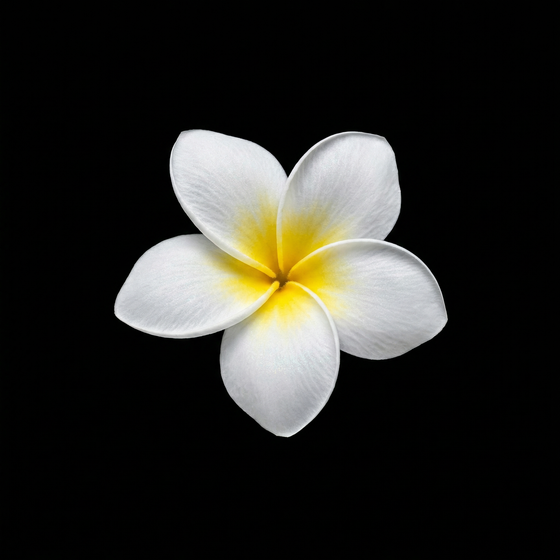
Frangipani

PrirodnaBELI CVETOVIcvetni · tropski · kremast
Srednje notePiramida
—Jačina
—Trajnost
1Poreklo
Uzorak
Frangipani kao sirovina za parfeme
Srednje note
Plumeria rubra L. / Plumeria alba L.
Definicija

Frangipani is the common name of Plumeria, a genus of small trees and low shrubs in the family Apocynaceae. The flowers are highly fragrant, especially at night.

CVETNI SLADAK VOĆNI TOPAO KREMAST MLEČAN TROPSKI
plumeria, temple tree, red frangipani, white frangipani, nosegay tree, West Indian jasmine, calachuchi
Type
Sirovina
Olfactive family
Cvetni
Source
flowers
Instrumenti
Piramida
GGornje note
SSrednje note
BBazne note
Zemlje proizvođači
Havaji

Miris

The scent of the flowers is perceived to have floral elements of jasmine, citrus and gardenia, fruity aromatic notes of coconut, peach and vanilla, and lactonic, woody accords. The fragrance is sweet and floral and evocative of other tropical scents. Among the main constituents of Plumeria rubra flower volatiles, (E,E)-alpha-farnesene has a floral-green apple odour and (E)-nerolidol a woody one. (E)-beta-Ocimene smells sweet and herbal, and linalool floral and lavender-like.

Teroar i poreklo

Detaljno

Botany

Plumeria species are native to the Neotropical realm in Mexico, Central America, the Caribbean, and northwestern South America. They are often grown as ornamental plants in tropical regions, including Florida, Hawaii, southern China, northern India and Senegal. The branches are succulent, and the trunk and branches have a milky latex sap that, like the sap of many other Apocynaceae, contains poisonous compounds that irritate the eyes and skin. Plumeria trees flower from early summer to fall. The blossoms grow in clusters at the ends of the stems and have a tubular corolla that splits sharply into five rounded, waxy petals that overlap each other. The flowers come in many colours, including pink, red, white, yellow, orange or pastel. The genus Plumeria includes 18 accepted species and one natural hybrid.

The scent of the flowers tricks sphinx moths into pollinating them as the moths search in vain for nectar. In Plumeria rubra the fragrance becomes more prominent in the evening and at night, matching the period of greatest hawkmoth activity. Plumeria rubra grows as a spreading tree 7-8 m (23-26 ft) high and wide that is flushed with fragrant flowers in shades of pink, white and yellow over the summer and autumn. Despite its common name, Plumeria rubra is not a true jasmine and does not belong to the genus Jasminum. The native range of Plumeria rubra extends from Baja California into central Mexico and south through Central America to the Department of Antioquia in Colombia and Venezuela. Plumeria rubra is cultivated widely in tropical and subtropical regions of the world and has become naturalized in most parts of tropical Asia and the Pacific Islands. Plumeria alba is native to Puerto Rico and the Lesser Antilles in the Caribbean. It is a small deciduous tree that has been planted in tropical regions worldwide. The flowers of Plumeria alba are fragrant, with five white petals and a yellow center.

Scent chemistry

Linalool (23.91%), alpha-terpineol (10.97%), geraniol (10.47%) and phenylethyl alcohol (8.65%) are abundant in the essential oil of Plumeria alba flowers, in which 17 compounds were identified. Terpenes and terpenoids dominate that flower oil, which also holds primary alcohols, ketones, esters and saturated fatty acids. A reported analysis of Plumeria alba flowers from India gives benzyl salicylate (33.98%), benzyl benzoate (12.37%), germacrene (10.30%) and linalool (8.71%) as major compounds. In the headspace of Plumeria rubra flowers, (E,E)-alpha-farnesene makes up 40.9-41.2% of the volatiles on the DB-5ms column and (E)-nerolidol 21.4-32.6%. (E)-beta-Ocimene, (Z)-dihydro-apofarnesol, linalool and perillene are the other main constituents. Another analysis of Plumeria rubra flowers reported benzyl salicylate (26.7%), benzyl benzoate (22.3%), (E,E)-geranyl linalool (9.4%) and tricosane (8.3%) among the main constituents.

Open flowers of plumeria emit the highest amount of volatiles, with phenylpropanoids and benzenoids (70.1%) outweighing terpenoids (20.8%). Open flowers emit nearly 6 times more total volatiles than floral buds and 2.5 times more than leaves. 2-Phenylethanol is the most abundant volatile of open plumeria flowers, at 35.67% of the total. Benzaldehyde (11.77%) and 2-phenylacetaldehyde (5.82%) are also among the open-flower volatiles. Floral buds emit mainly terpenoids, such as eucalyptol (51.68%). The leaves emit mainly monoterpenoids, such as beta-ocimene (55.53%). A highly expressed, flower-specific gene encoding a cytochrome P450 protein, PrCYP79D73, catalyzes the formation of phenylacetaldoxime in plumeria flowers. Phenylacetaldoxime is an intermediate in the biosynthesis of 2-phenylethanol in plumeria flowers. 2-Phenylethanol is likely of major importance to the typical scent and fragrance of plumeria flowers.

Uses and culture

In several Pacific islands, including Tahiti, Fiji, Samoa, Hawaii, New Zealand, Tonga and the Cook Islands, Plumeria species are used for making leis. Balinese Hindus use the flowers in their temple offerings. In Cambodia pagodas especially choose Plumeria alba, and its flowers are used in ritual offerings to the deities. The flowers of Plumeria alba are edible and eaten as fritters. In Myanmar the poisonous sap is used as a laxative. Plumeria is considered a symbol of immortality because it can flower and produce leaves even if uprooted. Plumeria rubra is the national flower of Laos, where it is known as dok champa. Plumeria rubra was declared the national flower of Nicaragua in 1971, where it is known as sacuanjoche. In Mexico the common name of Plumeria rubra is cacaloxochitl, a Nahuatl name meaning crow's flower. Because of its associations with graveyards and death, Plumeria rubra is also known as bunga kuburan, literally grave flower.

Zanimljivosti

An invented story about the origin of the name 'frangipani' was published in 1867. The English perfumer Septimus Piesse claimed that the name came from Mercutio Frangipani, a crewman with Columbus. Piesse and some associates concocted the story and the character to drive up commercial interest in his products. In Malaysian-Indonesian folklore, the fragrance of the plumeria is associated with the Kuntilanak, an evil vampiric spirit of a dead mother.

Dobijanje i hemija

Način dobijanja

Steam distillation of the flowers of Plumeria alba yielded 0.09% of essential oil, pale yellow in colour. Earlier reports of Plumeria alba flower oil give yields of 0.05% in India and 0.23% in Nigeria. Yields vary with the method of extraction, the age of the plant, the variety and the growing conditions. Enfleurage is the transfer of the essential oil from flower petals to fat. In general, absolutes are made by extracting plant material with a hydrocarbon solvent such as hexane to give a concrete, which is then extracted with ethanol. The ethanol extract is cooled to solidify waxes and cold filtered to give a liquid extract, and when the ethanol evaporates an oil, the absolute, is left behind. Traditionally, the absolute was obtained by enfleurage, where the resulting pomade was extracted with ethanol to yield the absolute.

Formula
Complex natural mixture (key constituents: (E,E)-alpha-farnesene; (E)-nerolidol; linalool)
CAS
94350-02-4 (Plumeria alba extract); 223748-06-9 (Plumeria rubra extract)
Botanički naziv
Plumeria rubra L. / Plumeria alba L.
Izgled
pale yellow essential oil (steam-distilled Plumeria alba flowers)
Sinonimi
plumeria, temple tree, red frangipani, white frangipani, nosegay tree, West Indian jasmine, calachuchi
Status prema standardima IFRA
Pogledajte napomenu

No IFRA Standard for the material itself (51st Amendment)

U parfemima

Frangipani is used in the manufacture of soaps, perfumes and essential oil blends. Its calming scent, together with anti-inflammatory properties and antioxidants, makes the extract a popular choice in cosmetic, aromatherapy and household products. No current PREMIEREPEAU fragrance features frangipani as a declared note.

Uloga u formuli
01modifikator
02nota potpisa
03sredstvo za podizanje
04sirovina za stapanje
05graditelj volumena
Oblici na tržištu
apsolut anfleraž

Pogledajte i

5 nota