Attar: The Perfume Oil Distilled Into a Base, Without Alcohol

Attar is a perfume oil made without alcohol, from the Arabic 'itr, perfume. In Kannauj, India, flowers, herbs or baked clay are boiled in a copper still and the steam is caught in a base oil. The base was sandalwood. In 2008 a leading exporter said most makers had changed to liquid paraffin or DOP. A shop attar may be only a concentrated oil.
What is attar?
Attar is a perfume oil made without alcohol. The word is Arabic, 'itr, perfume. In Kannauj, India, flowers, herbs or baked clay are boiled in a copper still, and the steam is caught in a base oil that takes up the smell, as in mitti attar. On a shop shelf, the same word may name only a concentrated oil.
Search the word and most pages tell you the same story. Rose attar, they say, was discovered by the empress Nur Jahan. Wikipedia's page, second on the results, states: "Rooh Gulab attar was discovered by Nur Jahan." The one first-hand account, written by her husband the emperor, tells it differently. He credits the discovery to "the mother of" Nur-Jahan Begam and names no one. The second story on those pages is that real attar is distilled into sandalwood oil. That is the tradition. In 2008, a leading Kannauj exporter said most makers had already left it.
What is the English name for attar?
Older English says otto. The Anglo-Indian dictionary Hobson-Jobson, in the edition of 1903, derives the word from the Arabic 'itr, perfume, and adds that an 'attar is a perfumer or druggist. It gives the English form as "Otto of Roses" in common use, and "Attar of Roses" only "by imperfect purists." So the English name for the oil was otto, and attar was the spelling nearer the Arabic.
No dated record gives the first printing of the word in English.
| Year | Spelling | Where |
|---|---|---|
| 1573 | Atarin | A street of Fez "of the Atarin, which is the Spicery," in a Spanish account quoted in Hobson-Jobson |
| 1759 | otter | "1 otter box set with diamonds," in the accounts of an entertainment given to Jugget Set, quoted in Hobson-Jobson |
| 1802 | otta | Burder, Oriental Customs, where a Burmese nobleman speaks of the perfume of "otta of roses" |
| 1903 | otto, attar | Hobson-Jobson, new edition, entry Otto |
| 2015 | itr | Down To Earth, a report on Kannauj |
Attar oil, attar perfume and alcohol free perfume: two meanings
Two meanings sit under the one word. The first is the maker's. A Kannauj distiller catches the steam of the flowers in a base oil, and the result is the attar. The second is the seller's. A shop guide that ranks on the results page defines attar as "a natural perfume oil made from flowers, herbs, spices, or woods" and as "non-alcoholic." The same guide says "People mix attars with a base oil (like sandalwood) and use them as perfumes." In that reading the base is added to a finished attar. In Kannauj the base waits in the receiver.
| Kannauj, as the reports describe it | Shop guide | |
|---|---|---|
| The thing | A distillate of flowers, herbs or clay, caught in a base oil | A perfume oil from flowers, herbs, spices or woods |
| The base oil | In the receiver, during the distillation | Mixed with the attar afterwards |
| Alcohol | "alcohol is not used in the production process" | "non-alcoholic" |
Alcohol is the point every page repeats. A Kannauj maker told Down To Earth that "the onslaught of inexpensive alcohol-based fragrances and deodorants has flattened the demand for itr everywhere." Our article on perfume oil against spray sets the two formats side by side.
How is attar made?
With a copper still and a day of fire. The method is called deg-bhapka, after the two vessels. A government account of the castes of the North-Western Provinces, by William Crooke, quotes a monograph on trades and manufactures for the perfumer's still. It is "a gigantic goblet" of copper, the bhapka, in which the maker places "Sandal 'Itr, which is made at Kanauj." The flowers are thrown into water in the cauldron on the fire, and the perfume comes off in steam and passes into the bhapka, where it combines with the sandal oil. Then the perfumed oil is separated from the water "by skimming the surface with the hands."
A visit to Kannauj by the magazine Business Today, in 2008, describes the same steps. "Each sack of flowers, which could weigh between 60 kg and 70 kg, is emptied into a copper urn (degh) that contains roughly an equal quantity of water." The mouth of the urn is plastered with clay and the lid clamped. A hollow bamboo pipe wrapped in coconut coir carries the vapour into the bhapka, which stands in a shallow tank of water. The article says the distillation "takes about five to six hours," on a fire of wood charcoal. It also says the base oil "takes on the smell of the particular flower."
Down To Earth, in 2015, describes it as hydro-distillation "fired through dung cakes or wood," with equipment of copper and bamboo. The same report says "alcohol is not used in the production process." Three accounts, Crooke's, the magazine's and the 2015 report, give one method. Our article on steam distillation and the other ways of extracting scent tells how the Western stills differ.
How much does it take? The Business Today article says "a minimum of 80-100 kg of flowers per kg of sandalwood oil for a kg of attar." The sentence is loose, and it is not a figure for rose alone.
Is attar made with sandalwood?
It was, and it is said to be less and less. Crooke's account makes sandal oil the base of the whole trade. In 2008, the Business Today reporter quoted a leading Kannauj exporter: "Most manufacturers, including us, have replaced the sandalwood oil base with either liquid paraffin or DOP." DOP is dioctyl phthalate. The reason was cost, Rs 90,000 a kilogram for sandalwood against Rs 10,000 for liquid paraffin. The share of sandalwood-based attars to paraffin or DOP attars had gone from 80 to 20, about six years before, to 10 to 90.
A 2015 report in Down To Earth says the same, with a cause: sandalwood oil became short after it was banned in north India and "highly regulated" in the south in the 1990s. In its words, "sandalwood oil has been replaced" with petroleum products. Two reports seven years apart agree. Neither cites a statute or gives a figure for today.
| Item | Figure | Year, source |
|---|---|---|
| Sandalwood-based attars to paraffin or DOP attars | 80 to 20, then 10 to 90 about six years later | 2008, Business Today |
| Base oil, sandalwood | Rs 90,000 per kg | 2008, Business Today |
| Base oil, liquid paraffin | Rs 10,000 per kg | 2008, Business Today |
| Flowers per kg of attar | at least 80 to 100 kg | 2008, Business Today |
| Flowers per urn | 60 to 70 kg, with about the same weight of water | 2008, Business Today |
| Firing time per charge | five to six hours | 2008, Business Today |
| Rose attar, 100 ml | Rs 1,000, against Rs 100 for the cheapest | 2015, Down To Earth |
The last row is a maker's retail figure from 2015. A 100 ml vial of the famous Ruh Gulab, the rose attar, "costs Rs 1,000," the maker said, but rose attar "for as low as Rs 100" is also on the market. The two prices sit ten times apart. For the tree itself, see the thirty-year sandalwood industry, sandalwood and Indian sandalwood in our glossary.
Who discovered rose attar?
The emperor Jahangir wrote the entry himself, in the memoir translated by Alexander Rogers and edited by Henry Beveridge. He says the rose 'itr "is a discovery which was made during my reign through the efforts of the mother of" Nur-Jahan Begam. When she was making rose-water, "a scum formed on the surface of the dishes into which the hot rose-water was poured from the jugs." She collected the scum little by little. He rewarded the inventress with a string of pearls, and a third woman, Salima Sultan Begam, was present and "gave this oil the name of" 'itr-i-Jahangiri.
He praised it at length. "It is of such strength in perfume that if one drop be rubbed on the palm of the hand it scents a whole assembly, and it appears as if many red rosebuds had bloomed at once." That is an emperor's praise, not a trade description. The translator glosses the oil as "so-called otto of roses."
| The memoir | The later tale | |
|---|---|---|
| Who | the mother of Nur-Jahan Begam, not named | the empress Nur Jahan herself |
| How | a scum on hot rose-water in dishes | a scum on a canal of rose-water filled for her wedding |
| Who named it | Salima Sultan Begam | the name is simply said to follow |
| Where | Tuzuk-i-Jahangiri, vol. 1, pp. 270 to 271 | A note added to Hobson-Jobson by its later editor: "is said to have been discovered by the Empress Nur-jahan." Wikipedia and a heritage site repeat it |
The later version has no source in the dictionary note. Live History India marks it as legend: "other legends ascribe it to Emperor Jahangir or even his chief consort Noorjahan." The memoir does not name the inventress. Our article on Asmat Begum names her, from other works. For the oil itself, see rose otto against rose absolute and rose.
What is the smell of attar?
It depends on what went into the still and on what caught it. The Business Today article makes the second point plainly: the base oil takes on the smell of the particular flower. So there is no one smell of attar. There is a smell of rose attar, a smell of clay attar, and a smell of the base underneath.
Two smell records bear on it. Jahangir's, for rose, is above: many red rosebuds blooming at once. Our glossary records, for mitti attar, "Wet earth and the loamy smell of a first rain." Our glossary also describes the oil of Santalum album, the traditional base, as clean and substantive, "with a milky, creamy, mellow woody note." That is a description of the base alone. Nothing more is claimed for the attars themselves.
Is attar the same as musk?
No. Attar names a form, a scented oil caught in a base. Musk names a material. Our glossary calls musk "a class of aromatic substances commonly used as base notes in perfumery," including secretions of the musk deer and artificial substances with similar odours. The shop guide above lists a musk attar among its types. Our entry on musk tells the material.
What is mitti attar?
Our glossary records: "Mitti attar is an attar of Kannauj made by distilling clay into sandalwood oil." The clay is shaped into cakes, baked part-way and distilled in the deg, in the way described above, into a receiver of sandalwood oil. Its smell, the glossary says, resembles petrichor, the smell of rain on dry ground. The word is young. I. J. Bear and R. G. Thomas coined it in a paper called "Nature of Argillaceous Odour" in Nature, volume 201, in March 1964. They put it in place of "argillaceous odour," the clay odour.
A second attar has its own entry: our glossary says shamama attar "is traditionally associated with the Mughal era," and is a blend of many herbs and spices.
Is Kannauj attar protected, and who buys it?
It is protected, as a name. "Kannauj Perfume" is a registered geographical indication of India, application number 157, filed on 9 February 2009 by the Export Commissioner of the Uttar Pradesh Government Export Promotion Bureau. The register shows certificate 203, dated 31 March 2014, valid to 8 February 2029. The register lists fourteen authorised users. It is a registered name for goods from Uttar Pradesh.
Who buys the oil is another matter. The Business Today article says that "nearly 90 per cent is used as flavouring agents for tobacco products." The 2015 Down To Earth report cites district administration data that tobacco and pan masala makers buy "close to 80 per cent of all itr." The same report says bans on pan masala and chewing tobacco cut that demand.
| Item | Figure | Year, source |
|---|---|---|
| Kannauj attar made | worth Rs 1,000 crore | 2008, Business Today |
| Kannauj attar exported | Rs 100 crore, mainly to West Asia and some countries of Europe | 2008, Business Today |
| Share bought as tobacco flavouring | nearly 90 per cent of output | 2008, Business Today |
| Share bought by tobacco and pan masala makers | close to 80 per cent | 2015, Down To Earth |
The rupee figures of 2008 are the makers' own, and the article says the makers under-report their turnover.
Frequently Asked Questions
What is attar?
Attar is a perfume oil made without alcohol. The word comes from the Arabic 'itr, perfume. In Kannauj, India, flowers, herbs or baked clay are boiled in a copper still, and the steam is caught in a base oil. A shop may also use the word for a concentrated perfume oil.
What is the English name for attar?
Otto. The dictionary Hobson-Jobson, in its 1903 edition, calls "Otto of Roses" the usual English form and "Attar of Roses" the form of "imperfect purists." Both come from the Arabic 'itr, perfume. Older records spell it otter in 1759 and otta in 1802, and a 2015 report uses itr.
Is attar the same as musk?
No. Attar is a form, a scented oil caught in a base. Musk is a material. Our glossary calls musk a class of aromatic substances used as base notes, including secretions of the musk deer and artificial substances with similar odours. A shop guide lists a musk attar among its types.
What is the smell of attar?
It depends on the flower and the base. Business Today says the base oil takes on the smell of the particular flower. Jahangir's memoir says one drop of rose attar scents a whole assembly. Our glossary records the smell of mitti attar as wet earth and the loamy smell of a first rain.
How is attar made?
By the deg-bhapka method. In 2008 Business Today described a 60 to 70 kg sack of flowers emptied into a clay-sealed copper urn with about the same weight of water. A bamboo pipe carries the vapour into a second copper urn holding the base oil. Firing takes about five to six hours.
Is attar made with sandalwood?
It was. An old caste account names sandal oil as the base made at Kannauj. In 2008 a leading exporter said most makers had replaced it with liquid paraffin or DOP, at Rs 10,000 a kilogram against Rs 90,000. A 2015 report says sandalwood oil has been replaced. No report gives a figure for today.
Who discovered rose attar?
Jahangir's memoir credits "the mother of" Nur-Jahan Begam, who skimmed a scum from hot rose-water, and says Salima Sultan Begam named the oil. It names no one. Later tales, with no source given in the dictionary that records one, say the empress herself found it on a canal of rose-water.
Is Kannauj attar protected?
As a name, yes. Kannauj Perfume is a registered geographical indication of India: application 157, filed on 9 February 2009, certificate 203 of 31 March 2014, valid to 8 February 2029. The applicant is the Export Commissioner of the Uttar Pradesh Government Export Promotion Bureau. The register lists fourteen authorised users.
Sources
- H. Yule and A. C. Burnell, Hobson-Jobson, new edition edited by William Crooke, London, John Murray, 1903, entry Otto, with its quotations of Marmol (1573) and the accounts to Jugget Set (1759). Read in full text at the Internet Archive.
- Jahangir, Tuzuk-i-Jahangiri, or Memoirs of Jahangir, translated by Alexander Rogers, edited by Henry Beveridge, vol. 1, Royal Asiatic Society, London, 1909, pp. 270 to 271 and index. Read in full text at the Internet Archive.
- William Crooke, The Tribes and Castes of the North-Western Provinces and Oudh, vol. 2, Calcutta, entry Gandhi, quoting Hoey, Monograph on Trade and Manufactures, p. 107. Read in full text at the Internet Archive. The scan shows no year.
- Burder, Oriental Customs, 1802 edition, p. 450, read in full text at the Internet Archive.
- Tejeesh N S Behl, "Fleeting fragrance", Business Today, 27 July 2008. Read online.
- Rajit Sengupta, "The lingering scent of Kannauj", Down To Earth, 17 December 2015. Read online.
- Geographical Indications Registry, Intellectual Property India, application 157, Kannauj Perfume. Read online.
- I. J. Bear and R. G. Thomas, "Nature of Argillaceous Odour", Nature 201, 993-995, 1964, DOI 10.1038/201993a0, record read on Crossref.
- Al Shareef Oudh, "What is Attar?", a seller's guide, undated. Live History India, "Kannauj: Perfume Capital of India", undated. Wikipedia, "Attar", read as a statement of the belief, not as a source.
- PREMIEREPEAU glossary, entries mitti attar, shamama attar, petrichor, sandalwood and musk; PREMIEREPEAU articles on Asmat Begum, perfume oil against spray, rose otto and sandalwood. Google's first page for the word "attar" in the United States, read on 19 November 2026.
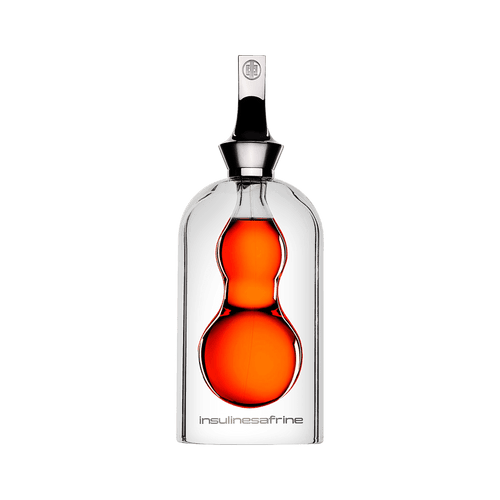
Insuline Safrine
Extrait de parfum at 20%. 8 notes, including bitter almond and clove.
Read also
3
Oil Perfume Oil vs Spray: The Format War
No study read measures whether oil outlasts spray. The record does hold how attar is made, what it costs, what the skin studies found and why two solid perfume recipes disagree.
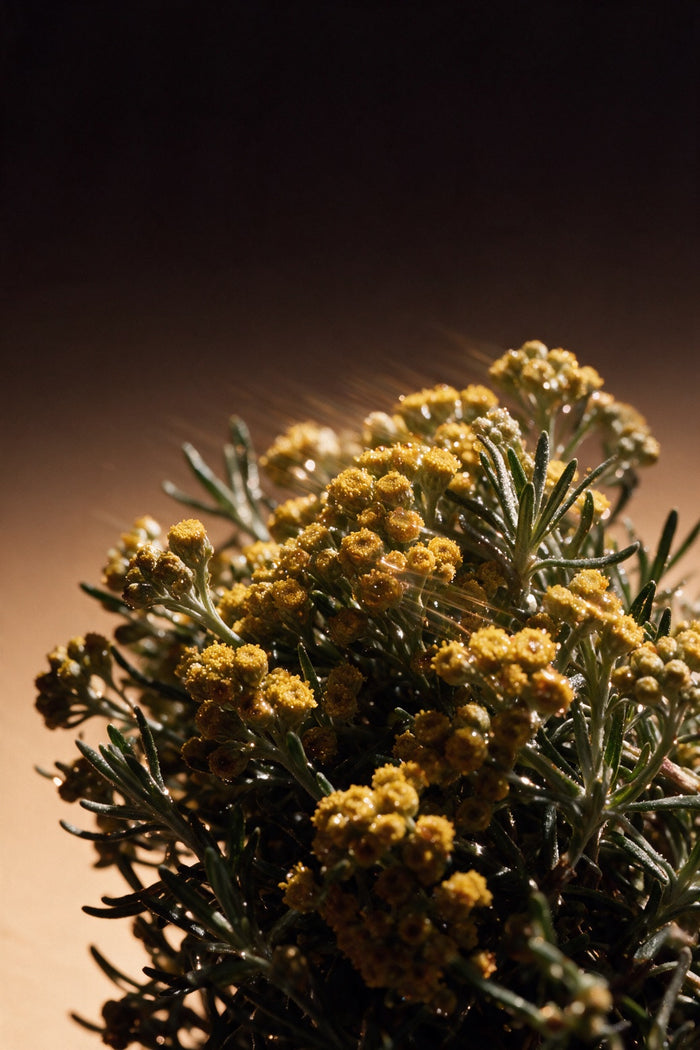
Helichrysum Helichrysum: The Mediterranean Shrub Behind the Word Immortelle
Helichrysum names a whole genus, but the perfumer means one Mediterranean shrub, Helichrysum italicum, called immortelle. Its oil costs a great deal and its scar claims rest on little.
Distillation Steam Distillation: How Ingredients Are Born
Rose petals do not surrender their scent willingly. Steam distillation — the oldest industrial method for isolating volatile aromatic molecules from plant matter, requires between 3,500 and 5,000 kilograms of Rosa...
Next
Perfumery Journal
Mother-in-law Asmat Begum: The Mother-in-Law Who Invented Rose Attar
18.02.26