The Damask Rose: A Hybrid of Three Species, Not a Native of Syria
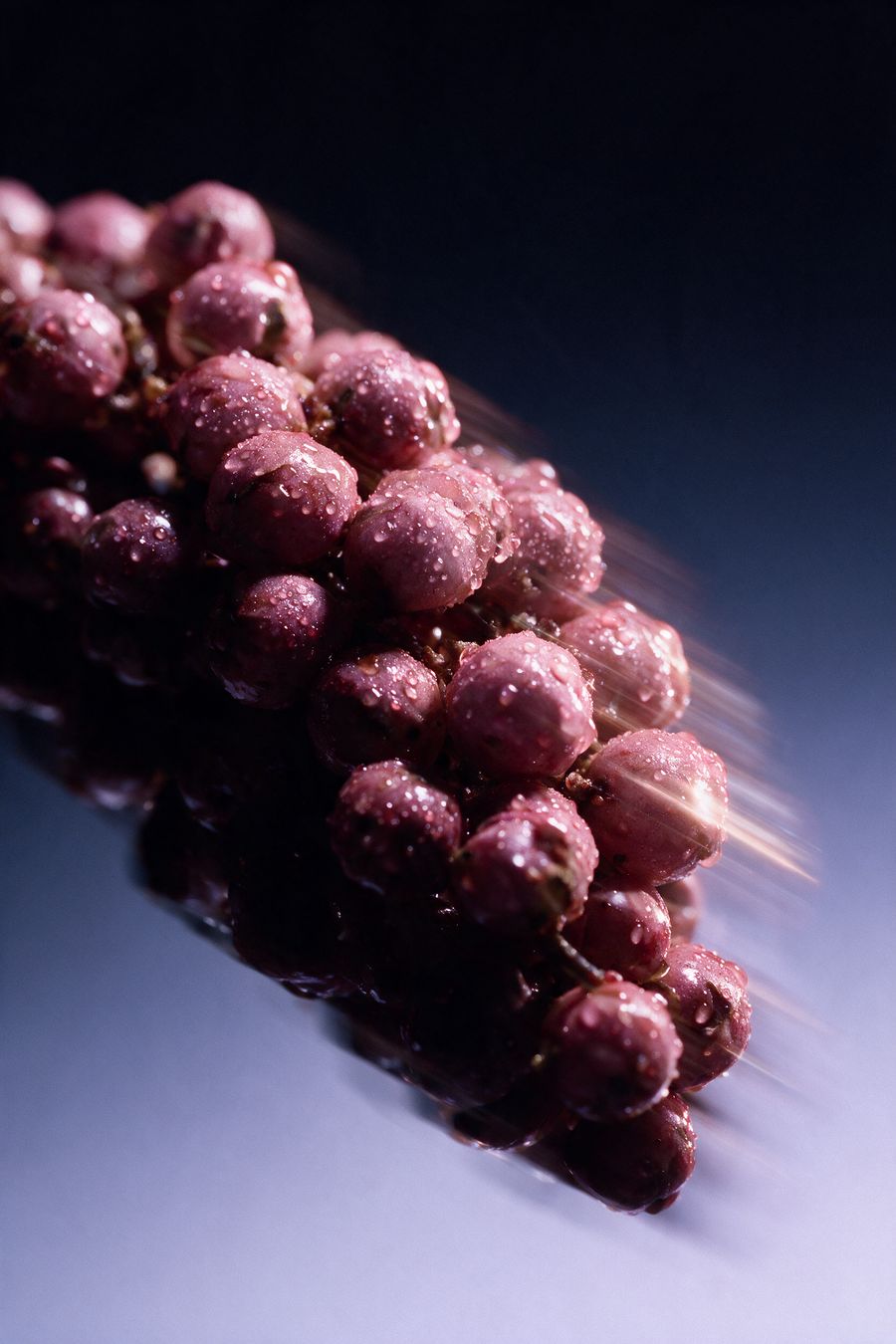
The damask rose, Rosa × damascena, is a garden hybrid of three species, Rosa moschata, Rosa gallica and one more, and the rose that most rose oil is distilled from. Its name points to Damascus, but no source proves it grew wild there. The EU protects the Bulgarian oil, Bulgarsko rozovo maslo, and its specification says about 3 500 kg of blossom make 1 kg of oil.
What is the damask rose?
The damask rose is Rosa × damascena, the old garden rose that most of the world's rose oil is distilled from. It is a hybrid of three species, not a wild plant of one country. The name points to Damascus, but no record proves that it grew wild there.
Search "damask rose" in the United States and four of the ten results are nurseries selling rose bushes. The pages that explain the flower repeat one sentence. A French skincare brand's journal writes, "Native to Syria, this delicate flower has been cultivated for millennia." An American rose nursery's blog says it "earned its name from Damascus, Syria". Nobody on that page explains the oil, the law that protects its best known source, or the plant's parents.
Is the damask rose native to Syria?
No source says so. A 2022 study of edible roses in China assembled the plastome sequences of the major varieties and phased their nuclear ribosomal DNA. Its abstract calls R. × damascena "the species most widely used in perfume products and food additives" and confirms its "tri-parental Middle-Eastern origin." Its parents are Rosa moschata, Rosa gallica and one of three species, Rosa majalis, Rosa fedtschenkoana or Rosa davurica. A hybrid of three species has no single wild home. It was made where its parents met, and the paper gives no city.
The same 2022 paper says only "Middle-Eastern". A 2021 review in Biomolecules says in one place that most rose species are native to Asia, with Middle Eastern places including Damascus, Hama, Aleppo and Homs in Syria, and Iran. That sentence is about roses in general. In another, the review calls the thirty-petalled damask rose "the most important scented rose species that originated in Central Asia." It adds that "Many scientists have worked on the genesis of the Bulgarian rose," with crosses proposed between R. gallica and R. canina, or R. gallica and R. moschata, and that Topalov in 1978 defined the Kazanlak oil rose as a separate species, R. kazanlika.
| Source | What it says about where the rose comes from |
|---|---|
| A French skincare brand's journal | "Native to Syria" |
| An American rose nursery's blog | It "earned its name from Damascus, Syria" |
| Horticulture Research, 2022 | A "tri-parental Middle-Eastern origin" |
| Biomolecules review, 2021 | "originated in Central Asia" in one chapter, and a list of Syrian and Iranian places for roses in general in another |
| Catalogue of Life | Germany, European Russia, Turkmenistan, Uzbekistan and Pakistan, among other places, marked [I] for introduced, and Iran given without that mark |
Kew's World Checklist of Vascular Plants accepts the name, but Kew's record carries no native range text, so none is printed. Both shop pages add the Crusades. No source confirms or refutes that story. As for "millennia", the one date found is the oil trade's own: the Bulgarian application for the protected name, taken up below, dates the production of the oil to the 17th century.
Why is it called the damask rose?
The name points to Damascus, and that is all the sources establish. The nursery's sentence about the name carries no source. IPNI, the plant-name index, records two names for it: Rosa × damascena by Herrmann, published in 1762 in De Rosa, and Rosa damascena by Miller, published in 1768 in the eighth edition of the Gardeners Dictionary. GBIF, the biodiversity database, accepts the second, Rosa × damascena Mill. Kew accepts the first, Rosa ×damascena Herrm. The sign × in both is the botanists' mark of a hybrid. No source gives the first use of "damask rose" in English or the reason for the name. It is a name, not a birth certificate.
What is special about it: damask rose against the other oil roses
The damask rose is the one that yields oil. The 2021 review states that "the predominant rose species used worldwide for the production of rose oil is the thirty-petalled" form, Rosa damascena Mill. forma trigintipetala Dieck. The Bulgarian specification, quoted below, describes the picked blossoms differently, with "14-40 pinkish red petals". Both counts are printed in the sources.
The cabbage rose, Rosa centifolia, is another plant. The review calls it "a complex hybrid" of R. gallica, R. moschata, R. canina and R. damascena, with an oil content "three times less than that of R. damascena". So it goes mostly to concrete and absolute, in France, Morocco and Italy. That road is told in the rose de mai article and in rose otto against rose absolute. The white rose, Rosa × alba, is a third plant, and the review gives its oil more geraniol than citronellol, which the table below shows.
Where is damask rose grown for perfume?
The 2021 review names Bulgaria, Turkey and Iran as the biggest producers, "supplying more than 90% of the total rose oil." It adds that "the best quality oil is Bulgarian R. damascena oil", a claim by its authors and not a measurement. The skincare brand's page names a different trio, "mainly grown in Turkey, Morocco and Bulgaria". Both are written statements, and neither gives a tonnage by country to settle it.
The rose did not take everywhere. The review records that early in the 19th century, with the growing needs of perfumery in Western Europe, attempts were made to introduce it in France and Germany, and later in the Crimea, "but it failed to adapt to the conditions of the Crimean Peninsula." The Bulgarian application gives the home of its oil: "The Damask rose is traditionally grown in the Valley of Roses (Rozovata Dolina) in Central Bulgaria at elevations between 370 and 625 m." It says that before the Second World War Bulgarian oil met 70 to 90% of world demand, and that a 2007 report from the institute for roses in Kazanlak put the output at 1.5 to 2 tonnes a year, 40 to 50% of global demand. These are the applicant's figures.
Is Bulgarian rose oil protected?
Yes. By Commission Implementing Regulation (EU) No 1020/2014 of 25 September 2014, "The name ‘Българско розово масло’ (Bulgarsko rozovo maslo) (PGI) is hereby entered in the register." The registered name is the Bulgarian one, a protected geographical indication in the class of essential oils. "Bulgarian rose oil" is its English reading, not the entry.
The specification published beforehand defines the product as "an essential oil obtained by means of the steam distillation of flowers of the Damask rose". It describes an "Oily transparent liquid", "Yellow or yellowish green" in colour. The area is a list of municipalities in four provinces, Plovdiv, Stara Zagora, Pazardzhik and Sofia, among them Kazanlak and Karlovo. The applicant writes that production started in the 17th century and that the local population has a "more than 300-year history" with the oil.
Our glossary describes Bulgarian rose oil as having "an intense, warm, deep floral, waxy odour, slightly spicy and very rich, with traces of honey."
How many roses make one kilo of rose oil?
Two written sources give two numbers, and both are printed here. The EU specification for the Bulgarian oil says: "About 3 500 kg of rose blossom is needed to obtain 1 kg of rose oil." The skincare brand's page says: "Around 4,000 kilograms of petals are required to produce just one kilogram of essential oil." One is a legal text for a protected product. The other is a brand's journal. Neither source explains the gap. Rose oil at the gate costs what that weight costs, and the real prices, with their sources, are in the article on the most expensive perfume ingredients.
The specification also fixes the making, step by step. The method itself, steam and water, is explained in the article on distillation. What is particular to Bulgaria is the clock.
| Step | What the specification says |
|---|---|
| Picking | Begins in May and runs 20 to 25 days, from 5 to 6 a.m. until 11 to 12 noon |
| Time to the still | Blossom processed "not later than 10-15 hours after they have been picked" |
| Waiting blossom | Stored no more than 15 hours, when the weather is cool and the blossom is at no more than 20 °C |
| Charge of the still | 100 kg of blossom per cubic metre, mixed with water at 1:4 to 1:5 |
| Concentration | Cohobation, the multiple redistillation of the distilled liquid, in a continuously operating column |
| Separation | In Florentine vessels, then heated to 30 °C and filtered |
| Storage | 15 plus or minus 5 °C, out of direct sunlight, in sealed glass vessels of up to 5 000 g or lacquered aluminium tanks |
| Packs | From 0.5 g up to 5 kg |
The same document words the dawn twice. One passage says picking begins at 5 to 6 a.m. Another says only blossoms with at least one open petal are picked "between several hours before daybreak and the early morning".
What is in damask rose oil?
The specification lists the profile in numbers, and the 2021 review prints the limits of the international standard ISO 9842, a typical Bulgarian oil, and the oils of three other roses. The review says the oil is "a mixture of almost 300 compounds" and that the standard is "a necessary but insufficient quality criterion". A 2023 review in Plants names the most important components as "Citronellol, nonadecane, heneicosane, caryophyllene, geraniol, nerol, linalool, and phenyl ethyl acetate".
| Component, % of the oil | EU specification | ISO 9842, as printed in the 2021 review | Typical Bulgarian oil, 2021 review |
|---|---|---|---|
| Citronellol | 24.0 to 35.0 | 20.0 to 34.0 | 28.72 |
| Geraniol | 13.0 to 22.0 | 15.0 to 22.0 | 21.40 |
| Nerol | 5.0 to 12.0 | 0 to 12.0 | 4.80 |
| Linalool | 1.0 to 3.0 | not printed | 1.90 |
| Phenylethyl alcohol | up to 3.0 | up to 3.5 | 0.40 |
| Nonadecane | 8.0 to 15.0 | 8.0 to 15.0 | 11.10 |
| Heneicosane | 3.0 to 5.5 | 3.0 to 5.5 | 5.00 |
| Cis-rose oxide | not listed | not printed | 0.22 |
The Bulgarian application makes a claim of its own about citronellol: 24 to 35%, "compared with 39-49 % for producers elsewhere in the world." The ISO range the review prints for citronellol ends at 34%. The two do not reconcile. Oils also differ by plant. In the review's table the white rose oil holds 30.98% geraniol and 16.65% citronellol, against 21.40% and 28.72% for the damask. A range matters more than a single figure, since the 2023 review adds that the harvest and its stresses move the figures.
The smell words come from the Pyrfume records. Citronellol is recorded as "rose" by Leffingwell, with floral, bud, leather, citrus and waxy added by Good Scents. Geraniol is floral, rose and sweet. Phenylethyl alcohol is floral and rose, and Good Scents adds honey and bready. The cis-rose oxide row is a trace, and its words are earthy, green and rose. Beta-damascenone is the odd one. The review's table has no row for it, so no percentage is printed here. Its records give apple, floral, fruity, plum, rose, tea and tobacco. Geraniol has an article of its own.
Rose water is the other product of the still. The review calls it "a by-product in the distillation of rose oil" and says it holds about 0.02 to 0.09% of oil, with a composition that differs from the oil's by "its high content of phenylethyl alcohol". Its older story, from Persia, is in the rose water article.
Does damask rose oil have to be labelled?
In the European Union, in cosmetics, yes, above a threshold. Commission Regulation (EU) 2023/1545 of 26 July 2023 added entry 366 to Annex III of the cosmetics regulation: Rosa damascena flower oil and extract, CAS 8007-01-0 and 90106-38-0. The wording is exact: "The presence of the substance or substances shall be indicated as 'Rose Flower Oil/Extract' in the list of ingredients". The thresholds are 0.001% in leave-on products and 0.01% in rinse-off products. The same entry lists the flower oils of Rosa alba, canina, centifolia, gallica and moschata. Entry 86, citronellol, carries the same two thresholds.
This is a labelling rule. It bans nothing, and it states no verdict on the oil. CosIng, the Commission's ingredient database, records geraniol under restriction III/78 with the functions tonic and perfuming, and Rosa damascena extract with the functions fragrance and tonic. The IFRA Transparency List lists geraniol, citronellol, phenethyl alcohol and rose oxide. A listing is a listing.
Rose attar, and where to read next
Rose attar, the oil taken up in sandalwood in Kannauj, is a different road from the Bulgarian still, and the attar article tells it. For the rose as a perfume note, see the modern rose guide.
Frequently Asked Questions
What is special about the damask rose?
It is a hybrid of three species, Rosa moschata, Rosa gallica and one more, and it is the rose that most rose oil is distilled from. A 2021 review calls the thirty-petalled form the predominant rose species used worldwide for rose oil. Its oil is led by citronellol and geraniol.
Why is it called the damask rose?
The name points to Damascus. Beyond that, no source gives a reason for it. IPNI records Rosa × damascena by Herrmann in 1762 and Rosa damascena by Miller in 1768. No first use of the English name was found, and the plant is a Middle Eastern hybrid, not a proven native of one city.
Is the damask rose native to Syria?
No source says so. A 2022 study confirmed a tri-parental Middle-Eastern origin, and a 2021 review says the rose originated in Central Asia in one chapter. A rose that is a hybrid of three species has no single wild home, and Kew gives no native range text.
How many roses make one kilo of rose oil?
Two written sources disagree. The EU specification for Bulgarian rose oil says about 3 500 kg of rose blossom is needed for 1 kg of oil. A French skincare brand's page says around 4,000 kilograms of petals. This article prints both with their sources and does not choose between them.
Is Bulgarian rose oil protected?
Yes. A Commission regulation of 25 September 2014 entered the name Bulgarsko rozovo maslo in the EU register as a protected geographical indication. The specification requires steam distillation of damask rose, in named municipalities of the Valley of Roses, with blossom processed within 10 to 15 hours of picking.
What is in damask rose oil?
The EU specification sets citronellol at 24.0 to 35.0%, geraniol at 13.0 to 22.0%, nerol at 5.0 to 12.0%, linalool at 1.0 to 3.0% and phenylethyl alcohol up to 3.0%. A 2021 review calls the oil a mixture of almost 300 compounds. Rose oxide appears as a trace.
Is the damask rose the same as Rosa centifolia?
No. The review calls Rosa centifolia a complex hybrid of Rosa gallica, Rosa moschata, Rosa canina and Rosa damascena, with an oil content three times less than the damask rose. It is used mainly for concrete and absolute, in France, Morocco and Italy. The damask rose is the distilled oil rose.
Where is the damask rose grown for perfume?
A 2021 review names Bulgaria, Turkey and Iran, supplying more than 90% of the total rose oil. In Bulgaria the protected area is the Valley of Roses, at 370 to 625 m. Another page names Turkey, Morocco and Bulgaria. Neither gives a tonnage by country.
Sources
- Commission Implementing Regulation (EU) No 1020/2014 of 25 September 2014, entering Bulgarsko rozovo maslo (PGI) in the register, OJ L 283, 27.9.2014. Read at the EU Publications Office.
- Publication of an application, Bulgarsko rozovo maslo, single document, OJ C 122, 25.4.2014. Read at the EU Publications Office.
- Commission Regulation (EU) 2023/1545 of 26 July 2023 amending Regulation (EC) No 1223/2009 as regards labelling of fragrance allergens, OJ L 188, 27.7.2023, Annex III entries 86 and 366. Read at the EU Publications Office.
- T. Ivanova and others, "Rose Flowers: A Delicate Perfume or a Natural Healer?", Biomolecules 11(1), 127, 2021. DOI 10.3390/biom11010127. Full text read at Europe PMC.
- "Complex and reticulate origin of edible roses (Rosa, Rosaceae) in China", Horticulture Research, 2022. DOI 10.1093/hr/uhab051. Abstract read at Europe PMC.
- "Do Abiotic Stresses Affect the Aroma of Damask Roses?", Plants 12(19), 3428, 2023. DOI 10.3390/plants12193428. Abstract read at Europe PMC.
- IPNI, Rosa damascena Mill. (1768) and Rosa × damascena Herrm. (1762). GBIF Backbone Taxonomy, usageKey 7390572. Kew, World Checklist of Vascular Plants. Catalogue of Life distribution.
- PubChem, Pyrfume (Leffingwell and Good Scents records) and the IFRA Transparency List, for citronellol, geraniol, phenylethyl alcohol, rose oxide and beta-damascenone. European Commission CosIng, records 33991 and 79758.
- Patyka, journal, "Damask rose, the secret to perfect skin" (skincare brand), and the Jackson and Perkins blog, "The Damask Rose: A Fragrant Tradition Worth Growing", 5 July 2025 (rose nursery). Both read on the page.
- PREMIEREPEAU glossary, entry Rose, one line of odour words. Google's first page for "damask rose" in the United States, as listed in Ahrefs on 19 November 2026.

Rose Monotone
Extrait de parfum at 20%. 8 notes, including crystalline rose, pink pepper and cellophane.
Read also
3
Lilac in Perfumery: The Scent Extracted in 1857
Lilac cannot be distilled, and it was still extracted: Piesse described the grease method in 1857 and counted 16,000 lbs of flowers a year at one house. The flower's own chemistry is lilac alcohols and benzyl alcohol.

Rose de Mai: Five Thousand Kilos of Petals for One Litre
A number in perfumery that sounds like a mistranslation. To produce one kilogram of Rose de Mai absolute, the concentrated aromatic extract of Rosa centifolia, the hundred-petalled rose of Grasse, you need between fou...

The Modern Rose in Perfumery: Cold, Not Romantic
Why a crystalline rose reads cold and geometric instead of sweet, and how to wear it, with Rose Monotone as the worked example.
Next
Perfumery Journal
Rose Otto vs Rose Absolute: Two Extractions
21.07.26