


Lilac in Perfumery: The Scent Extracted in 1857
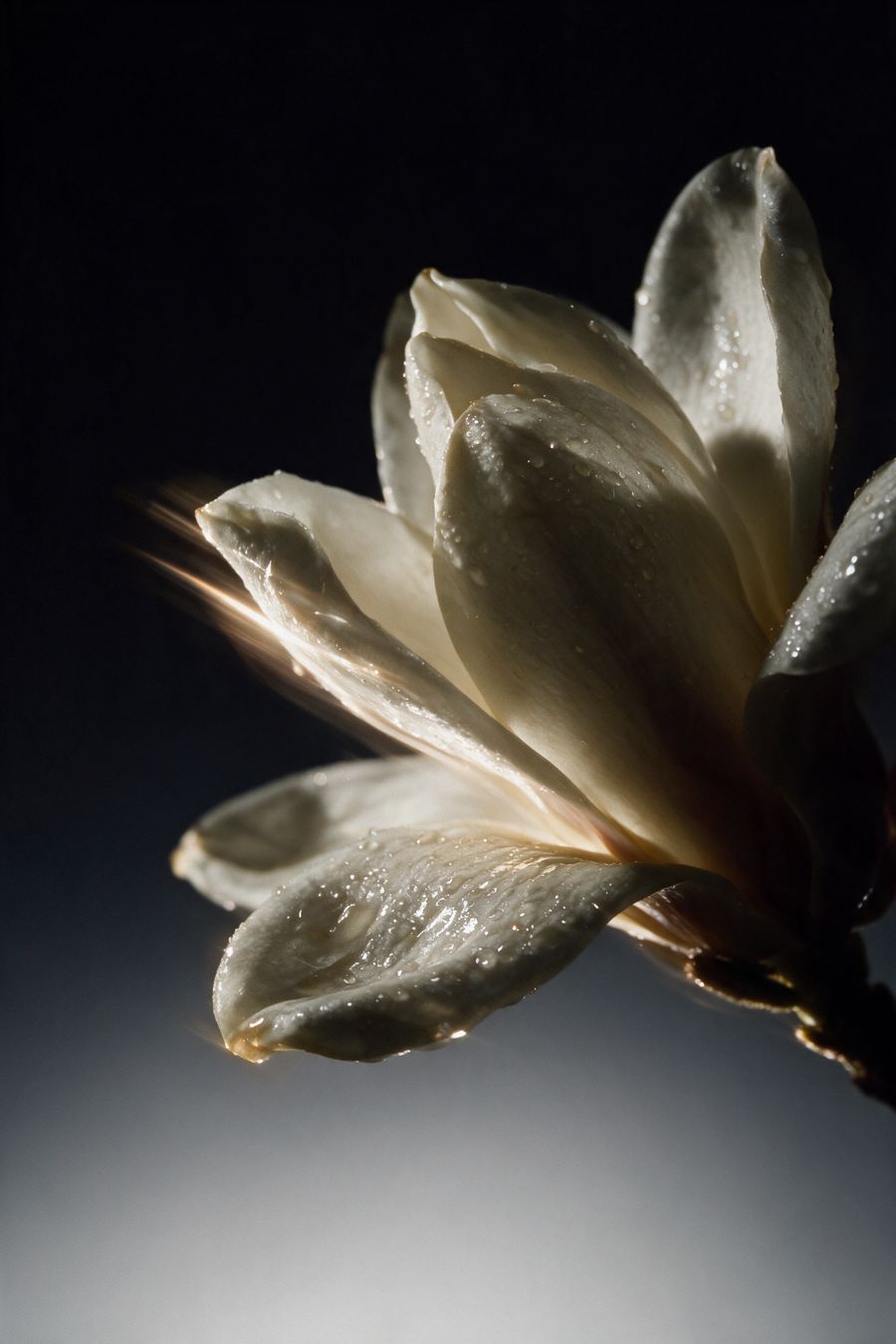
Lilac is Syringa vulgaris, a shrub of the olive family, and in perfumery a soft, floral, powdery note. Its scent can be extracted: in 1857 Piesse described maceration and enfleurage with grease. Steam distillation fails and yields are tiny. One flower extract held lilac alcohols C and D, over 40% of the compounds identified, and benzyl alcohol, 27.36%.
What is lilac?
Lilac is the common name of Syringa vulgaris, a shrub of the olive family, and in perfumery the name of a soft, floral, powdery note. Linnaeus published the species in 1753. Its scent was already being extracted from the flowers in 1857, with grease.
One claim passes from page to page: lilac cannot be extracted, so every lilac note in a perfume is synthetic. The record is narrower than that. In 1857 George Piesse wrote down how the scent of lilac was caught, and he counted 16,000 lbs of flowers a year at a single house. What holds is smaller and plainer. Steam does not give a lilac oil, and by any method the yield is tiny.
Can you extract perfume from lilac?
Yes, with grease, and it was done in the 1850s. Piesse published The Art of Perfumery in London in 1857. Of lilac he wrote that the essence "is obtained either by the process of maceration, or enfleurage with grease." The grease was then washed with spirit, "in the same manner as previously described for cassie." The article on enfleurage tells the method. Flowers are laid on fat, the fat takes up the scent, and the fat is washed with alcohol.
Piesse sets lilac among the flowers a manufacturing perfumer worked by the ton. He wrote that "one of the large perfumers of Grasse and Paris employs annually" a long list of flowers, and lilac closes the list.
| Flower | Pounds a year, one large house of Grasse and Paris |
|---|---|
| Orange flowers | 80,000 |
| Cassia flowers | 60,000 |
| Rose leaves | 54,000 |
| Jasmine blossoms | 32,000 |
| Violets | 32,000 |
| Tuberose | 20,000 |
| Lilac | 16,000 |
Every row comes from one sentence of the book. It describes one house in one year and gives no date beyond the book itself. Lilac is the smallest figure of the seven, and it is still 16,000 lbs.
Why lilac was sold as tuberose
The lilac pomade had a second life. Piesse wrote that "the odor so much resembles tubereuse, as to be frequently used to adulterate the latter, the demand for tubereuse being at all times greater than the supply." So in 1857 a lilac pomade could stand in for a dearer one. That is a belief of the trade and a lever on price, not a measure of the smell. The flower the pomade was passed off as is told in the article on tuberose and in the glossary entry for tuberose.
Does lilac essential oil exist?
Not as a distilled oil, as far as the sources show. A lilac farm in New York State, which sells an extract of its own, states the failure plainly: "Steam distillation destroys the floral essence of lilac." On the same page it adds that "Lilac does not lend itself to distillation and other methods collect only fractions of the scent."
The same farm gives the cost of the method that works. It replaces the blossoms with fresh ones every day for 33 days, and "More than 30 bushels of fresh flowers go into producing 10 ml of Lilac Enfleurage extract." That is a maker's own statement, and no third party checked it. It shows that the extract can be made. It also shows why no source describes a lilac absolute sold at scale.
The farm adds that most products sold as lilac essential oil are blends of synthetic fragrance oils. That is the farm's view, not a test. So the belief is wrong in its first word, because lilac can be extracted. It is right in what it implies about distillation and about volume. A washed pomade is what the trade calls an absolute, and the words are told in the lexicon of absolute, concrete and resinoid.
What does lilac smell like?
Our glossary describes lilac as "softer and more powdery than lavender or muguet, with a fresh, dewy charm." The comparison is with lily of the valley, which the French call muguet. The Leffingwell odour records for the aldehyde below give the words floral, fresh and sweet. No source measures how the smell changes over hours or days, so none is given.
What is lilac scent made of?
A paper of 2021 in Molecules analysed ethanolic extracts of the flowers, leaves, bark and fruit of Syringa vulgaris gathered in north-western Romania. The authors report that "The harvested samples were air dried." That makes it a study of the plant's chemistry, not a capture of the living scent, and the paper heads its tables "The tentative identification of the main compounds". Within those limits, the flower extract showed one family of molecules above all.
| Compound | Flower extract, % of area | Leaf extract, % of area |
|---|---|---|
| Lilac alcohol D | 33.02 | Not among the compounds listed |
| Benzyl alcohol | 27.36 | 3.26 |
| Lilac alcohol C | 7.70 | Not among the compounds listed |
The authors write that "Twenty compounds were identified." They add that the lilac alcohols, which they describe as furane alcohols, "represented more than 40% of the identified compounds," and that benzyl alcohol was among the compounds found in the highest amounts. The two lilac alcohols, C and D, are two stereoisomers, two arrangements of the same atoms. Benzyl alcohol has its own entry in our glossary.
The flower may not hold these molecules free. A paper of 2026 in Nutrients, which studied a lilac flower extract for its antioxidant effect and not for its smell, reports several monoterpenoid hexosides and notes that they "are probably glucosides of lilac alcohols." A glucoside is a molecule bound to a sugar. In the paper's reading, part of the lilac alcohol is held in the flower in that bound form.
Lilacs also differ from one another. A paper of 2023 in Plant Physiology and Biochemistry compared two lilacs by GC-MS, Syringa oblata 'Zi Kui' with a faint aroma and Syringa vulgaris 'Li Fei' with a strong one. It identified "a total of 43 volatile components," with 3 found only in 'Zi Kui' and 30 found only in 'Li Fei'. One species and one cultivar each, so no single recipe stands for lilac.
What is lilac alcohol, and lilac aldehyde?
Lilac alcohol and lilac aldehyde are two related molecules built on the same five-membered ring with an oxygen in it. PubChem records the alcohol as C10H18O2 and the aldehyde as C10H16O2. The aldehyde also carries a flavour number, FEMA 4058. The Leffingwell odour records give the aldehyde the words floral, fresh and sweet. The records give no odour words for the alcohol.
| Molecule | PubChem record | Formula | Odour words on record |
|---|---|---|---|
| Lilac alcohol | 526973 | C10H18O2 | None found |
| Lilac aldehyde | 155007 | C10H16O2 | Floral, fresh, sweet (Leffingwell) |
| Alpha-terpineol | 17100 | C10H18O | Lilac among its Good Scents words, with floral and sweet in Leffingwell |
The third row is the molecule the trade reaches for. The Good Scents odour words for alpha-terpineol, in the Pyrfume data, include lilac. That does not make lilac mostly terpineol. Terpineol occurs in many plants, and the 2021 paper does not list it among the compounds it found in the flower. Our glossary also keeps an entry for lilac acetaldehyde.
Is lilac fragrance synthetic?
Often it is a copy, and the copy is old. Piesse gave a recipe for "Imitation of Essence of White Lilac" built from other flowers: the spirit extract of tuberose pomade, one pint, the extract of orange-flower pomade, three drops of otto of almonds and the extract of civet. He explains the last item: "The civet is only used to give permanence to the perfume of the handkerchief." In the same entry he gives the real method, enfleurage. A perfumer of 1857 had both, and wrote both down.
The recipe borrows the pomades of tuberose and orange blossom and a little civet. The part of the question about today's perfumes is a different matter. No source lists the lilac notes of modern perfumes, so no claim is made about which are synthetic and which are not. What the sources show is a method, a cost and a chemistry. A lilac note in a perfume may be built from molecules like terpineol, or it may not, and the label does not say which. The question is taken up again in the article on headspace, where scent is read from a living flower without touching it. No source gives a headspace recipe of lilac.
The shrub behind the name
GBIF, the biodiversity database, gives Syringa vulgaris L. as the accepted name, in the family Oleaceae. IPNI records that Linnaeus published it in Species Plantarum, volume 1, page 9, on 1 May 1753. The white form was named early: IPNI lists Syringa vulgaris var. alba by Weston in 1770 and again by Aiton in 1789. Those are dates of names, not proof of when a white lilac was first grown.
Kew's World Checklist marks the lilac as introduced in France, Germany, Great Britain, Ireland, Spain, Switzerland, Korea, several Canadian provinces and many US states. It leaves Bulgaria, Greece, the north-western Balkan Peninsula and Romania unmarked. This is a garden shrub, and no source names a field farmed for perfume today. The Grasse of 1857 is the only lilac harvest of this size the record shows.
Frequently Asked Questions
Does lilac essential oil exist?
Not as a steam-distilled oil. A lilac farm states that steam distillation destroys the floral essence of lilac. The same farm makes an enfleurage extract, 10 ml from more than 30 bushels of flowers, and Piesse recorded enfleurage of lilac in 1857. An extract exists at a tiny yield, and a distilled oil is not found.
Can you extract perfume from lilac?
Yes, with grease. Piesse wrote in 1857 that the essence of lilac is obtained by maceration or enfleurage with grease, and the pomade is then treated with rectified spirit. One large house of Grasse and Paris used 16,000 lbs of lilac a year. Today a farm reports 10 ml from more than 30 bushels.
What does lilac smell like?
Our glossary describes lilac as softer and more powdery than lavender or muguet, with a fresh, dewy charm. The Leffingwell odour records give lilac aldehyde, one of its molecules, the words floral, fresh and sweet. No source measures how the smell changes over hours or days.
What is lilac scent made of?
In one 2021 analysis of an ethanolic extract of dried flowers, two lilac alcohols were 7.70% and 33.02% of the area, together over 40% of the compounds identified, and benzyl alcohol was 27.36%. Cultivars differ: a 2023 study of two lilacs found 43 volatile components, 3 found only in one and 30 only in the other.
What is lilac alcohol?
Lilac alcohol is a C10H18O2 molecule, PubChem record 526973, with a five-membered ring holding an oxygen. It comes as several stereoisomers, and lilac alcohols C and D were the main compounds in a 2021 flower extract. A 2026 paper reads part of the flower's lilac alcohol as bound to sugars, as glucosides.
Is lilac fragrance synthetic?
The sources show a method, a cost and a chemistry, not a list of modern perfumes. A copy of lilac is old: in 1857 Piesse gave an imitation of white lilac from tuberose and orange-flower pomades, almond otto and civet. Whether a given modern lilac note is built or extracted, the label does not say.
Why was lilac used to adulterate tuberose?
Piesse wrote in 1857 that the odor of lilac pomade so much resembles tuberose that it was frequently used to adulterate the latter, because the demand for tuberose was at all times greater than the supply. It is a belief and a practice of the trade then, not a measure of the smell.
Where does the lilac shrub come from?
Linnaeus published Syringa vulgaris in 1753. Kew's World Checklist marks it as introduced in France, Germany, Great Britain, Ireland, Spain, Switzerland, Korea and many US states, and leaves Bulgaria, Greece, the north-western Balkan Peninsula and Romania unmarked. No source names a field farmed for perfume today.
Sources
- G. W. Septimus Piesse, The Art of Perfumery, and the Methods of Obtaining the Odors of Plants, London, 1857, entries on lilac and on the flowers worked by a Grasse and Paris house. Read in full text at the Internet Archive.
- Cherry Valley Lilacs, "Q&A with Charle-Pan: Does real lilac essential oil exist?", a lilac farm's page on distillation and enfleurage. Read on 19 November 2026. A maker's own statements.
- "Chemical Profile, Cytotoxic Activity and Oxidative Stress Reduction of Different Syringa vulgaris L. Extracts", Molecules 26(11), 3104, 2021. DOI 10.3390/molecules26113104, Tables 5 and 7. Read in Europe PMC.
- "Extract from Syringa vulgaris L. Flowers: A Special Emphasis on Its Biological Activity", Nutrients 18(7), 1022, 2026. DOI 10.3390/nu18071022. Read in Europe PMC.
- Z. Yang and others, on the volatile metabolome of Syringa oblata and S. vulgaris, Plant Physiology and Biochemistry, 2023. DOI 10.1016/j.plaphy.2023.03.003. Abstract read in Europe PMC.
- PubChem records 155007 (lilac aldehyde), 526973 (lilac alcohol) and 17100 (alpha-terpineol). Leffingwell odour words through the Pyrfume data. GBIF, Syringa vulgaris. IPNI, Syringa vulgaris L., record 289009-2, and the records of var. alba. Kew, World Checklist of Vascular Plants, distribution.
- Good Scents odour words for alpha-terpineol, through the Pyrfume data, read on 19 November 2026.
Nuit Élastique
Extrait de parfum at 20%. 8 notes, including magnolia, black olive and green olive.
Read also
3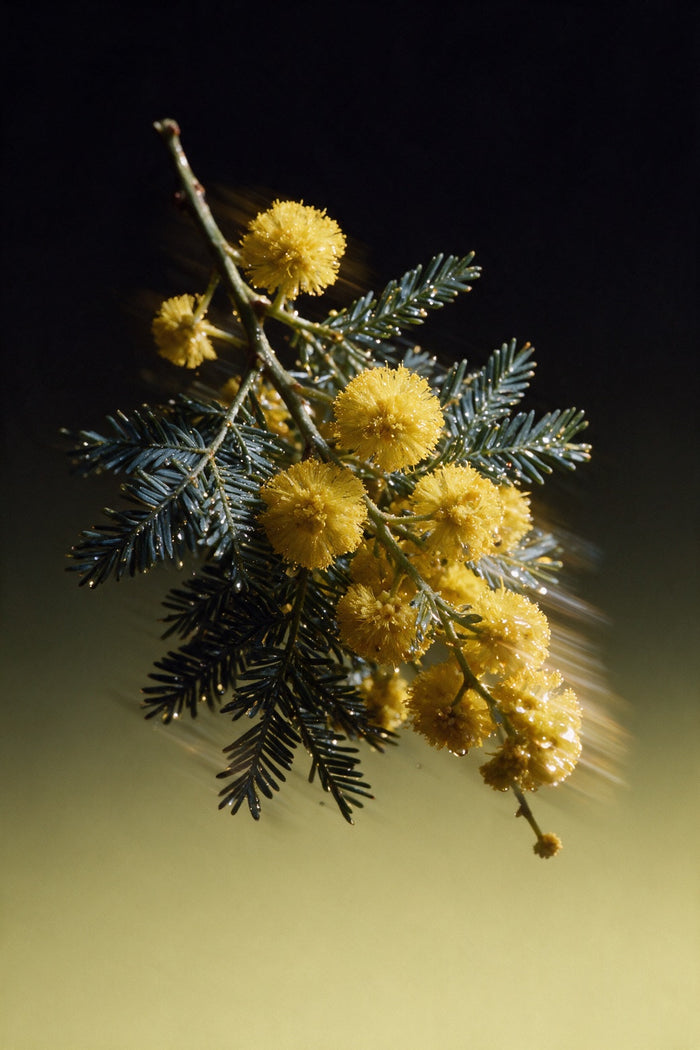
Mimosa Flower: Four Plants Share the Name
Four different plants answer to the name mimosa. Only one is the yellow flower of the florist, and it is an acacia.

Enfleurage: The Near-Extinct Art of Capturing Scent
Enfleurage is the slowest way to capture a smell. Petals pressed into cold animal fat, left for a day, removed, replaced by fresh ones.

Absolute, Concrete, Resinoid: The Lexicon Nobody Masters
A particular kind of ignorance thrives not in the absence of information but in its abundance. The vocabulary of perfumery extraction is a case study.
Next
Perfumery Journal
Enfleurage: The Near-Extinct Art of Capturing Scent
01.10.25








