Olibanum: The Trade Name of Frankincense and the Trees Behind It
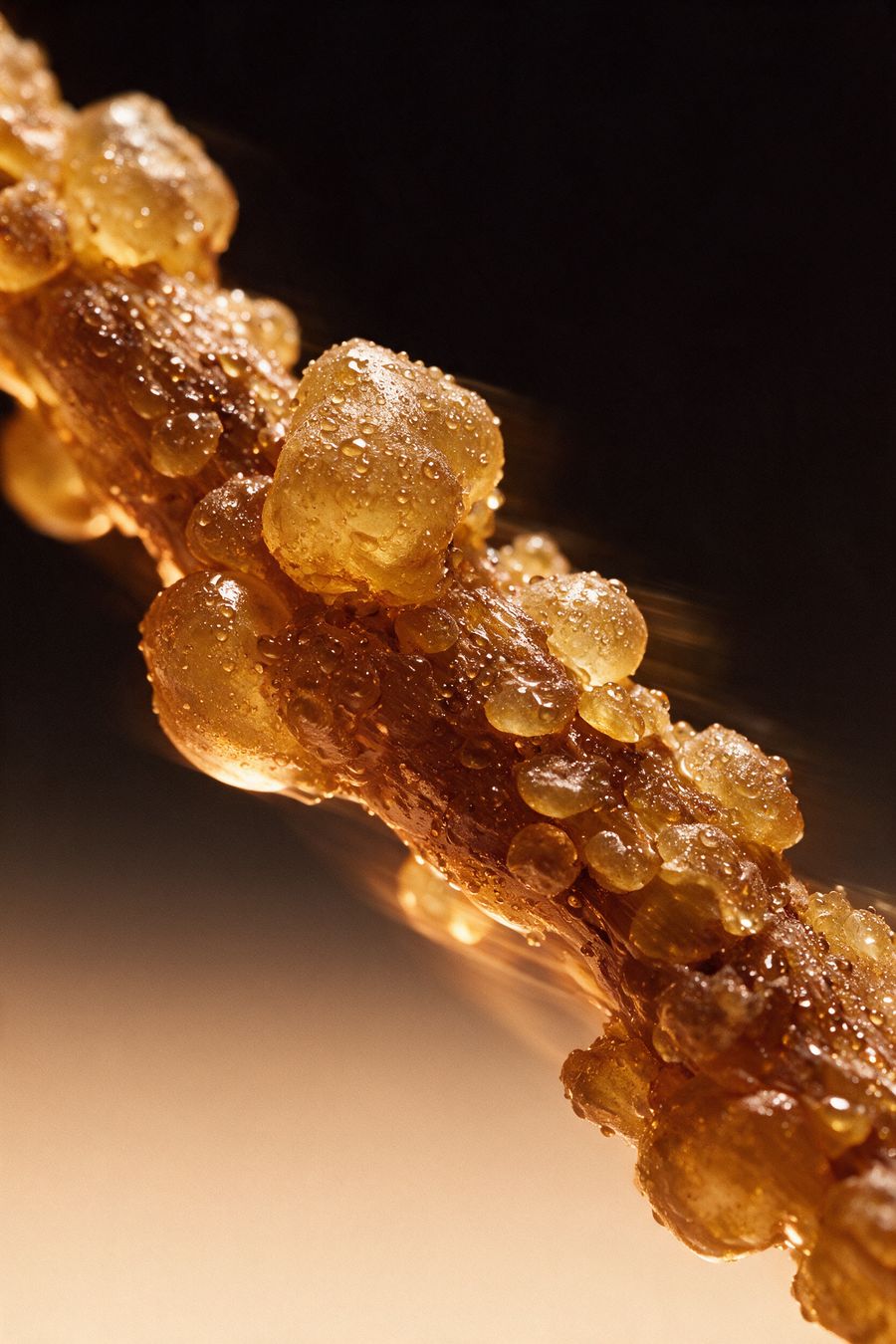
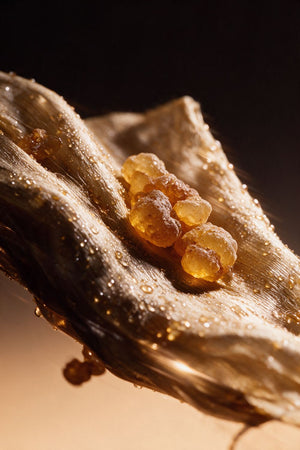
Olibanum is the trade name of frankincense, the dried resin of Boswellia trees. An 1892 perfumery manual prints it as the Latin name, and ingredient lists still use it. It covers several species from Oman, Somalia, Ethiopia, Sudan and India, graded by season, shape and colour, so the word names a family of resins.
What is olibanum?
Olibanum is the trade name of frankincense, the dried resin of Boswellia trees. Perfumers and ingredient lists use it for a material that comes from several species in several countries. The word is a label of the trade, and the trees behind it are less uniform than the label suggests.
A health site's page on olibanum oil gives the usual account: "Frankincense is a more common name in the Western world, though in the East, near its native regions, olibanum is another common name." The record does not show that. An 1892 perfumery manual prints olibanum as its headword and gives it as the Latin name of the resin, while the Arabic is a different word. This article keeps to the word, the species behind it and the grades. The history of the smoke and the trade routes is in our article on frankincense.
Where does the word olibanum come from?
A perfumery manual of 1892, by C. Deite in the English edition of W. T. Brannt, gives the road of the word in one passage. "It was introduced into commerce by the Phenicians," it says, "and, like many other substances, it received from them its name, which was adopted by other nations." Then it lists the forms: "the Hebrews called the tree lebonah, the Arabs, lubah". For the Latin it prints olibanum.
The claim about the Phoenicians is the 1892 author's, and nothing confirms it. One point holds from the page itself. The English word is the Latin word, and the Hebrew and the Arabic names are different words. The first printed English use of olibanum, and the reason for its initial o, are not established, so no year is given.
The Roman writers did not use the word in the sense of the trade. Bostock and Riley, who translated Pliny's Natural History into English in 1855, render his word as frankincense and add a footnote that supplies the trade name: "In commerce, the gum resin, Olibanum, the produce of the Boswellia serrata, and imported from the Levant, bears the name of frankincense." That is the belief of a Victorian translator. Boswellia serrata is the Indian species, and the Arabian resin of Pliny's account comes from another tree, as the chapters below show.
Is olibanum the same as frankincense?
As a name, yes. The 1892 manual opens its entry with both words: "Olibanum or Frankincense is the inspissated juice of various varieties of Boswellia, partially indigenous to Africa and partially to Asia." The headword is olibanum. Frankincense is the second name. GBIF, the biodiversity database, records "frankincense" and "olibanum-tree" as English names of Boswellia sacra, and "oliban" in French.
The two words differ in where they live. In the Authorised Version of 1611, at Exodus 30:34 to 36 and Matthew 2:11, the English is frankincense: "pure frankincense" in the recipe of the sanctuary, and "gold, and frankincense, and myrrh" among the gifts of the Magi. The word olibanum is absent from both. Olibanum is the word of the workshop and of the ingredient list. A perfumer who writes olibanum is using the trade name for a material, and the material is a family.
Which tree gives olibanum?
Several. The genus Boswellia counts about 24 known species, according to a 2026 review by Sun and colleagues, and the same abstract names "unclear taxonomy" among the obstacles to using the resin. Five names recur around olibanum, and the checklists place them in different parts of the world.
| Species | Described | Range in the checklists | Names seen for the resin |
|---|---|---|---|
| Boswellia sacra | Flück., 1867 | Oman, Somalia, Yemen | frankincense, olibanum-tree |
| Boswellia carterii (a synonym of sacra at Kew and GBIF) | listed as a synonym of sacra | Somali material in the 2012 study below | "Olibanum carterii oil" on the IFRA list |
| Boswellia frereana | Birdw., 1870 | Somalia, south-west Yemen | African elemi, elemi frankincense |
| Boswellia serrata | Roxb. ex Colebr., 1807 | India | Indian olibanum, "Olibanum serrata oil, Indian" |
| Boswellia papyrifera | (Delile) Hochst., 1843 | Nigeria and Chad east to Sudan, Ethiopia, Eritrea and Uganda | Sudanese frankincense, elephant tree |
So the answer to the question of Oman or Somalia is both, and more. Kew's accepted range for Boswellia sacra covers Oman, Somalia and Yemen, and the Catalogue of Life gives northern Somalia, Dhofar in Oman, and Yemen. The separate species frereana is Somali. Papyrifera grows from Nigeria and Chad to Sudan, Ethiopia and Eritrea, and serrata grows in India. Which of them a given jar holds depends on the supplier. The word olibanum does not say.
A 2019 study of nine species and 41 resins found why that matters to a chemist: the pattern of boswellic and lupeolic acids "could be assigned to distinct Boswellia species and to their geographic growth location". The authors name "uncertainties regarding botanical identification" as the obstacle. Their interest is medicinal chemistry, not smell. The finding still shows that a label saying frankincense alone hides variation.
Are Boswellia sacra and Boswellia carterii the same species?
Kew and GBIF say yes. Both list carteri and carterae among the synonyms of sacra. A 2012 chemical study in the Journal of Chromatography A says no. It opens on the reference works: "Major botanical and scientific references currently identify two species of frankincense, Boswellia carterii and Boswellia sacra, as being synonymous." The authors then compared oil from Somalia, which they call carterii, with oil from Oman and Yemen, which they call sacra.
| Measure | Oman and Yemen (sacra) | Somalia (carterii) |
|---|---|---|
| alpha-pinene | 68.2% | 37.3% |
| limonene plus beta-phellandrene | 6.2% | 14.4% |
| myrcene | 0.7% | 7.3% |
| optical rotation | +30.1 degrees | -13.3 degrees |
| (+)/(-) ratio of alpha-pinene | 8.24 | 0.68 |
Plain gas chromatography "did not reveal major statistical differences" at first. The optical rotation and the ratio of the two mirror forms of alpha-pinene did, and the authors concluded that the two are "not synonymous but rather two distinct and individual frankincense species". These are averages of the samples in one study. Both statements are true as what each source says, and the trade lists keep the older split: the IFRA list files its olibanum oils as "carterii" and "serrata" while Kew files carterii under sacra.
What are the grades of olibanum?
Grading began with the eye and the hand. Pliny, in the English of 1855, sorts by season. "The incense which has accumulated during the summer is gathered in the autumn: it is the purest of all, and is of a white colour." The spring gathering is "of a red colour, and not to be compared with the other incense". He names the two kinds carfiathum, the first, and dathiathum, the second. He sorts by shape as well. Round hanging drops are "male" frankincense, and "the incense, however, that is the most esteemed of all is that which is mammose, or breast-shaped".
The test he gives is a buyer's: whiteness, size, brittleness, and the readiness with which it takes fire on heated coals. He adds that it should not give under the teeth but crumble.
The 1892 manual keeps the habit. The pure pieces are "pale yellow, seldom reddish". "Selected olibanum (Olibanum electum) is the best commercial variety, while Olibanum naturale, O. in lacrymis, and O. in sortis form darker pieces intermingled with separate paler grains". The same page names the fakes: "Olibanum is only adulterated with sandarac and naturally exuded pine resin". Sandarac is told by "the fracture being glassy and transparent", pine resin by "completely dissolving to a clear solution in spirit of wine".
Oman grades by its own list. The 2023 paper on frankincense smoke in Foods opens on it: "Omani frankincense is produced by B. sacra trees and is graded into Hojari, Nejdi, Shazri or Sha'bi." Its authors distilled the Hojari and Sha'bi grades and found the two oils "similar in composition". The paper does not say what separates one grade from another, so no ranking is given.
How much did olibanum cost?
The only price this article can source is Roman. Pliny gives it after listing what the caravan cost on the road. "Hence it is that a pound of the best frankincense sells at six denarii, the second quality five, and the third three."
| Quality in Pliny | Denarii per pound |
|---|---|
| best | 6 |
| second | 5 |
| third | 3 |
Those are the prices of the first century, in denarii, for goods delivered to Rome. No price in money of today is given. Pliny also writes that the finest drops weighed a third of a mina, "twenty-eight denarii". For the long history of the trade, and for the camels and the caravans, see the incense road.
What does olibanum smell like?
Our glossary describes the first impression as "Very fresh and bright and lemony, with slightly woody, green, terpenic/pine and peppery aspects". The 1892 manual, writing of the raw resin, is plainer: "its odor is slightly balsamic, and its taste bitter and pungent."
The laboratory names molecules. In 2015 Niebler and Buettner worked on resin of Boswellia sacra from Somalia and Oman. They detected 23 odorants and named the key ones: "α-pinene, β-myrcene, linalool, p-cresol and two unidentified sesquiterpenoids". Most of the identified odorants were oxygenated monoterpenes. The named four are alpha-pinene, myrcene, linalool and p-cresol. The study does not match each molecule to a smell word. Its samples from Somalia are counted under the sacra name, the question of the previous chapter again.
For the resin as a perfume material, and the way extraction changes it, see olibanum resinoid in our glossary and the article on absolutes, concretes and resinoids.
Is olibanum used by that name in perfumery and on ingredient lists?
Yes, and the lists keep both vocabularies. The European Commission's CosIng database has an ingredient named OLIBANUM, and it carries records under the species names too.
| Listing | Name | CAS | Functions recorded |
|---|---|---|---|
| CosIng 57785 | OLIBANUM | 8050-07-5 | fragrance, skin conditioning |
| CosIng 54939 | BOSWELLIA CARTERII OIL | 89957-98-2 / 8050-07-5 | fragrance, tonic |
| CosIng 94899 | BOSWELLIA SACRA RESIN OIL | none shown | skin conditioning, emollient, fragrance, perfuming |
The IFRA Transparency List, the industry's list of materials in use in fragrance, holds ten olibanum entries under CAS 8016-36-2: absolute, extract, oil, rectified oil and resinoid, then four carterii preparations (CO2 extract, extract, oil and pyrogenated oil) and one Indian serrata oil. These are listings of materials in use. They are not a verdict on safety, The point here is the vocabulary. The same word covers a resinoid, a CO2 extract and a smoked oil, and it carries the species labels of the older botany.
What is olibanum oil good for?
In perfumery it is a fragrance material, as the listings show. Beyond perfume the evidence is a scatter of papers, and three of them are worth reading as what they say.
A 2026 review of Boswellia lists antimicrobial, anti-inflammatory, anticancer and analgesic activity among others, "with no significant reported side effects or toxicity", and adds that the research "is limited to only a few species". A 2008 study in FASEB Journal found that incensole acetate, "a Boswellia resin constituent, is a potent TRPV3 agonist that causes anxiolytic-like and antidepressive-like behavioral effects in wild-type (WT) mice". It acted in ordinary animals and not in those without the channel. The result is from rodents, and the paper does not show what smoke delivers to a person.
The smoke itself has been measured. In the 2023 study, "Frankincense smoke contained fine irregular solid particles with a diameter range of 0.8-2287.4 µm, and thus may pose a health risk to susceptible individuals." The same study found the smoke "had potent antimicrobial activity" against several microbes, up to full inhibition. Both findings stand in the same abstract.
Is olibanum endangered?
The species that is now its main source is in decline. In 2019 Bongers and colleagues inventoried 23 populations of Boswellia papyrifera, 21,786 trees in all, and wrote that it is "now the main source of frankincense". They found "over 75% of studied populations lack small trees, natural regeneration has been absent for decades, and projected frankincense production will be halved in 20 yr." The projection concerns production, not the number of trees. A literature review in the same paper "showed that other Boswellia species experience similar threats". The harvest itself is told in our frankincense article, linked at the top.
For the neighbours of the resin in the censer, see myrrh and the bakhoor article.
Frequently Asked Questions
Is olibanum the same as frankincense?
In the trade, yes. An 1892 perfumery manual defines "Olibanum or Frankincense" in one breath, and databases file olibanum as another name of frankincense. But the resin comes from several Boswellia species in several countries, graded differently, so one word covers a mixed material.
What does olibanum smell like?
Our glossary describes the first impression as very fresh, bright and lemony. The 1892 manual, writing of the raw resin, says its odor is slightly balsamic and its taste bitter and pungent. Lab work on the resin names alpha-pinene, myrcene, linalool and p-cresol among its key odorants.
What is olibanum oil good for?
In perfumery it is a fragrance material, listed in CosIng for fragrance and skin conditioning. Other uses rest on papers: a 2026 review reports many effects with no significant reported toxicity, and one mouse study shows incensole acetate acting on the TRPV3 channel. This is a report of the papers, not advice.
Where does the word olibanum come from?
An 1892 perfumery manual says the Hebrews called the tree lebonah and the Arabs lubah, and that the Phoenicians put it into commerce. It prints olibanum as the Latin name of the resin. The first English use is not established, so no year is given.
Is olibanum from Oman or from Somalia?
Both, and others. Kew's accepted range for Boswellia sacra is Oman, Somalia and Yemen, Boswellia frereana is Somali, Boswellia papyrifera grows from Nigeria to Eritrea, and Boswellia serrata is Indian. Which one a jar holds depends on the supplier, not on the word olibanum.
Are Boswellia sacra and Boswellia carterii the same species?
Kew and GBIF list carterii as a synonym of sacra. A 2012 chemical study of Somali and Omani or Yemeni oils argued they are two species, with alpha-pinene at 37.3% against 68.2% and opposite optical rotation. Each statement is true as what its source says.
What are the grades of olibanum?
Pliny sorted it by harvest and shape: white autumn resin, red spring resin, round drops called male, and prized breast-shaped tears. An 1892 manual ranks Olibanum electum best. Oman today grades its resin Hojari, Nejdi, Shazri and Sha'bi. What separates them is not stated.
How much did olibanum cost in antiquity?
Pliny wrote that a pound of the best frankincense sold at six denarii, the second quality at five and the third at three. Those are first-century prices for goods delivered to Rome. He adds that the finest drops weighed a third of a mina, "twenty-eight denarii".
Sources
- C. Deite, ed. W. T. Brannt, A practical treatise on the manufacture of perfumery, Philadelphia, 1892, chapter on the perfumes of the Hebrews and the section on resins and balsams. Read in full text at the Internet Archive.
- Pliny the Elder, The Natural History, translated by J. Bostock and H. T. Riley, London, 1855, book XII, chapters 30, 32 and 41. Read at the Perseus Digital Library.
- C. L. Woolley and others, "Chemical differentiation of Boswellia sacra and Boswellia carterii essential oils by gas chromatography and chiral gas chromatography-mass spectrometry", Journal of Chromatography A 1261, 158 to 163, 2012. DOI 10.1016/j.chroma.2012.06.073. Abstract read at Europe PMC.
- J. Niebler and A. Buettner, "Identification of odorants in frankincense (Boswellia sacra Flueck.) by aroma extract dilution analysis and two-dimensional gas chromatography-mass spectrometry/olfactometry", Phytochemistry 109, 66 to 75, 2015. Abstract read at Europe PMC.
- Z. S. Al-Kharousi, A. S. Mothershaw and B. Nzeako, "Antimicrobial Activity of Frankincense (Boswellia sacra) Oil and Smoke against Pathogenic and Airborne Microbes", Foods 12(18), 3442, 2023. DOI 10.3390/foods12183442.
- M. Schmiech and others, Molecules 24(11), 2153, 2019. DOI 10.3390/molecules24112153. Abstract read at Europe PMC.
- X. Sun and others, "Frankincense from Boswellia: A review of species, traditional uses, phytochemistry, pharmacology and toxicology", Chinese Herbal Medicines, 2026. DOI 10.1016/j.chmed.2025.09.007. Abstract read at PubMed.
- A. Moussaieff and others, FASEB Journal 22(8), 3024 to 3034, 2008. DOI 10.1096/fj.07-101865. Abstract read at Europe PMC.
- F. Bongers and others, "Frankincense in peril", Nature Sustainability 2, 602 to 610, 2019. DOI 10.1038/s41893-019-0322-2. Abstract read at Nature.
- IPNI, WCVP, GBIF and the Catalogue of Life records for Boswellia sacra, serrata, papyrifera and frereana, read through the natural-world checklist tool, 19 November 2026. European Commission CosIng records 57785, 54939 and 94899. IFRA Transparency List, CAS 8016-36-2.
- Authorised (King James) Version, Exodus 30:34 to 36 and Matthew 2:11. PREMIEREPEAU glossary, entry frankincense (olibanum). A health site's page on olibanum oil, read on 19 November 2026.

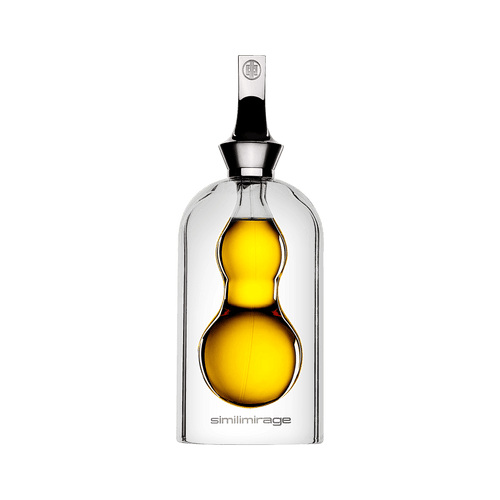
Simili Mirage
Extrait de parfum at 20%. 8 notes, including olibanum, thyme and white thyme.
Read also
3
Myrrh: The Bitter Resin of the Pharaohs, and What It Smells Like
Myrrh is named for what it tastes like. The word comes from the Semitic root m-r-r, meaning bitter. Arabic murr, Hebrew mor, Akkadian murru. It entered English through the Greek myrrha, which borrowed it from the same...
Bakhoor: The Ancient Scenting Ritual The West Forgot
The sources call it smouldering, and the oldest English eyewitness saw its smoke wafted to the face and beard. What bakhoor is made of, how it was used in Cairo and in Qatar, what the studies of its smoke report, and ...
Mastic: The Resin Tears of Chios, Protected by Name Since 1997
The mastic tree grows around the whole Mediterranean, yet its protected resin comes from southern Chios. The tears are cut by hand each summer, and the name has been registered in the EU since 1997.
Next
Perfumery Journal
Frankincense: Sacred Smoke to Modern Crisis
09.11.25