Safrole: The Sweet-Shop Molecule That Got Sassafras Barred From Food
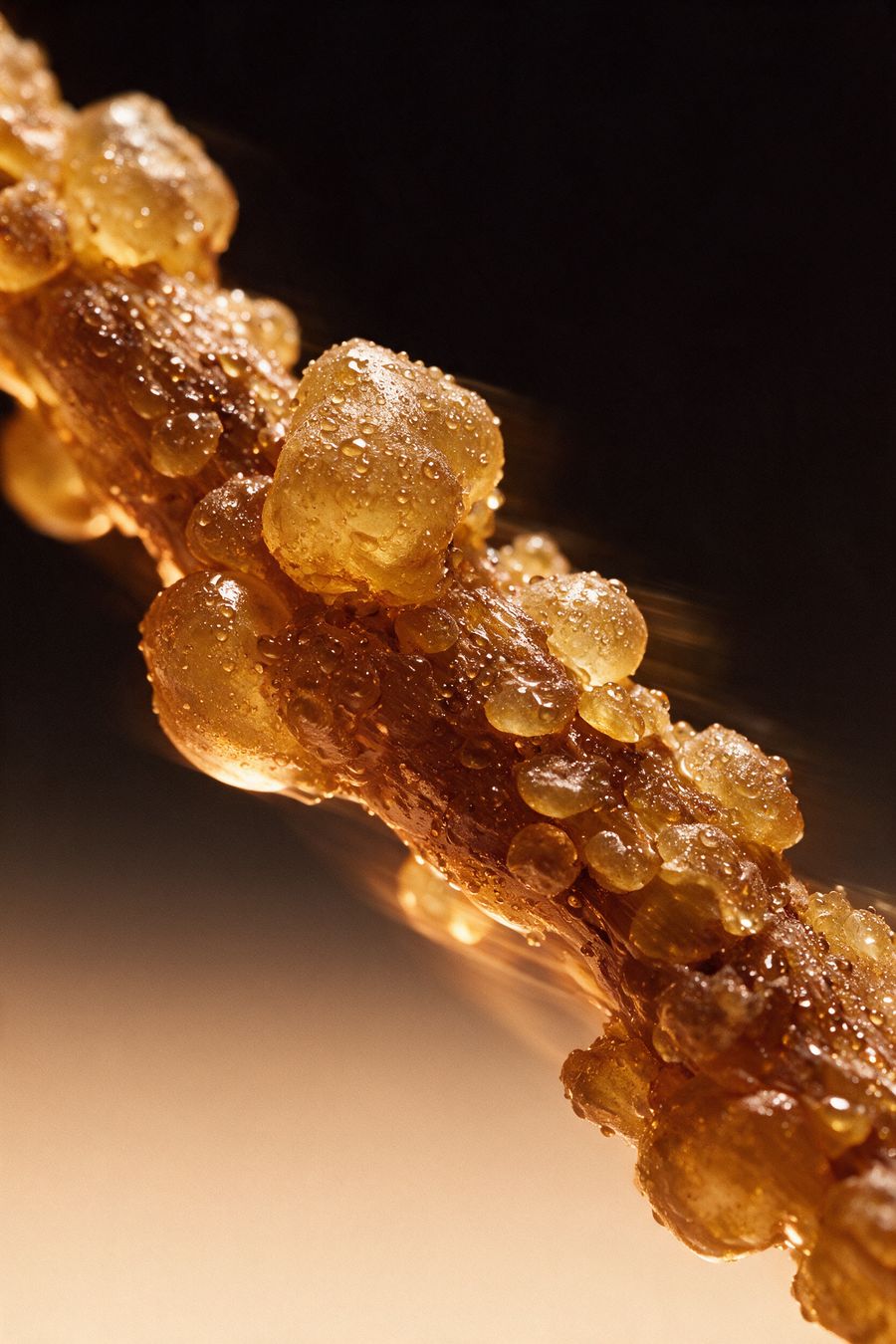
Safrole is the main molecule of sassafras root oil, 60 to 95% of it, and the source of its sweet, anise-like smell. A US order of 1960 barred it from food; it caused liver tumours in rats and mice given it by mouth. The fragrance industry prohibits it as an ingredient, and drug agencies list it as a precursor.
What is safrole?
Safrole is the molecule that gives sassafras root its sweet, anise-like smell, and the reason the tree's oil was barred from American food in 1960. It makes up 60 to 95% of sassafras root oil. Given by mouth, it caused liver tumours in rats and mice. Today it is banned as an added food substance in the United States, prohibited as a perfume ingredient, and controlled as a drug precursor.
The American rule names its victim. Food containing added safrole or oil of sassafras, or "sassafras bark, which is intended solely or primarily as a vehicle for imparting such substances to another food, e.g., sassafras tea, is deemed to be adulterated." The order behind it was published in the Federal Register on 3 December 1960.
The molecule now answers to rules written by a food regulator, by the European Union three times over, by the fragrance industry and by the agencies that fight drug trafficking. Each draws its line in a different place, and none of them bans the tree.
What does safrole smell like?
Of sweets. Our glossary gives safrole "a characteristic 'sweet-shop' aroma," says its odour "is that of sassafras and is also described as anise-like," and that "Smelt at 10% in dipropylene glycol, it is sweet, warm, spicy, woody and floral." The trade's databases list the same words: sweet, anise, spicy, warm, floral, woody, and the name of the tree itself. Undiluted, its tenacity is 44 hours.
Chemically it is a small molecule, C10H10O2, of molecular weight 162.18, registered under CAS number 94-59-7, and named 5-prop-2-enyl-1,3-benzodioxole by the chemists' rules.
What is sassafras?
A tree of the laurel family. Its accepted name is Sassafras albidum, in the form Nees gave it in 1836, and it grows wild in eastern North America, from Ontario through the eastern United States. The French names recorded for it include sassafras officinal, filé and gombo filé.
The oil is distilled from the root bark and the root wood, and it is mostly safrole. The United States rule puts the share at "about 80 percent." Measurements gathered in a review of 2021 run wider.
| Plant and oil | Safrole in the oil | Source |
|---|---|---|
| Sassafras root oil, several studies | 60 to 95% | Review, Molecules, 2021 |
| Sassafras root bark and root wood, grown in the Netherlands | 61.3 to 88.8% | Same review |
| Commercial sassafras root bark oil, Belgrade | 82.0% | Same review |
| Ocotea odorifera, a Brazilian study | 77.9% | Antibiotics, 2020 |
| Piper hispidinervum, leaves, a Brazilian study | 93.0% | Plants, 2024 |
| Oil of sassafras, as the US rule states it | About 80% | 21 CFR 189.180 |
Sassafras is not the only source. The same review names Cinnamomum camphora, Ocotea pretiosa and Piper betle as "other economic sources of safrole." The United Nations Office on Drugs and Crime wrote in 2008 that safrole-rich oil "is extracted from over 360 tree species in South-East Asia."
Why is sassafras banned?
Because of what safrole did to rodents. In 1976 the International Agency for Research on Cancer summed up the evidence: "Safrole and isosafrole are carcinogenic in mice and rats; they produce liver tumours following their oral administration." Of people it could say nothing: "No case reports or epidemiological studies were available to the Working Group." In its overall evaluation of 1987 the agency placed safrole in Group 2B, possibly carcinogenic to humans, where its own page still records it.
A review of 2021 calls safrole and its relatives "weak hepatocarcinogens in rats and mice and possibly in humans," and notes that the molecule "has been widely used as a flavor and fragrance agent prior to 1961." Three bodies of different kinds act on the same finding: the American food regulator since 1960, the cancer agency since 1976, and the fragrance industry's expert panel, whose standard names "CARCINOGENICITY" as the property that drives its ban.
Not everyone reads the file the same way. A wildlife column that ranks for the word writes that later research "has suggested that the original research was flawed" and that "It was determined that safrole does not cause cancer." The agency's classification has not changed: Group 2B, with no human data behind it either way.
Is sassafras illegal?
The tree is not. No rule read for this article names the living plant or its wood. What the rules control is the molecule and the oil, and each does it for its own reason.
| Body | Rule | What it says | Date |
|---|---|---|---|
| US Food and Drug Administration | 21 CFR 189.180 | Food with added safrole, oil of sassafras, isosafrole or dihydrosafrole, or sassafras bark sold as a vehicle for tea, is adulterated | Order of 3 December 1960 |
| European Union, food | Regulation 1334/2008, annex III | Not to be added as such to food; at most 15 mg/kg in meat and fish products, 25 in soups and sauces, 1 in soft drinks | 16 December 2008 |
| European Union, cosmetics | Regulation 1223/2009, annex II, entry 360 | Prohibited, except normal content in natural essences up to 100 ppm, 50 ppm in oral hygiene, none in children's toothpaste | Active in the EU database |
| IFRA, the fragrance industry | Standard, Amendment 17 | Not to be used as such; natural extracts tolerated up to 0.01% of the three related molecules in the finished product | 1987, first in 1976 |
| US Drug Enforcement Administration | 21 CFR 1310.02 | List I chemical, code 8323 | Section first published in 1989 |
| European Union, drug precursors | Regulation 273/2004, annex I | Category 1 scheduled substance, with sassafras oil brought under control | 11 February 2004 |
The drug-control side explains the strictest wording. The Drug Enforcement Administration treats "essential oils rich in safrole, such as sassafras oil" as safrole itself, because they "are sometimes used in the manufacture of MDMA," and states: "It is unlawful for any person knowingly or intentionally to possess or distribute safrole, knowing, or having reasonable cause to believe, the safrole will be used to manufacture MDMA." The European regulation of 2004 widened its definition to natural products for one oil in particular: in some member states sassafras oil "is regarded as a mixture containing Safrole and is therefore controlled," in others "a natural product not subject to controls."
Safrole in nutmeg, basil and pepper
The molecule is also in the kitchen, in small amounts. The food database FooDB records it in nutmeg at up to 142 mg per 100 g, in sweet basil at up to 23 mg and in rosemary at up to 6.35 mg, and lists it without a figure in cinnamon, black pepper, star anise, anise, dill and tea. The review of 2021 names "anise, basil, nutmeg, mace, and black pepper."
The European rule leaves these alone as long as they are eaten as they are. Spices, herbs and teas "consumed as such" fall outside the flavouring regulation. Its limits apply to a compound food to which a flavouring has been added: a sausage, a sauce, a soft drink. Nutmeg in the jar is not a flavouring. A nutmeg flavouring in a soup is, and the soup may then hold at most 25 mg of safrole per kilo.
Safrole in perfume
Perfumery gave it up by its own rule. The IFRA Standard, first published in 1976 and revised as Amendment 17 in 1987, reads: "Safrole, Isosafrole and/or Dihydrosafrole as such should not be used as fragrance ingredients. The natural extracts containing Safrole, Isosafrole and/or Dihydrosafrole should not be used as substitutes for these ingredients." Natural oils that carry traces remain usable "as long as the total concentration of Safrole, Isosafrole and Dihydrosafrole in the finished consumer product does not exceed 0.01%," and only "if the natural extracts are not being used to provide an alternative, indirect source of the banned substance." The journal tells how such standards came to govern the trade in IFRA.
European cosmetics law says the same with figures: safrole is prohibited "except for normal content in the natural essences used and provided that the concentration does not exceed: 100 ppm in the finished cosmetic product." The European database ties certain camphor tree root oils to that entry.
Safrole left a descendant that perfumers still use. Heliotropin, the powdery almond note, was first made from piperine, the alkaloid of pepper. By 1908 the chemist Ernest Parry could write that the heliotropin sold to the trade came from safrole instead. The journal follows another regulated molecule of the classic palette in coumarin.
The trees behind the oil
The demand for safrole has a cost in forests. In Cambodia, the drug office reported in 2008, the oil is distilled from a tree "locally known as Mreas Prov Phnom," in "makeshift distilleries deep in the forests" of the west. "Large amounts of fuel wood are needed, which together with the felling of Mreas Prov Phnom trees result in deforestation. When one area is depleted, distillation moves elsewhere." The government had classified the tree as a rare species in 2004 and had since prohibited the production, import and export of the oil. Producers sold it "at around US$ 4 per liter"; in Phnom Penh it fetched US$30. In late 2007, more than 50 tons were seized at the Thai port of Laem Chabang.
In Brazil, our glossary records that the safrole tree Ocotea odorifera, sold under the trade name Ocotea pretiosa, "is threatened by habitat loss."
Frequently Asked Questions
Why is safrole illegal?
It is controlled rather than illegal everywhere. The United States has barred it as an added food substance since 1960, the fragrance industry prohibits it as an ingredient, and drug agencies list it because it can be used to make MDMA: List I in the United States, category 1 in the European Union.
Is it illegal to possess sassafras?
No rule read for this article names the tree or its wood. The US drug agency treats safrole-rich oils such as sassafras oil as safrole, and says it is unlawful to possess or distribute safrole knowing, or having reasonable cause to believe, that it will be used to make MDMA. Food use of the bark for tea is barred.
What happens if you ingest safrole?
The cancer agency's evaluation reports liver tumours in rats and mice given safrole by mouth and no studies in people, and classes it in Group 2B. The US food regulator has barred it as an added substance since 1960, and European law limits it in soft drinks to 1 mg per kilo.
Is safrole in nutmeg and black pepper?
Yes, in small amounts. The food database FooDB records nutmeg at up to 142 mg per 100 g and lists safrole in black pepper, star anise, cinnamon and tea without a figure. European law leaves spices eaten as they are outside its flavouring limits, which apply to compound foods.
What does safrole smell like?
Our glossary gives it a sweet-shop aroma, the smell of sassafras, also described as anise-like, and at 10% in dipropylene glycol sweet, warm, spicy, woody and floral. The trade's databases list sweet, anise, spicy, warm, floral and woody. Undiluted, its tenacity is 44 hours.
Is safrole used in perfume?
Not as such. The IFRA Standard of 1987 says safrole should not be used as a fragrance ingredient and that natural extracts containing it must not substitute for it. Traces from natural oils are tolerated up to 0.01% of the finished product. In Europe the cosmetics limit for natural content is 100 ppm.
What plants contain safrole?
Sassafras root oil holds 60 to 95% by the studies gathered in a 2021 review. A Brazilian study measured 77.9% in the oil of Ocotea odorifera and another 93.0% in the leaf oil of Piper hispidinervum. The drug office counts over 360 tree species in South-East Asia that yield safrole-rich oil.
Is safrole carcinogenic?
In animals, by the cancer agency's account: liver tumours in rats and mice after oral doses. No case reports or studies in humans were available to its working group, and its overall evaluation places safrole in Group 2B. The fragrance industry's panel names carcinogenicity as the reason for its prohibition.
Sources
- Code of Federal Regulations of the United States, title 21, section 189.180 (Safrole) and section 1310.02 (List I chemicals). Read at the Legal Information Institute of Cornell Law School.
- Regulation (EC) No 1334/2008 of 16 December 2008 on flavourings, recitals 6 and 8 and annex III. Regulation (EC) No 273/2004 of 11 February 2004 on drug precursors, recital 7 and annex I. Read at the Publications Office of the European Union.
- European Commission, CosIng database, Annex II entry 360, Safrole, and the records of Cinnamomum camphora root oils.
- IFRA Standard, "Safrole, Isosafrole and Dihydrosafrole", Amendment 17, 1987.
- International Agency for Research on Cancer, Monographs volume 10, 1976, "Safrole, isosafrole and dihydrosafrole", with the subsequent evaluation of Supplement 7, 1987.
- US Drug Enforcement Administration, Diversion Control Division, "Safrole and Sassafras Oil are used in the Illicit Manufacture of MDMA".
- United Nations Office on Drugs and Crime, "Cambodia tackles safrole oil production", 3 October 2008.
- K. Lunz and I. Stappen, "Back to the Roots: An Overview of the Chemical Composition and Bioactivity of Selected Root-Essential Oils", Molecules 26(11), 3155, 2021. DOI 10.3390/molecules26113155.
- R. S. Almeida and others, "GC-MS Profile and Enhancement of Antibiotic Activity by the Essential Oil of Ocotea odorifera and Safrole", Antibiotics 9(5), 247, 2020. M. S. S. Ferraz and others, "Toxicity of Piper hispidinervum Essential Oil to Callosobruchus maculatus and Cowpea Bean Quality", Plants 13(22), 3148, 2024.
- Ernest J. Parry, The Chemistry of Essential Oils and Artificial Perfumes, London, 1908, entry heliotropin. Read in full text at the Internet Archive.
- FooDB, compound FDB011672, safrole. PubChem, compound 5144. GBIF, record 3034002, and IPNI, record 30245337-2, Sassafras albidum.
- PREMIEREPEAU glossary, entries safrole and sassafras. The column quoted: Terry W. Johnson, "Out My Backdoor: Splash of Sassafras", Georgia Wildlife. Read on 19 November 2026.

Simili Mirage
Extrait de parfum at 20%. 8 notes, including olibanum, thyme and white thyme.
Read also
3
Coumarin Coumarin: The Banned Molecule That Invented Modern Perfumery
Coumarin is a fragrant plant molecule, C9H6O2, that smells of hay. It was first isolated from the tonka seed in the 1820s, and William Henry Perkin made the same molecule in a laboratory in 1868. Perfume rules restric...
Tonka Tonka Bean: Banned But Beloved
The US rule says food with added coumarin, as such or as tonka beans, is adulterated, and it is silent on perfume. What the bean smells like, the European food limits, the safety numbers and how a bean is cured.
Wormwood Wormwood: The Herb of Absinthe, Its Thujone and Its Cousins
Wormwood is absinthe's bitter herb, and the legend around its thujone is larger than the measurements. This is the record: the plant, its genus, old absinthe analysed, and the EU and US texts.
Next
Perfumery Journal
Coumarin Coumarin: The Banned Molecule That Invented Modern Perfumery
31.12.25