


Banana Leaf
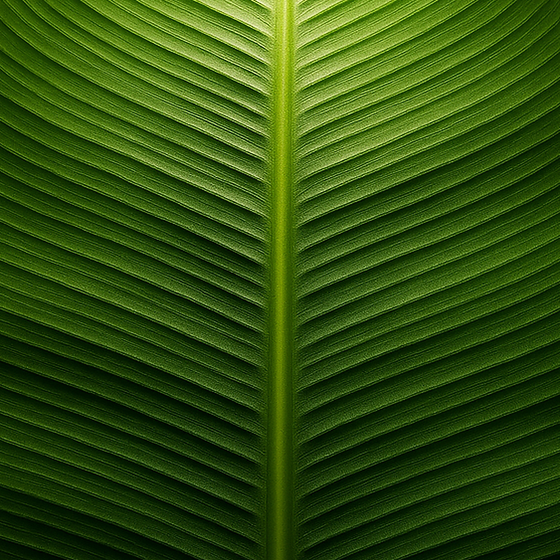
Green, waxy, faintly medicinal. The smell of a freshly torn banana leaf is more latex than fruit — chlorophyll-rich, with a rubbery undertone.
- Type
- Ingredient
- Olfactive family
- Green
- Subfamily
- Tropical greens
- Cluster
- Green-waxy notes
- Source
- leaves and flowering tops
- Chemical class
- Synthetic accord (green-leaf chemicals)
Scent
The Full Story
Did You Know?
Banana leaves are natural non-stick surfaces. Their waxy cuticle contains hydrophobic compounds that prevent food from adhering — the reason they have been used as cooking wrappers across tropical Asia for thousands of years.
Extraction & Chemistry
Extraction method
No standard commercial extraction. Some artisanal distillates exist but with extremely low yields. The perfumery note is predominantly a synthetic accord built from green-leaf chemicals.
- Formula
- N/A — complex natural extract (key green notes: cis-3-hexenol C₆H₁₂O, hexanal C₆H₁₂O)
- CAS
- N/A — natural leaf material; no single CAS for banana leaf aroma
- Botanical
- Musa spp. (Musaceae)
- Appearance
- Pale yellow to amber liquid
- Odour strength
- Medium
- Synonyms
- MUSA LEAF
Not applicable: accord or concept, not a single material
- Note
- Musa spp. leaf. Not commercially distilled at scale for perfumery. Green-leaf character typically recreated with cis-3-hexenol and related molecules.
In Perfumery
Green modifier providing tropical texture. Warmer and waxier than galbanum or violet leaf. Functions in heart-note territory, adding humid, vegetal density to tropical, aquatic, or green compositions. Typically reconstructed from cis-3-hexenyl acetate and waxy aldehydes. Complements vetiver, coconut, ylang-ylang in tropical accords.
See Also
5 notes