


Beer
Keywords: fresh · rich · sweet
Beer is an alcoholic beverage produced by the brewing and fermentation of starches from cereal grain, most commonly malted barley. Its aroma includes caramel and malty notes, with fruity and flowery notes from yeast and hops.
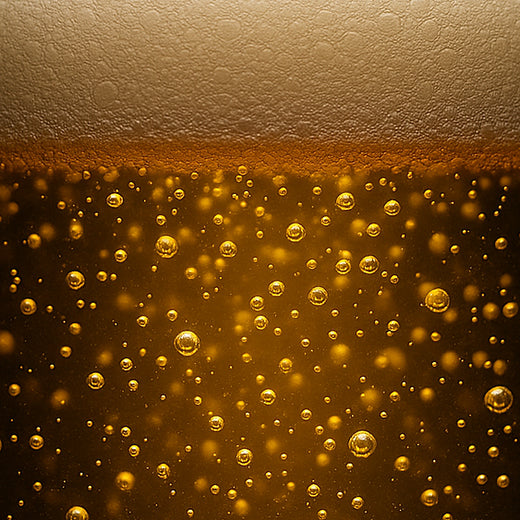
- Olfactive family
- Gourmand · 476 entries of the glossary in this family Subfamily: Malty-fermented · 1 entry in this subfamily Cluster: Boozy gourmands · 7 entries in this cluster
- Material
- Fantasy/Concept Cereal grain, most commonly malted barley; most modern beer is also brewed with hops
- Pyramid
- Heart · Volatility: Heart Note
- Strength
- N/A — no measured strength for a fantasy accord Not on the graded scale
- Producing countries
- N/A — olfactory concept
- Also called
- ale, lager, stout, porter, pilsner
Family, subfamily and cluster: PREMIEREPEAU house classification, version 2026‑11.
Beer · Facets
Entries of the glossary that carry each facet, of 3,979:
- earthy 660
- sweet 1,988
- bitter 75
- malty 15
- yeasty 9
Editorial note We own no rights to this material, its name or its trademark. This entry is independent editorial journalism, published under freedom of expression.
Beer · Scent
Isoamyl acetate has a fruity, banana, sweet, fresh and apple aroma, and its banana-like flavour is a key attribute of Hefeweizen beers. Hops impart floral, fruity or citrus aromas to beer. Hop flavours and aromas may be described as grassy, floral, citrus, spicy, piney, lemony, grapefruit and earthy. Myrcene gives a pungent smell of fresh hops. Yeasty and meaty flavours are often associated with cloudy wheat beers. Dimethyl sulphide is commonly present in lagers and contributes to their characteristic aroma.
Evolution over time
Beer: scent over time.
- Immediately
N/A — no documented evolution for a fantasy accord
- After a few hours
N/A
- After a few days
N/A
Beer · In Perfumery
Depending on the quantity and on the time and point of addition, the hop gives either a strong or a more subtle hop aroma. In the flavour industry, the Maillard reaction is the basis of many recipes, and flavourists have used it to make artificial flavours.
Pyramid
Beer: Heart. Entries of the glossary stored at each place of the pyramid, of 4,006 (42 store no place):
- Top 718
- Top · Heart 497
- Heart 1,641
- Heart · Base 514
- Base 594
Role in the formula
Beer: roles in the formula. Entries of the glossary that share each role, of 4,006:
- N/A — no documented formula role 361
Beer · Extraction & Chemistry
The process of making beer is brewing. It converts the grain into a sugary liquid called wort and then ferments this into beer using yeast. The first step is mashing, in which malted barley is mixed with hot water in a mash tun. The starches are converted to sugars, and the sweet wort is drained off. Hops are added to the wort during the boil as a source of bitterness, flavour and aroma. The wort is cooled and the yeast is added. The wort is then fermented, often for a week or longer.
Available as
Beer: available as.
- synthetic accord
- fantasy note
- Appearance
- N/A — olfactory concept
Beer · Did You Know?
The Hymn to Ninkasi, a prayer to the Mesopotamian goddess of beer, contains a recipe for beer. The Sumerians believed that the goddess Ninkasi oversaw the brewing process.
Beer · In Depth
What beer is
Beer is one of the oldest and most widely consumed alcoholic drinks in the world. Wheat, maize, rice and oats are also used besides malted barley. Other flavouring agents, such as gruit, herbs or fruits, may be included or used instead of hops. Beer is distributed in bottles and cans, and is commonly available on draught in pubs and bars. A beer hall is a large pub that specializes in beer.
Malt
Malt is any cereal grain that has been made to germinate by soaking in water and then stopped from germinating further by drying with hot air. Malting produces enzymes that convert starches into fermentable sugars. Different roasting times and temperatures produce different colours of malt from the same grain. Darker malts produce darker beers. Caramel malt provides enhanced caramel notes, while roasted malt contributes more roasted or malty flavours.
Hops and yeast
Hops are the green flowers of the hop plant Humulus lupulus. They are used primarily as a bittering, flavouring and stability agent in beer, to which they also give floral, fruity or citrus flavours and aromas. During wort boiling, the humulones in hops are thermally isomerized into iso-alpha acids, which give a bitter flavour to beer. Myrcene, humulene and caryophyllene together make up 80–90% of the essential oil in hops.
Top-fermented beers are most commonly produced with Saccharomyces cerevisiae, a top-fermenting yeast. Top-fermenting yeast typically works between 15 and 25 °C, and at these temperatures it produces significant amounts of esters and other secondary flavour and aroma products. Lager is cool-fermented beer, and pale lagers are the most commonly drunk beers in the world.
Chemistry
Beer contains the phenolic acids 4-hydroxyphenylacetic acid, vanillic acid, caffeic acid, syringic acid, p-coumaric acid, ferulic acid and sinapic acid. Tryptophol, tyrosol and phenylethanol are aromatic higher alcohols produced by yeast during the brewing process. Furfural is one of the most prevalent aldehydes in beers.
Esters are synthesised during fermentation, and their amount depends on the yeast strain and the fermentation temperature. The Maillard reaction contributes to the browning of malted barley as found in beer. The caramel and malty notes in beer generally arise from Maillard reactions, caramelisation or pyrolysis products.
Explore all seven extraits in the Discovery Set.
Beer · History
Ancient evidence and early laws
The earliest archaeological evidence of fermentation consists of 13,000-year-old residues of a beer with the consistency of gruel, found at Raqefet Cave near Haifa. The earliest clear chemical evidence of beer produced from barley dates to about 3500–3100 BC, from Godin Tepe in the Zagros Mountains of western Iran. The Babylonian Code of Hammurabi, from about 1750 BC, included laws regulating beer.
Sumerian beers and later styles
The Sumerians drank a variety of beers: eight types from barley, 12 types from wheat and 3 from a mixture of grains. When hopped ale from Europe was imported into Britain in the late Middle Ages, it was called beer to differentiate it from the British unhopped ale. Stout was originally the strongest variety of porter, a dark brown beer popular with the street and river porters of eighteenth century London.
Beer · Technical Sheet
Identity
- Botanical
- N/A — olfactory concept (beverage from Hordeum vulgare + Humulus lupulus)
- Type
- Accord
- Category
- Beverages
- Note
- Beer is an evocative accord in perfumery. Reconstructed from malty, yeasty, hoppy, and slightly bitter materials.
Chemical data
- Formula
- Complex natural mixture (key constituents: ethanol; vanillic acid; caffeic acid; ferulic acid)
- Structure
- Ethanol, Vanillic Acid:
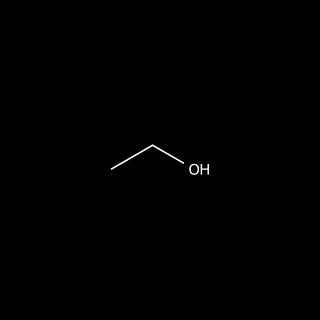
Ethanol
PubChem, Ethanol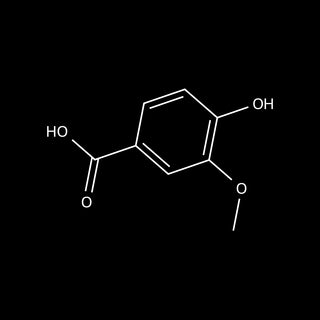
Vanillic Acid
PubChem, Vanillic Acid
Physical properties
- Alcohol by volume
- usually around 4% to 6%
Performance and rules
- IFRA status
- No IFRA Standard for the material itself (51st Amendment)
Beer · See Also
Entries related to Beer, by their place in the pyramid. “shared” marks a scent word Beer has too.
Top notes

Tyrosol
floral · fruity · rose Florals / Top · Heart

Heart notes

Black Sesame
gourmand · nutty · roasted Gourmand / Natural & Synthetic
Vanillic Acid
sweet (shared) · vanilla · custard Gourmand


Base notes

Red Wine
rich (shared) · fruity · earthy (shared) Gourmand / Same cluster / Natural
Rum
sweet (shared) · gourmand · rich (shared) Gourmand / Same cluster / Fantasy/Concept
Vanilla
gourmand · balsamic · warm Gourmand / Natural & Synthetic
Honey
gourmand · animalic · sweet (shared) Gourmand / Natural & Synthetic


Other entries · Place in the pyramid not stored

Wine Must
grape juice · winemaking · reduced must Gourmand / Same cluster / Natural

Beer · Sources
- Foods (2025) Beer Aroma Compounds: Key Odorants, Off-Flavour Compounds and Improvement Proposals
- FEMS Microbiology Reviews (2019) The molecular biology of fruity and floral aromas in beer and other alcoholic beverages
- IFRA Standards, 51st Amendment
- Wikipedia Beer
- Wikipedia Hops
- Wikipedia Maillard reaction
- Wikipedia Beer hall
- Wikipedia Malt
Cite as PREMIEREPEAU Glossary, “Beer”, https://premierepeau.com/
