


Red Wine
Keywords: rich · fruity · earthy
Red wine is a type of wine made from dark-colored grape varieties. Its alcohol content is generally 5.5–15.5% by volume.
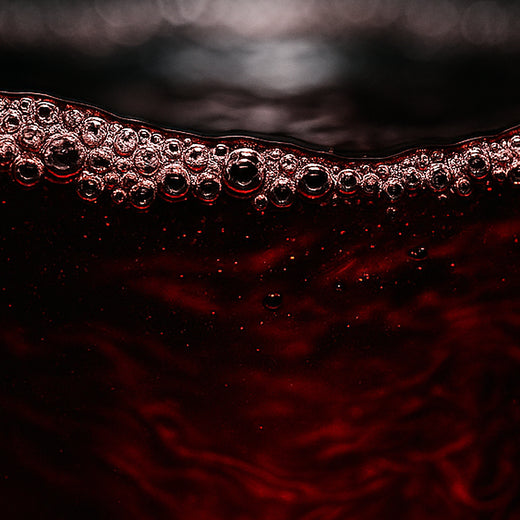
- Olfactive family
- Gourmand · 472 entries of the glossary in this family Subfamily: Classic fruits · 2 entries in this subfamily Cluster: Boozy gourmands · 7 entries in this cluster
- Material
- Natural Fermented grape juice (Vitis vinifera)
- Pyramid
- Base · Volatility: Base Note
- Strength
- Medium Step 3 of 5 · shared by 1,462 of 2,148 graded entries Graded entries at each step, from 1 to 5: 4, 118, 1,462, 500, 40. 24 more sit between two steps.
Red Wine · Facets
Entries of the glossary that carry each facet, of 3,979:
- floral 1,546
- sweet 1,988
- leather 78
- fruity 1,301
- woody 792
- winey 129
Red Wine · Scent
The aromas of wine range over fruit, earthy, leathery, floral, herbal, mineral and woodsy notes. As a wine ages, chemical reactions create new smells that are known as its bouquet, such as truffles in a Pinot noir. A wine extract smells fruity, woody, fusel, winey and of cognac.
Evolution over time
Red Wine: scent over time.
- Immediately
Fruity, fusel
Scent words: fruity - After a few hours
Winey, cognac
- After a few days
Woody
Scent words: woody
Red Wine · In Perfumery
Wine-like notes in perfumery come from aromatics such as green cognac oil, clary sage absolute and black currant bud absolute. Green cognac oil has a powerful, dry, tart, wine-like aroma and is used as a middle to base note to brighten and lift a composition, add fresh fruity aspects and give tenacity. Clary sage absolute has an intense, wine-like, rich herbaceous aroma and is a very tenacious, fixative middle note. Black currant bud absolute has deep, warm, wine-like earthy undertones and is a bold middle to base note used to modify green aromas. Ethyl octanoate, an ester that occurs above its odor threshold in young red wines, is used as a flavoring in the food industry and as a scent additive in perfumery.
Pyramid
Red Wine: Base. Entries of the glossary stored at each place of the pyramid, of 4,000 (36 store no place):
- Top 718
- Top · Heart 497
- Heart 1,641
- Heart · Base 514
- Base 594
Role in the formula
Red Wine: roles in the formula. Entries of the glossary that share each role, of 4,000:
- Blender 1,040
- Volume builder 780
- Fixative 340
Red Wine · Terroir & Origins
- Producing countries
- Italy, France, Spain, United States, China
No origin card: China, Spain, France, United States.
Calabrian Red Wine
Calabria — Italy
Facet scores, out of 100
- Sweet 100 (also a facet of the entry)
- Fruity 80 (also a facet of the entry)
- Bitter 67
- Earthy 50
- Aromatic 37
- Smoky 30
Only the red wines of Cirò have drawn much international attention.
The far southern province of Reggio Calabria contains the Bianco and Bivongi wine regions. The Bivongi DOC makes red and rosé wines from blends of Gaglioppo, Greco nero, Nocera, Castiglione and Calabrese.
- Soil
- Clay, limestone, sandy, volcanic in some areas
Red Wine · Extraction & Chemistry
In red wine production, yeast converts the sugars in the must into alcohol, with carbon dioxide and heat as by-products. Much of the red wine production process involves extraction of color and flavor components from the grape skin. In red wine production the grapes are crushed, but pressing usually does not take place until after or near the end of fermentation. Approximately 60–70% of the available juice in the grape berry, the free-run juice, can be released by crushing and does not require the press. The preservative sulfur dioxide is commonly added when grapes arrive at the winery.
- Appearance
- Hydro-alcoholic solution; intense violet when young, brick red when mature, brown when old
Red Wine · Did You Know?
Red grapes can produce white wine if they are quickly pressed and the juice is not left in contact with the skins. Blanc de noirs Champagnes are made solely from Pinot noir, Pinot meunier or a mix of the two.
Red Wine · In Depth
Color and tannins
The color of red wine ranges from intense violet in young wines through brick red in mature wines to brown in older ones. The red color comes from anthocyan pigments in the skin of the grape, and the juice of most purple grapes is greenish-white. With aging, reactions between active molecules in the wine generally brown it, leading from red to a more tawny color. Aging in a wooden barrel, generally oak, also affects the color.
In general, cooler fermentation temperatures (25–28 °C) produce fruitier red wines for early drinking, while higher temperatures (28–35 °C) produce more tannic wines designed for long aging. Tannins give wine astringency, and they bind to anthocyanin to form more stable molecules that give long-term color in aged red wines.
Aroma compounds
Wine aroma is formed by more than 800 volatile compounds. The main wine volatiles are ethyl esters, acetates and higher alcohols. Esters are produced by the yeasts during fermentation. Ethyl acetate is the most common ester in wine. The principal ethyl esters, such as ethyl hexanoate, ethyl octanoate and ethyl decanoate, are characterized by fruity and floral notes.
Ethyl octanoate has a strong odor of fruit and flowers and occurs above its odor threshold in young red wines. Adjusting the 11 fruity compounds, predominantly esters, of a beer aroma base model to the concentration levels of a wine aroma base model made a sensory panel describe the sample as wine-like instead of beer-like. A basic wine aroma can be built from an aroma base of ethanol and 26 other compounds, mainly derived from fermentation.
Norisoprenoids and barrel aging
Oxidation of carotenoids in ripening grape berries produces volatile C13-norisoprenoids, which are strongly odoriferous. Damascenone produces some of the rose oil aromas associated with Pinot noir, and raspberry ketone produces some of the raspberry aromas associated with red wine. Tertiary aromas are those that develop through either bottle or oak aging. Wines aged in acacia, chestnut and oak wood showed higher contents of vanillin and eugenol. Odor-active amounts of cis-whisky lactone are associated with barrel aging.
Related: Beer · Cognac · Rum · Sake · Wine Must · White Grape
Red Wine · History
Winemaking has a history of approximately 8000 years. The oldest winery in the world, dating to 4100 BC, was found in the Areni-1 cave in Areni, Armenia. Historically, intact grape clusters were trodden by feet.
Red Wine · Technical Sheet
Identity
- Botanical
- Vitis vinifera
- Taxonomy
- Vitales order › Vitaceae family › Vitis genus · GBIF
- Botanical records
- Vitis vinifera: POWO, Vitis vinifera · IPNI, Vitis vinifera · GBIF, Vitis vinifera · Wikidata, Vitis vinifera · Wikipedia, Vitis vinifera · IUCN Least concern (LC), Vitis vinifera
- IPNI
- Vitis vinifera L., Sp. Pl. 1: 202 (1753) — Carl Linnaeus (1707–1778)
- Type
- Ingredient
- Category
- Beverages
- Note
- Red wine is an olfactory accord in perfumery evoking rich, tannic, fruity-boozy, vinous notes. Key molecules include ethyl cinnamate, linalool, beta-damascenone, and various esters. Wine absolute (CAS 91082-91-6) exists commercially as a dark, viscous extract. Specific gravity approximately 0.95–1.05.
In Nature
- Growth form
- Climber · POWO
- Native range
- Middle Europe · Southwestern Europe · Southeastern Europe · Eastern Europe · Middle Asia · Caucasus · Western Asia · POWO
- Introduced to
- 54 regions · Africa 13 · Northern America 10 · Europe 9 · Temperate Asia 8 · Tropical Asia 7 · Southern America 4 · Pacific 2 · Australasia 1
- Flowering
- peak in May · north of the equator · iNaturalist
- Recorded altitude
- 50–650 m · median 200 m · 15,958 records with an altitude · GBIF
- Wild or cultivated
- 19,455 native · 2,461 introduced · 10,872 cultivated among 163,862 records (the rest carry no such mark) · GBIF
- Recorded in
- 120 of 512 squares of the world grid; a brighter dot holds more records · GBIF
- Also from this genus
- Vitis: Cabernet Grape · Cognac · Grape Leaves · Grape Seed · Grapeflower · Grapes · Pinot Noir Grapes · Vine · 2 more entries
In Print
- Timeline
- first described 1753 · earliest aroma paper in Europe PMC, 1949
- In English books
- most mentioned in the 1980s · Google Books Ngram
Classification
- Chemical class
- Complex mixture of chemical compounds in a hydro-alcoholic solution with a pH around 4
Chemical data
- Formula
- Complex natural mixture (key constituents: ethyl octanoate C₁₀H₂₀O₂; β-damascenone C₁₃H₁₈O)
- Most reported compounds
- l-Epicatechol (53 papers; one: BMC Plant Biol 2016) · Resveratrol (50 papers; one: BMC Plant Biol 2016) · cis-Piceid (31 papers; one: BMC Plant Biol 2016) · Gallic Acid (30 papers; one: BMC Plant Biol 2016) · (+)-Catechin 3-Gallate (26 papers; one: BMC Plant Biol 2016) · LOTUS
- Structure
- Ethyl octanoate, Beta-Damascenone:
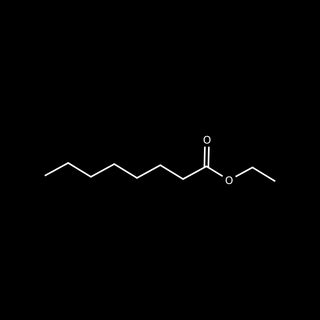
Ethyl octanoate
PubChem, Ethyl octanoate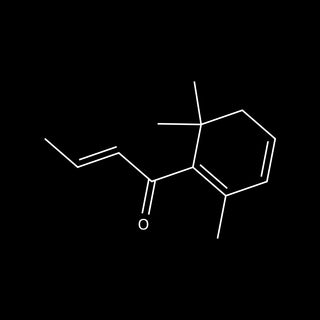
Beta-Damascenone
PubChem, Beta-Damascenone - CAS
- 91082-91-6
- EC
- 293-806-9
- INCI names (CosIng)
- VITIS VINIFERA FRUIT JUICE FERMENT LEES OIL (FRAGRANCE, PERFUMING)VITIS VINIFERA LEAF OIL (FRAGRANCE)VITIS VINIFERA SEED OIL (SKIN CONDITIONING – EMOLLIENT, SKIN CONDITIONING)VITIS VINIFERA BUD EXTRACT (SKIN CONDITIONING)VITIS VINIFERA CALLUS CULTURE EXTRACT (NOT REPORTED)VITIS VINIFERA CALLUS EXTRACT (SKIN PROTECTING)VITIS VINIFERA EXTRACT (ANTIOXIDANT, SKIN CONDITIONING – MISCELLANEOUS)VITIS VINIFERA FLOWER CELL EXTRACT (FRAGRANCE, SKIN PROTECTING)
Labelling
- EU allergens reported
- Linalool · Geraniol · Citronellol · Benzyl Alcohol · Terpineol · Vanillin · Rose Ketones
Performance and rules
- Available as
- standard form
- IFRA status
- No IFRA Standard for the material itself (51st Amendment)
Red Wine · See Also
Entries related to Red Wine, by their place in the pyramid. “shared” marks a scent word Red Wine has too.
Heart notes

Beer
fresh · rich (shared) · sweet (shared) Gourmand / Same cluster / Fantasy/Concept
Black Sesame
gourmand · nutty · roasted Gourmand / Natural & Synthetic
Cabernet Grape
rich (shared) · fruity (shared) · aromatic Fruity / Fantasy/Concept
Pinot Noir Grapes
fruity (shared) · aromatic · floral (shared) Fruity / Fantasy/Concept


Base notes


Other entries · Place in the pyramid not stored

Wine Must
grape juice · winemaking · reduced must Gourmand / Same cluster / Natural

Red Wine · Sources
Read the science
- BMC Plant Biol (2022) Genetic architecture of berry aroma compounds in a QTL (quantitative trait loci) mapping population of interspecific hybrid grapes (Vitis labruscana × Vitis vinifera)
- Foods (2022) GC-MS Untargeted Analysis of Volatile Compounds in Four Red Grape Varieties (Vitis vinifera L. cv) at Different Maturity Stages near Harvest
- Food Chem X (2023) Microbial community succession and volatile compounds changes during spontaneous fermentation of Cabernet Sauvignon (Vitis vinifera L.) under rain-shelter cultivation
- Molecules (2014) Applications of solid-phase microextraction and gas chromatography/mass spectrometry (SPME-GC/MS) in the study of grape and wine volatile compounds
- Journal of Agricultural and Food Chemistry (2024) Molecular Insights into the Aroma Difference between Beer and Wine: A Meta-Analysis-Based Sensory Study Using Concentration Leveling Tests
- PubChem Beta-Damascenone
- IFRA Standards, 51st Amendment
- Wikipedia Red wine
- Wikipedia Nose (wine)
- Wikipedia Vitis vinifera
- Wikipedia List of wine-producing countries
- Wikipedia Wine color
- Wikipedia Wine chemistry
- Wikipedia Ethyl octanoate
- Wikipedia Champagne
Cite as PREMIEREPEAU Glossary, “Red Wine”, https://premierepeau.com/
