


Belambra Tree
Keywords: botanical · tree
Belambra Tree: The belambra tree (Phytolacca dioica), commonly known as ombú, is a massive evergreen tree in the pokeweed family Phytolaccaceae. It is native to the Pampas of South America.
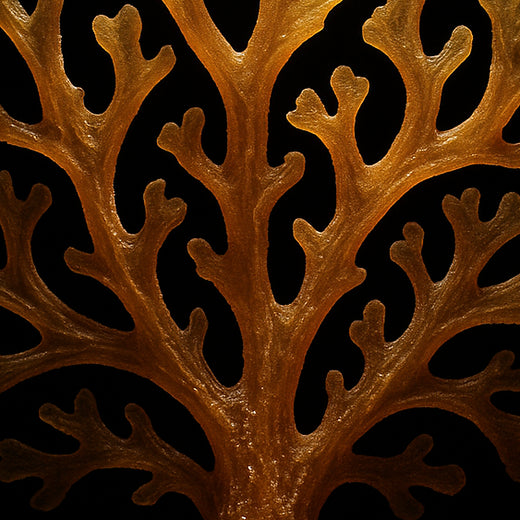
- Olfactive family
- Woods · 362 entries of the glossary in this family Subfamily: Earthy woods · 49 entries in this subfamily
- Material
- Fantasy/Concept Evergreen tree
- Pyramid
- Base · Volatility: Base Note
- Strength
- Faint Step 2 of 5 · shared by 119 of 2,156 graded entries Graded entries at each step, from 1 to 5: 4, 119, 1,473, 498, 39. 23 more sit between two steps.
- Also called
- Belhambra, belombra, bella sombra, ombú, umbu, monkey grape, elephant tree
Family, subfamily and cluster: PREMIEREPEAU house classification, version 2026‑11.
Belambra Tree · Facets
Entries of the glossary that carry each facet, of 3,979:
- woody 792
- earthy 660
- warm 1,108
- green 1,442
- damp 4
Belambra Tree · Scent
The small flowers of the tree are extremely malodorous.
Evolution over time
Belambra Tree: scent over time.
- Immediately
Extremely malodorous (the flowers).
Belambra Tree · In Perfumery
Pyramid
Belambra Tree: Base. Entries of the glossary stored at each place of the pyramid, of 4,006 (42 store no place):
- Top 718
- Top · Heart 497
- Heart 1,641
- Heart · Base 514
- Base 594
Role in the formula
Belambra Tree: roles in the formula. Entries of the glossary that share each role, of 4,006:
- Modifier 1,167
- Atmospheric fewer than 40 entries
Available as
Belambra Tree: available as.
- fantasy accord
PREMIEREPEAU collection: Extrait de parfum
Belambra Tree · Terroir & Origins
- Producing countries
- Argentina, Brazil, Uruguay (native to the Pampas)
Belambra Tree · Did You Know?
The trunk and branches contain up to 80% of water. Despite its size, the soft trunk is easily manipulated, which has led to the tree being used in the art of bonsai.
Belambra Tree · In Depth
Pollination and size
Phytolacca dioica is dioecious, with male and female flowers on separate plants. The flowers are pollinated by the butterfly Doxocopa laurentia. The tree has an umbrella-like canopy that spreads to a diameter of 12 to 15 m and can attain a height of 12 to 18 m.
Trunk and wood
Because the ombú is derived from herbaceous ancestors, its trunk consists of anomalous secondary thickening rather than true wood. The ombú grows fast, but its wood is soft and spongy enough to be cut with a knife. The trunk is uniquely swollen at the base, which may grow to 4 m in diameter, so that the tree appears to be standing on a mound. Thick roots emerge prominently around the broad, twisted trunk base and can lift structures.
Flowers and fruit
The small creamy white flowers hang in terminal catkins up to 15 cm long. The fruits are juicy yellow to black berries that hang in clusters.
Toxic sap and uses
The sap is poisonous, so the ombú is not grazed by cattle and is immune to locusts and other pests. The seeds, leaf and root contain saponins, and the fruits should be considered potentially toxic to livestock. The leaves are sometimes used as a laxative or purgative, and the fruit has been used as a human emetic and purgative.
The tree resists locusts and ants and withstands hurricanes, prolonged heat and drought. The tree provides excellent shade in regions where other trees will not grow, and it is cultivated as a shade tree in Southern California.
Native range and name
The Pampas, the ombú’s native region, include the Argentine provinces of Buenos Aires, La Pampa, Santa Fe, Entre Ríos and Córdoba, all of Uruguay, and the Brazilian state of Rio Grande do Sul. The reason the pristine Pampas were treeless has been much debated. In South Africa, where it was introduced, the ombú has become invasive.
The generic name Phytolacca means ‘plant that produces juice’.
Related: Sandalwood · Vetiver · Andiroba · Iso E Super · Javanol · Pamplewood
Belambra Tree · History
The ombú is a symbol of Uruguay, Rio Grande do Sul and Argentina, and of gaucho culture, as its canopy is quite distinguishable from afar and provides comfort and shelter from sun and rain. The name ‘ombú’ comes from the Guarani language, where it is given as meaning ‘shadow’, reflecting its prominent canopy.
Belambra Tree · Technical Sheet
Identity
- Botanical
- Phytolacca dioica
- Taxonomy
- Caryophyllales order › Phytolaccaceae family › Phytolacca genus · GBIF
- Botanical records
- Phytolacca dioica: POWO, Phytolacca dioica · IPNI, Phytolacca dioica · GBIF, Phytolacca dioica · Wikidata, Phytolacca dioica · Wikipedia, Phytolacca dioica · IUCN Least concern (LC), Phytolacca dioica
- IPNI
- Phytolacca dioica L., Sp. Pl., ed. 2. 1: 632 (1762) — Carl Linnaeus (1707–1778)
- Type
- Concept
- Category
- Accords and curiosities
- Note
- Phytolacca dioica (Ombú/Belambra) is not commercially distilled. Used as a creative/evocative note in perfumery rather than a sourced raw material.
In Nature
- Growth form
- Tree · POWO
- Native range
- Brazil · Southern South America · POWO
- Introduced to
- 31 regions · Africa 16 · Europe 4 · Tropical Asia 3 · Australasia 3 · Southern America 2 · Temperate Asia 1 · Pacific 1 · Northern America 1
- Recorded altitude
- 0–700 m · median 50 m · 4,022 records with an altitude · GBIF
- Wild or cultivated
- 693 native · 164 introduced · 23 cultivated among 8,534 records (the rest carry no such mark) · GBIF
- Recorded in
- 52 of 512 squares of the world grid; a brighter dot holds more records · GBIF
In Print
- In English books
- most mentioned in the 1930s · Google Books Ngram
Classification
- Cluster
- Earthy woods · 237 entries in this cluster
- Chemical class
- Fantasy accord — not an isolated chemical class
Chemical data
- Formula
- N/A — no standardized extract
Physical properties
- Appearance
- Pale yellow to amber viscous liquid
Performance and rules
- IFRA status
- No IFRA Standard for the material itself (51st Amendment)
Belambra Tree · See Also
Entries related to Belambra Tree, by their place in the pyramid. “shared” marks a scent word Belambra Tree has too.
Heart notes

Pamplewood
woody (shared) · fruity · fresh Woods / Same cluster / Synthetic

Base notes

Iso E Super
woody (shared) · amber · velvet Woods / Same cluster / Synthetic
Sandalwood
woody (shared) · floral Woods / Natural
Vetiver
earthy (shared) · woody (shared) · smoky Woods / Natural
Javanol
woody (shared) · creamy · clean Woods / Synthetic
Andiroba
earthy (shared) · sweet Earthy / Natural


Belambra Tree · Sources
- International Plant Names Index (IPNI) Phytolacca dioica L.
- IFRA Standards, 51st Amendment
- Wikipedia Phytolacca dioica
- Wikipedia Pampas
- World Agroforestry Phytolacca dioica, Agroforestree species profile
Cite as PREMIEREPEAU Glossary, “Belambra Tree”, https://premierepeau.com/
