


Boronia Absolute
Keywords: floral · woody · sweet
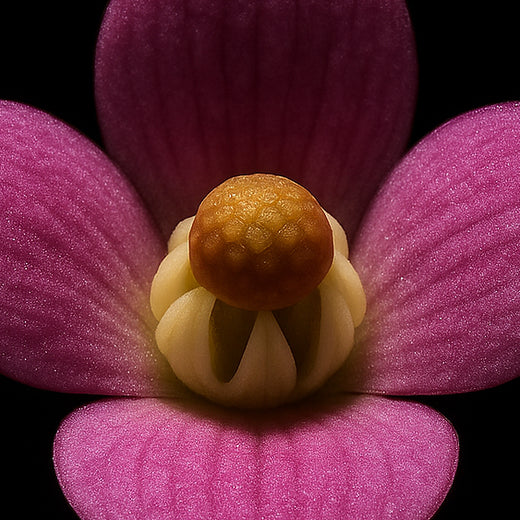
Boronia absolute is an absolute extracted from the flowers of Boronia megastigma. Its aroma is an earthy floral with fresh, green, fruity-sweet and tea-like notes.
- Olfactive family
- Florals · 782 entries of the glossary in this family Subfamily: Fruity florals · 14 entries in this subfamily Cluster: Fruity-floral naturals · 1 entry in this cluster
- Material
- Natural Flower
- Pyramid
- Heart · Volatility: Heart Note
- Also called
- Boronia megastigma Nees absolute
Boronia Absolute · Facets
Entries of the glossary that carry each facet, of 3,979:
- floral 1,546
- woody 792
- sweet 1,988
- warm 1,108
- fresh 1,387
Boronia Absolute · Scent
It is a complex, rich and tenacious earthy floral reminiscent of champaca, with fresh, green, fruity-sweet and tea-like notes, soft cinnamon and tobacco nuances, and a warm, woody-sweet undertone. At 100%, the odour is described as cassie, violet, warm, sweet, woody, fresh, fruity and green. At 1.0%, it is sweet, fresh and floral, with aromatic green herbal and woody notes, berry and powdery facets and an overall tutti-frutti-like nuance.
Evolution over time
Boronia Absolute: scent over time.
- Immediately
Fresh, green and fruity-sweet notes.
Scent words: fresh · green · fruity · sweet - After a few hours
Earthy floral and tea-like notes with a violet facet.
Scent words: floral · earthy - After a few days
A warm, woody-sweet undertone with soft cinnamon and tobacco nuances.
Scent words: sweet · warm · woody
Boronia Absolute · In Perfumery
The absolute is used in floral perfumes and bases, for example violet, mimosa, cassie, honeysuckle and sweet pea. The oil is used in perfumes and as a food additive that enhances fruit flavors. The absolute is used primarily in the food flavouring industry. It is a middle note.
Pyramid
Boronia Absolute: Heart. Entries of the glossary stored at each place of the pyramid, of 4,000 (36 store no place):
- Top 718
- Top · Heart 497
- Heart 1,641
- Heart · Base 514
- Base 594
Role in the formula
Boronia Absolute: roles in the formula. Entries of the glossary that share each role, of 4,000:
- Modifier 1,167
- Signature note 897
- Blender 1,040
Boronia Absolute · Terroir & Origins
- Producing countries
- Australia
Tasmanian Boronia Absolute
Tasmania — Australia
About 12.5 million flowers are needed to make one kilo of the absolute.
Over 34 years, the Tasmanian processor has worked with the University of Tasmania to advance boronia farming techniques.
- Harvest
- Flowers; about three tonnes from one grower in the 2020 season
- Extraction
- Aromatic essence extracted from the harvested plant to make an absolute
Boronia Absolute · Extraction & Chemistry
The absolute is solvent extracted. It is prepared by alcoholic extraction of the concrete.
- Appearance
- Dark brown/amber colored, semi-transparent, slightly viscous liquid
Boronia Absolute · Did You Know?
All organs of the Boronia megastigma flower contain oil glands, and their activity is greatest while the stigma is receptive to pollen. This suggests that the scent may serve to attract pollinators such as insects.
Boronia Absolute · In Depth
Description, range and naming
Boronia megastigma is a shrub that typically grows 1–2 m tall, with slender branches covered in fine, soft hairs. The species, commonly known as brown boronia, is a plant in the citrus family Rutaceae. It is endemic to the south-west of Western Australia.
It grows in winter-wet swamps and woodland, mainly in the karri forests and the southern edges of the jarrah forests between Harvey and Cape Riche. The leaves have three or five thick, slender, linear leaflets and are strongly aromatic. The flowers are cup-shaped, hanging and aromatic, reddish brown to dark brown or purplish black on the outside and yellow inside. The stigma is unusually large, dark purple or black, with four lobes.
Boronia megastigma was first formally described in 1848 by Friedrich Gottlieb Bartling. The specific epithet megastigma refers to the large stigma of the flower.
Aroma compounds
The two main aroma compounds of the oil of this species are β-ionone and dodecyl acetate. The absolute contains the same constituents as the concrete. Among them are the alcohols linalool and dodecanol and the ketones β-ionone, α-ionone and dihydro-β-ionone. The absolute also contains hydrocarbons such as α-pinene, β-pinene, limonene and myrcene, and esters including dodecyl acetate and tetradecyl acetate.
Cultivation and supply
Boronia megastigma is the main Boronia source of essential oils. Boronia heterophylla is more often harvested as an aromatic cut ornamental. Restrictions on bush-picking and the need to improve quality have increased demand for harvesting from cultivated boronia plants. Plantations and cultivation have occurred in a number of places outside the natural habitat. Current commercial production is insufficient and is based on a limited number of genotypes. Several cultivated varieties bear flowers of different colours.
Explore all seven extraits in the Discovery Set.
Boronia Absolute · Technical Sheet
Identity
- Botanical
- Boronia megastigma
- Taxonomy
- Sapindales order › Rutaceae family › Boronia genus · GBIF
- Botanical records
- Boronia megastigma: POWO, Boronia megastigma · IPNI, Boronia megastigma · GBIF, Boronia megastigma · Wikidata, Boronia megastigma · Wikipedia, Boronia megastigma
- IPNI
- Boronia megastigma Nees ex Bartl., Pl. Preiss. [J.G.C.Lehmann] 2(2–3): 227 (1848) — Christian Gottfried Daniel Nees von Esenbeck (1776–1858)
- Type
- Ingredient
- Category
- Flowers
In Nature
- Growth form
- Shrub · POWO
- Native range
- Australia · POWO
- Wild or cultivated
- 35 native · 4 introduced · 5 cultivated among 425 records (the rest carry no such mark) · GBIF
- Recorded in
- 5 of 512 squares of the world grid; a brighter dot holds more records · GBIF
- Also from this genus
- Boronia: Boronia
- Also from this botanical family
- Rutaceae: Acronychia pedunculata · Amyris · Bergamot · Bergamot Blossom · Bitter Orange · Blood Orange · 60 more entries
In Print
- Timeline
- first described 1848 · earliest aroma paper in Europe PMC, 1947
- In English books
- most mentioned in the 1890s · Google Books Ngram
Classification
- Chemical class
- Complex natural (absolute)
Chemical data
- Formula
- Complex natural mixture (key constituents: β-ionone; dodecyl acetate; linalool)
- Most reported compounds
- Beta-Ionone (3 papers; one: Helv Chim Acta 1947) · Eugenol (1 paper; one: Helv Chim Acta 1947) · Alpha-Ionone (1 paper; one: Helv Chim Acta 1947) · Zeaxanthin (1 paper; one: J Agric Food Chem 2009) · Heptacosane (1 paper; one: Helv Chim Acta 1947) · LOTUS
- Structure
- Beta-Ionone, Dodecyl acetate, Linalool:
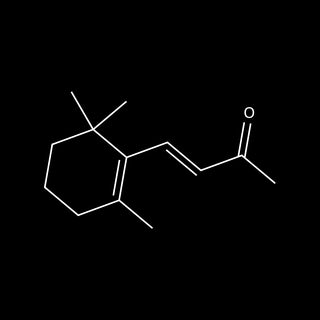
Beta-Ionone
PubChem, Beta-Ionone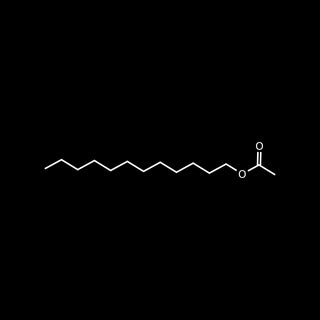
Dodecyl acetate
PubChem, Dodecyl acetate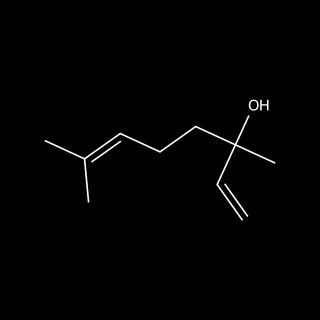
Linalool
PubChem, Linalool - CAS
- 8053-33-6
- INCI names (CosIng)
- BORONIA MEGASTIGMA FLOWER OIL (PERFUMING)BORONIA MEGASTIGMA FLOWER EXTRACT (PERFUMING)
Labelling
- EU allergens reported
- Eugenol
Physical properties
- Flash point
- 143.00 °F
- Specific gravity
- 0.95000 to 1.02000 at 25.00 °C
- Appearance
- Dark green viscous liquid (est)
Performance and rules
- Available as
- absolute
- IFRA status
- No IFRA Standard for the material itself (51st Amendment)
Boronia Absolute · See Also
Entries related to Boronia Absolute, by their place in the pyramid. “shared” marks a scent word Boronia Absolute has too.
Heart notes
-
Osmanthus Absolute
fruity · floral (shared) · apricot Florals / Heart · Base / Same subfamily / Natural 
Rose
floral (shared) · honeyed · waxy Florals / Natural
Tuberose
floral (shared) · narcotic · creamy Florals / Natural
Violet
floral (shared) · violet Florals / Natural & Synthetic
Lantana
floral (shared) · herbaceous · pungent Florals / Natural


Other entries · Place in the pyramid not stored

Carnation
floral (shared) · spicy · clove Florals / Natural

Boronia Absolute · Sources
Read the science
- Helv Chim Acta (1947) Etudes sur les matières végétales volatiles. XLV. — Présence d’ionones dans l’essence concrète de Boronia megastigma Nees
- ISHS Acta Horticulturae Selection and production of Boronia
- IFRA Standards, 51st Amendment
- Wikipedia Boronia megastigma
Cite as PREMIEREPEAU Glossary, “Boronia Absolute”, https://premierepeau.com/
