


Chinese Cedarwood
Keywords: woody · smoky · cedar
Chinese cedarwood oil is an oil distilled from Cupressus funebris, a weeping cypress of the family Cupressaceae. Its odour is woody and smoky.
- Olfactive family
- Woods · 362 entries of the glossary in this family Subfamily: Dry woods · 45 entries in this subfamily Cluster: Cedar-like dry woods · 29 entries in this cluster
- Material
- Natural Wood of Cupressus funebris, the Chinese weeping cypress
- Pyramid
- Base · Volatility: Base Note
- Strength
- Medium Step 3 of 5 · shared by 1,473 of 2,156 graded entries Graded entries at each step, from 1 to 5: 4, 119, 1,473, 498, 39. 23 more sit between two steps.
- Also called
- Cedarwood oil China, Cedarwood oil Chinese, Cupressus funebris wood oil, China cedar wood oil
Family, subfamily and cluster: PREMIEREPEAU house classification, version 2026‑11.
Chinese Cedarwood · Facets
Entries of the glossary that carry each facet, of 3,979:
- woody 792
- smoky 166
- earthy 660
- phenolic 94
- medicinal 82
- musky 113
Chinese Cedarwood · Scent
The odour is woody, burnt, musty and cedar-like. Commercial Chinese cedarwood oil has an odour more smoke-like than the American oils. Another description gives a woody, musky, light, pleasant aroma with some earthy and smoky notes. A supplier lists its odour as woody, cedar, phenolic and medicinal.
Evolution over time
Chinese Cedarwood: scent over time.
- Immediately
Light, musky and pleasant, with a medicinal and phenolic edge.
Scent words: musky - After a few hours
Woody and cedar-like, with earthy notes.
Scent words: woody · earthy - After a few days
Burnt, musty and smoky.
Scent words: smoky
- Tenacity
- 400 hours at 100%
Chinese Cedarwood · In Perfumery
Cedrol and cedrene, constituents of cedarwood oils, are valuable to the chemical industry for conversion to other derivatives with fragrance applications. In cosmetics the function of Chinese cedarwood oil is perfuming. The recommendation for cedarwood oil China is that it is not for flavor use.
Pyramid
Chinese Cedarwood: Base. Entries of the glossary stored at each place of the pyramid, of 4,006 (42 store no place):
- Top 718
- Top · Heart 497
- Heart 1,641
- Heart · Base 514
- Base 594
Role in the formula
Chinese Cedarwood: roles in the formula. Entries of the glossary that share each role, of 4,006:
- Perfuming agent 43
- Fragrance ingredient 51
- Backbone 196
Chinese Cedarwood · Terroir & Origins
- Producing countries
- China
Chinese Cedarwood · Extraction & Chemistry
Chinese cedarwood oil is obtained by steam distillation of species of the Cupressaceae family such as Cupressus funebris. The oil may also come from Platycladus orientalis, the Chinese arborvitae. The part used is the wood.
Available as
Chinese Cedarwood: available as.
- essential oil
- oil
- wood
- Appearance
- Colorless to slightly yellow oil
Chinese Cedarwood · Did You Know?
Although termed cedarwood oils, the most important oils are distilled from the wood of junipers and cypresses, both of the family Cupressaceae, rather than from true cedars, of the family Pinaceae.
Chinese Cedarwood · In Depth
The tree
The tree is the Chinese weeping cypress, a species of cypress native to southwestern and central China. It may also occur naturally in Vietnam. Cupressus funebris is a medium-sized coniferous tree growing to 20–35 m tall, with a trunk up to 2 m diameter.
Composition
Chinese cedarwood oil is similar in composition to Texas cedarwood oil. Analysis by gas chromatography gives α-cedrene 13–29%, thujopsene 18–39% and cedrol 10–20%. Cedrol is a sesquiterpene alcohol found in the essential oil of conifers, especially in the genera Cupressus and Juniperus. Thujopsene is a sesquiterpene with the molecular formula C₁₅H₂₄.
Properties and production
One volume of the oil dissolves in five volumes or fewer of 95% ethanol. The annual production volume is in the range of 1000 t.
Chinese Cedarwood · Technical Sheet
Identity
- Botanical
- Cupressus funebris
- Taxonomy
- Pinales order › Cupressaceae family › Cupressus genus · GBIF
- Botanical records
- Cupressus funebris: POWO, Cupressus funebris · IPNI, Cupressus funebris · GBIF, Cupressus funebris · Wikidata, Cupressus funebris · Wikipedia, Cupressus funebris · IUCN Data deficient (DD), Cupressus funebris
- IPNI
- Cupressus funebris Endl., Syn. Conif. 58. (1847) — Stephan Friedrich Ladislaus Endlicher (1804–1849)
- Type
- Ingredient
- Category
- Woods and mosses
In Nature
- Recorded altitude
- 0–1,250 m · median 500 m · 306 records with an altitude · GBIF
- Wild or cultivated
- 1 native · 16 introduced · 37 cultivated among 3,438 records (the rest carry no such mark) · GBIF
- Recorded in
- 38 of 512 squares of the world grid; a brighter dot holds more records · GBIF
- Also from this genus
- Cupressus: Cypress · Cypress Oil · Mexican Cypress
- Also from this botanical family
- Cupressaceae: Australian Blue Cypress · Bagas de Zimbro · Cade Oil · Cedar · Cedar Leaves · Cedarwood · 18 more entries
In Print
- Timeline
- first described 1847 · earliest aroma paper in Europe PMC, 2011
- In English books
- most mentioned in the 1850s · Google Books Ngram
Classification
- Chemical class
- Sesquiterpenes (α-cedrene, thujopsene) and the sesquiterpene alcohol cedrol
Chemical data
- Formula
- Complex natural mixture (key constituents: α-cedrene; thujopsene C₁₅H₂₄; cedrol C₁₅H₂₆O)
- Most reported compounds
- (+)-alpha-Funebrene (1 paper; one: Collect Czech Chem Commun 1968, (+)-alpha-Funebrene) · Amentoflavone (1 paper; one: Phytochemistry 1987, Amentoflavone) · Hinokiflavone (1 paper; one: Phytochemistry 1987, Hinokiflavone) · Cupressuflavone (1 paper; one: Phytochemistry 1987, Cupressuflavone) · LOTUS
- Structure
- Cedrol:
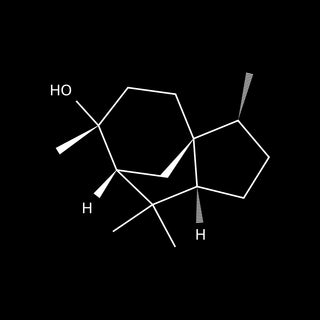
Cedrol
PubChem, Cedrol - CAS
- 85085-29-6
- EC
- 285-360-9
Labelling
- Forms in the EU cosmetic inventory
- Chinese Cedarwood: CUPRESSUS FUNEBRIS WOOD OIL · CUPRESSUS FUNEBRIS WOOD EXTRACT · CUPRESSUS FUNEBRIS WOOD EXTRACT ACETYLATED
Physical properties
- Boiling point
- 257.6 °C at 100.3 kPa
- Flash point
- > 93.33 °C (> 200 °F, TCC)
- Specific gravity
- 0.938–0.960 (d20/20)
- Refractive index
- 1.5000–1.5080 (n20/D)
- Vapour pressure
- 1.2–4.3 Pa at 20–25 °C
- Log P
- 4.33–7.04
Performance and rules
- IFRA status
- No IFRA Standard for the material itself (51st Amendment)
Chinese Cedarwood · See Also
Entries related to Chinese Cedarwood, by their place in the pyramid. “shared” marks a scent word Chinese Cedarwood has too.
Top notes

Cypress Oil
woody (shared) · coniferous · green Woods / Natural
Conifer
woody (shared) · pine · herbal Woods / Top · Heart / Natural


Heart notes

Cypress
woody (shared) · fresh · balsamic Woods / Same cluster / Natural-
Mexican Cypress
coniferous · woody (shared) · resinous Woods / Same cluster / Natural

Base notes

Cedarwood
woody (shared) · dry · clean Woods / Same cluster / Natural

Chinese Cedarwood · Sources
- GBIF Cupressus funebris
- International Plant Names Index (IPNI) Cupressus funebris Endl.
- Heliyon Antibacterial mechanism of action and in silico molecular docking studies of Cupressus funebris essential oil against drug resistant bacterial strains
- Horst Surburg, Johannes Panten Common Fragrance and Flavor Materials (2016)
- Horst Surburg, Johannes Panten Common Fragrance and Flavor Materials (2006)
- Horst Surburg, Johannes Panten Common Fragrance and Flavor Materials (2016)
- Wiley-VCH Ullmann’s Food and Feed, 3 Volume Set
- IFRA Standards, 51st Amendment
- Perflavory Cedarwood oil china, 85085-29-6
- Wikipedia Cupressus funebris
- Wikipedia Thujopsene
- Wikipedia Cedrol
- Wikipedia Cedarwood oil
- PubChem Thujopsene
- PubChem Cedrol
Cite as PREMIEREPEAU Glossary, “Chinese Cedarwood”, https://premierepeau.com/
