


Curry Tree
Keywords: spicy · fresh · citrus
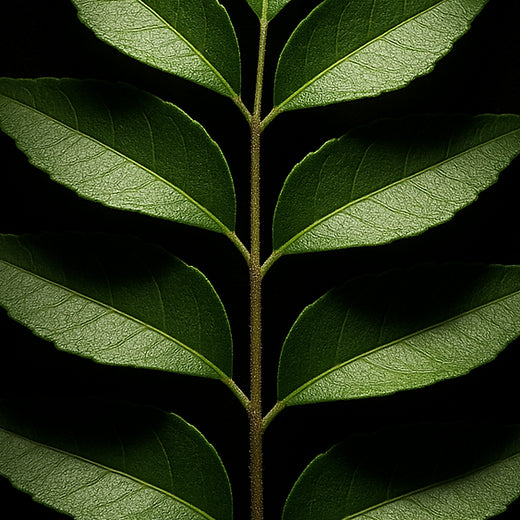
Curry tree (Bergera koenigii, synonym Murraya koenigii) is a tree in the citrus family Rutaceae, native to the Indian subcontinent, southern China and mainland Southeast Asia. Its leaves are pungent in smell and are used in many culinary dishes in India, Sri Lanka and Bangladesh.
- Olfactive family
- Spicy · 155 entries of the glossary in this family Subfamily: Warm spices · 145 entries in this subfamily Cluster: Classic spices · 86 entries in this cluster
- Material
- Natural Leaves
- Pyramid
- Heart · Volatility: Heart Note
- Strength
- High Step 4 of 5 · shared by 500 of 2,148 graded entries Graded entries at each step, from 1 to 5: 4, 118, 1,462, 500, 40. 24 more sit between two steps.
- Also called
- Murraya koenigii, curry bush, sweet neem, curry leaf tree
Curry Tree · Facets
Entries of the glossary that carry each facet, of 3,979:
- citrus 487
- green 1,442
- earthy 660
- spicy 474
- warm 1,108
- fresh 1,387
- dry 159
Curry Tree · Scent
The major odor compounds in the leaves are the sulfury-smelling 1-phenylethanethiol, the citrusy-smelling linalool, the resinous-smelling α-pinene and the grassy-smelling cis-3-hexenal, together with eucalyptol, methional, myrcene, cis-3-hexen-1-ol and trans,cis-2,6-nonadienal. The leaves are pungent in smell.
Evolution over time
Curry Tree: scent over time.
- Immediately
Grassy and citrusy
- After a few hours
Pungent and sulfury
- After a few days
Resinous
Scent words: resinous
Curry Tree · In Perfumery
The oil can be extracted and used to make scented soaps. The essential oil can also be used as perfume and flavor agents in traditional practice.
Pyramid
Curry Tree: Heart. Entries of the glossary stored at each place of the pyramid, of 4,000 (36 store no place):
- Top 718
- Top · Heart 497
- Heart 1,641
- Heart · Base 514
- Base 594
Role in the formula
Curry Tree: roles in the formula. Entries of the glossary that share each role, of 4,000:
- Modifier 1,167
- Signature note 897
- Lifting agent 567
- Blender 1,040
- Volume builder 780
- Freshness 720
Curry Tree · Terroir & Origins
- Producing countries
- India, Australia, Spain
No origin card: Australia, Spain.
Indian Curry Tree
Kanyakumari, Tamil Nadu — India
Facet scores, out of 100
- Spicy 90 (also a facet of the entry)
- Sweet 86
- Warm 80 (also a facet of the entry)
- Woody 46
- Earthy 41 (also a facet of the entry)
- Aromatic 35
Leaf oil from the south region of Tamil Nadu has linalool (32.83%) as its main compound, followed by elemol (7.44%) and geranyl acetate (6.18%).
- Species
- Murraya koenigii
Curry Tree · Extraction & Chemistry
In one case, fresh leaves from Kanyakumari District, Tamilnadu, were hydro-distilled for 6 hours in a Clevenger-type glass apparatus, giving an oil yield of 1%. Leaf oil has also been obtained by solvent-free microwave extraction. For essential oils from aromatic plants, hydro-distillation, steam distillation and steam/water distillation are the most common methods of extraction.
- Appearance
- Dark yellow oil
Curry Tree · Did You Know?
Though available dried, curry leaves have a greatly inferior aroma and flavor. In almost all cases, the leaves are freshly plucked from a garden only a few hours or even minutes before they are used.
Curry Tree · In Depth
What it is
The curry tree, Bergera koenigii, has the synonym Murraya koenigii and is commonly known as curry tree, curry bush or sweet neem. It is a tree in the citrus family Rutaceae, first described by Carl Linnaeus in 1767. Members of the Rutaceae give off a citrus smell when crushed or their bark is slashed.
Plant and range
It is a small to medium-sized tropical tree, typically growing 4–6 metres tall. The small flowers are white and fragrant. The tree is native to the Indian subcontinent, southern China and mainland Southeast Asia, and it has been introduced to other parts of Southeast Asia and to Australia.
Chemistry
A leaf oil from the south of Tamilnadu, India, held 33 constituents, with linalool (32.83%), elemol (7.44%), geranyl acetate (6.18%) and myrcene (6.12%) among the main compounds. Oxygenated monoterpenes make up 72.15% of that oil. A report on the same species growing in Bangladesh found an oil dominated by 3-carene (54.22%), with linalool (0.19%) as a minor compound. Geographical, seasonal and other variations among countries and regions also influence the chemical composition. Compounds found in the leaves, stems, bark and seeds include cinnamaldehyde and numerous carbazole alkaloids.
History
Records of the leaves being utilized are found in Tamil literature dating back to the 1st and 4th centuries CE. The word ‘curry’ is borrowed from the Tamil word kari (‘spiced sauce’ or ‘meat’). The former generic name, Murraya, derives from Johan Andreas Murray (1740–1791), who studied botany under Carl Linnaeus.
Culinary use
Curry leaves have a mild, aromatic, slightly bitter flavor. In southern and west coast Indian cooking, the leaves are usually fried first with vegetable oil, mustard seeds and chopped onions. The essential oil and fresh leaf powder are also used to season foods and to prepare ready-to-eat foods.
Explore all seven extraits in the Discovery Set.
Related: Buchu or Agathosma · Kaffir Lime · Fenugreek · Citron Leaf · Tangerine Leaves
Curry Tree · Technical Sheet
Identity
- Botanical
- Bergera koenigii
- Taxonomy
- Sapindales order › Rutaceae family · GBIF
- Botanical records
- Bergera koenigii: POWO, Bergera koenigii · IPNI, Bergera koenigii · GBIF, Bergera koenigii · Wikidata, Bergera koenigii · IUCN Least concern (LC), Bergera koenigii
- IPNI
- Bergera koenigii L., Mant. Pl. Altera [Linnaeus] 563 (1771) — Carl Linnaeus (1707–1778)
- Type
- Ingredient
- Category
- Spices
- Note
- Main compounds of a hydro-distilled leaf oil from Tamilnadu: linalool, elemol, geranyl acetate and myrcene.
In Nature
- Growth form
- Shrub · POWO
- Native range
- China · Indian Subcontinent · Indo-China · Malesia · POWO
- Introduced to
- 9 regions · Tropical Asia 7 · Temperate Asia 1 · Pacific 1
- Recorded in
- 48 of 512 squares of the world grid; a brighter dot holds more records · GBIF
- Also from this botanical family
- Rutaceae: Acronychia pedunculata · Amyris · Bergamot · Bergamot Blossom · Bitter Orange · Blood Orange · 61 more entries
In Print
- Timeline
- first described 1771 · earliest aroma paper in Europe PMC, 2015
- In English books
- most mentioned in the 2000s · Google Books Ngram
Classification
- Chemical class
- Complex natural mixture, mostly oxygenated monoterpenes
Chemical data
- Formula
- Complex natural mixture (key constituents: linalool; elemol; geranyl acetate; myrcene)
- Structure
- Linalool, Elemol, Geranyl Acetate:
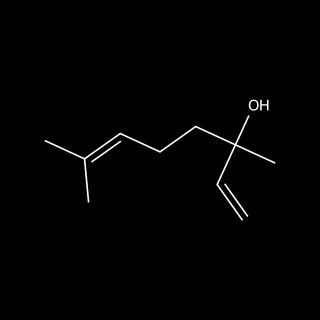
Linalool
PubChem, Linalool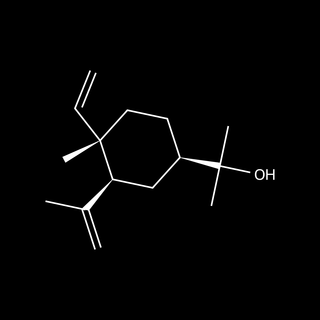
Elemol
PubChem, Elemol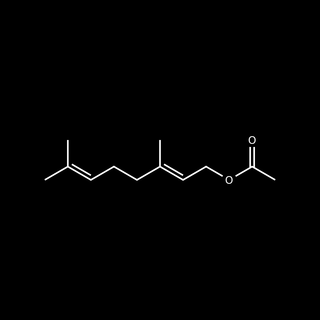
Geranyl Acetate
PubChem, Geranyl Acetate - CAS
- 91771-61-8
- EC
- 294-954-7
Labelling
Physical properties
- Strength
- Medium
Performance and rules
- Available as
- essential oil
- IFRA status
- No IFRA Standard for the material itself (51st Amendment)
Curry Tree · See Also
Entries related to Curry Tree, by their place in the pyramid. “shared” marks a scent word Curry Tree has too.
Top notes

Timur
spicy (shared) · fresh (shared) · citrus (shared) Spicy / Top · Heart / Same cluster / Natural
Ginger
spicy (shared) · fresh (shared) · citrus (shared) Spicy / Same subfamily / Natural
Peruvian Pepper
spicy (shared) · peppery · sweet Spicy / Top · Heart / Same subfamily / Natural
Serrano Pepper
spicy (shared) · fresh (shared) · warm (shared) Spicy / Natural


Heart notes

Tamarind
sweet · warm (shared) · fruity Spicy / Same cluster / Natural
Caraway
warm (shared) · spicy (shared) · fresh (shared) Spicy / Same cluster / Natural
Kaempferia Galanga
peppery · camphorous Spicy / Same cluster / Natural
Cinnamon
spicy (shared) · warm (shared) · sweet Spicy / Same subfamily / Natural
Longoza
spicy (shared) · peppery Spicy / Same subfamily / Natural


Curry Tree · Sources
Read the science
- J Agric Food Chem (2015) Characterization of the Major Odor-Active Compounds in the Leaves of the Curry Tree Bergera koenigii L. by Aroma Extract Dilution Analysis
- Avicenna Journal of Phytomedicine (2014) Chemical composition, antibacterial and antioxidant profile of essential oil from Murraya koenigii (L.) leaves
- Antioxidants (2020) Medicinal Profile, Phytochemistry, and Pharmacological Activities of Murraya koenigii and its Primary Bioactive Compounds
- Evidence-Based Complementary and Alternative Medicine (2021) Nutritive Importance and Therapeutics Uses of Three Different Varieties (Murraya koenigii, Micromelum minutum, and Clausena indica) of Curry Leaves: An Updated Review
- IFRA Standards, 51st Amendment
- Wikipedia Curry tree
- Wikipedia Rutaceae
Cite as PREMIEREPEAU Glossary, “Curry Tree”, https://premierepeau.com/
