


Ethylene Glycol
Keywords: musty
Ethylene Glycol is a 1,2-glycol, ethane-1,2-diol, a clear, colourless, syrupy liquid with a faint musty odour.
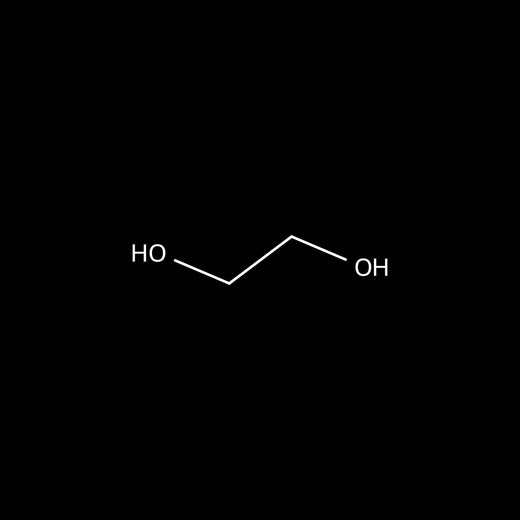
- Olfactive family
- Earthy · 87 entries of the glossary in this family Subfamily: Earthy woods · 68 entries in this subfamily
- Material
- Synthetic
- Pyramid
- Top · Volatility: Top Note
Ethylene Glycol · Facets
Entries of the glossary that carry each facet, of 3,979:
- musty 126
Ethylene Glycol · Scent
It has a faint, musty odour.
Ethylene Glycol · In Perfumery
Its odour is only faint and musty, and in cosmetics it serves as a humectant, solvent and viscosity controlling agent.
Pyramid
Ethylene Glycol: Top. Entries of the glossary stored at each place of the pyramid, of 4,000 (36 store no place):
- Top 718
- Top · Heart 497
- Heart 1,641
- Heart · Base 514
- Base 594
Ethylene Glycol · Extraction & Chemistry
It is made by air oxidation of ethylene followed by hydration of the ethylene oxide formed, by acetoxylation, from synthesis gas of carbon monoxide and hydrogen from coal gasification, or by the oxirane process.
- Appearance
- A clear, colourless, syrupy liquid at room temperature
Ethylene Glycol · In Depth
Identity
Ethylene Glycol has the IUPAC name ethane-1,2-diol and the CAS number 107-21-1. Its formula is C₂H₆O₂ and its molecular weight is 62.07 g/mol. It is a 1,2-glycol compound produced by the reaction of ethylene oxide with water, and it acts as a solvent. Its major use is as a coolant or antifreeze, and in the plastics industry for polyester fibres and resins.
Odour
Its odour is faint and musty.
Production
It is made by air oxidation of ethylene followed by hydration of the ethylene oxide formed, by acetoxylation, from synthesis gas of carbon monoxide and hydrogen from coal gasification, or by the oxirane process.
Use in flavours
As a food additive it serves as an adjuvant and carrier solvent.
Properties
It is a viscous, hygroscopic, colourless liquid. It boils at 197.3 °C at 760 mmHg and melts at −12.69 °C. It has a sweet taste.
Safety and IFRA
No IFRA Standard covers this material. Its INCI name is GLYCOL and its EC number is 203-473-3. It is registered under REACH. It is harmful if swallowed.
Ethylene Glycol · Technical Sheet
Molecular weight
62.07 g/mol Heavier than 28 of the 536 other entries at the same place of the pyramid that store a weight.
2,515 entries store a molecular weight. By place in the pyramid: Top 537, Top · Heart 403, Heart 861, Heart · Base 452, Base 262.
Identity
- Type
- Ingredient
- Category
- Aroma chemicals
Classification
- Cluster
- Earthy woods · 238 entries in this cluster
- Chemical class
- Alcohol
Chemical data
- Formula
- C2H6O2
- CAS
- 107-21-1
- PubChem CID
- 174, compound record on PubChem
- InChIKey
- LYCAIKOWRPUZTN-UHFFFAOYSA-N
- Wikidata · Wikipedia
- Ethylene Glycol: Q194207, item on Wikidata · Wikipedia, English article
Physical properties
- Boiling point
- 197.3 °C at 760 mmHg
- Melting point
- −12.69 °C
Performance and rules
- Available as
- synthetic
- IFRA status
- No IFRA Standard for the material itself (51st Amendment)
Ethylene Glycol · See Also
Entries related to Ethylene Glycol, by their place in the pyramid. “shared” marks a scent word Ethylene Glycol has too.
Top notes

Glyceryl Acetate
musty (shared) · sour Earthy / Top · Heart / Same cluster / Synthetic / 134.13 g/mol
Fruity Notes
fruity · fresh · citrus Fruity / Fantasy/Concept
Ethylene glycol diacetate
oily · sweet · winey Green / Top · Heart / Synthetic / 146.14 g/mol


Heart notes

Ethyl acetoacetate ethyleneglycol ketal
fruity · apple · sweet Fruity / Synthetic / 174.19 g/mol
Lactones
creamy · fruity · gourmand Fruity / Natural & Synthetic


Base notes

Ethylene Brassylate
musky · clean · powdery Amber & musk / Synthetic / 270.36 g/mol

Ethylene Glycol · Sources
- PubChem Ethylene Glycol
- ChEBI Ethylene Glycol: chemical classification record
- Pyrfume Arctander, Perfume and Flavor Chemicals: odour descriptions (Pyrfume archive)
- European Commission, CosIng Ethylene Glycol: cosmetic ingredient record
- IFRA Standards, 51st Amendment
- European Chemicals Agency Ethylene Glycol: substance record
Cite as PREMIEREPEAU Glossary, “Ethylene Glycol”, https://premierepeau.com/
