


Guggul
Keywords: balsamic · herbaceous · earthy
Guggul is an oleo-gum resin obtained from Commiphora wightii (Burseraceae), a small tree with thorny branches. Its aroma is warm, slightly sweet, balsamic, herbaceous and earthy, with hints of vanilla.
- Olfactive family
- Resinous · 88 entries of the glossary in this family Subfamily: Smoky resins · 15 entries in this subfamily Cluster: Myrrh-like dark resins · 7 entries in this cluster
- Material
- Natural Oleo-gum resin tapped from the stems and branches of Commiphora wightii
- Pyramid
- Base Note
- Also called
- Guggulu, guggula, guggal, gugal, gugar, gugul, Indian bdellium, gum guggulu
Guggul · Facets
Entries of the glossary that carry each facet, of 3,979:
- balsamic 344
- sweet 1,987
- warm 1,109
- herbaceous 51
- earthy 660
- vanilla 79
Guggul · Scent
The resin has a fragrance nearly identical to myrrh. Its odour is aromatic, and its scent is balsamically sweet. Guggul is less bitter in aroma than the hard bisabol type myrrhs from Africa and Arabia.
Evolution over time
Guggul: scent over time.
- Immediately
Herbaceous and slightly sweet.
Scent words: herbal · sweet - After a few hours
Warm and balsamic.
Scent words: balsamic · warm - After a few days
Earthy, with hints of vanilla.
Scent words: earthy
Guggul · In Perfumery
Bdellium, the old name of guggul resin, is used in perfumery and as incense. The resin is the same product that was known in Hebrew, ancient Greek and Latin sources as bdellium, and it was commonly used in incense and perfumes for centuries.
Pyramid
Guggul: Base. Entries of the glossary stored at each place of the pyramid, of 4,000 (35 store no place):
- Top 718
- Top · Heart 496
- Heart 1,644
- Heart · Base 513
- Base 594
Role in the formula
Guggul: roles in the formula. Entries of the glossary that share each role, of 4,000:
- Fixative 341
- Backbone 196
- Warmth 53
- Signature note 898
Guggul · Terroir & Origins
- Producing countries
- India, Pakistan
Guggul · Extraction & Chemistry
The trees are tapped by making an incision on the bark. The resin that flows out is allowed to harden before it is collected. The tree is tapped from November to January and the resin is collected through May to June. A guggul tree yields between 250 to 500 g of dry resin during each collection season. The gum resin yields about 0.4% of essential oil by steam distillation. For traditional purification, the guggulu is boiled in a fluid until all its soluble matter has dissolved, and the insoluble part is taken out and discarded. Boiling continues until the solution forms a soft mass, which is poured over a smooth wooden board smeared with cow ghee or castor oil and dried in the sun. The dried mass is called purified guggulu.
Available as
Guggul: available as.
- resin
- essential oil
- Appearance
- Vermicular pieces of pale yellow or brown coloured mass; viscid and golden coloured when fresh
Guggul · Did You Know?
Bdellium is the common English translation in the Bible for the Hebrew bedolach, but there is no agreement about whether the term actually referred to the resin. In Numbers, the manna eaten by the Israelites is said to have the color of bdellium.
Guggul · In Depth
What guggul is
The plant is commonly known as the guggul tree. It is a small, bushy tree with thorny branches that produces a yellowish gum resin in small ducts throughout its bark. The resin is known as gum guggulu. Its taste is bitter and astringent.
Origin and habitat
Commiphora wightii is native to western India, from where it was introduced westward to southern Pakistan and the middle-east. It prefers arid and semi-arid climates and is tolerant of poor soil. The wild occurrence of the species is restricted mainly to the dry regions of Rajasthan and Gujarat in India and the bordering regions of Pakistan.
In India and Pakistan, guggul is cultivated commercially. Its wild population has declined over the last several decades through habitat loss and degradation, coupled with unregulated harvesting and tapping of the resin. The species is assessed as Critically Endangered and is on the IUCN Red List of threatened species.
Composition
Guggulu is a mixture of phytoconstituents, among them volatile oil, steroids, flavonoids, guggultetrols, lignans, sugars and amino acids. Genuine samples of guggulu contain 1 percent of volatile oil and between 1.0 and 1.5 percent of guggulsterones (Z and E). The chief components of the essential oil are myrcene, dimyrcene and polymyrcene. The extract of the gum contains the steroid guggulsterone. Bdellium consists of a water-soluble gum, a resin, and an essential oil.
Uses
In the Indian traditional system of medicine, guggulu has been used for thousands of years in the treatment of arthritis, inflammation, gout, rheumatism, obesity, and disorders of lipids metabolism. The gum can be bought in a loosely packed form called dhoop, an incense from India that is burned over hot coals. This produces a fragrant, dense smoke. It is also sold as incense sticks and dhoop cones, which can be burned directly.
Guggul · History
Guggul in Ayurvedic medicine
Guggul is mentioned in Ayurvedic texts dating back to 600 BC. The extract of the gum has been used in Unani and Ayurvedic medicine for nearly 3,000 years in India.
Bdellium from Bactria to China
Theophrastus is perhaps the first European classical author to mention bdellium, if his informant’s report from Alexander’s expedition refers to Commiphora wightii. According to Pliny, the best quality of bdellium came from Bactria. The Periplus of the Erythraean Sea, of the 2nd century CE, reports that bdella are exported from the port of Barbarice at the mouth of the Indus.
Bdellium was an ingredient in the prescriptions of ancient physicians from Galen to Paul of Aegina. In China, bdellium was among the varieties of incense that reached the country either along the Silk Route from Central Asia or by sea.
Guggul · Technical Sheet
Identity
- Botanical
- Commiphora wightii
- IPNI
- Commiphora wightii (Arn.) Bhandari, Bull. Bot. Surv. India 6: 327 (1965) — Madan Mal Bhandari (1929–2011)
- Type
- Ingredient
- Category
- Resins and balsams
In Nature
- Wild or cultivated
- 1 native · 1 cultivated among 170 records (the rest carry no such mark) · GBIF
- Recorded in
- 8 of 512 squares of the world grid; a brighter dot holds more records · GBIF
- Also from this genus
- Commiphora: Abyssinian Myrrh · Kenyan Myrrh · Myrrh · Myrrh Oil · Namibian Myrrh · Opoponax · Opoponax Resinoid
- Also from this botanical family
- Burseraceae: Bois d’Encens · Boswellia Neglecta · Breu-Branco · Copal · Elemi · Elemi Oil · 9 more entries
In Print
- Timeline
- first described 1965 · earliest aroma paper in Europe PMC, 2013
- In English books
- most mentioned in the 2000s · Google Books Ngram
Classification
- Chemical class
- Oleo-gum resin
Chemical data
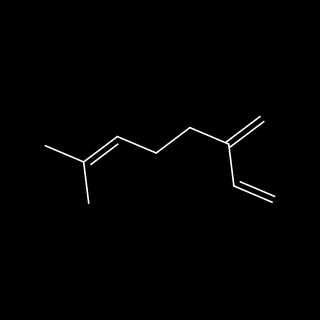
Performance and rules
- IFRA status
- No IFRA Standard for the material itself (51st Amendment)
Guggul · See Also
Entries related to Guggul, by their place in the pyramid. « shared » marks a scent word Guggul has too.
Base notes

Myrrh
resinous · bitter · smoky Resinous / Same cluster / Natural
Opoponax
balsamic (shared) · warm (shared) · sweet (shared) Resinous / Same cluster / Natural-
Myrrh Oil
resinous · balsamic (shared) · smoky Resinous / Same cluster / Natural -
Opoponax Resinoid
balsamic (shared) · sweet (shared) Resinous / Same cluster / Natural -
Abyssinian Myrrh
resinous · green · oriental Resinous / Same cluster / Natural -
Kenyan Myrrh
resinous · terpenic · aromatic Resinous / Same cluster / Natural


Guggul · Sources
- Scientifica Pharmacology and Phytochemistry of Oleo-Gum Resin of Commiphora wightii (Guggulu)
- PubChem Guggulsterone
- IFRA Standards, 51st Amendment
- Wikipedia Commiphora wightii
- Wikipedia Bdellium
- PubChem substance 135362401: guggul extract
- PubChem Guggulsterone
Cite as PREMIEREPEAU Glossary, “Guggul”, https://premierepeau.com/pages/glossary-terms/guggul Updated 2026-11-18
