


Lemon Ironbark
Keywords: lemon · fresh · woody
Lemon Ironbark: Eucalyptus staigeriana (Myrtaceae), the lemon-scented ironbark, is a small tree endemic to the Cape York Peninsula. Its leaves are distilled into a complex essential oil with a fruity-lemon fragrance and rosemary-like back tones.
- Olfactive family
- Citrus · 156 entries of the glossary in this family Subfamily: Zesty citrus · 115 entries in this subfamily Cluster: Lemon-lime sharp citrus · 83 entries in this cluster
- Material
- Natural Leaves of Eucalyptus staigeriana
- Pyramid
- Top Note
- Also called
- Lemon-scented ironbark
Lemon Ironbark · Facets
Entries of the glossary that carry each facet, of 3,979:
- citrus 488
- fresh 1,390
- sweet 1,987
- woody 790
- fruity 1,299
- herbal 757
Lemon Ironbark · Scent
The oil has a fresh, gently sweet lemon scent. It is slightly similar to lemon oil, with a woody scent. In an early investigation, citral and free geraniol gave the crude oil a pleasant and refreshing odour, unlike ordinary pharmacy eucalyptus oil. Freed from its aldehydes, the oil had a secondary odour that resembled geraniol very markedly.
Evolution over time
Lemon Ironbark: scent over time.
- Immediately
Fresh, fruity lemon.
Scent words: fresh · fruity - After a few hours
Gently sweet lemon, slightly like lemon oil.
- After a few days
Rosemary-like back tones and a woody scent, with a secondary odour resembling geraniol.
Scent words: woody
Lemon Ironbark · In Perfumery
The oil is used for flavouring, perfumery and aromatherapy. Lemon ironbark is one of the non-cineole eucalyptus oils used as flavouring. In early comparative tests for flavouring, the rectified oil compared very favourably with the best lemon oil, both for culinary purposes and in the manufacture of lemonades.
Pyramid
Lemon Ironbark: Top. Entries of the glossary stored at each place of the pyramid, of 4,000 (35 store no place):
- Top 718
- Top · Heart 496
- Heart 1,644
- Heart · Base 513
- Base 594
Role in the formula
Lemon Ironbark: roles in the formula. Entries of the glossary that share each role, of 4,000:
- Flavouring fewer than 40 entries
- Freshness 720
- Top note fewer than 40 entries
- Perfuming agent 43
Lemon Ironbark · Terroir & Origins
- Producing countries
- Brazil, Guatemala
Lemon Ironbark · Extraction & Chemistry
Dried leaves distilled for one hour yielded 5.20 mL of oil per 100 g. Carefully collected dry leaves and terminal branchlets gave 2.48 per cent oil, a yield considered a maximum.
- Appearance
- Very pale yellow to clear oil of watery consistency
Lemon Ironbark · Did You Know?
The oil of this species is abnormal for a eucalyptus, as it contains the aldehyde citral in some quantity.
Lemon Ironbark · In Depth
The tree
Eucalyptus staigeriana typically grows to a height of 12–21 m and forms a lignotuber. It has rough ironbark on the trunk and branches, and its lance-shaped to egg-shaped leaves smell of lemons when crushed. The tree grows in woodland and open forest in hilly country on the eastern side of the Cape York Peninsula. It is classified as least concern under the Queensland Government Nature Conservation Act 1992.
The oil
Fresh leaves yield 2.9–3.4% essential oil. The oil’s components include geranial, methyl geranate, geranyl acetate, limonene, phellandrene, neral, terpinolene and geraniol. In an analysis of oil from leaves collected in Caxias do Sul, Brazil, the major compounds were citral (34.32%, of which 21.83% geranial and 12.49% neral), limonene (20.60%) and 1,8-cineole (12.33%). Eucalyptus staigeriana is among the non-cineole oil producing species of Eucalyptus, with citral and limonene as the named constituents. Brazil produces up to 60 tonnes of the oil a year.
Biological activity
Against Alternaria alternata, the fungus that causes leaf spot and black rot in grapevines, the oil showed its highest inhibitory activity on mycelial growth and conidial germination at 1 μL per mL in laboratory tests. In laboratory tests the oil was also bactericidal against Corynebacterium pseudotuberculosis isolated from Northeastern Brazil.
Lemon Ironbark · History
Eucalyptus staigeriana was first formally described in 1883 by Frederick Manson Bailey from an unpublished description by Ferdinand von Mueller. The specific epithet honours Karl Theodore Staiger (1833–1888). Leaves collected on the Palmer River, Queensland, yielded an oil that was investigated, and the results were originally published in London in March 1906. The investigators supposed that the oil would eventually become of some commercial importance when better known.
Lemon Ironbark · Technical Sheet
Identity
- Botanical
- Eucalyptus staigeriana
- Botanical records
- Eucalyptus staigeriana: POWO, Eucalyptus staigeriana · IPNI, Eucalyptus staigeriana · GBIF, Eucalyptus staigeriana · Wikidata, Eucalyptus staigeriana · Wikipedia, Eucalyptus staigeriana · IUCN LC
- IPNI
- Eucalyptus staigeriana F.Muell. ex Bailey, Syn. Queensl. Fl. 176. — Ferdinand Jacob Heinrich von Mueller (1825–1896)
- Type
- Ingredient
- Category
- Citrus smells
In Nature
- Recorded altitude
- 250–600 m · median 500 m · 85 records with an altitude · GBIF
- Wild or cultivated
- 28 native among 288 records (the rest carry no such mark) · GBIF
- Recorded in
- 7 of 512 squares of the world grid; a brighter dot holds more records · GBIF
- Also from this genus
- Eucalyptus: Blue Mallee · Eucalyptus · Gully Gum Eucalyptus · Kangaroo Island Mallee · Kochii Mallee · Narrow-Leaved Peppermint Eucalyptus · River Red Gum
- Also from this botanical family
- Myrtaceae: Allspice · Anise Myrtle · Cajeput · Clove · Clove Leaf · Cloves · 20 more entries
In Print
- In English books
- most mentioned in the 1880s · Google Books Ngram
Classification
- Chemical class
- Monoterpenes (88.07%) and esters (11.75%)
Chemical data
- Formula
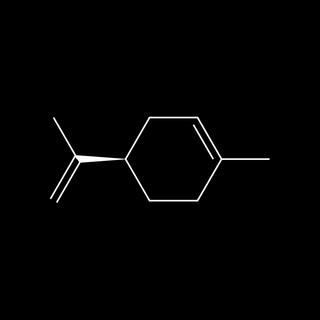
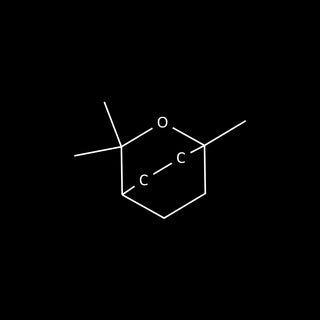
- Complex natural mixture (key constituents: geranial; neral; limonene; 1,8-cineole)

Labelling
Physical properties
- Refractive index
- 1.4814 (at 20 °C)
Performance and rules
- Available as
- essential oil
- IFRA status
- No IFRA Standard for the material itself (51st Amendment)
Lemon Ironbark · See Also
Entries related to Lemon Ironbark, by their place in the pyramid. « shared » marks a scent word Lemon Ironbark has too.
Top notes

Lemon Myrtle
citrus (shared) · fresh (shared) · green Citrus / Same cluster / Natural
Citronellal
citrus (shared) · floral · fresh (shared) Citrus / Same subfamily / Natural & Synthetic
Eucalyptus
fresh (shared) · aromatic · woody (shared) Aromatic / Natural


Heart notes

Methyl Cinnamate
balsamic · fruity (shared) · sweet (shared) Resinous / Heart · Base / Natural & Synthetic
Methyl geranate
fruity (shared) · green · waxy Green


Lemon Ironbark · Sources
- GBIF Eucalyptus staigeriana
- SciELO Antifungal activity of essential oil from Eucalyptus staigeriana against Alternaria alternata causing of leaf spot and black rot in table grapes
- Chemistry & biodiversity Antibacterial Properties of Origanum vulgare and Eucalyptus staigeriana Essential Oils Single or in Combination With Cloxacillin Against Corynebacterium pseudotuberculosis
- Anais da Academia Brasileira de Ciências Antifungal activity of essential oil from Eucalyptus staigeriana against Alternaria alternata causing of leaf spot and black rot in table grapes (2022)
- SciELO / Anais da Academia Brasileira de Ciências Antifungal activity of essential oil from Eucalyptus staigeriana against Alternaria alternata causing of leaf spot and black rot in table grapes (PDF full text)
- Europe PMC (Chemistry & Biodiversity, 2026) Antibacterial Properties of Origanum vulgare and Eucalyptus staigeriana Essential Oils Single or in Combination With Cloxacillin Against Corynebacterium pseudotuberculosis
- Internet Archive A Research on the Eucalypts (Baker and Smith), entry 171 Eucalyptus Staigeriana, Lemon-scented Ironbark
- IFRA Standards, 51st Amendment
- Chest of Books 171 Eucalyptus Staigeriana
- Wikipedia Eucalyptus staigeriana
- Wikipedia Eucalyptus oil
Cite as PREMIEREPEAU Glossary, “Lemon Ironbark”, https://premierepeau.com/
