Maninka is the mother tongue of the Malinké people in Guinea, where it is spoken by 3.1 million people and is the main language in the Upper Guinea region. It is also spoken in Mali, Liberia, Sierra Leone and Ivory Coast. Maninka in Guinea is written in an official Latin-based script, in an older official Latin-based orthography and in the N'Ko script. Maninka has about 4.6 million native speakers.
Sounds and grammar
The Wudala dialect of Eastern Maninka, spoken in the central highlands of Guinea, is comprehensible to speakers of all dialects in that country. Maninka has four tones: high, low, rising and falling. Its seven vowel qualities can each be long or short, oral or nasal. Nouns ending in oral vowels take the plural -lu, and nouns ending in nasal vowels take -nu.
The Manding language family
Varieties of Manding are spoken by around 37 million people in The Gambia, Senegal, Mali, Burkina Faso, Guinea-Bissau, Guinea, Ivory Coast, Sierra Leone and Liberia. The best-known members are Mandinka, Bambara, Maninka or Malinké, and Jula. Eastern Maninka is the southeastern Manding branch and has several varieties in Mali, Guinea and Ivory Coast. The N'Ko script, developed in 1949 by Solomana Kante, is designed to write Manding with a common literary standard. The western Manding dialects usually have 10 vowels, while the eastern group, typified by Bambara, has 14. The Manding languages have a strong oral tradition, and are also written in adaptations of the Arabic and Latin alphabets.
The Malinke people
The Mandinka or Malinke are a West African ethnic group indigenous to southern Mali, The Gambia, southern Senegal and eastern Guinea. They speak the Manding languages, which are a lingua franca in much of West Africa. They number about 15 million and are the largest subgroup of the Mandé peoples. They are predominantly subsistence farmers and live in rural villages.
The wild fruit Saba senegalensis
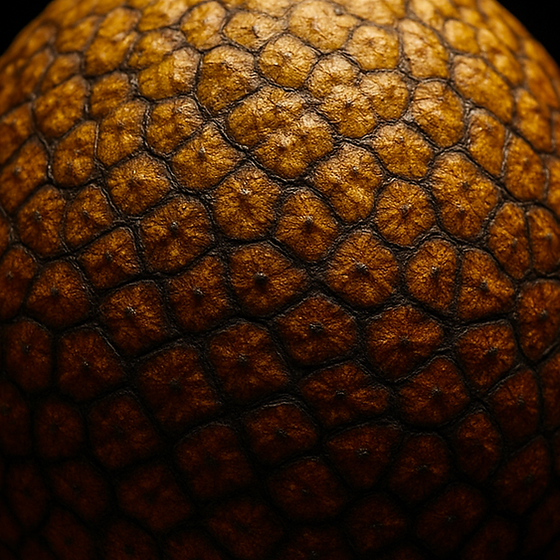
Saba senegalensis is a wild liana that grows in the African savannahs and is called Zaban in the Malinké language in Mali. Saba senegalensis is a fruit-producing plant of the Apocynaceae family, native to the Sahel region of sub-Saharan Africa. The fruit has a hard yellow peel containing large seeds embedded in a yellowish pulp, with a pleasing acidity similar to that of the tamarind. Its soft, edible pulp has a sweet-sour flavour. The fruits can reach up to 10 centimetres in length and are rich in vitamins A and C. Natives of the Sahel region often use the fruit to make a juice. The vitamin C of the pulp from 20 villages in five regions of Burkina Faso ranged from 42.91 to 66.41 mg per 100 g.
The plant is called weda in Moore, madd in Wolof and kabaa in Mandinka. Its range runs from Senegal to Togo, on forest fringes, in galleried forest and in thickets. In open, drier lands it stays a low shrub, but in forest it becomes a stout climbing shrub. Most fruits are about the size of a medium to small orange and are full of big seeds. The leaves are prepared in sauces and condiments as an appetizer with a salty tang. Leaves and twigs are used in handicrafts to make dyes. Fruits, leaves and roots are all used as traditional remedies.