


Marine Oxyde
Keywords: herbal · fruity · woody
Marine Oxyde is a synthetic ingredient of the marine, herbal and woody family. Tricyclodecenyl propionate, registered under CAS 17511-60-3, is a fragrance material also called verdyl propionate. Its odour is described as fruity, herbal, woody, jasmin, oily and basil.
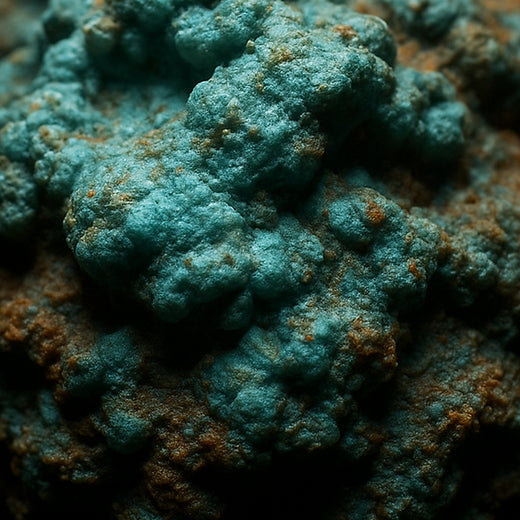
- Olfactive family
- Aromatic · 510 entries of the glossary in this family Subfamily: Herbal aromatics · 230 entries in this subfamily
- Material
- Synthetic Not found in nature
- Pyramid
- Heart · Base · Volatility: Heart · Base
- Strength
- Medium Step 3 of 5 · shared by 1,473 of 2,156 graded entries Graded entries at each step, from 1 to 5: 4, 119, 1,473, 498, 39. 23 more sit between two steps.
- Also called
- Tricyclodecenyl propionate, verdyl propionate, cyclaprop, florocyclene, herbal propionate, herbyl propionate
Family, subfamily and cluster: PREMIEREPEAU house classification, version 2026‑11.
Marine Oxyde · Facets
Entries of the glossary that carry each facet, of 3,979:
- green 1,442
- aquatic 42
- fresh 1,387
- herbal 757
- fruity 1,301
- woody 792
- jasmin 1
- oily 237
- basil 5
Marine Oxyde · Scent
Other published descriptions are powerful, herbaceous-green, fruity, fresh and woody. A supplier describes it as a fresh, herbal note reminiscent of basil. Another description is fresh, floral and woody. The odour type is herbal.
Evolution over time
Marine Oxyde: scent over time.
- Immediately
Fresh, fruity and herbal.
Scent words: fresh · herbal · fruity - After a few hours
Jasmin and basil.
- After a few days
Woody and oily.
Scent words: woody
- Tenacity
- 144 hour(s) at 100.00 %
Marine Oxyde · In Perfumery
Listed potential uses in fragrance include a basil oil replacer and herbal, jasmin, lavender leaf and woody notes. Its cosmetic uses are deodorants and fragrance perfuming agents.
Pyramid
Marine Oxyde: Heart · Base. Entries of the glossary stored at each place of the pyramid, of 4,006 (42 store no place):
- Top 718
- Top · Heart 497
- Heart 1,641
- Heart · Base 514
- Base 594
Role in the formula
Marine Oxyde: roles in the formula. Entries of the glossary that share each role, of 4,006:
- Modifier 1,167
- Freshness 720
- Top note lift 54
Marine Oxyde · Where It Is Made
- Producing countries
- France, Germany, Switzerland
Marine Oxyde · Extraction & Chemistry
Tricyclodecenyl propionate is made by reacting dicyclopentadiene with propionic acid in the presence of triflic acid. In one example, dicyclopentadiene is added dropwise at 110–120 °C to propionic acid containing a small amount of triflic acid over 3.5 hours. The mixture is stirred for a further 1.5 hours and cooled to 40 °C. The crude material is then distilled with a little aqueous sodium hydroxide added to the distillation pot. This example gave commercial-grade ester in 69% yield based on dicyclopentadiene, with a major isomer content of 93.1% by gas chromatography. Unreacted dicyclopentadiene or acid can be recovered by distillation and reused.
- Appearance
- Colorless to pale yellow clear liquid
Marine Oxyde · Did You Know?
The raw material of this ester, dicyclopentadiene, is co-produced in large quantities in the steam cracking of naphtha and gas oils to ethylene. In its pure form it smells somewhat of soy wax or camphor.
Marine Oxyde · In Depth
Identity
The CAS number 17511-60-3 belongs to tricyclodecenyl propionate, which is also called verdyl propionate. Its IUPAC name is 8-tricyclo[5.2.1.02,6]
It is not found in nature. The European classification marks it as an irritant to skin and eyes.
Identifiers and specification
Its EINECS number is 241-514-7 and its PubChem compound number is 86579. The assay is 98.00 to 100.00, and the acid value is 1.00 KOH/g at most. Its export tariff code is 2915.50.3000.
Safety data
Explore all seven extraits in the Discovery Set.
Marine Oxyde · History
Dicyclopentadiene, the starting material of the ester, was discovered in 1885 by Henry Roscoe among the products of the pyrolysis of phenol. Its structure was deduced in 1931 through the work of Alder and a coworker.
Marine Oxyde · Technical Sheet
Molecular weight
206.28 g/mol Heavier than 166 of the 451 other entries at the same place of the pyramid that store a weight; 16 weigh the same.
2,515 entries store a molecular weight. By place in the pyramid: Top 537, Top · Heart 403, Heart 861, Heart · Base 452, Base 262.
Identity
- Botanical
- N/A — synthetic molecule
- Type
- Ingredient
- Category
- Aroma chemicals
Classification
- Cluster
- Herbal aromatics · 79 entries in this cluster
- Chemical class
- Propanoic acid ester
Chemical data
- Formula
- C13H18O2
- Structure
- Marine Oxyde:
 PubChem
- CAS
- 17511-60-3
- PubChem CID
- 86579, compound record on PubChem
- InChIKey
- BLBJUGKATXCWET-UHFFFAOYSA-N
- Wikidata
- Marine Oxyde: Q10869279, item on Wikidata

Physical properties
- Boiling point
- 276.15 °C. at 760.00 mm Hg (est)
- Flash point
- > 212.00 °F. TCC (> 100.00 °C.)
- Specific gravity
- 1.05000 to 1.06000 at 25.00 °C.
- Refractive index
- 1.49000 to 1.49400 at 20.00 °C.
- Vapour pressure
- 0.005000 mmHg at 25.00 °C. (est)
- Log P
- 3.628 (est)
Performance and rules
- Available as
- synthetic
- IFRA status
- No IFRA Standard for the material itself (51st Amendment)
Marine Oxyde · See Also
Entries related to Marine Oxyde, by their place in the pyramid. “shared” marks a scent word Marine Oxyde has too.
Top notes

Prenol
green (shared) · fruity (shared) · lavender Aromatic / Same cluster / 86.13 g/mol
Cascalone
fresh (shared) · aquatic (shared) · floral Aquatic / Synthetic / 206.24 g/mol
Calone
marine · ozonic · aquatic (shared) Aquatic / Top · Heart / Synthetic / 178.19 g/mol-
Aquozone
fresh (shared) · ozonic · aquatic (shared) Aquatic / Top · Heart / Synthetic 
Thalassogaia™
fresh (shared) · aquatic (shared) · green (shared) Aquatic / Accord


Heart notes

Airy Note
fresh (shared) · floral · citrus Aquatic / Fantasy/Concept-
Seaweed Absolute
marine · briny · aquatic (shared) Aquatic / Natural

Base notes

Iodine
aquatic (shared) · metallic · warm Aquatic / Fantasy/Concept / 253.81 g/mol

Marine Oxyde · Sources
- PubChem Tricyclodecenyl propionate
- IFRA Standards, 51st Amendment
- The Good Scents Company Tricyclodecenyl propionate
- Google Patents Patent US7446221
- Wikipedia Dicyclopentadiene
Cite as PREMIEREPEAU Glossary, “Marine Oxyde”, https://premierepeau.com/
