


Moroccan Oregano
Keywords: fragrant · warm · spicy
Moroccan oregano is the oil of Origanum compactum (Lamiaceae), obtained from its flowering tops. Its aroma is warm, strong and spicy.
- Olfactive family
- Spicy · 155 entries of the glossary in this family Subfamily: Warm spices · 144 entries in this subfamily Cluster: Aromatic warm spices · 8 entries in this cluster
- Material
- Natural Flowering tops of Origanum compactum
- Pyramid
- Heart · Volatility: Heart Note
- Strength
- Strong Step 4 of 5 · shared by 501 of 2,149 graded entries Graded entries at each step, from 1 to 5: 4, 118, 1,462, 501, 40. 24 more sit between two steps.
- Also called
- Zaâtre
Moroccan Oregano · Facets
Entries of the glossary that carry each facet, of 3,979:
- warm 1,109
- spicy 473
- aromatic 103
- herbal 757
- fragrant 8
Moroccan Oregano · Scent
The oil has a fragrant scent and a strong aroma. Its aroma is also described as warm and spicy.
Evolution over time
Moroccan Oregano: scent over time.
- Immediately
A fragrant, strong scent.
- After a few hours
A spicy aroma.
Scent words: spicy - After a few days
A warm aroma.
Scent words: warm
Moroccan Oregano · In Perfumery
Pyramid
Moroccan Oregano: Heart. Entries of the glossary stored at each place of the pyramid, of 4,000 (35 store no place):
- Top 718
- Top · Heart 496
- Heart 1,644
- Heart · Base 513
- Base 594
Role in the formula
Moroccan Oregano: roles in the formula. Entries of the glossary that share each role, of 4,000:
- Modifier 1,168
- Warmth 53
- Fragrance ingredient 51
PREMIEREPEAU collection: Extrait de parfum
Moroccan Oregano · Terroir & Origins
- Producing countries
- Morocco
Moroccan Oregano · Extraction & Chemistry
The essential oil is obtained by hydrodistillation of the flowering tops of the plant. In a laboratory study the oil was hydrodistilled for three hours in a Clevenger-type apparatus.
- Appearance
- Light yellow
Moroccan Oregano · Did You Know?
Oils from different regions of Morocco contain from 0 to 96.3% carvacrol and from 0 to 80.7% thymol. Samples from Benslimane, Ouazzane, Oulmes, Taounate and Moulay Driss Zerhoun contain carvacrol at 90.2% to 96.7% of the oil.
Moroccan Oregano · In Depth
Botanical origin
Origanum compactum is a plant of the family Lamiaceae. The oil has been studied from plants originating from the Middle Atlas of Morocco.
Yield
Several factors could explain differences in yield between plants: the vegetative stage, geographical distribution, storage conditions, harvest period and extraction method.
Chemistry
Carvacrol is the main compound of an Origanum compactum oil from the Middle Atlas, at 75.70%. The same oil contains mentha-3,8-diene (6.74%), cymene (5.05%), (E)-caryophyllene (2.74%) and myrcene (2.71%). Its compounds fall into oxygenated monoterpenes (76.62%), hydrogenated monoterpenes (17.99%), hydrogenated sesquiterpenes (4.73%) and oxygenated sesquiterpenes (0.61%).
An oil from flowering tops of plants collected in the Moroccan Middle Atlas highlands is composed mainly of carvacrol (30.89%), γ-terpinene (22.89%), p-cymene (15.84%), thymol (10.21%), (E)-caryophyllene (3.63%) and linalool (2.66%). Carvacrol and thymol are low molecular weight phenolic compounds. In oils from different regions of Morocco, carvacrol methyl ether ranges from 0 to 36.2%.
Plants with over 50% carvacrol belong to a carvacrol-rich chemotype, which has been indicated for samples of O. compactum from different regions of Morocco. In a comparison of oils from different regions of Morocco, carvacrol was the predominant component in all the samples collected in the Middle Atlas.
Biological activity
In antioxidant tests, Origanum compactum oil was found more potent than the positive control ascorbic acid. Of two oregano oils tested, Origanum compactum oil showed the higher antibacterial efficacy.
Moroccan Oregano · Technical Sheet
Identity
- Botanical
- Origanum compactum
- Botanical records
- Origanum compactum: POWO, Origanum compactum · IPNI, Origanum compactum · GBIF, Origanum compactum · Wikidata, Origanum compactum
- IPNI
- Origanum compactum Benth., Labiat. Gen. Spec. 334 (1834) — George Bentham (1800–1884)
- Type
- Ingredient
- Category
- Spices
In Nature
- Recorded altitude
- 100–1,100 m · median 600 m · 66 records with an altitude · GBIF
- Wild or cultivated
- 8 introduced · 10 cultivated among 271 records (the rest carry no such mark) · GBIF
- Recorded in
- 3 of 512 squares of the world grid; a brighter dot holds more records · GBIF
- Also from this genus
- Origanum: Marjoram · Oregano · Small-Flowered Oregano · Syrian Oregano · Turkish Oregano
- Also from this botanical family
- Lamiaceae: Akigalawood · Apple Mint · Basil · Basil Oil · Blue Bugle · Catnip · 35 more entries
In Print
- Timeline
- first described 1834 · earliest aroma paper in Europe PMC, 1999
- In English books
- most mentioned in the 2010s · Google Books Ngram
Chemical data
- Formula
- Complex natural mixture (key constituents: carvacrol C₁₀H₁₄O; thymol; γ-terpinene; p-cymene)
- Structure
- Carvacrol, Thymol, Gamma-Terpinene:
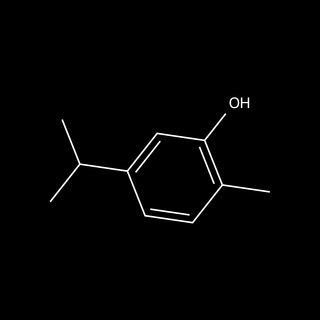
Carvacrol
PubChem, Carvacrol
Thymol
PubChem, Thymol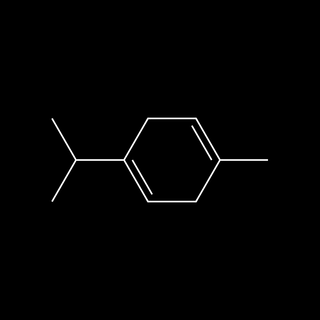
Gamma-Terpinene
PubChem, Gamma-Terpinene

Physical properties
- Density
- 0.937
Performance and rules
- Available as
- essential oil
- IFRA status
- No IFRA Standard for the material itself (51st Amendment)
Moroccan Oregano · See Also
Entries related to Moroccan Oregano, by their place in the pyramid. “shared” marks a scent word Moroccan Oregano has too.
Top notes
-
Syrian Oregano
sharp · herbal (shared) · aromatic (shared) Aromatic / Top · Heart / Natural
Heart notes

Carvacrol
spicy (shared) · herbal (shared) · thyme Spicy / Same subfamily / Natural & Synthetic
Marjoram
warm (shared) · green · aromatic (shared) Aromatic / Natural
Oregano
warm (shared) · green · fresh Aromatic / Natural
Carvacryl methyl ether
herbal (shared) · spicy (shared) · green Green-
Small-Flowered Oregano
sharp · herbaceous · pungent Aromatic / Natural -
Turkish Oregano
pungent · warm (shared) · herbal (shared) Aromatic / Natural


Base notes

Patchouli
Woods / Natural

Moroccan Oregano · Sources
- GBIF Origanum compactum
- GBIF Origanum compactum (GBIF species record)
- Antibiotics (Basel, Switzerland) Carvacrol and Thymol Content Affects the Antioxidant and Antibacterial Activity of Origanum compactum and Thymus zygis Essential Oils
- Metabolites A Study of the Synergistic Effects of Essential Oils from Origanum compactum and Origanum elongatum with Commercial Antibiotics against Highly Prioritized Multidrug-Resistant Bacteria for the World Health Organization
- PubChem Carvacrol
- IFRA Standards, 51st Amendment
- Wikipedia Origanum
- PubChem Carvacrol
Cite as PREMIEREPEAU Glossary, “Moroccan Oregano”, https://premierepeau.com/
