


Marjoram
Keywords: warm · green · aromatic
Marjoram is the herb Origanum majorana, of the family Lamiaceae. Its essential oil has a characteristic earthy, spicy odour.

- Olfactive family
- Aromatic · 510 entries of the glossary in this family Subfamily: Herbal aromatics · 230 entries in this subfamily Cluster: Green-herbal notes · 155 entries in this cluster
- Material
- Natural Flowering leaves and tops
- Pyramid
- Heart · Volatility: Heart Note
- Strength
- Medium Step 3 of 5 · shared by 1,473 of 2,156 graded entries Graded entries at each step, from 1 to 5: 4, 119, 1,473, 498, 39. 23 more sit between two steps.
- Also called
- Sweet marjoram, knotted marjoram, pot marjoram
Family, subfamily and cluster: PREMIEREPEAU house classification, version 2026‑11.
Marjoram · Facets
Entries of the glossary that carry each facet, of 3,979:
- green 1,442
- spicy 474
- sweet 1,988
- herbal 757
- warm 1,108
- fresh 1,387
Marjoram · Scent
At full strength it is described as spicy, herbal, camphor and sweet. Another description gives sweet, herbal, green minty. That description adds a tropical camphoreous nuance. The oil also has a spicy and cardamom note.
Evolution over time
Marjoram: scent over time.
- Immediately
Green, minty, herbal and sweet
Scent words: green · herbal · sweet - After a few hours
Spicy, with a cardamom note
Scent words: spicy - After a few days
Earthy, with camphor
Scent words: earthy
Marjoram · In Perfumery
Sweet marjoram oil is used mainly to flavour foods and in smaller amounts in perfumery, where it adds spicy touches to men’s fragrances.
Pyramid
Marjoram: Heart. Entries of the glossary stored at each place of the pyramid, of 4,006 (42 store no place):
- Top 718
- Top · Heart 497
- Heart 1,641
- Heart · Base 514
- Base 594
Role in the formula
Marjoram: roles in the formula. Entries of the glossary that share each role, of 4,006:
- Modifier 1,167
- Signature note 897
- Blender 1,040
- Volume builder 780
- Freshness 720
Marjoram · Terroir & Origins
- Producing countries
- Egypt, Serbia
- Other countries of origin
- Turkey
No origin card: Serbia.
Antalya Marjoram
Antalya — Turkey
Facet scores, out of 100
- Herbal 97 (also a facet of the entry)
- Green 72 (also a facet of the entry)
- Fresh 54 (also a facet of the entry)
- Aromatic 53
- Woody 38
- Earthy 25
Local people distil O. majorana by steam because the plant gives a high oil yield.
- Species
- Origanum majorana (white marjoram)
- Extraction
- Traditional steam distillation
Egyptian Marjoram
Egypt
Facet scores, out of 100
- Herbal 100 (also a facet of the entry)
- Green 60 (also a facet of the entry)
- Fresh 47 (also a facet of the entry)
- Aromatic 39
- Woody 38
- Earthy 32
Origanum majorana is cultivated in Egypt.
The Egyptian oil contained 12.1% trans-sabinene hydrate and 3.5% cis-sabinene hydrate, whereas the Serbian oil had a total of 7.3% of both.
- Species
- Origanum majorana
Facet scores, origin against origin
Widest gap: Aromatic · 14 points of 100. Highest: Antalya Marjoram: 53. Lowest: Egyptian Marjoram: 39.
Marjoram · Extraction & Chemistry
The flowering leaves and tops are distilled.
- Appearance
- Yellow to greenish-yellow liquid
Marjoram · Did You Know?
In one narrative, the royal perfumer of Cyprus, Amaracus, was transformed into marjoram. Ancient Greeks thought the plant was created by Aphrodite.
Marjoram · In Depth
The plant
Marjoram is a cold-sensitive perennial herb or undershrub with sweet pine and citrus flavours. In some Middle Eastern countries marjoram is synonymous with oregano, and the names sweet marjoram and knotted marjoram are used there to distinguish it from other plants of the genus Origanum. Marjoram is indigenous to Cyprus and southern Turkey. Its flowers can be white, pink to red, or blue to purple.
Oregano, Origanum vulgare, is also called wild marjoram. It has a stronger flavour than marjoram. Hardy marjoram, a cross of marjoram with oregano, is much more resistant to cold but slightly less sweet.
The oil
The oil has many chemical components, some of which are borneol, camphor and pinene. Its main constituent is terpinen-4-ol, at more than 20%.
In commercial oils from Serbia and Egypt, the major volatile compounds in both were terpinen-4-ol and γ-terpinene, which made up over a third of the oils by GC peak area. The Egyptian oil contained 12.1% trans-sabinene hydrate and 3.5% cis-sabinene hydrate. The Serbian oil contained a total of 7.3% cis- and trans-sabinene hydrates in a 1:1.7 ratio.
Culinary use
Marjoram is cultivated for its aromatic leaves, either green or dry, for culinary purposes. It is used for seasoning lamb and vegetable dishes, soups, stews, salad dressings, sauces, herbal teas and sausages. It is often used in herb combinations such as herbes de Provence and za’atar. Its flavour resembles that of oregano. Marjoram has long been used as a medicinal herb.
Explore all seven extraits in the Discovery Set.
Related: Artemisia · Basil · Bay Leaf · Apple Mint · Monarda · Hyssop · Coleus · Lesser Calamint
Marjoram · History
Marjoram was known to the ancient Greeks and Romans as a symbol of happiness. To the Romans the herb was known as the herb of happiness, and was thought to increase lifespan. Marjoram is mentioned in De Materia Medica by Pedanius Dioscorides, and was used by Hippocrates as an antiseptic. It may have spread to the British Isles during the Middle Ages. Marjoram did not come into general use in the United States until after World War II.
Marjoram · Technical Sheet
Identity
- Botanical
- Origanum majorana
- Taxonomy
- Lamiales order › Lamiaceae family › Origanum genus · GBIF
- Botanical records
- Origanum majorana: POWO, Origanum majorana · IPNI, Origanum majorana · GBIF, Origanum majorana · Wikidata, Origanum majorana · Wikipedia, Origanum majorana
- IPNI
- Origanum majorana L., Sp. Pl. 2: 590 (1753) — Carl Linnaeus (1707–1778)
- Type
- Ingredient
- Category
- Greens, herbs and fougeres
In Nature
- Growth form
- Herb · POWO
- Native range
- Western Asia · POWO
- Introduced to
- 22 regions · Europe 13 · Africa 6 · Southern America 2 · Tropical Asia 1
- Sample origins in GC-MS studies
- Morocco (2 papers; one: Pharmaceuticals (Basel) 2025, Morocco) · Tunisia (2 papers; one: Microb Pathog 2016, Tunisia) · Venezuela (1 paper; one: Journal of essential oil research 2011, Venezuela) · Egypt (1 paper; one: Z Naturforsch C J Biosci 2009, Egypt) · Cyprus (1 paper; one: Journal of essential oil research 2008, Cyprus)
- Recorded altitude
- 50–800 m · median 250 m · 1,722 records with an altitude · GBIF
- Wild or cultivated
- 12 native · 106 introduced · 61 cultivated among 4,133 records (the rest carry no such mark) · GBIF
- Recorded in
- 53 of 512 squares of the world grid; a brighter dot holds more records · GBIF
- Also from this genus
- Origanum: Moroccan Oregano · Oregano · Small-Flowered Oregano · Syrian Oregano · Turkish Oregano
- Also from this botanical family
- Lamiaceae: Akigalawood · Apple Mint · Basil · Basil Oil · Blue Bugle · Catnip · 35 more entries
In Print
- In English books
- most mentioned in the 2010s · Google Books Ngram
Classification
- Chemical class
- Complex natural (essential oil)
Chemical data
- Formula
- Complex natural mixture (key constituents: terpinen-4-ol C₁₀H₁₈O; γ-terpinene; cis-sabinene hydrate; trans-sabinene hydrate)
- Most reported compounds
- Para-Cymene (3 papers; one: Planta Med 1991, Para-Cymene) · Gamma-Terpinene (3 papers; one: Planta Med 1991, Gamma-Terpinene) · Thymol (2 papers; one: Journal of essential oil research 1993, Thymol) · Linalool (2 papers; one: Planta Med 1991, Linalool) · LOTUS
- Structure
- Terpinen-4-ol, Gamma-Terpinene:
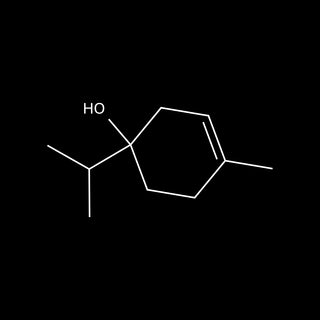
Terpinen-4-ol
PubChem, Terpinen-4-ol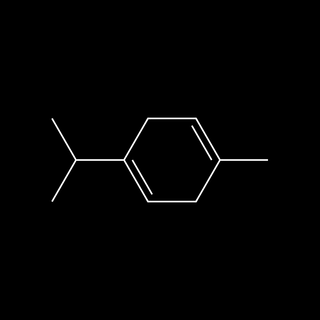
Gamma-Terpinene
PubChem, Gamma-Terpinene - CAS
- 8015-01-8 (sweet marjoram oil, Origanum majorana)
- INCI names (CosIng)
- ORIGANUM MAJORANA FLOWER OIL (FRAGRANCE, REFRESHING)ORIGANUM MAJORANA FLOWER/LEAF/STEM OIL (FRAGRANCE, SKIN CONDITIONING, FLAVOURING)ORIGANUM MAJORANA HERB OIL (PERFUMING)ORIGANUM MAJORANA LEAF OIL (FRAGRANCE, REFRESHING)ORIGANUM MAJORANA HERB EXTRACT (PERFUMING)ORIGANUM MAJORANA LEAF EXTRACT (ANTI-SEBUM, REFRESHING, TONIC)ORIGANUM MAJORANA LEAF WATER (SKIN CONDITIONING)
- Compound classes reported
- Monoterpenoids 51 % · Sesquiterpenoids 20 % · Flavonoids 14 % · of 51 compounds reported, 8 % of them esters · LOTUS
- Terpinen 4 ol content
- 20–30%
Labelling
- EU allergens reported
- Limonene · Linalool · Geraniol · Citronellol · Farnesol · Linalyl Acetate · Geranyl Acetate · Pinene · Terpineol · Alpha-Terpinene · Terpinolene · Camphor
Physical properties
- Boiling point
- 266 °C at 760 mm Hg
- Specific gravity
- 0.890–0.906 at 25 °C
- Refractive index
- 1.4700–1.4750
- Optical rotation
- +14° to +24°
- Oil density
- 0.890–0.906 g/cm³
Performance and rules
- Odour words (The Good Scents Company)
- spicy · marjoram (data sheet)
- Available as
- essential oil
- IFRA status
- No IFRA Standard for the material itself (51st Amendment)
Marjoram · See Also
Entries related to Marjoram, by their place in the pyramid. “shared” marks a scent word Marjoram has too.
Top notes

Wintergreen
green (shared) · fresh (shared) · sweet (shared) Aromatic / Same cluster / Natural
Rosemary
aromatic (shared) · herbal (shared) · camphorous Aromatic / Top · Heart / Same subfamily / Natural-
Syrian Oregano
sharp · herbal (shared) · aromatic (shared) Aromatic / Top · Heart / Same subfamily / Natural -
Rosemary Oil
herbal (shared) · camphoraceous · fresh (shared) Aromatic / Same subfamily / Natural 
Basil
aromatic (shared) · green (shared) · herbal (shared) Aromatic / Top · Heart / Natural
Tulsi
fresh (shared) · green (shared) · spicy (shared) Aromatic / Natural
Sabinene
spicy (shared) · oily · woody Spicy / Top · Heart


Heart notes

Calamus
earthy · sweet (shared) · green (shared) Aromatic / Same cluster / Natural
Chuan Xiong
green (shared) · fresh (shared) · spicy (shared) Aromatic / Same cluster / Natural
Khella
green (shared) · fresh (shared) · sweet (shared) Aromatic / Same cluster / Natural
Catnip
fresh (shared) · green (shared) · aromatic (shared) Aromatic / Same cluster / Natural
Sideritis Mountain Tea
green (shared) · earthy · aromatic (shared) Aromatic / Same cluster / Natural
Tea
green (shared) · aromatic (shared) · dry Aromatic / Heart · Base / Same subfamily / Natural
Sage
aromatic (shared) · herbal (shared) · amber Aromatic / Same subfamily / Natural-
Small-Flowered Oregano
sharp · herbaceous · pungent Aromatic / Same subfamily / Natural -
Turkish Oregano
pungent · warm (shared) · herbal (shared) Aromatic / Same subfamily / Natural 
Shiso
fresh (shared) · green (shared) · spicy (shared) Aromatic / Natural
Sabinenehydrate
herbal (shared) · eucalyptus · minty Aromatic-
Moroccan Oregano
fragrant · warm (shared) · spicy (shared) Spicy / Natural


Marjoram · Sources
- International Plant Names Index (IPNI) Origanum majorana L.
- Facta Universitatis, University of Niš Comparative chemical analysis of Origanum majorana essential oils from Serbia and Egypt
- PubChem Terpinen-4-ol
- IFRA Standards, 51st Amendment
- Perflavory Origanum majorana oil
- Wikipedia Marjoram
- Good Scents Origanum majorana herb oil turkey
Cite as PREMIEREPEAU Glossary, “Marjoram”, https://premierepeau.com/
