


Turkish Oregano
Keywords: pungent · warm · herbal
Turkish Oregano is the commercial name of Origanum onites, a plant of the family Lamiaceae.
- Olfactive family
- Aromatic · 509 entries of the glossary in this family Subfamily: Herbal aromatics · 228 entries in this subfamily Cluster: Mediterranean herbs · 11 entries in this cluster
- Material
- Natural Leaves
- Pyramid
- Heart · Volatility: Heart Note
- Also called
- Cretan oregano, Greek oregano, pot marjoram
Turkish Oregano · Facets
Entries of the glossary that carry each facet, of 3,979:
- pungent 90
- warm 1,108
- herbal 757
- spicy 474
- aromatic 102
Turkish Oregano · Scent
Turkish Oregano · In Perfumery
Pyramid
Turkish Oregano: Heart. Entries of the glossary stored at each place of the pyramid, of 4,000 (36 store no place):
- Top 718
- Top · Heart 497
- Heart 1,641
- Heart · Base 514
- Base 594
Role in the formula
Turkish Oregano: roles in the formula. Entries of the glossary that share each role, of 4,000:
- Modifier 1,167
- Blender 1,040
Available as
Turkish Oregano: available as.
- essential oil
PREMIEREPEAU collection: Extrait de parfum
Turkish Oregano · Terroir & Origins
- Producing countries
- Greece, Turkey, Sicily
Turkish Oregano · Did You Know?
Origanum onites is a steno-endemic taxon with a narrow distribution area covering only the Eastern Mediterranean region.
Turkish Oregano · In Depth
Origin
Origanum onites is found in Sicily, Greece and Turkey. Its distribution is limited to the southern part of Greece, a small region in Sicily and southwestern Turkey. The plant is also naturalized in Cyprus and Tunisia.
Chemistry
The oil of Origanum onites is rich in carvacrol. In one GC/MS analysis of the oil, 64 compounds were identified, and carvacrol was the most abundant at 47.99%. Earlier analyses found the carvacrol content of the oil ranging from about 50% to even about 85%.
Other major compounds in that oil were terp-1-in-4-ol (6.79%), sabinene hydrate (6.14%), γ-terpinene (5.20%), p-cymene (3.85%) and α-terpineol (3.76%). In an ethanol extract of the plant analysed by GC-MS, carvacrol was the most abundant compound at 82.34%.
Culinary use
O. onites is primarily a culinary herb and is cultivated for its aromatic leaves. Its flavour is similar to that of common oregano. In Anatolia, members of the genus Origanum serve as culinary herbs, spices and herbal tea, and are called kekik.
Biological activity and traditional use
The essential oil has been shown to exert antifungal, antimicrobial, antioxidant, insecticidal, hepatoprotective and cytotoxic activity. Turkish traditional medicine makes frequent use of the plant, and its leaves are employed for their antimicrobial and antioxidant properties. Its medicinal uses include the treatment of respiratory infections, digestive system issues and pain-related ailments.
Turkish Oregano · History
Origanum onites is among the plants described in 1753. It was named by Carl Linnaeus.
Turkish Oregano · Technical Sheet
Identity
- Botanical
- Origanum onites
- Taxonomy
- Lamiales order › Lamiaceae family › Origanum genus · GBIF
- Botanical records
- Origanum onites: POWO, Origanum onites · IPNI, Origanum onites · GBIF, Origanum onites · Wikidata, Origanum onites · Wikipedia, Origanum onites
- IPNI
- Origanum onites L., Sp. Pl. 2: 590 (1753) — Carl Linnaeus (1707–1778)
- Type
- Ingredient
- Category
- Greens, herbs and fougeres
In Nature
- Recorded altitude
- 0–600 m · median 150 m · 267 records with an altitude · GBIF
- Wild or cultivated
- 5 introduced · 15 cultivated among 1,426 records (the rest carry no such mark) · GBIF
- Recorded in
- 15 of 512 squares of the world grid; a brighter dot holds more records · GBIF
- Also from this genus
- Origanum: Marjoram · Moroccan Oregano · Oregano · Small-Flowered Oregano · Syrian Oregano
- Also from this botanical family
- Lamiaceae: Akigalawood · Apple Mint · Basil · Basil Oil · Blue Bugle · Catnip · 35 more entries
In Print
- Timeline
- first described 1753 · earliest aroma paper in Europe PMC, 2004
- In English books
- most mentioned in the 2000s · Google Books Ngram
Chemical data
- Formula
- Complex natural mixture (key constituents: carvacrol C₁₀H₁₄O; p-cymene; γ-terpinene)
- Most reported compounds
- Carvacrol (6 papers; one: Journal of essential oil research 1993) · Thymol (3 papers; one: Journal of essential oil research 1993) · Para-Cymene (3 papers; one: Journal of essential oil research 1993) · Gamma-Terpinene (3 papers; one: Journal of essential oil research 1993) · Borneol (2 papers; one: Econ Bot 1988) · LOTUS
- Structure
- Carvacrol, Para-Cymene, Gamma-Terpinene:
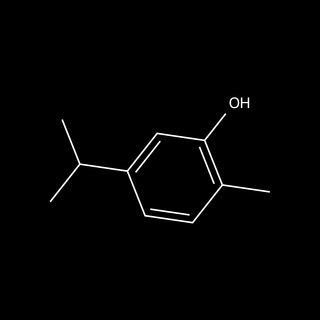
Carvacrol
PubChem, Carvacrol
Para-Cymene
PubChem, Para-Cymene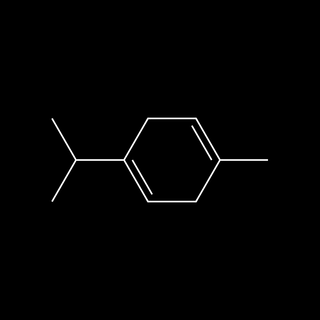
Gamma-Terpinene
PubChem, Gamma-Terpinene

Labelling
- EU allergens reported
- Limonene · Linalool · Linalyl Acetate · Pinene · Terpineol · Alpha-Terpinene · Terpinolene · Beta-Caryophyllene · Carvone
Performance and rules
- IFRA status
- No IFRA Standard for the material itself (51st Amendment)
Turkish Oregano · See Also
Entries related to Turkish Oregano, by their place in the pyramid. “shared” marks a scent word Turkish Oregano has too.
Top notes
-
Syrian Oregano
sharp · herbal (shared) · aromatic (shared) Aromatic / Top · Heart / Same subfamily / Natural
Heart notes

Oregano
warm (shared) · green · fresh Aromatic / Same cluster / Natural
Marjoram
warm (shared) · green · aromatic (shared) Aromatic / Same subfamily / Natural-
Small-Flowered Oregano
sharp · herbaceous · pungent (shared) Aromatic / Same subfamily / Natural 
Carvacrol
spicy (shared) · herbal (shared) · thyme Spicy / Natural & Synthetic-
Moroccan Oregano
fragrant · warm (shared) · spicy (shared) Spicy / Natural


Base notes

Patchouli
Woods / Natural

Turkish Oregano · Sources
- GBIF Origanum onites (GBIF species record)
- Molecules Extraction, Chemical Composition, and Anticancer Potential of Origanum onites L. Essential Oil
- Microorganisms Biochemical, Antioxidant Properties and Antimicrobial Activity of Steno-Endemic Origanum onites
- IFRA Standards, 51st Amendment
- Wikipedia Origanum onites
- Wikipedia Origanum
- Wikipedia Carvacrol
- PubChem Carvacrol
Cite as PREMIEREPEAU Glossary, “Turkish Oregano”, https://premierepeau.com/
