


Shell Ginger
Keywords: sweet · spicy · refreshing
Shell ginger is Alpinia zerumbet, a perennial species of ginger native to East Asia. Its leaf oil smells crisp, refreshing and deeply sweet.
- Olfactive family
- Spicy · 155 entries of the glossary in this family Subfamily: Warm spices · 144 entries in this subfamily Cluster: Aromatic warm spices · 8 entries in this cluster
- Material
- Natural Leaves
- Pyramid
- Top-Heart Note
- Also called
- Shell flower, pink porcelain lily, variegated ginger, light galangal
Shell Ginger · Facets
Entries of the glossary that carry each facet, of 3,979:
- sweet 1,987
- fresh 1,390
- spicy 473
- tropical 189
- aromatic 103
Shell Ginger · Scent
The aroma is crisp, refreshing and deeply sweet, with a calming undertone, evoking the sensation of being in a tropical country. The scent is sweet and somewhat deeply spicy.
Evolution over time
Shell Ginger: scent over time.
- Immediately
Crisp and refreshing, with a herbal character.
Scent words: herbal - After a few hours
Sweet and somewhat deeply spicy.
Scent words: sweet · spicy - After a few days
Deeply sweet, with a calming undertone.
Scent words: sweet
Shell Ginger · In Perfumery
The essential oils of the leaves are used in cosmetics, perfumes, insect repellents and deodorants. The oil is classed as a top to middle note.
Pyramid
Shell Ginger: Top · Heart. Entries of the glossary stored at each place of the pyramid, of 4,000 (35 store no place):
- Top 718
- Top · Heart 496
- Heart 1,644
- Heart · Base 513
- Base 594
Role in the formula
Shell Ginger: roles in the formula. Entries of the glossary that share each role, of 4,000:
- Perfuming agent 43
- Freshness 720
- Top note fewer than 40 entries
- Heart note fewer than 40 entries
Shell Ginger · Extraction & Chemistry
The oil is obtained from the leaves by steam distillation, at an extraction rate of 1%.
- Appearance
- Light yellow to brownish
Shell Ginger · Did You Know?
A 2013 publication found that A. zerumbet leaf extract increased the lifespan of C. elegans by 22.6%.
Shell Ginger · In Depth
The plant
Alpinia zerumbet belongs to the family Zingiberaceae. The plants can grow up to 2.5 to 3 meters (8 to 10 ft) tall and bear colorful funnel-shaped flowers. The name shell ginger comes from the pink flowers, which resemble sea shells, especially in bud. The plants are grown as ornamentals, and their leaves are used in cuisine and traditional medicine. In Okinawa, the leaves are used in the traditional muchi cuisine, a rice cake wrapped in the leaves.
Composition of the leaf oil
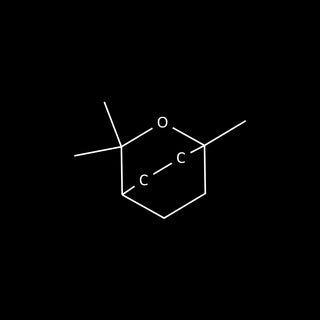
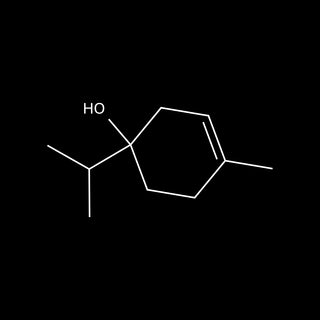
An analysis of steam-distilled leaf oil from Okinawa Island identified 17 compounds. Monoterpenes make up 95% of that oil. p-Cymene was the most abundant compound, followed by 1,8-cineole, terpinen-4-ol, alpha-pinene, beta-pinene and limonene. The sesquiterpene content was small, mostly beta-caryophyllene and alpha-caryophyllene. The shares of terpinen-4-ol and 1,8-cineole are high in winter and fall around summer.
Most of the essential oils prepared from the leaves, rhizomes and flowers are dominated by 1,8-cineole and terpinen-4-ol. In plants from Martinique, terpinen-4-ol was the major constituent of the oil from every part studied, at 29.8% in the leaves and 9.6% in the stems.
In one batch from a supplier, p-cymene made up 24.4% of the oil, limonene 15.2%, α-pinene 11.8% and camphene 11.7%. Of five volatiles measured in leaves and rhizomes, trans-methyl cinnamate (87.20 ppm), 1,8-cineole (70.50 ppm) and linalool (21.60 ppm) were highest in the leaves. Endo-fenchyl acetate, exo-fenchyl acetate and endo-fenchol are unique to rhizome oil.
Shell Ginger · History
The plant was originally called Alpinia speciosa, which was also the scientific name of torch ginger. To avoid the confusion, it was renamed A. zerumbet, while torch ginger was reclassified in the genus Etlingera. In the first half of the twentieth century, the seeds were sold as Amomum seeds native to Japan.
Shell Ginger · Technical Sheet
Identity
- Botanical
- Alpinia zerumbet
- IPNI
- Alpinia zerumbet (Pers.) B.L.Burtt & R.M.Sm., Notes Roy. Bot. Gard. Edinburgh 31(2): 204 (1972) — Brian Laurence Burtt (1913–2008); Rosemary Margaret Smith (1933–2004)
- Type
- Ingredient
- Category
- Spices
In Nature
- Flowering
- May · north of the equator · iNaturalist
- Recorded altitude
- 0–650 m · median 50 m · 1,202 records with an altitude · GBIF
- Wild or cultivated
- 20 introduced · 51 cultivated among 10,430 records (the rest carry no such mark) · GBIF
- Recorded in
- 88 of 512 squares of the world grid; a brighter dot holds more records · GBIF
- Also from this botanical family
- Zingiberaceae: Cardamom · Cardamom Flower · Curcuma (Turmeric) · Ginger · Guinea Pepper · Kaempferia Galanga · 8 more entries
In Print
- Timeline
- first described 1972 · earliest aroma paper in Europe PMC, 2002
- In English books
- most mentioned in the 2000s · Google Books Ngram
Classification
- Chemical class
- Essential oil, mainly monoterpenes
Chemical data
- Formula
- Complex natural mixture (key constituents: p-cymene; 1,8-cineole; terpinen-4-ol; alpha-pinene; beta-pinene; limonene)

Labelling
- EU allergens reported
- Limonene · Linalool · Pinene · Terpineol · Alpha-Terpinene · Terpinolene · Beta-Caryophyllene · Camphor · Carvone
Performance and rules
- Available as
- essential oil
- IFRA status
- No IFRA Standard for the material itself (51st Amendment)
Shell Ginger · See Also
Entries related to Shell Ginger, by their place in the pyramid. « shared » marks a scent word Shell Ginger has too.
Top notes

Cardamom
spicy (shared) · aromatic (shared) · fresh (shared) Spicy / Top · Heart / Same cluster / Natural

Heart notes

Alpinia
spicy (shared) · gingery · camphorous Spicy / Same subfamily / Natural
Galanga
warm · spicy (shared) · aromatic (shared) Spicy / Same subfamily / Natural
Methyl Cinnamate
balsamic · fruity · sweet (shared) Resinous / Heart · Base / Natural & Synthetic


Shell Ginger · Sources
- GBIF Alpinia zerumbet
- Molecules (Basel, Switzerland) Phytochemicals of Alpinia zerumbet: A Review
- Bioscience Biotechnology and Biochemistry Significant Longevity-Extending Effects of Alpinia zerumbet Leaf Extract on the Life Span of Caenorhabditis elegans (2013)
- Journal of Natural Medicines (Springer Medicine) Composition and seasonal variation of essential oil in Alpinia zerumbet from Okinawa Island
- FAO AGRIS 669f607900eb85b7d72c31cb
- IFRA Standards, 51st Amendment
- Wikipedia Alpinia zerumbet
Cite as PREMIEREPEAU Glossary, “Shell Ginger”, https://premierepeau.com/pages/glossary-terms/shell-ginger Updated 2026-11-18
