


Snow Lotus
Keywords: alpine Saussurea herbs
Snow lotus is a common name for a number of high-altitude species of the genus Saussurea in East Asia.
- Olfactive family
- Florals · 779 entries of the glossary in this family Subfamily: Green florals · 143 entries in this subfamily Cluster: Green-fresh florals · 135 entries in this cluster
- Material
- Fantasy/Concept Flowers
- Pyramid
- Heart · Volatility: Heart Note
- Strength
- N/A — no measured strength for a fantasy accord Not on the graded scale
- Also called
- Xuě liánhuā
Family, subfamily and cluster: PREMIEREPEAU house classification, version 2026‑11.
Snow Lotus · Facets
Entries of the glossary that carry each facet, of 3,979:
- floral 1,546
- green 1,442
- sweet 1,988
- herbal 757
- fresh 1,387
Editorial note We own no rights to this material, its name or its trademark. This entry is independent editorial journalism, published under freedom of expression.
Snow Lotus · In Perfumery
Pyramid
Snow Lotus: Heart. Entries of the glossary stored at each place of the pyramid, of 4,006 (42 store no place):
- Top 718
- Top · Heart 497
- Heart 1,641
- Heart · Base 514
- Base 594
Role in the formula
Snow Lotus: roles in the formula. Entries of the glossary that share each role, of 4,006:
- N/A — no documented formula role 361
Available as
Snow Lotus: available as.
- synthetic accord
- fantasy note
PREMIEREPEAU collection: Extrait de parfum
Snow Lotus · Terroir & Origins
- Producing countries
- China
Snow Lotus · Did You Know?
Larger plants of Saussurea laniceps are preferentially collected for medicinal use and souvenirs, which appears to favour shorter plants in heavily harvested areas. Plants in a protected area are about 9 cm taller than plants in the harvest areas.
Snow Lotus · In Depth
Saussurea is a genus of about 300 species of flowering plants in the family Asteraceae. The genus is native to cool temperate and arctic regions of East Asia, Europe, and North America, with the highest diversity in alpine habitats in the Himalayas and East Asia.
Botany and Habitat
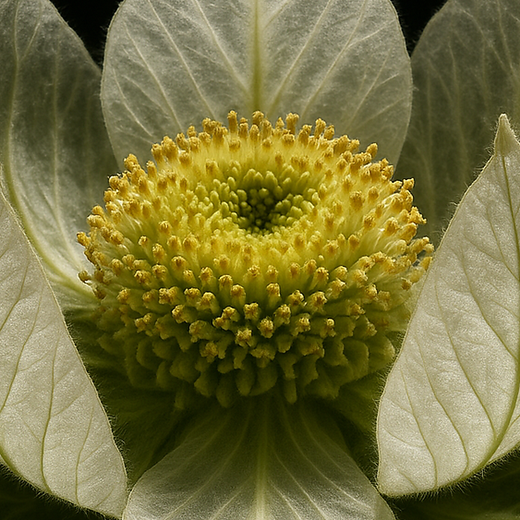
The flowers of the genus form in a dense head of small capitula, often surrounded by dense white to purple woolly hairs. The wool is densest in the high-altitude species. It helps regulate the temperature of the flowers, limits frost damage at night and shields them from ultraviolet light. A number of the high alpine Himalayan species are grown as ornamental plants for their decorative dense woolly flowerheads.
Two alpine snow lotus species
Saussurea involucrata is a perennial alpine species mainly distributed in the Tianshan Mountains. Saussurea involucrata can be found at 4,000 m elevation in the western part of the Tianshan Mountains in Xinjiang, China. It occurs in the Tianshan and Altai Mountains at about 2400–4100 m, and its seeds carry long hairs that let the wind spread them.
Saussurea laniceps, the cotton-headed snow lotus, is a rare snow lotus found only in the Himalayas, including Nepal and southwest China (Sikkim in India, and Sichuan, Tibet and Yunnan in China). It grows above about 3,200 m altitude on alpine scree slopes. Saussurea laniceps is a perennial herb 15–45 cm tall that grows slowly for 7–10 years or more and dies after flowering. It is pollinated by two bumblebee species.
Chemistry
The major bioactive components of the herb were reported to be acacetin, hispidulin and rutin.
Traditional Use
Several varieties of snow lotus are used in traditional Tibetan medicine. The flowers and stems of Saussurea laniceps, Saussurea involucrata and Saussurea medusa have long been used in traditional Chinese medicine for the treatment of rheumatoid arthritis, cough with cold, stomachache, dysmenorrhea, and altitude sickness. Saussureae Involucratae Herba is the dried ground part of Saussurea involucrata and is used in traditional Uyghur and/or Chinese medicine. In the China Pharmacopoeia (2015), the major pharmaceutical values of snow lotus are alleviating rheumatoid arthritis, accelerating blood circulation and mitigating other “cold” syndromes.
Conservation and Cultivation
The plant takes over 8 years to mature before the harvest. Over-harvesting in China is destroying the growing environment and damaging the quality of Saussurea involucrata. Saussurea involucrata has become endangered due to over-exploitation. The whole plant of Saussurea laniceps is used medicinally, and the species is threatened in many regions by over-exploitation.
The cultivation of snow lotus has been tried by the Xinjiang Technical Institute of Physics & Chemistry in China. The harvest period could be shortened from 8 years to 2 years, and the major chemical contents were not decreased.
Explore all seven extraits in the Discovery Set.
Snow Lotus · History
In most Chinese martial arts literature, snow lotus was classified as a rare herb as precious as lingzhi mushroom and old ginseng.
Snow Lotus · Technical Sheet
Identity
- Botanical
- Saussurea involucrata
- Taxonomy
- Asterales order › Asteraceae family › Saussurea genus · GBIF
- Botanical records
- Saussurea involucrata: IPNI, Saussurea involucrata · GBIF, Saussurea involucrata · Wikidata, Saussurea involucrata
- IPNI
- Saussurea involucrata O.Fedtsch. & B.Fedtsch., Consp. Fl. Turkestanicae [O.A. Fedchenko & B.A. Fedchenko] 4: 235 (1912) — Olga Alexandrowna Fedtschenko (1845–1921); Boris Alexeevich Fedtschenko (1872–1947) · ≡ Aplotaxis involucrata Kar. & Kir. (1842)
- Type
- Accord
- Category
- Flowers
- Note
- Snow Lotus (Saussurea involucrata) is an extremely rare alpine plant. No standard commercial essential oil exists. Primarily used as a fantasy/concept note in perfumery.
In Nature
In Print
- Timeline
- first described 1842 · earliest aroma paper in Europe PMC, 1992
- In English books
- most mentioned in the 2010s · Google Books Ngram
Classification
- Chemical class
- Complex natural (essential oil)
Chemical data
- Formula
- Complex mixture — contains rutin, quercetin, syringin
- GC-MS study
- Journal of essential oil research 1992, Components of the essential oil of Saussurea involucrata (Kar. et Kir.) ex Maxim
- INCI names (CosIng)
- SAUSSUREA INVOLUCRATA CALLUS EXTRACT (ANTIOXIDANT, SKIN CONDITIONING – EMOLLIENT, SKIN CONDITIONING)SAUSSUREA INVOLUCRATA EXTRACT (HUMECTANT)
- Compound classes reported
- Monoterpenoids 5 % · Sesquiterpenoids 22 % · Fatty acyls 18 % · Fatty acids and conjugates 16 % · of 83 compounds reported, 18 % of them esters · LOTUS
Labelling
- EU allergens reported
- Benzyl Alcohol
Physical properties
- Appearance
- Woolly white or yellowish alpine flower growing on rocky mountain slopes above 4,000 m
Performance and rules
- IFRA status
- No IFRA Standard for the material itself (51st Amendment)
Snow Lotus · See Also
Entries related to Snow Lotus, by their place in the pyramid. “shared” marks a scent word Snow Lotus has too.
Heart notes

Laurel Blossom
floral (shared) · green (shared) · fresh (shared) Florals / Same cluster / Natural
Spiraea
floral (shared) · sweet (shared) · green (shared) Florals / Same cluster / Natural
Clematis
floral (shared) · green (shared) · sweet (shared) Florals / Same cluster / Fantasy/Concept
Pansy
floral (shared) · green (shared) · fresh (shared) Florals / Same cluster / Fantasy/Concept
Jasmine
floral (shared) Florals / Natural
Rose
floral (shared) · honeyed · waxy Florals / Natural
Violet
floral (shared) · violet Florals / Natural & Synthetic
Orange Blossom
floral (shared) · honeyed · citrus Florals / Natural
Lily
floral (shared) · green (shared) · waxy Florals / Synthetic


Snow Lotus · Sources
- International Plant Names Index (IPNI) Saussurea involucrata (Kar. & Kir.) Sch.Bip.
- Frontiers in Pharmacology (2019) Saussureae Involucratae Herba (Snow Lotus): Review of Chemical Compositions and Pharmacological Properties
- Life (2023) Conservation Priorities and Demographic History of Saussurea involucrata in the Tianshan Mountains and Altai Mountains
- IFRA Standards, 51st Amendment
- Wikipedia Saussurea involucrata
- Wikipedia Saussurea laniceps
Cite as PREMIEREPEAU Glossary, “Snow Lotus”, https://premierepeau.com/
