


Strobilanthes Callosa
Keywords: botanical · shrub
Strobilanthes callosa is a shrub found mainly in the low lying hills of the Western Ghats, all along the west coast of India.
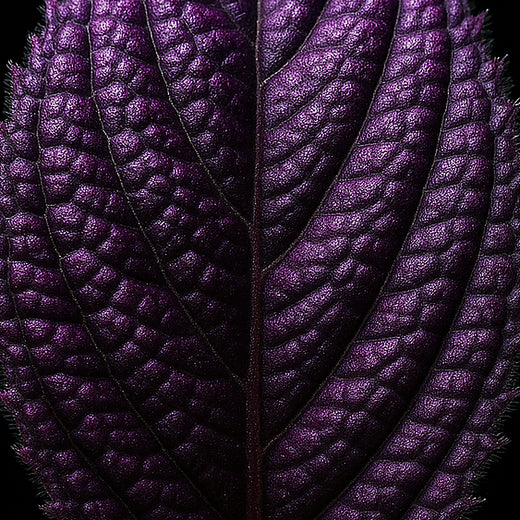
- Olfactive family
- Florals · 779 entries of the glossary in this family Subfamily: Powdery florals · 63 entries in this subfamily
- Material
- Natural Flowers
- Pyramid
- Heart · Volatility: Heart Note
- Strength
- Medium Step 3 of 5 · shared by 1,473 of 2,156 graded entries Graded entries at each step, from 1 to 5: 4, 119, 1,473, 498, 39. 23 more sit between two steps.
- Also called
- karvi, karvy, maruadona, Carvia callosa
Family, subfamily and cluster: PREMIEREPEAU house classification, version 2026‑11.
Strobilanthes Callosa · Facets
Entries of the glossary that carry each facet, of 3,979:
- floral 1,546
- green 1,442
- sweet 1,988
- powdery 197
- fresh 1,387
- strongly smelling 1
Strobilanthes Callosa · In Perfumery
Strobilanthes callosa is described as a wild shrub of forest undergrowth and hill slopes, and the IFRA Standards library holds no standard under its name.
Pyramid
Strobilanthes Callosa: Heart. Entries of the glossary stored at each place of the pyramid, of 4,006 (42 store no place):
- Top 718
- Top · Heart 497
- Heart 1,641
- Heart · Base 514
- Base 594
Role in the formula
Strobilanthes Callosa: roles in the formula. Entries of the glossary that share each role, of 4,006:
- Diffusion enhancer 248
- Modifier 1,167
- Backbone 196
- Signature note 897
- Lifting agent 567
- Blender 1,040
- Botanical reference fewer than 40 entries
Available as
Strobilanthes Callosa: available as.
- synthetic accord
- fantasy note
- plant
Strobilanthes Callosa · Terroir & Origins
- Producing countries
- India
Strobilanthes Callosa · Did You Know?
Every year the shrub turns green with the arrival of the monsoon, but once the rainy season is over only dry, dead-looking stems are left. In a forest of this species the capsules, which burst open elastically, make a peculiar, almost continuous noise as the seeds are shed.
Strobilanthes Callosa · In Depth
Strobilanthes callosa belongs to the family Acanthaceae. It is a large shrub, sometimes attaining 6–20 ft in height. It flowers between July and September. Its leaves are home to several insects, including caterpillars and snails, which feed on it. Endoclita malabaracus, a Lepidoptera species whose larvae feed on Strobilanthes plants, has been recorded on it.
Names
Its standardized Hindi name is maruadona, the name used in Madhya Pradesh. In Maharashtra and Karnataka the shrub is locally known as karvi, sometimes spelled karvy in English. The genus Strobilanthes has around 350 species, of which at least 46 are found in India.
Distribution
It can be seen growing wild around Mumbai, Tansa, Khandala and Bhimashankar. Karvi grows in abundance in the Western Ghat hills near Mumbai, including throughout the Sanjay Gandhi National Park. It covers large areas on the Konkan and North Kanara ghats and forms the undergrowth in many deciduous moist forests. The Western Ghats are a mountain range that stretches 1,600 km along the west coast of India.
Flowering Cycle
The bush typically takes seven years to grow, and only in its eighth year does it burst into bloom. The buds bear bright purple flowers in a mass flowering. The flowers vary in colour from purple-blue to pink. An occasional plant may show white coloured flowers. After this once in a lifetime mass flowering the bush dies. Plants that bloom at long intervals, like Strobilanthes callosa, are known as plietesials. Some species of Strobilanthes, this one included, show a mass seeding phenomenon termed masting.
Explore all seven extraits in the Discovery Set.
Strobilanthes Callosa · History
A general flowering of this species in North Kanara took place in September and October 1887. A forestry report of 1908 on the Ankola high forests of coastal Karnataka states that the growth of Karvi in many places is very heavy and is a direct check on natural regeneration.
Strobilanthes Callosa · Technical Sheet
Identity
- Botanical
- Strobilanthes callosa
- Taxonomy
- Lamiales order › Acanthaceae family › Strobilanthes genus · GBIF
- Botanical records
- Strobilanthes callosa: POWO, Strobilanthes callosa · IPNI, Strobilanthes callosa · GBIF, Strobilanthes callosa · Wikidata, Strobilanthes callosa · Wikipedia, Strobilanthes callosa
- IPNI
- Strobilanthes callosa Nees, Pl. Asiat. Rar. (Wallich). iii. 85, partim — Christian Gottfried Daniel Nees von Esenbeck (1776–1858)
- Type
- Concept
- Category
- Greens, herbs and fougeres
- Note
- N/A — no commercial essential oil available
In Nature
- Growth form
- Shrub · POWO
- Native range
- Indian Subcontinent · POWO
- Flowering
- peak in September · north of the equator · iNaturalist
- Recorded in
- 3 of 512 squares of the world grid; a brighter dot holds more records · GBIF
- Also from this botanical family
- Acanthaceae: Sabah Snake Grass · Siriuba Tree
Classification
- Cluster
- Powdery florals · 32 entries in this cluster
- Chemical class
- Fantasy note (accord)
Chemical data
- Formula
- N/A — no standard isolate
Labelling
- EU allergens reported
- Limonene · Linalool · Geraniol · Linalyl Acetate · Geranyl Acetate · Pinene · Terpineol · Alpha-Terpinene · Terpinolene · Beta-Caryophyllene
Physical properties
- Appearance
- Pale yellow to greenish liquid
Performance and rules
- IFRA status
- No IFRA Standard for the material itself (51st Amendment)
Strobilanthes Callosa · See Also
Entries related to Strobilanthes Callosa, by their place in the pyramid. “shared” marks a scent word Strobilanthes Callosa has too.
Heart notes

Gladiolus
floral (shared) · fresh (shared) · green (shared) Florals / Same cluster / Natural
Violet
floral (shared) · violet Florals / Same subfamily / Natural & Synthetic
Tuberose
floral (shared) · narcotic · creamy Florals / Natural
Orange Blossom
floral (shared) · honeyed · citrus Florals / Natural


Other entries · Place in the pyramid not stored

Carnation
floral (shared) · spicy · clove Florals / Natural
Baby’s Breath
floral (shared) · sour milk Florals / Fantasy/Concept


Strobilanthes Callosa · Sources
- International Plant Names Index (IPNI) Strobilanthes callosa Nees
- IFRA Standards, 51st Amendment
- Wikipedia Strobilanthes callosa
- Wikipedia Strobilanthes
- Wikipedia Western Ghats
Cite as PREMIEREPEAU Glossary, “Strobilanthes Callosa”, https://premierepeau.com/

