


Zinnia
Keywords: floral · fresh · earthy
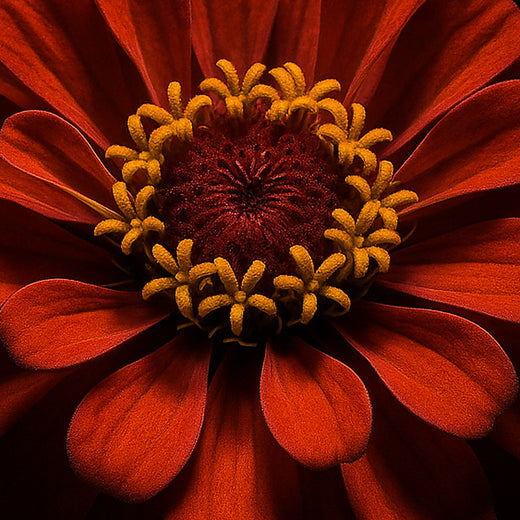
Zinnia is a genus of plants of the tribe Heliantheae within the family Asteraceae. Its members bear solitary, often long-stemmed flower heads in a variety of bright colors. The number of ray florets varies among cultivars.
- Olfactive family
- Florals · 783 entries of the glossary in this family Subfamily: Green florals · 144 entries in this subfamily Cluster: Green-fresh florals · 135 entries in this cluster
- Material
- Natural Inflorescences
- Pyramid
- N/A — no standard perfumery material
- Strength
- N/A — no standard perfumery material Not on the graded scale
- Also called
- youth-and-age, common zinnia, elegant zinnia, Zinnia violacea
Zinnia · Facets
Entries of the glossary that carry each facet, of 3,979:
- floral 1,547
- green 1,442
- earthy 660
- sweet 1,987
- warm 1,109
- fresh 1,390
Zinnia · Scent
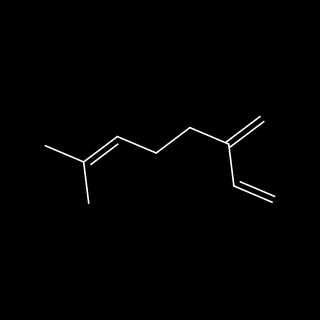
Myrcene, another main component of the oil, has a pleasant odour.
Evolution over time
Zinnia: scent over time.
- Immediately
N/A — no documented evolution: no standard perfumery material
- After a few hours
N/A
- After a few days
N/A
N/A
Zinnia · In Perfumery
The IFRA Standards library lists no standard for zinnia or zinnia flower.
Pyramid
Entries of the glossary stored at each place of the pyramid, of 4,000 (35 store no place):
- Top 718
- Top · Heart 496
- Heart 1,644
- Heart · Base 513
- Base 594
Role in the formula
Zinnia: roles in the formula. Entries of the glossary that share each role, of 4,000:
- N/A — no documented formula role 360
Zinnia · Terroir & Origins
- Producing countries
- Mexico, Central America
Zinnia · Extraction & Chemistry
Samples of essential oil have been obtained from the plant by steam distillation, using plant material cultivated in the East Kazakhstan region. A methanolic extract of the inflorescences was made by stirring the ground flowers with methanol for 3 hours at room temperature.
- Appearance
- Pale yellow to amber liquid
Zinnia · Did You Know?
Zinnias produced the first flowers in NASA’s Veggie plant-growth system aboard the International Space Station, in an experiment begun in 2015. Lettuce was its first crop, grown in 2014. The German anatomist Johann Gottfried Zinn, in whose honour the genus is named, gave the first detailed and comprehensive anatomy of the human eye.
Zinnia · In Depth
Botany
The genus is native to scrub and dry grassland in an area stretching from the Southwestern United States to South America, with a centre of diversity in Mexico. Zinnia elegans is the most familiar species and comes originally from the warm regions of Mexico. It is an annual flowering plant in the family Asteraceae.
The uncultivated plant grows to about 15 cm in height and has solitary flower heads about 5 cm across. Its purple ray florets surround black and yellow discs. It is grown as an ornamental in many places and is naturalised in several, including scattered locations in South and Central America, the West Indies, the United States, Australia, and Italy. The composite flowers of a zinnia consist of ray florets that surround disk florets. The leaves of Zinnia elegans are lance-shaped and sandpapery in texture.
Chemistry
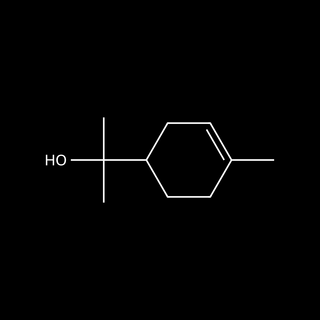
Asteraceae produce secondary metabolites, such as flavonoids and terpenoids. The main components of Zinnia elegans essential oil are α -terpineol, β -myrcene, myrtenal and camphene. The volatile oil obtained from the inflorescences presented germacrene D and p-cymene as major constituents.
Sesquiterpenes such as ziniolide, germacrene D and zinaflorin III have been identified in extracts of the aerial parts or roots. The seeds of the plant contain an important amount of oil (28%). Fractions of a methanolic extract of the inflorescences contained polyphenolic compounds such as chlorogenic acids and apigenin, kaempferol, and quercetin glycosides.
Cultivation and uses
Zinnias are popular garden flowers because they come in a wide range of flower colors and shapes, and they can withstand hot summer temperatures and are easy to grow from seeds. Zinnias are favored by butterflies as well as hummingbirds. Some zinnias are edible, though often reported to have a bitter taste best suited to garnish.
Explore all seven extraits in the Discovery Set.
Related: Purple Coneflower · Gerbera · White Dahlia · Cornflower Sultan Seeds
Zinnia · History
Collection and naming
The species Zinnia elegans was first collected in 1789 at Tixtla, Guerrero, by Sessé and Mociño. Cavanilles formally described it as Zinnia violacea in 1791. Jacquin described it again in 1792 as Zinnia elegans. Carl von Linné named the genus after the German botanist Johann Gottfried Zinn, who lived from December 4, 1727 to April 6, 1759.
Introduction and breeding
Zinnia peruviana was introduced to Europe in the early 1700s, and Z. elegans was introduced around 1790. In 1829, scarlet flowering plants were available under the name "Coccinea". Double flowering types were available in 1858, coming from India. Over 100 cultivars have been produced since selective breeding started in the 19th century. In time, zinnias came to represent thinking of absent friends in the language of flowers.
Zinnia · Technical Sheet
Identity
- Botanical
- Zinnia elegans
- Botanical records
- Zinnia elegans: POWO, Zinnia elegans · IPNI, Zinnia elegans · GBIF, Zinnia elegans · Wikidata, Zinnia elegans · Wikipedia, Zinnia elegans
- IPNI
- Zinnia elegans Jacq., Collectanea [Jacquin] 3: 152 (1791) — Nicolaus Joseph von Jacquin (1727–1817)
- Type
- Ingredient
- Category
- Flowers
In Nature
- Growth form
- Herb · POWO
- Native range
- Mexico · Central America · POWO
- Introduced to
- 82 regions · Europe 20 · Africa 11 · Tropical Asia 11 · Pacific 11 · Northern America 11 · Southern America 10 · Temperate Asia 7 · Australasia 1
- Flowering
- July–November · north of the equator · iNaturalist
- Recorded altitude
- 0–1,650 m · median 600 m · 1,291 records with an altitude · GBIF
- Wild or cultivated
- 2 native · 255 introduced · 42 cultivated among 10,693 records (the rest carry no such mark) · GBIF
- Recorded in
- 144 of 512 squares of the world grid; a brighter dot holds more records · GBIF
In Print
- Timeline
- first described 1791 · earliest aroma paper in Europe PMC, 2000
- In English books
- most mentioned in the 1840s · Google Books Ngram
Classification
- Chemical class
- Terpenoids
Chemical data
- Formula
- Complex natural mixture (key constituents: α-terpineol; β-myrcene; myrtenal; camphene)
- INCI names (CosIng)
- ZINNIA ELEGANS CALLUS CULTURE EXTRACT (ANTIOXIDANT, HAIR CONDITIONING, HUMECTANT, SKIN PROTECTING)

Labelling
- EU allergens reported
- Limonene · Linalool · Beta-Caryophyllene
Physical properties
- Note
- Zinnia is not commercially distilled. The scent is recreated in perfumery via floral accords.
Performance and rules
- Available as
- fantasy note
- IFRA status
- No IFRA Standard for the material itself (51st Amendment)
Zinnia · See Also
Entries related to Zinnia, by their place in the pyramid. « shared » marks a scent word Zinnia has too.
Heart notes

Periwinkle
floral (shared) · green (shared) · fresh (shared) Florals / Same cluster / Fantasy/Concept
Waratah
floral (shared) Florals / Same cluster / Fantasy/Concept
Dandelion
floral (shared) · earthy (shared) · green (shared) Florals / Same cluster / Natural
Orange Blossom
floral (shared) · honeyed · citrus Florals / Natural
Rose
floral (shared) · honeyed · waxy Florals / Natural
Lily
floral (shared) · green (shared) · waxy Florals / Synthetic
Cosmos Flower
floral (shared) · chocolate · vanilla Florals / Fantasy/Concept
Dahlia
floral (shared) · sweet (shared) · powdery Florals / Fantasy/Concept
Edelweiss
plant extract · cosmetic ingredient Florals / Natural


Base notes


Other entries · Place in the pyramid not stored

Carnation
floral (shared) · spicy · clove Florals / Natural

Zinnia · Sources
Read the science
- Journal of essential oil research : JEOR. 2000 Volatile constituents of the flowers of Wulffia baccata (L. f.) Kuntze. and Zinnia elegans Jacq. (Asteraceae)
- GBIF Zinnia elegans
- Molecules (2019) Chemical Profile and Antioxidant Activity of Zinnia elegans Jacq. Fractions
- IFRA Standards, 51st Amendment
- Wikipedia Zinnia
- Wikipedia Zinnia elegans
- Wikipedia Myrcene
- Wikipedia Terpineol
- Wikipedia Johann Gottfried Zinn
- Wikipedia Asteraceae
- International Union for the Protection of New Varieties of Plants (2022) Zinnia, Guidelines for the conduct of tests for distinctness, uniformity and stability (TG/339/1)
- NASA First Flower Grown in Space Station’s Veggie Facility
- NASA Veggie, NASA fact sheet
Cite as PREMIEREPEAU Glossary, “Zinnia”, https://premierepeau.com/
