


Zinziba
Keywords: aromatic · spicy · tropical
Zinziba: Inzinziniba is the Xhosa name of Lippia javanica (Verbenaceae), a plant also called fever tea or Cape verbena. Its oil is highly aromatic and spicy, with sweet mango and granadilla top notes.
- Olfactive family
- Fruity · 713 entries of the glossary in this family Subfamily: Tropical fruits · 123 entries in this subfamily Cluster: Tropical fruit notes · 103 entries in this cluster
- Material
- Natural Herb, leaves and flowers of Lippia javanica
- Pyramid
- Top-Heart Note
Zinziba · Facets
Entries of the glossary that carry each facet, of 3,979:
- fruity 1,299
- tropical 189
- spicy 473
- aromatic 103
- sweet 1,987
- resinous 199
Zinziba · Scent
The oil is highly aromatic and spicy, with sweet mango and granadilla top notes, and is reminiscent of a tropical fruit drink.
Evolution over time
Zinziba: scent over time.
- Immediately
Sweet mango and granadilla top notes, like a tropical fruit drink.
Scent words: fruity · tropical · sweet - After a few hours
Highly aromatic.
Scent words: aromatic - After a few days
Spicy.
Scent words: spicy
Zinziba · In Perfumery
The oil is resinous and sticky, so it is best used blended with other essential or carrier oils.
Pyramid
Zinziba: Top · Heart. Entries of the glossary stored at each place of the pyramid, of 4,000 (35 store no place):
- Top 718
- Top · Heart 496
- Heart 1,644
- Heart · Base 513
- Base 594
Role in the formula
Zinziba: roles in the formula. Entries of the glossary that share each role, of 4,000:
- Modifier 1,168
- Fruity accent fewer than 40 entries
- Top note fewer than 40 entries
- Blender 1,041
Zinziba · Terroir & Origins
- Producing countries
- South Africa
Zinziba · Extraction & Chemistry
The volatile oil of Lippia javanica has been prepared by hydrodistillation of leaves, flowers and stems. The oil sold as Lippia javanica essential oil is steam-distilled from the herb, leaves and flowers.
Available as
Zinziba: available as.
- essential oil
- oil
- Appearance
- Pale to dark orange; very sticky when cold
Zinziba · Did You Know?
In clinical studies with human volunteers, Lippia javanica repelled no less than 95% of mosquitos, whereas most mosquito repellents repel only 42% of them.
Zinziba · In Depth
Identity
Lippia javanica belongs to the verbena or vervain family, Verbenaceae. The plant has a long history of traditional use in tropical Africa as an indigenous herbal tea or tisane. Its herbal tea is traded as Zumbani in Zimbabwe.
Chemistry
The plant is rich in volatile oil, particularly caryophyllene, carvone, ipsenone, ipsdienone, limonene, linalool, myrcene, myrcenone, ocimenone, p-cymene, piperitenone, sabinene and tagetenone. The essential oil profiles of L. javanica vary between and within species, because different metabolic pathways produce them. Cluster analysis identified five chemotypes in South Africa and Swaziland. They are a myrcenone-rich type (36–62%), a carvone-rich type (61–73%), a piperitenone-rich type (32–48%), an ipsdienone-rich type (42–61%) and a linalool-rich type (>65%). In one analysed oil, the major component was 3-methyl-6-(1-methylethylidene)-cyclohex-2-en-1-one.
Traditional and other uses
Traditionally, L. javanica is commonly used to treat fever and malaria and to repel insects throughout its distributional range. In South Africa and Zimbabwe, the whole plant or leaves are burnt to repel mosquitoes. A rural community in Giyani, in the Limpopo province of South Africa, cultivates the plant on a commercial scale to produce mosquito-repellent candles. The oil inhibited Escherichia coli and Staphylococcus aureus at 1% dilution. It was also active against Plasmodium falciparum in micromolar concentrations.
Zinziba · History
Lippia javanica has been used in African and Asian countries as herbal tea and medicine for many centuries. South Africa’s Council for Scientific and Industrial Research signed a benefit sharing agreement with traditional healers that allows commercial cultivation of L. javanica.
Zinziba · Technical Sheet
Identity
- Botanical
- Lippia javanica (Burm.f.) Spreng.
- Botanical records
- Lippia javanica: POWO, Lippia javanica · IPNI, Lippia javanica · GBIF, Lippia javanica · Wikidata, Lippia javanica
- IPNI
- Lippia javanica Spreng., Syst. Veg., ed. 16 [Sprengel] 2: 752 (1825) — Sprengel, Curt (Kurt, Curtius) Polycarp Joachim (1766–1833)
- Type
- Ingredient
- Category
- Fruits, vegetables and nuts
In Nature
- Recorded altitude
- 650–2,200 m · median 1,650 m · 351 records with an altitude · GBIF
- Wild or cultivated
- 6 native among 3,499 records (the rest carry no such mark) · GBIF
- Recorded in
- 17 of 512 squares of the world grid; a brighter dot holds more records · GBIF
- Also from this genus
- Lippia: Bushy Lippia
In Print
- Timeline
- first described 1825 · earliest aroma paper in Europe PMC, 2000
- In English books
- most mentioned in the 2000s · Google Books Ngram
Chemical data
- Formula
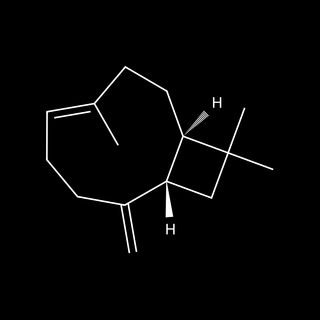
- Complex natural mixture (key constituents: caryophyllene; carvone; limonene; linalool; myrcene)


Labelling
Performance and rules
- IFRA status
- No IFRA Standard for the material itself (51st Amendment)
Zinziba · See Also
Entries related to Zinziba, by their place in the pyramid.
Top notes

Vervain
fresh · green · floral Aromatic / Natural
Lemon Verbena
citrus · fresh · green Citrus / Natural-
Bushy Lippia
intense · fresh · lemon Citrus / Natural


Heart notes

Lantana
floral · herbaceous · pungent Florals / Natural
Lantana leaf
green · herbal Aromatic / Natural


Zinziba · Sources
- Evidence-based complementary and alternative medicine : eCAM Lippia javanica (Burm.f.) Spreng.: Traditional and Commercial Uses and Phytochemical and Pharmacological Significance in the African and Indian Subcontinent
- FAO AGRIS 65deb3ee0f3e94b9e5d0958f
- IFRA Standards, 51st Amendment
Cite as PREMIEREPEAU Glossary, “Zinziba”, https://premierepeau.com/
