Kalafate

AkordVOĆE, POVRĆE I ORAŠASTI PLODOVIvoćni · gorak · zemljan
Srednje notePiramida
3/5Jačina
—Trajnost
2Poreklo
Uzorak
Kalafate kao sirovina za parfeme
Srednje note
Berberis microphylla
Fantazijska/konceptualna
Definicija

Tart, inky, wind-bitten. A fantasy accord built to carries the small dark berries of the Patagonian steppe — part blackcurrant, part sloe, part frozen blueberry skin. No extractive material exists. The note is a perfumer's reconstruction: what the berry would smell like if you could distill it.

DRVENAST CVETNI ZEMLJAN SLADAK VOĆNI BILJNI TOPAO SVEŽ
BERBERIS MICROPHYLLA
Type
Akord
Olfactive family
Voćni
Source
Fantasy/Concept — olfactory accord inspired by calafate
Instrumenti
Piramida
GGornje note
SSrednje note
BBazne note
3/5Jačina
Srednja
jačina mirisa
Zemlje proizvođači
Argentina Čile

Miris

As a reconstructed accord: tart, dark-fruited, and slightly astringent. Darker and more tannic than blueberry, without the sulfurous catty edge of cassisAn inky, almost mineral quality — sloe berries crushed on cold stone. The green quality is muted, more frozen-leaf than fresh-cut. No floral dimension. The drydown of a well-built calafate accord turns powdery and faintly woody, losing its tartness and leaving a cool, clean, berry-skin residue.

Detaljno

Calafate is not a perfumery raw material. No essential oil, absolute, or CO2 extract of Berberis microphylla exists in the commercial supply chain. The berry is too small, too wild, and too remote for industrial extraction — it grows on thorned shrubs across the wind-scoured steppe of Argentine and Chilean Patagonia, from Tierra del Fuego to the lakes district, at altitudes where almost nothing else fru its. When a perfumer lists calafate as a note, they are describing an accord: a synthetic reconstruction that aims to carries the berry's character.

Explore all seven extraits in the Discovery Set.

What the Berry Actually Smells Like

The fresh fruit, crushed between the fingers, is tart and slightly astringent — darker than blueberry, less sulfurous than blackcurrant, with an inky, tannic bite from its high anthocyanin content (delphinidin, petunidin, and malvidin glycosides dominate). There is a faint herbaceous-bitter undertone from berberine, the isoquinoline alkaloid characteristic of all Berberis species. The closest published volatile data comes from a related species, Berberis crataegina, where GC-MS-olfactometry identified nonanal (green, waxy), hexanal (cut-grass), and linalool (floral-woody) as the dominant aroma-active compounds.

The Accord

A calafate accord in practice would draw on materials that reconstruct tart dark-berry character: ethyl-2-methylbutyrate for ripe fruit density, damascenone for jammy depth, cis-3-hexenol for the green-leaf snap of the wild bush, and a trace of blackcurrant bud absolute for that catty, sulfurous lift. The result reads as a fictional berry note — recognisable yet not quite identifiable — positioned somewhere between cassis and sloe.

Botany and Terroir

Berberis microphylla G. Forst. (syn. B. buxifoli a Lam., reclassified by Landrum 1999) is a spiny persistent shrub of the Berberidaceae family, native to southern South America. It fru its in the austral summer (January-February), producing small dark-blue to black berries no larger than a pea. The plant thrives in exposed, nutrient-poor soils under Patagonian winds exceeding 100 km/h — conditions that concentrate its anthocyanin and phenolic content as a UV and oxidative stress defence. The town of El Calafate in Santa Cruz province takes its name from this bush.

Zanimljivosti

The Tehuelche (Aonikenk) people of Patagonia held that whoever eats calafate berries is destined to return — 'El que come calafate, vuelve.' The legend gave its name to the town of El Calafate in Santa Cruz province, Argentina, gateway to the Perito Moreno glacier. The bush itself is one of the only fruiting plants that survives on the exposed Patagonian steppe, where sustained winds regularly exceed 100 km/h.

Dobijanje i hemija

Način dobijanja

No perfumery extraction exists. Berberis microphylla berries are not commercially distilled, solvent-extracted, or processed by CO2 for fragrance use. The fruit is too small, too scarce (wild-harvested only, no cultivation at scale), and the volatile fraction has not been characterised for B. microphylla specifically. In perfumery, calafate is a fantasy accord reconstructed from synthetic and natural materials to carries the berry's character.

Formula
N/A — complex fruit (berberine, anthocyanins, malvidin-3-glucoside)
CAS
N/A — no single CAS (fruit)
Botanički naziv
Berberis microphylla
Jačina mirisa
Srednji
Sinonimi
BERBERIS MICROPHYLLA
Status prema standardima IFRA
Bez ograničenja

No known restrictions

Fizička svojstva
Nota
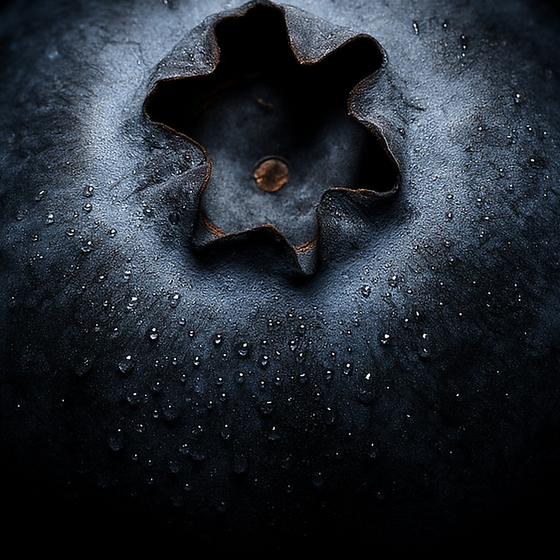
Small dark purple berry native to Patagonia. Rich in anthocyanins and berberine alkaloids.

U parfemima

Fantasy accord, not a raw material. No commercial extraction of Berberis microphylla exists for perfumery use. The calafate note functions as a narrative device — a named accord that gives a composition a sense of place (Patagonia, remoteness, wild terrain) without corresponding to any single extractive ingredient. In practice, a calafate accord would be built from synthetic and natural components that reconstruct tart dark-berry character. Likely building blocks: ethyl-2-methylbutyrate (fruity density), damascenone (dark berry jam), cis-3-hexenol (green snap), and traces of blackcurrant bud absolute or its sulfur-containing isolates. The accord would sit in the heart register, providing a fruity-tart anchor that bridges green top notes into warmer, woodier bases. No confirmed presence in the current PREMIEREPEAU collection.

Uloga u formuli
01modifikator
02nota potpisa
03sredstvo za podizanje
04sirovina za stapanje
05naturalizator
Oblici na tržištu
sintetički akord fantazijska nota

Pogledajte i

6 nota