Smokva

Prirodna i sintetičkaVOĆE, POVRĆE I ORAŠASTI PLODOVIzelen · voćni · drvenast
Srednje notePiramida
—Jačina
—Trajnost
4Poreklo
Uzorak
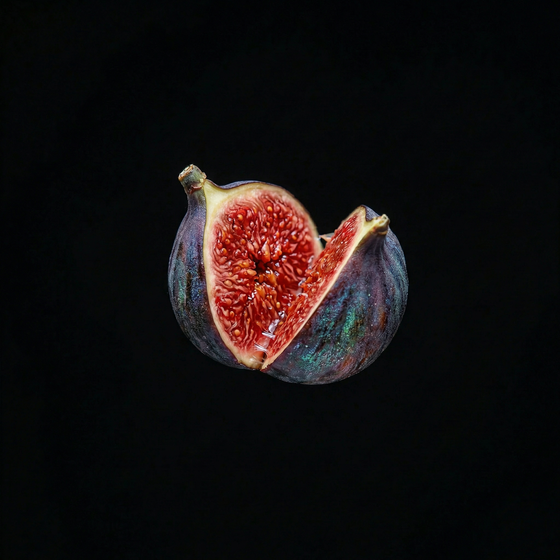
Smokva kao sirovina za parfeme
Srednje note
Ficus carica L.
Definicija

Fig is the edible fruit of Ficus carica, a species of tree or shrub in the flowering plant family Moraceae. Fig leaf extract has a delicately sweet green, herbaceous and somewhat woody odor with a mossy backnote.

ZELEN LISNAT TRAVNAT VOĆNO SLADAK DRVENAST MAHOVINAST
Common fig
Type
Sirovina
Olfactive family
Voćni
Source
Leaves of Ficus carica (absolute)
Chemical class
Oxime (stemone) and lactone (γ-octalactone)
Instrumenti
Piramida
GGornje note
SSrednje note
BBazne note
—Jačina
Srednji do jak (Stemone)
Zemlje proizvođači
Turska Egipat Maroko Alžir (proizvodnja smokava)

Miris

Stemone smells distinctly leafy, fig-like and vegetal, with tomato stem and blackcurrant bud facets and a smooth fruity-sweet undertone. Fig leaf absolute at 10% in dipropylene glycol is described as honey, green, herbal, tobacco and coumarin. Gamma-octalactone has a coconut flavor. Among the volatiles of the fig fruit, benzaldehyde smells of almond, and hexanal is green, fatty and leafy.

Teroar i obrada posle berbe

Detaljno

The fig plant

Ficus carica is a species of tree or shrub in the flowering plant family Moraceae, native to the Mediterranean region and to western and southern Asia. It has been cultivated since ancient times. Its fragrant leaves are some 20 cm long and 14 cm wide, rough and deeply lobed. Its fruit is teardrop-shaped and has sweet soft reddish flesh containing numerous small seeds. The fruit develops as a hollow, fleshy structure called the syconium, which is lined with numerous unisexual flowers. The tree has milky sap, produced by laticifer cells.

The name

The word fig was first recorded in English in the 13th century and derives from Old French figue, itself from Occitan figa.

Cultivation and production

The edible fig is probably the first plant to have been cultivated by humans. Nine subfossil figs of a sterile, parthenocarpic type, dated to about 9400-9200 BC, were found in the early Neolithic village of Gilgal I in the Jordan Valley. In 2024 world production of raw figs was 1.34 million tonnes, led by Turkey with 28% of the total. Turkey, Egypt, Algeria and Morocco together account for 61% of world production. Raw figs contain roughly 80% water and 20% carbohydrates. Ripe fresh figs are easily damaged in transport and do not keep well, so most commercial production is in dried and processed forms.

Pollination

Ripe figs are not full of dead wasps, and the crunchy bits in the fruit are only seeds. The fig produces an enzyme called ficain, which digests the dead wasps. Several commercial and ornamental varieties are parthenocarpic and bear sterile fruit without pollination.

Fig leaf absolute

Leaves of Ficus carica have been reported to contain coumarins or furocoumarins, including psoralen and bergapten. The essential oil of fig leaves contains more than 10% psoralen, the highest concentration of any organic compound isolated from fig leaves. Furanocoumarins cause phytophotodermatitis in humans, and the common fig contains significant quantities of two of them, psoralen and bergapten. Contact with the milky sap of Ficus carica followed by exposure to ultraviolet light can cause phytophotodermatitis, a potentially serious skin inflammation.

Stemone and gamma-octalactone

Stemone is the oxime of 5-methyl-3-heptanone and has the formula C₈H₁₇NO. Stemone is a top-note material with high volatility. It is stable in alcoholic solutions and most cosmetic bases. Gamma-octalactone, C₈H₁₄O₂, is a lactone with the preferred IUPAC name 5-butyloxolan-2-one. It is a component of urban aerosols as well as some liquors.

Volatiles of the fruit

Headspace analysis of the fig cultivars studied identified 68 volatile compounds, among them 20 aldehydes and 4 terpene compounds. Benzaldehyde accounted for a mean of 7.13% of the total area and was the most abundant aldehyde found. The main linear aldehydes were (E)-2-hexenal, nonanal and hexanal, which are characterised by green leaf notes. The monoterpenes α-pinene, limonene and linalool, around 1% of the total area, are among the most frequent groups of aroma compounds identified in figs.

Fruit chemistry

Figs contain polyphenols such as gallic acid, chlorogenic acid, syringic acid, (+)-catechin, (-)-epicatechin and rutin. The color of the fruit varies between cultivars with the concentration of anthocyanins, and cyanidin-3-O-rutinoside is particularly abundant. Ethyl acetate, hexanal, β-caryophyllene, limonene, (E)-2-hexenal and octanal are attributed mainly to the aroma of fresh figs. In one cultivar, (E)-2-methylbut-2-enal contributes strong green fruit notes, and ethyl 2-methylbutanoate and ethyl hexanoate contribute to the fruity aroma.

Dried figs

Of the factors studied, drying had the greatest effect on fig volatiles.

Dobijanje i hemija

Način dobijanja

Fig leaf absolute is made by extracting the leaves of Ficus carica with petroleum ether to form a concentrate, which is then re-extracted with alcohol to produce the absolute. Gamma-octalactone is prepared from crotonic acid and pentanal.

Formula
C₈H₁₇NO (stemone) · C₈H₁₄O₂ (γ-octalactone)
CAS
68916-52-9 (fig leaf absolute)
Botanički naziv
Ficus carica L.
Izgled
Dark-green to brownish-green semisolid mass or heavy viscous liquid (fig leaf absolute)
Jačina mirisa
Srednji do jak (Stemone)
Sinonimi
Common fig
Status prema standardima IFRA
Zabranjeno (neki oblici)

Prohibited — IFRA Standard « Fig leaf absolute » (Amendment 40)

U parfemima

It is typically used at 0.1-1% in the finished fragrance concentrate. Gamma-octalactone is classified as a lactone and used as a fragrance. No current PREMIEREPEAU fragrance features fig as a primary note.

Uloga u formuli
01modifikator
02naturalizator
03pojačivač gornjih nota
Oblici na tržištu
apsolut sintetička rekonstrukcija

Pogledajte i

8 nota