


Cimetna kiselina
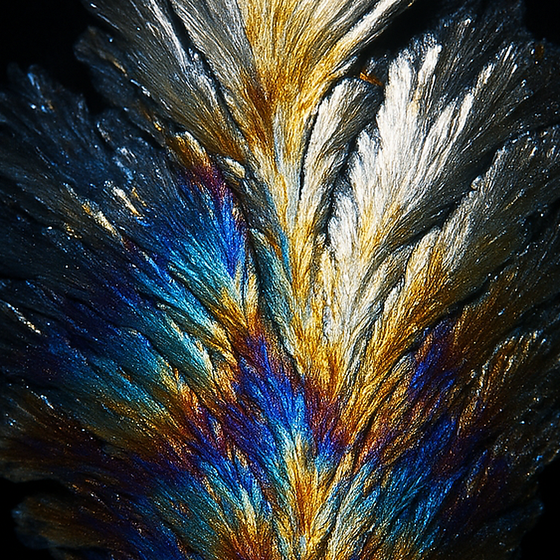
Faintly balsamic, honey-like, nearly odorless. Cinnamic acid is a quiet molecule — its value is chemical, as a precursor to more expressive cinnamic derivatives.
- Type
- Sirovina
- Olfactive family
- Začinski
- Source
- synthetic molecule
- Chemical class
- phenylpropanoid (acid)
Miris
Detaljno
Dobijanje i hemija
Način dobijanja
Produced synthetically by Perkin reaction (condensation of benzaldehyde with acetic anhydride) or Knoevenagel condensation. Found naturally in balsams but not commercially extracted from them. The Perkin reaction for cinnamic acid synthesis, developed in 1868, is one of the oldest named reactions in organic chemistry.
- Formula
- C9H8O2
- CAS
- 140-10-3
- Botanički naziv
- N/A — occurs naturally in cinnamon (Cinnamomum spp.), storax balsam, shea butter; primarily synthesized
- Izgled
- Pale amber powder
- Jačina mirisa
- Nizak
- Trajnost
- 340 hours at 20% in dipropylene glycol
- Sinonimi
- 3-Phenylacrylic acid, trans-Cinnamic acid
Not subject to an IFRA Standard (51st Amendment)
- Tačka ključanja
- 300°C
- Tačka topljenja
- 133°C (trans-form)
- Relativna gustina
- 1.248 @ 20°C
U parfemima
Chemical intermediate and minor component of natural balsams. Cinnamic acid is not used as a standalone perfumery ingredient. Its significance is structural — as the parent compound of cinnamate esters (cinnamaldehyde, cinnamyl alcohol, methyl cinnamate) that are common. In balsams, cinnamic acid and its esters collectively provide warm, balsamic character. The molecule also has UV-absorbing properties, making it relevant to sunscreen chemistry.
Pogledajte i
6 nota