Cedrat

PrirodnaCITRUSNI MIRISIcitrusni · cvetni
Gornje notePiramida
—Jačina
—Trajnost
3Poreklo
Uzorak
Cedrat kao sirovina za parfeme
Gornje note
Citrus medica
Definicija

Citron (Citrus medica) is a large fragrant citrus fruit with a thick, coarse rind. It is used in Asian and Mediterranean cuisine, traditional medicines, perfume, and religious rituals and offerings.

CVETNI CITRUSNI
cédrat
Type
Sirovina
Olfactive family
Citrusni
Source
fruit peel
Chemical class
complex natural (essential oil)
Instrumenti
Piramida
GGornje note
SSrednje note
BBazne note
Zemlje proizvođači
Italija Grčka Portoriko

Miris

The essential oils from the peel of the Amalfi Coast cultivars 'Liscia' and 'Rugosa' have a typical citrusy and floral odor.

Teroar i oblici

Detaljno

Citron — main de Bouddha — provides the structural top of PREMIEREPEAU's Gravitas Capitale against vetiver, shishito pepper and wet asphalt.

This note in PREMIEREPEAU. Gravitas Capitale. Sample all seven extraits in the Discovery Set.

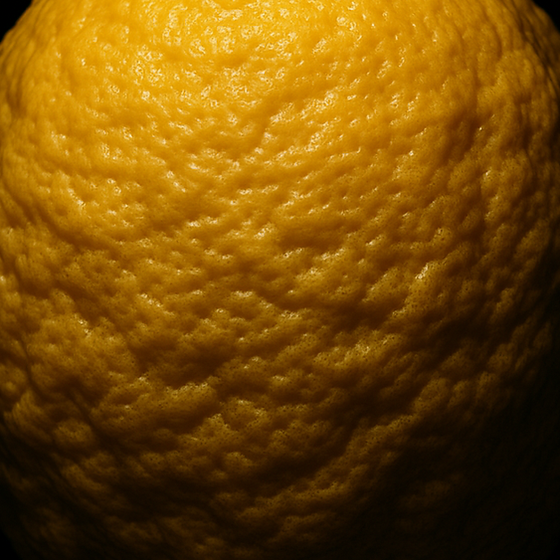
Citron (Citrus medica, called cedrat in French) is a large fragrant citrus fruit with a thick, coarse rind. It resembles a lemon, but is larger. It is one of the original citrus fruits from which all other citrus types developed through natural hybrid speciation or artificial hybridization. Molecular evidence indicates that most cultivated citrus species descend from hybridization among a few ancestral types: the citron, pomelo, mandarin and, to a lesser extent, papedas and kumquat. The main content of a citron fruit is its thick white rind, which adheres to the segments. Its pulp is dry and holds a small quantity of juice, if any. The scent of the peel is attributed to external vesicles that contain essential oils, rather than to the pulp.

Citrus medica is a slow-growing shrub or small tree that reaches a height of about 2.5 to 4.5 metres. The colour of the fruit varies from green when unripe to yellow-orange when overripe. A fingered citron variety is commonly called Buddha's hand.

Chemistry

Limonene is the major constituent of citron's essential oil. In the peel oils of the Amalfi Coast cultivars 'Liscia' and 'Rugosa', limonene makes up 67.2% and 62.8%, and camphene 8.5% and 10.9%, respectively. In the peel oil of the Corsican citron, monoterpene hydrocarbons dominate at 66.8 to 82.5%. Limonene is the major compound there, at 54.2 to 60.6%, followed by γ-terpinene at 6.7 to 15.2%. The oxygenated monoterpenes nerol, neral, geraniol and geranial are present in relatively high concentrations. In Corsican citron peel oil, the content of limonene, the major compound, stays stable as the fruit develops (54.2% in July, 54.6% in January), and γ-terpinene is the only compound with a significant difference between immature and mature fruits.

Varieties and uses

Acidic varieties include the Florentine and Diamante citrons from Italy, the Greek citron and the Balady citron from Israel. The sweet varieties include the Corsican and Moroccan citrons. The thick peel is candied after being cleared by fermentation in sea water. Of Corsican citrons, 80 to 90% are used for candying, jams and liqueurs such as cédratine. About 10% are sold fresh in mainland France and locally, and the rest is used in cosmetics and perfumes.

The fingered citron, Citrus medica var. sarcodactylis, is a citron variety whose fruit is segmented into finger-like sections. Unlike other citrus fruits, it contains no pulp or juice, but has edible rind and pith. It is eaten, often as a zest or flavouring, in desserts, savory dishes and alcoholic beverages, or candied as a sweet. In China, Buddha's hand is used as a symbol of happiness, longevity, and good fortune.

Zanimljivosti

In the 1890s Corsica was the world's leading producer of citron, with 5000 to 6000 metric tons per year from 500 to 600 ha of orchards. The price of Corsican citron quadrupled between 1870 and 1875, from around 0.25 francs per kilogram to 1 franc.

Dobijanje i hemija

Način dobijanja

Hydrodistillation of the peel of the cultivars 'Liscia' and 'Rugosa' gave yellow essential oils, with yields of 0.9% and 0.75%, respectively. In the Corsican citron, the low ratio of flavedo to fruit mass and the bumpy rind make essential oil extraction from the rind inefficient.

Formula
Complex natural mixture (key constituents: limonene C₁₀H₁₆; γ-terpinene; geraniol; neral; geranial)
CAS
68991-25-3
Botanički naziv
Citrus medica
Izgled
Yellow
Sinonimi
cédrat
Status prema standardima IFRA
Pogledajte napomenu

No IFRA Standard for the material itself (51st Amendment)

U parfemima

The fruit of the fingered citron known as Buddha's hand is very fragrant and is used predominantly in China and Japan for perfuming rooms and personal items such as clothing. For many centuries, the fragrant essential oil of citron, called oil of cedrate, has been used in perfumery. Its dry citrus character connects to Gravitas Capitale (/products/gravitas-capitale-neo-cologne-citron-asphalt-perfume).

Uloga u formuli
01mirisni sastojak
02aroma
Oblici na tržištu
eterično ulje

Pogledajte i

6 nota